
When you cook, especially frying or grilling, your appliances release VOCs that can linger if you don’t use ventilation. Cleaning products with synthetic fragrances and solvents also emit VOCs, raising indoor air pollution. Using exhaust fans, opening windows, and improving air circulation help reduce these pollutants. Switching to electric appliances and choosing natural cleaning options further lower VOC levels. Keep exploring to discover more tips on improving your home’s indoor air quality.
Key Takeaways
- Cooking, especially frying and grilling, releases VOCs through heat-induced chemical reactions.
- Using gas stoves and ovens increases indoor VOC levels compared to electric appliances.
- Proper ventilation during cooking and cleaning, like exhaust fans and open windows, reduces VOC accumulation.
- Cleaning products with synthetic fragrances or solvents emit VOCs that can linger without adequate air circulation.
- Regularly ventilating during and after cleaning activities helps lower indoor VOC concentrations and improve air quality.

Cleaning and cooking are everyday activities that can substantially impact the levels of volatile organic compounds (VOCs) in your home. These activities release VOCs into the air, affecting indoor air quality and potentially your health. Understanding how your daily routines influence VOC levels can help you create a safer and healthier environment.
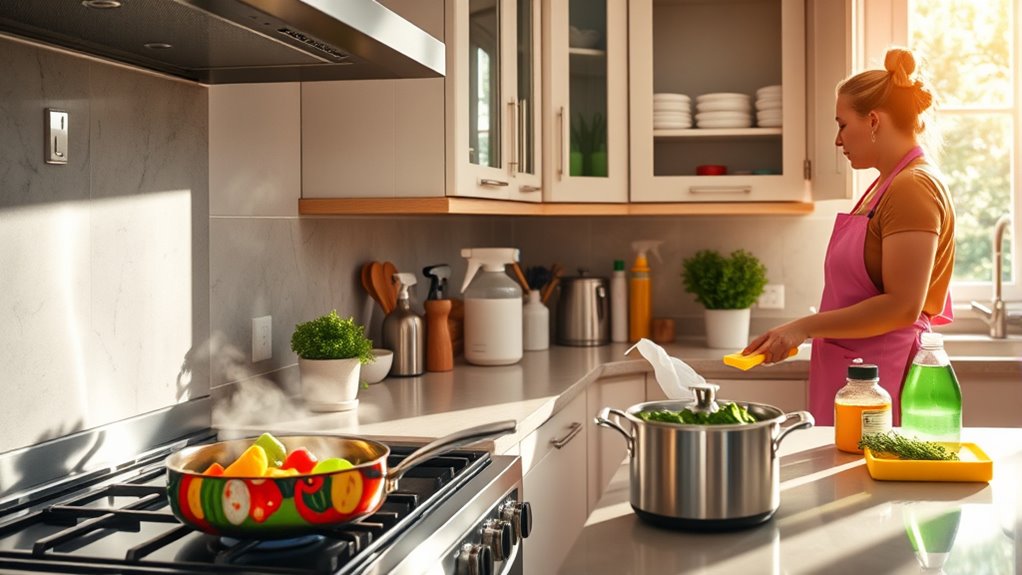
When you cook, especially frying, grilling, or using processed foods, you generate VOCs from the heat and chemical reactions in the kitchen. Many cooking appliances, like gas stoves and ovens, emit nitrogen oxides and VOCs directly into the air. The type of fuel you use plays a role too; gas appliances tend to produce more VOCs compared to electric ones. The fumes from these appliances can linger, especially if the air isn’t well-circulated, causing indoor VOC concentrations to rise. To minimize this, you should turn on exhaust fans or range hoods whenever you cook. These devices help remove airborne pollutants before they accumulate, reducing your exposure. Opening windows during and after cooking can further improve air circulation, diluting VOCs and clearing the air more quickly.
Cleaning also influences VOC levels. Many cleaning products, especially those with synthetic fragrances, solvents, or disinfectants, emit VOCs that can linger in the air long after you finish cleaning. When you spray or apply these products, you’re releasing chemicals that can contribute to indoor smog and air pollution. If you don’t ventilate properly, these VOCs can build up and cause respiratory irritation or other health issues over time. To reduce this impact, choose natural or fragrance-free cleaning options whenever possible. Additionally, increasing air circulation during and after cleaning helps disperse VOCs more rapidly. Using fans, opening windows, or running an air purifier can substantially cut down the concentration of harmful chemicals in your indoor environment. Being aware of indoor air quality and how it’s affected by daily activities is essential for maintaining a healthier home.
Your appliance usage plays a vital role in VOC emissions. Gas-powered appliances, such as stoves, water heaters, and space heaters, produce VOCs and other pollutants as byproducts of combustion. Using these appliances frequently without proper ventilation can lead to higher indoor VOC levels. Switching to electric alternatives can decrease VOC emissions, but you should still ensure good air circulation to prevent buildup. Regular maintenance of appliances also helps; a well-maintained appliance burns fuel more efficiently, reducing emissions. In sum, managing how you use your appliances—by venting exhaust gases and opting for electric options when possible—can make a noticeable difference in indoor air quality.
Frequently Asked Questions
Do Air Purifiers Effectively Reduce VOC Levels From Cooking and Cleaning?
Yes, air purifiers can effectively reduce VOC levels from cooking and cleaning if they have high-efficiency filters like activated carbon. They improve air quality by capturing VOCs before you breathe them in. To maximize VOC reduction strategies, use an air purifier that’s designed for VOC removal, run it during and after cooking or cleaning, and guarantee proper ventilation. This combined approach helps maintain healthier indoor air.
Which Household Appliances Emit the Most VOCS During Use?
You might be surprised, but your stove and oven top the list of appliance emissions, acting as major VOC sources during use. Gas-powered appliances release more volatile organic compounds than electric ones, especially when cooking with high heat or frying. Even your dishwasher and microwave emit VOCs, though less intensely. To protect your indoor air quality, consider venting appliances properly and choosing electric options when possible.
How Long Do VOCS From Cleaning and Cooking Typically Linger Indoors?
VOCs from cleaning and cooking usually linger indoors for a few hours to several days, depending on factors like ventilation and the specific chemicals involved. You’ll notice VOC decay through indoor diffusion, where the concentration gradually decreases over time. To shorten this period, open windows and use exhaust fans, which help speed up VOC dissipation and improve air quality quickly.
Are There Specific Cleaning Products That Increase VOC Emissions?
Yes, certain cleaning products increase VOC emissions, especially those with chemical fragrances. You should opt for natural cleaning alternatives, which typically emit fewer VOCs. Avoid products with artificial scents, as they release higher levels of harmful chemicals into your home. By choosing fragrance-free or naturally scented cleaning supplies, you decrease VOC exposure and improve indoor air quality. Always read labels to ensure you’re selecting low-VOC or fragrance-free options.
Can Ventilation Strategies Mitigate VOC Buildup After Cooking or Cleaning?
Did you know that proper ventilation can diminish VOC levels by up to 50%? You can effectively mitigate VOC buildup after cooking or cleaning through strategic kitchen air flow. Opening windows increases fresh air exchange, while using exhaust fans helps remove indoor pollutants quickly. Combining both window ventilation and exhaust fan use ensures that VOC concentrations decrease faster, creating a healthier indoor environment after activities that emit VOCs.
Conclusion
Every time you cook or clean, you’re releasing a storm of VOCs that flood your home like a relentless hurricane. These invisible villains invade your space, threatening your health and peace of mind with every breath. But remember, with mindful cleaning and smart cooking habits, you hold the power to tame this chaos. Don’t let VOCs take over your sanctuary—fight back and reclaim your home as a safe haven from this hidden menace!