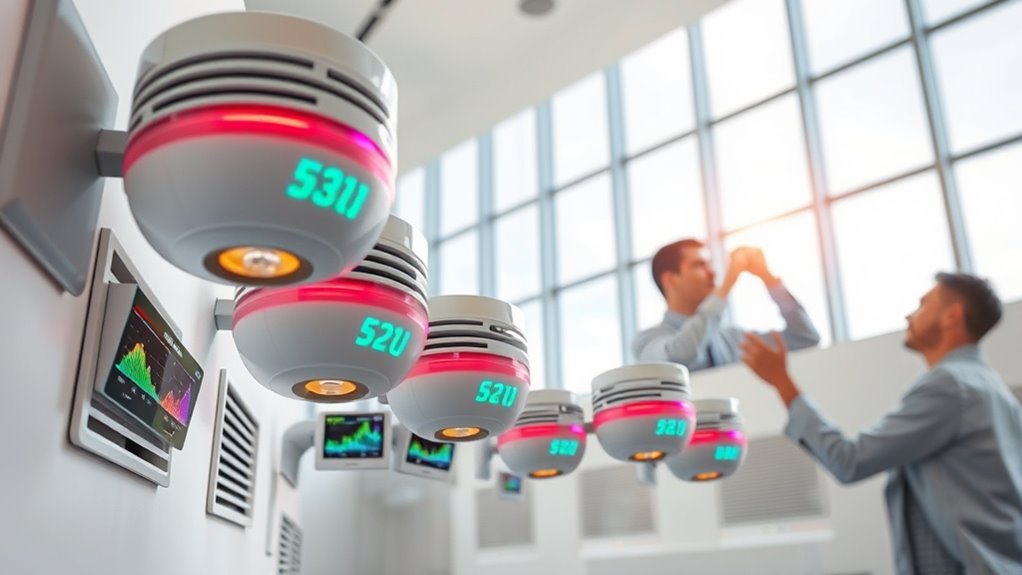

By using data from air quality sensors, you can optimize your ventilation system to create healthier indoor environments. Accurate, real-time data helps you identify pollution patterns and adjust airflow automatically for better air quality. Proper calibration and integrating multiple sensors enhance system responsiveness and efficiency. Over time, analyzing this data allows you to detect trends and maintain system performance. Keep exploring how intelligent data use can transform your indoor air management effectively.

Get home appliances delivered free — and shop member deals
- Fast, free delivery on millions of items
- Access to Prime Big Deal Days deals on October 6–7
- Prime Video, Amazon Music and more included
Key Takeaways
- Integrate sensor data to automate ventilation adjustments, ensuring optimal indoor air quality in real time.
- Regularly calibrate sensors to maintain accurate readings and prevent false alarms affecting ventilation.
- Combine data from multiple sensors to identify pollution patterns and optimize airflow accordingly.
- Use long-term data analysis to detect pollution trends and schedule maintenance or system upgrades proactively.
- Automate ventilation responses based on sensor data to improve energy efficiency and indoor comfort.

As indoor air quality becomes increasingly important for health and comfort, leveraging data from air quality sensors offers a practical way to optimize ventilation systems. When you actively monitor the air, you’re better equipped to respond swiftly to changes in pollutants, humidity, or carbon dioxide levels. But to truly harness this data, you need to ensure your sensors are properly calibrated. Sensor calibration is essential because it guarantees that the readings you receive are accurate and reliable. Over time, sensors can drift, leading to false alarms or missed issues. Regular calibration, whether through manual adjustment or automated calibration protocols, helps maintain precision. This way, you avoid unnecessary ventilation adjustments based on faulty data, saving energy and ensuring healthy air quality.
Proper sensor calibration ensures accurate air quality data for smarter ventilation and healthier indoor environments.
Once your sensors are calibrated, the next step involves data integration. This process combines data from multiple sensors and sources, creating a holistic picture of indoor air conditions. When you integrate data effectively, you can identify patterns and correlations that wouldn’t be apparent from isolated readings. For example, a spike in CO2 levels might coincide with increased occupancy, or elevated humidity might relate to recent cleaning activities. Data integration allows you to analyze these relationships in real-time, enabling smarter ventilation control. You can set your system to automatically adjust airflow based on combined sensor inputs, optimizing energy use while maintaining ideal air quality.
Implementing a robust data integration approach also involves using compatible hardware and software that can communicate seamlessly. If your sensors and ventilation systems are compatible, you can automate responses to air quality fluctuations. For instance, when integrated data indicates poor air quality, your system can increase ventilation instantly, preventing discomfort or health issues. Conversely, when air quality improves, the system can reduce ventilation, conserving energy without compromising safety. This dynamic responsiveness hinges on accurate data collection and seamless integration. Additionally, understanding the importance of attention in the creative process highlights how focusing on sensor data can lead to more innovative and effective ventilation solutions.
Furthermore, by continuously analyzing integrated data, you can identify long-term trends and potential issues before they become problematic. For example, gradual increases in indoor pollutants may signal the need for maintenance or improved filtration. Regularly reviewing this data helps you make informed decisions, ensuring your ventilation system adapts proactively rather than reactively. Overall, combining diligent sensor calibration with smart data integration transforms your ventilation approach from static to dynamic, making indoor environments healthier, more comfortable, and more energy-efficient.
Frequently Asked Questions
How Accurate Are Air Quality Sensors in Different Environments?
Air quality sensors’ accuracy varies depending on environmental variability and sensor calibration. In stable environments, they tend to be quite reliable, but in dynamic settings with fluctuating conditions, their precision can decline. Regular sensor calibration is essential to maintain accuracy, especially when used across different environments. Keep in mind that some sensors may struggle with detecting specific pollutants, so understanding their limitations helps you make better ventilation decisions.
What Are the Costs Associated With Implementing Sensor-Based Ventilation Systems?
Imagine installing a network of air quality sensors in your building—you’ll face installation costs that vary based on size and complexity, often ranging from a few thousand to tens of thousands of dollars. Maintenance expenses include regular calibration and sensor replacement, which keep your system running efficiently. While initial costs might seem high, the long-term benefits of improved air quality and energy savings can outweigh these expenses.
How Quickly Can Sensor Data Trigger Ventilation Adjustments?
You can expect sensor data to trigger ventilation adjustments in real-time, often within seconds to a minute, depending on system setup. To guarantee accuracy, regular sensor calibration is essential; it prevents false readings that could delay responses. Real-time response helps maintain air quality efficiently, but consistent calibration keeps the system reliable, allowing it to react swiftly and effectively to changing air conditions.
Are There Privacy Concerns With Continuous Air Quality Monitoring?
You should know that privacy concerns and data security are valid when it comes to continuous air quality monitoring. While sensor data helps improve ventilation, it could raise issues if personal or sensitive information is collected or if data isn’t properly protected. To address these concerns, guarantee your system uses secure data encryption and clear privacy policies, giving you confidence that your information stays private and protected.
How Can Sensors Differentiate Between Indoor and Outdoor Pollution Sources?
Think of sensors as detectives, meticulously piecing together clues to distinguish indoor from outdoor pollution. They use source identification techniques, analyzing patterns and specific chemical signatures. Regular sensor calibration guarantees accuracy, preventing false alarms. By comparing data over time, you can trace pollution origins, like following footprints in the snow, helping you improve ventilation precisely where it’s needed most.
Conclusion
By harnessing data from air quality sensors, you can fine-tune your ventilation systems, creating healthier indoor spaces. It’s almost poetic how real-time insights reveal hidden patterns, guiding you to act just when it matters most. When sensors detect changes, your response becomes instinctive, turning data into a silent guardian of air quality. In this dance between technology and environment, you’re not just reacting—you’re proactively shaping a fresher, safer space without even realizing it.
Fall Picks
fall essentials
As an affiliate, we earn on qualifying purchases.