
TL;DR

Get home appliances delivered free with Prime
- Fast, free delivery on millions of items
- Prime Video, Amazon Music and more included
- Member-only deals all year
An Ideal Home report shares six measures its writer is taking to make a 111-year-old cottage more comfortable in winter without losing its character. Experts cited recommend checking heating systems, reviewing insulation and addressing draughts, while warning that unsuitable insulation or persistently cold rooms can create problems.
Ideal Home has published a winter guide from a writer living in a 111-year-old cottage, describing six steps intended to make the house warmer without sacrificing its character. The advice, informed by heating and heritage-property experts, focuses on practical checks and upgrades for older homes, where heat loss and high heating costs can make staying comfortable difficult.
The writer says the cottage has central heating but cools quickly unless the heating runs for much of the day, which can push up energy bills. The house has solid walls and little insulation outside newer sections, while the writer also describes radiators as poorly positioned and undersized and says the household has not settled on an effective heating schedule.
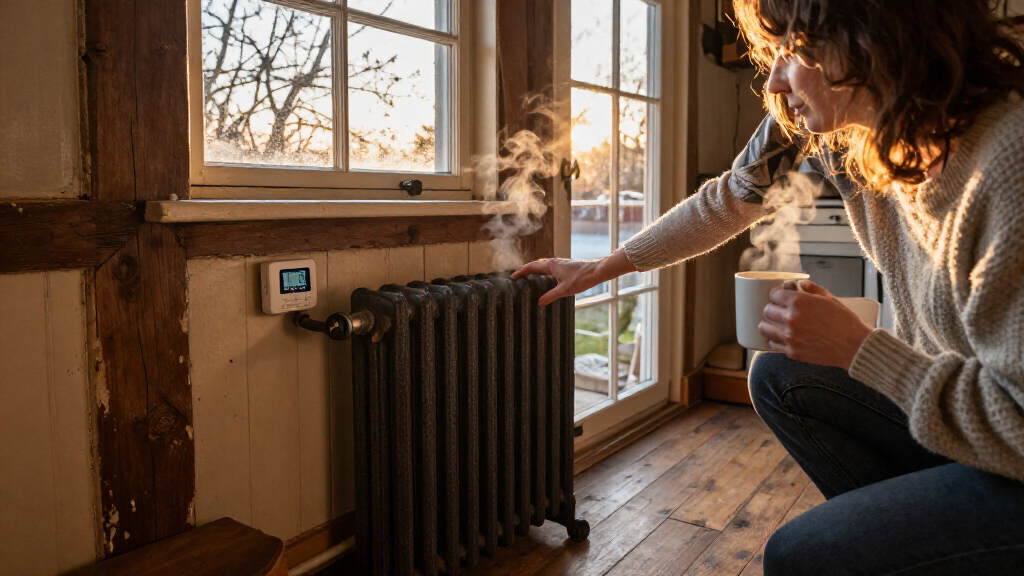
One recommended starting point is a heating-system check. Ant Langston of HeatandPlumb.com advises arranging an annual boiler service with a Gas Safe engineer and bleeding radiators if trapped air is preventing them from heating evenly. Carl Mason of Mason & Oak Surveyors and Heritage Consultancy says programmable controls or thermostatic radiator valves may help households heat rooms according to their routines, but technology cannot fix an unsuitable or poorly maintained system.
The guide also highlights loft insulation and draught reduction among its six planned measures. Mason says accessible loft insulation can be a sensible improvement if it is installed appropriately; Simon Bones of retrofit company Genous says topping it up can be a low-disruption measure. The supplied source excerpt ends partway through the section on draughts and does not provide the full list of six steps.
Practical Steps for Older Homes
For people living in older properties, the report distinguishes between changes that may improve comfort quickly and larger retrofit work that can affect a building’s appearance or performance. Heating maintenance, room controls and loft insulation are presented as possible starting points, rather than a single solution for every house.
The advice also underlines a trade-off: reducing heating use in unused rooms may help control bills, but leaving parts of a cold home unheated can increase the risk of damp and condensation, particularly where airflow is limited. The appropriate balance depends on the building and how it is used; the report does not give a universal temperature or cost-saving estimate.
Products Worth Considering

Bose Lifestyle Ultra Wireless Home Speaker, White Smoke

Google Nest Learning Thermostat (4th Gen) with Nest Temperature Sensor (2nd Gen), Silver

Bose Lifestyle Ultra Compact Wireless Smart Home Speaker Bundle, Black
As an affiliate, we earn on qualifying purchases.
The Cottage’s Heating Challenges
The report is based on the writer’s own experience in a cottage built 111 years ago. Its central heating does not keep the home warm for long after it is switched off, and the writer says the radiators and controls present practical problems. Those details explain why the guide combines heating-system advice with suggestions for insulation and draughts.
Older homes differ in construction. Mason notes that many homes built before the 1930s do not have cavity walls, so cavity-wall insulation may not be suitable. The source also emphasizes that insulation choices should account for how a traditional building performs, rather than treating every older property as if it had the same walls or layout.
““Ensuring your radiators are in tip top condition before winter arrives is paramount to lowering your costs.””
— Ant Langston, bathroom and heating expert at HeatandPlumb.com
Costs and Home-Specific Limits
The source does not provide estimates for the cost, energy savings or payback period of the suggested measures, nor does it establish that every upgrade will work for every property. The full six-item list is not available in the supplied excerpt, which cuts off during the draught-proofing section.
It is also unclear what insulation is appropriate for any individual home without details of its construction and condition. The experts’ advice is general; the article does not report an inspection of the cottage or confirm that the writer has completed the planned upgrades.
The Writer’s Winter Measures
The writer says they are putting six measures into practice to make the cottage more comfortable while keeping its character and limiting disruption. The excerpt specifically identifies a heating-system check, a review of insulation and work on draughts, but does not say when each job will be completed or report results.
For readers considering similar work, the source points to checking the heating system and the building’s insulation before choosing upgrades. Boiler servicing should be handled by a Gas Safe engineer; insulation decisions for older properties may require advice suited to the building’s construction. The report gives no further timetable or follow-up data on the cottage’s winter performance.
Key Questions
What winter measures does the guide recommend?
The supplied excerpt covers heating-system maintenance, heating controls, loft insulation and draught reduction. It refers to six measures overall, but the source text provided here ends before the complete list appears.
Should an old house’s boiler be checked before winter?
Ant Langston recommends an annual boiler service by a Gas Safe engineer. The report also suggests checking whether radiators have cold spots and bleeding them if trapped air is affecting their heat.
Can every older home have cavity-wall insulation?
No. Simon Bones says many homes built before the 1930s do not have cavity walls. Whether insulation is suitable depends on the property’s construction and condition.
Is it safe to leave unused rooms unheated?
Langston says households do not need every room at the same temperature, but warns that letting rooms stay cold can raise the risk of damp and condensation, especially with limited airflow. The article does not provide a universal temperature setting.
Source: idealhome.co.uk