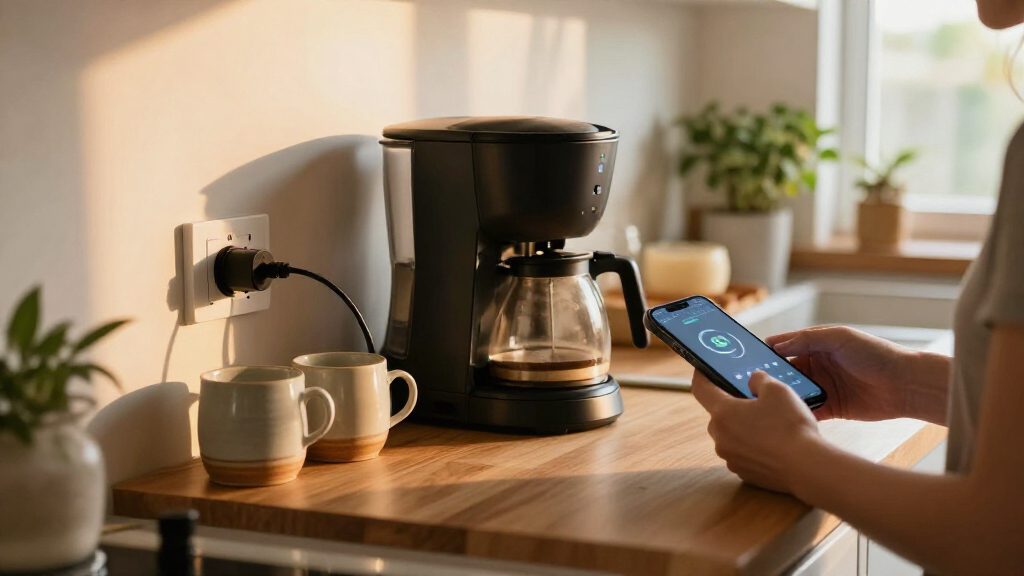

Smart plugs with energy monitoring let you track how much electricity a connected device uses and control it remotely. My best overall pick is the Tapo P115 2-Pack, which pairs monitoring with a practical Wi-Fi setup; the Eve Energy Outlet stands out for Matter-focused homes, while the Minoston Z-Wave suits buyers building around a Z-Wave hub. The main tradeoffs are ecosystem compatibility, how many plugs you need, and whether you want local smart-home control or a simpler app-led setup. Multi-packs can cover more devices, but they do not all offer the same connection options or monitoring tools. Read on for the full breakdown and help matching a plug to your devices and smart-home setup.

Get home appliances delivered free with Prime
- Fast, free delivery on millions of items
- Prime Video, Amazon Music and more included
- Member-only deals all year
Complete the kit



Key Takeaways
- Tapo P115 comes in both 2- and 4-packs, so it offers a way to start with a smaller set or cover more appliances while staying with the same Wi-Fi plug family.
- Matter and energy monitoring are not interchangeable features: several Matter products in this roundup do not list energy monitoring, so check the exact model before buying.
- Eve Energy and Minoston serve different smart-home priorities: Eve is the Matter-oriented outlet pick, while Minoston requires a Z-Wave setup and can act as a repeater.
- Emporia, Govee, and AiSeek are 4-pack options aimed at monitoring multiple devices, but their Wi-Fi and app-led approaches suit buyers who do not need the same protocol choices as Matter or Z-Wave.
- Kasa KP125M and Tapo P110M offer Matter alongside energy monitoring, making them distinct from less expensive-to-set-up-in-principle Wi-Fi-only choices when cross-platform compatibility matters.






| smart plugs with energy monitoring | Connectivity | Operating voltage | Model | Maximum load |
|---|---|---|---|---|
| AiSeek Smart Plug with Energy | — | 120V | — | 15A, 1800W |
| Tapo P115 Smart Wi-Fi Plug wit | 2.4 GHz Wi-Fi | 125V | P115 | 15A, 1,800W |
| Eve Energy Outlet Matter Smart | Matter, Thread | 120V AC | 20ECN4101 | — |
| SONOFF S61s Matter Smart Plug | 2.4 GHz Wi-Fi, Matter | 120V | S61STPB | 15A, 1875W |
| Govee Smart Plug with Energy M | Wi-Fi and Bluetooth | — | H5086 | — |
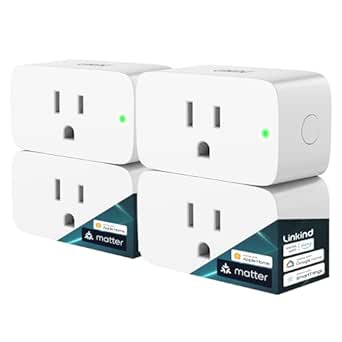
| Linkind Matter Smart Plug | 2.4 GHz Wi-Fi; IPv6 network required | — | LC09003256 | 15 A; 1800 W |
| SIXWGH Matter Smart Plug with | Matter, 2.4 GHz Wi-Fi, Bluetooth-assisted pairing | 125 V | — | 15 A; 1800 W |
| Kasa Matter Smart Plug with En | Matter over 2.4 GHz Wi-Fi | 120 V | KP125MP2 | 15 A; 1800 W |
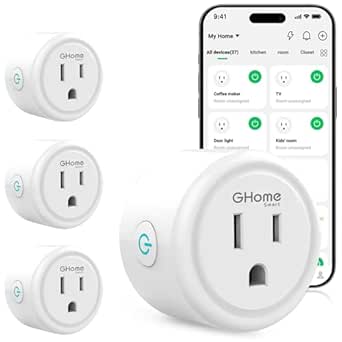
| GHome Smart Wi-Fi Plug with Al | 2.4 GHz Wi-Fi; Bluetooth or Wi-Fi connection stated | 120 V | WP3 | — |
| Minoston Z-Wave Smart Plug wit | Z-Wave; compatible hub required | — | MP21ZP (VER 8.0) | 15 A |
| Tapo P115 Smart Wi-Fi Plug wit | 2.4 GHz Wi-Fi | 110 V AC | — | — |
| Tapo P110M Matter-Certified Sm | Matter and Wi-Fi | — | — | — |
| Emporia Energy Monitoring Smar | 2.4 GHz Wi-Fi | 120 V | EMSO1-4 | — |
| Kasa Matter Smart Plug with En | Matter, Wi-Fi, SmartThings | 120 V | KP125M | — |
More Details on Our Top Picks
AiSeek Smart Plug with Energy Monitoring, 15A, 2.4 GHz Wi-Fi, 4-Pack
For buyers who want energy data in several rooms, the four-plug bundle makes it easier to track and schedule multiple appliances than the two-plug Tapo P115 pack. Through SmartLife, it reports real-time energy use and adds timers, schedules, and group control, so a set of lamps or other compatible devices can follow the same routine. Alexa and Google Assistant support is available after setup, though this plug does not connect directly to Alexa: the SmartLife app must be configured first. Its 15A, 1800W rating suits common household loads, while the 2.4 GHz-only Wi-Fi requirement rules out networks configured for 5 GHz alone. Compared with Govee’s four-pack, AiSeek’s listed feature set is less specific about historical energy records, making Govee a stronger fit for buyers who want to review long-term usage data.
Pros:- Four plugs make multi-room monitoring and group control practical.
- Reports real-time energy use and supports timers and schedules.
- Works with Alexa and Google Assistant through SmartLife.
- Includes overload and short-circuit protection and a two-year warranty.
Cons:- Requires 2.4 GHz Wi-Fi.
- SmartLife setup must be completed before linking Alexa or Google Assistant.
- The supplied data does not specify long-term energy history or charting.
Best for: Households that want to monitor and schedule several compatible appliances using SmartLife and Alexa or Google Assistant.
Not ideal for: Buyers who need direct Alexa setup, 5 GHz Wi-Fi support, or detailed long-term energy history.
- Pack count:4 plugs
- Maximum load:15A, 1800W
- Operating voltage:120V
- Wi-Fi:2.4 GHz
- App compatibility:SmartLife, Tuya
- Voice assistants:Amazon Alexa, Google Assistant
- Monitoring and controls:Real-time energy monitoring, scheduling, timers, group control, remote control
- Protection and warranty:Fire-resistant materials; short-circuit and overload protection; 2 years
Our verdict“Choose AiSeek if you want four app-controlled plugs for basic real-time monitoring, but pick Govee if historical energy records matter more.”
Tapo P115 Smart Wi-Fi Plug with Energy Monitoring, 15A, 2-Pack
The Tapo P115 is a straightforward pick for buyers who want energy charts and everyday control without a more involved smart-home setup. Its Tapo app presents usage statistics, while schedules, remote access, and Alexa or Google Assistant control cover routine switching. Compared with the AiSeek four-pack, this two-plug set covers fewer outlets, but the stated charts make its monitoring offer clearer for someone who wants to inspect consumption rather than only check current use. A distinctive extra is smart charging, which can stop power at a chosen battery limit; that is useful for compatible charging routines, though it does not replace checking device requirements. Automatic overload shutoff adds a safety measure. The tradeoff is a 2.4 GHz Wi-Fi connection and a maximum 1,800W load, so buyers with higher-demand equipment should verify compatibility before use.
Pros:- Tapo app provides energy statistics and charts.
- Smart charging can stop power at a selected battery limit.
- Automatic overload shutoff adds a protective measure.
- Compact body helps preserve access to neighboring outlets.
Cons:- The pack includes only two plugs.
- Requires 2.4 GHz Wi-Fi.
- Maximum rated output is 1,800W.
Best for: People who want app-based energy charts, voice control, and scheduled charging for a small number of compatible devices.
Not ideal for: Buyers who need more than two monitored outlets, 5 GHz Wi-Fi, or capacity above 1,800W.
- Pack count:2 plugs
- Model:P115
- Maximum load:15A, 1,800W
- Operating voltage:125V
- Connectivity:2.4 GHz Wi-Fi
- Control:Tapo app, remote control, voice control
- Voice assistants:Amazon Alexa, Google Assistant
- Monitoring and safety:Energy statistics and charts; automatic overload shutoff
- Certification:ETL, FCC, RoHS
Our verdict“Pick the Tapo P115 for clear app-based tracking and charging routines, or choose AiSeek or Govee if you need four plugs in one bundle.”
Eve Energy Outlet Matter Smart Outlet with Power Meter
Eve is the most infrastructure-dependent option here, but it offers a different kind of flexibility: two independently controlled outlets in one wall outlet, with a power meter and Matter-over-Thread connectivity. That makes it a better fit than the plug-in SONOFF S61s for buyers who want to replace a wall outlet and control separate connected loads without relying on Eve cloud services. Matter support spans Apple Home, Alexa, Google Home, and SmartThings, while local communication can suit households that prefer less cloud dependence. The tradeoff is the setup: a compatible platform hub and Thread router are required, and installation involves a wall outlet rather than simply plugging into one. It is also physically larger than a typical single smart plug. Buyers seeking the easiest monitoring setup should look at the Tapo P115 instead.
Pros:- Controls two outlets independently.
- Matter and Thread support works across several major smart-home platforms.
- Local communication does not depend on Eve cloud services, registration, or tracking.
- Power meter supports monitoring alongside app, voice, remote, and presence-based control.
Cons:- Requires a compatible platform hub and Thread router.
- Wall-outlet installation is less convenient than a plug-in smart plug.
- Requires iOS/iPadOS 16.4 or later or Android 8.1 or later.
Best for: Smart-home owners with a compatible hub and Thread router who want two independently controlled, locally communicating outlets.
Not ideal for: Renters, plug-and-play shoppers, or anyone without a compatible hub and Thread router.
- Model:20ECN4101
- Outlet count:2, independently controlled
- Operating voltage:120V AC
- Maximum wattage:1800W
- Connectivity:Matter, Thread
- Compatible platforms:Apple Home, Amazon Alexa, Google Home, SmartThings
- Required equipment:Compatible platform hub and Thread router
- Monitoring:Power meter
- Certification:UL-certified
Our verdict“Choose Eve if local Matter control and two independently monitored outlets justify the added hub and installation requirements.”
SONOFF S61s Matter Smart Plug with Energy Monitoring, 15A
The SONOFF S61s combines Matter compatibility with Wi-Fi setup that requires no hub, a useful middle ground for buyers who want broad platform support without Eve’s Thread-router requirement. It works with Apple Home, Alexa, Google Home, and SmartThings, and its monitoring reports real-time power use and electricity costs. That cost tracking gives it a more directly bill-focused angle than the Tapo P115’s stated energy charts, while the Tapo adds smart charging for battery devices. The S61s also supports scheduling and automation through eWeLink or a compatible Matter controller, with overload protection and fire-resistant housing listed for household use. It still needs 2.4 GHz Wi-Fi, and its IP20 rating means it is intended for indoor environments with limited dust and moisture exposure—not damp or exposed locations.
Pros:- Matter support spans Apple Home, Alexa, Google Home, and SmartThings.
- Tracks real-time power use and electricity costs.
- Hub-free Wi-Fi operation supports remote control, scheduling, and automation.
- Includes overload protection and fire-resistant housing.
Cons:- Requires 2.4 GHz Wi-Fi.
- IP20 offers limited protection from dust and moisture.
- A single-plug listing provides less outlet coverage than the four-packs from AiSeek or Govee.
Best for: People who want Matter control across major platforms, real-time electricity-cost tracking, and a plug-in setup without a separate hub.
Not ideal for: Buyers who need 5 GHz Wi-Fi or want a plug for dusty, damp, or outdoor areas.
- Model:S61STPB
- Maximum load:15A, 1875W
- Operating voltage:120V
- Connectivity:2.4 GHz Wi-Fi, Matter
- Compatible platforms:Apple Home, Alexa, Google Home, SmartThings
- Monitoring:Real-time power use and electricity-cost tracking
- Protection:Overload protection; fire-resistant housing
- Ingress protection:IP20
- Certification and warranty:ETL Listed, CE; 2 years
Our verdict“Choose the SONOFF S61s for hub-free Matter control and cost tracking, provided your Wi-Fi is 2.4 GHz and the plug will stay indoors.”
Govee Smart Plug with Energy Monitoring, Wi-Fi and Bluetooth, 4-Pack
Govee is the strongest fit in this group for buyers who want to examine how a device’s consumption changes over time: its app tracks power, current, and voltage, with data history available for up to one year. That longer record gives it a monitoring advantage over AiSeek, whose supplied details focus on real-time readings, while both offer four plugs, group control, schedules, and Alexa and Google Assistant support. Bluetooth is listed alongside Wi-Fi, but app-based monitoring still runs through the Govee Home app; it is not an app-free option. The plugs are rated at 15A and 120V and carry ETL and FCC certifications. The main connectivity limitation is familiar: 5 GHz Wi-Fi is unsupported. Buyers who prefer SmartLife or want a different app ecosystem may find AiSeek a better match.
Pros:- Tracks power, current, and voltage.
- Provides energy data history for up to one year.
- Four-plug pack supports group control, schedules, and remote operation.
- Works with Alexa and Google Assistant and carries ETL and FCC certifications.
Cons:- Does not support 5 GHz Wi-Fi.
- App-based monitoring and control require Govee Home.
- The listed voltage is 110V, so buyers should check appliance and outlet compatibility.
Best for: Households that want several monitored outlets and value long-term records of power, current, and voltage in one app.
Not ideal for: Buyers who need 5 GHz Wi-Fi, want to avoid the Govee Home app, or prefer SmartLife/Tuya.
- Model:H5086
- Pack count:4 plugs
- Voltage and current:110V, 15A
- Connectivity:Wi-Fi and Bluetooth
- Wi-Fi limitation:5 GHz Wi-Fi is not supported
- App:Govee Home
- Voice assistants:Amazon Alexa, Google Assistant
- Monitoring:Power, current, and voltage; up to one year of data history
- Certifications:ETL, FCC, CA65, SDOC
Our verdict“Choose Govee if long-term, multi-measurement energy records matter more than app choice or 5 GHz Wi-Fi support.”
Linkind Matter Smart Plug, 4-Pack
The Linkind four-pack is a fit for buyers who want broad Matter compatibility and several plugs at once, but its supplied details do not list energy monitoring. That gap matters in a roundup focused on tracking consumption: unlike the Kasa Matter Smart Plug with Energy Monitoring and SIXWGH, Linkind cannot be recommended here for measuring appliance use based on the available product information. Its strength is ecosystem choice, with support for Apple Home, Alexa, Google Home, and SmartThings through a compatible Matter hub, plus hub-free use through AiDot. Local-network Matter control can keep compatible devices responsive when internet access drops. The tradeoff is setup complexity: several platforms need a Matter hub, and Wi-Fi must support both 2.4 GHz and IPv6. I’d choose it for cross-platform switching and quantity, not energy tracking.
Pros:- Works with Apple Home, Alexa, Google Home, SmartThings, and AiDot.
- Matter local-network communication can work without internet access.
- Four plugs support schedules, timers, and remote control.
- Overload and short-circuit protection are specified.
Cons:- Energy monitoring is not listed in the supplied product information.
- A Matter-certified hub is needed for several supported platforms.
- Requires 2.4 GHz Wi-Fi and an IPv6 network.
Best for: Households that want four Matter-compatible plugs for several ecosystems and are comfortable using AiDot or supplying a compatible hub.
Not ideal for: Buyers who need to track appliance energy use, or households without an IPv6-capable 2.4 GHz network or the required Matter hub.
- Pack count:4
- Model:LC09003256
- Maximum load:15 A; 1800 W
- Connectivity:2.4 GHz Wi-Fi; IPv6 network required
- Compatible platforms:Apple Home, Alexa, Google Home, SmartThings, AiDot
- Hub requirement:Matter-certified hub for Apple Home, Alexa, Google Home, and SmartThings; not required for AiDot
- Safety:Overload and short-circuit protection; FCC and ETL certifications stated
Our verdict“Choose Linkind for four plugs and broad Matter control, but pick Kasa or SIXWGH instead if energy monitoring is a requirement.”
SIXWGH Matter Smart Plug with Energy Monitoring, Timer, and Voice Control
SIXWGH combines energy monitoring with an unusually broad set of timer controls, making it a practical pick for buyers who want to measure usage and automate around a routine. Monitoring runs through the Smart Life app, while schedules, countdowns, cycle timers, and random timers offer more ways to control a device than the simpler app-and-voice setup listed for the Kasa Matter Smart Plug. Matter support spans major platforms, and the product description says no hub is required, which makes this a less equipment-dependent route than the Minoston Z-Wave plug. The tradeoffs are app reliance for energy data and a single-plug package. Its 2.4 GHz-only Wi-Fi also rules out networks that use 5 GHz exclusively, and the stated IP00 rating offers no ingress protection. I’d favor it for automation variety, not for outdoor or damp locations.
Pros:- Energy monitoring is available through the Smart Life app.
- Schedules, countdowns, cycle timers, and random timers support varied routines.
- Matter compatibility covers Alexa, Apple Home, Google Home, SmartThings, and Siri.
- Compact dimensions and a stated 1800 W maximum load suit many indoor appliances.
Cons:- Energy monitoring depends on the Smart Life app.
- Only 2.4 GHz Wi-Fi is supported.
- IP00 means no ingress protection is stated.
Best for: Smart-home owners who want energy readings in Smart Life alongside several timer modes and Matter control without adding a hub.
Not ideal for: Buyers who need a multi-plug bundle, energy data outside the Smart Life app, or a plug with stated ingress protection.
- Pack count:1
- Maximum load:15 A; 1800 W
- Operating voltage:125 V
- Connectivity:Matter, 2.4 GHz Wi-Fi, Bluetooth-assisted pairing
- Energy monitoring:Yes, via Smart Life (Tuya) app
- Automation:Schedules, countdown, cycle and random timers, group control
- Dimensions:2 x 2 x 2 inches
- Safety:Overload protection; FCC certification
Our verdict“Pick SIXWGH if timer flexibility matters as much as app-based energy tracking; choose Kasa for a two-plug bundle instead.”
Kasa Matter Smart Plug with Energy Monitoring, 15A/1800W, 2-Pack
Kasa is the most balanced choice here for buyers who want energy monitoring and Matter in a ready-made pair. It supports Apple Home, Alexa, Google Home, and SmartThings, with local Matter control available when devices share a network. That combination makes it a more direct energy-tracking recommendation than the Linkind four-pack, whose supplied details do not list monitoring, while the SIXWGH offers more timer types but comes as a single plug. Kasa’s compact, UL-certified flame-retardant design adds a clear safety specification, and its two-year limited warranty is stated in the product data. The tradeoff is a 2.4 GHz Wi-Fi limit and a 15 A/1800 W ceiling; it is an on-off plug, not a way to vary appliance output. For a small Matter setup, I’d choose Kasa for its balance rather than specialized automation.
Pros:- Energy monitoring and Matter support are included in a two-plug bundle.
- Compatible with Apple Home, Alexa, Google Home, and SmartThings.
- Local Matter communication can continue without an internet connection.
- Compact flame-retardant design is UL certified, with a two-year limited warranty.
Cons:- Connects over 2.4 GHz Wi-Fi only.
- The 15 A and 1800 W maximum limits the loads it can handle.
- On-off operation does not provide variable output control.
Best for: Households adding two energy-monitoring plugs to an Apple Home, Alexa, Google Home, or SmartThings setup.
Not ideal for: Buyers needing a four-pack, 5 GHz Wi-Fi, or control beyond basic on-off operation for variable-power appliances.
- Model:KP125MP2
- Pack size:2
- Maximum load:15 A; 1800 W
- Operating voltage:120 V
- Connectivity:Matter over 2.4 GHz Wi-Fi
- Compatible platforms:Apple Home, Amazon Alexa, Google Home, Samsung SmartThings
- Energy monitoring:Yes
- Safety and warranty:UL-certified flame-retardant design; two-year limited warranty
Our verdict“Choose Kasa for a compact, cross-platform pair with energy monitoring; SIXWGH is a better fit if you want more timer modes in one plug.”
GHome Smart Wi-Fi Plug with Alexa and Google Home Compatibility, 4-Pack
GHome offers four plugs for straightforward schedules, timers, and voice control, but the supplied product details do not list energy monitoring. That makes it a weaker match for this roundup than the energy-tracking Kasa Matter two-pack or the Minoston Z-Wave plug. Its appeal is instead the quantity and familiar Alexa and Google Assistant control, with app options including GHome, Smart Life, and Tuya. Group control can make several lamps or small devices easier to operate together. Setup requires adding the plugs in the GHome app before linking Alexa or Google, so it is less direct than a Matter setup such as Kasa or SIXWGH. The product data also gives no maximum current or wattage, limiting how confidently I’d match it to higher-load appliances. I’d reserve it for routine control of compatible devices, not energy accounting.
Pros:- Four plugs support multi-device coverage from one package.
- Compatible with Alexa and Google Assistant voice control.
- App features include remote control, scheduling, timers, and group operation.
- ETL and FCC certifications are listed.
Cons:- Energy monitoring is not listed in the supplied product information.
- Requires 2.4 GHz Wi-Fi.
- GHome app setup is required before connecting Alexa or Google Home, and maximum load is not specified.
Best for: Alexa or Google Assistant households that want four plugs for scheduling and group control of compatible devices.
Not ideal for: Buyers seeking energy-use readings, Matter ecosystem flexibility, or clearly specified load capacity for appliance selection.
- Pack count:4
- Model:WP3
- Connectivity:2.4 GHz Wi-Fi; Bluetooth or Wi-Fi connection stated
- Compatible assistants:Alexa, Google Assistant
- Compatible apps:GHome, Smart Life, Tuya
- Operating voltage:120 V
- Dimensions:2.1 x 2.1 x 1.1 inches
- Certifications:ETL, FCC
Our verdict“Choose GHome for four-plug voice automation, but select Kasa or Minoston if energy monitoring is non-negotiable.”
Minoston Z-Wave Smart Plug with Energy Monitoring, 800 Series, Repeater, and Alexa and Google Assistant Compatibility (MP21ZP)
Minoston is the specialist pick for existing Z-Wave homes: it pairs energy monitoring with a built-in repeater, so the plug can also help extend network coverage. Its 800 Series radio, S2 security, and SmartStart pairing distinguish it from Wi-Fi Matter options such as the Kasa Matter Smart Plug, which suit buyers who want direct integration across several major ecosystems without choosing a Z-Wave hub. Minoston requires a compatible hub, so the additional range and security features are useful only if that hub is already part of the setup. The stated reach of up to 1,300 feet depends on a Long Range-compatible hub; it is not a guarantee for every installation. I’d pick it when extending a Z-Wave network matters alongside tracking consumption, and skip it for a hub-free home.
Pros:- Energy monitoring works through a compatible hub and app.
- Built-in repeater can strengthen Z-Wave coverage.
- 800 Series, S2 authenticated security, and SmartStart pairing are specified.
- Supports remote control, timers, and schedules through a hub.
Cons:- A compatible Z-Wave hub is required.
- Long Range reach depends on a compatible hub and setup.
- Alexa and Google Assistant control also depends on hub support.
Best for: Z-Wave users with a compatible hub who want appliance energy readings and another repeater in the network.
Not ideal for: Smart-home beginners seeking a direct Wi-Fi plug, or households without a compatible Z-Wave hub.
- Model:MP21ZP (VER 8.0)
- Connectivity:Z-Wave; compatible hub required
- Z-Wave features:800 Series, S2 authenticated security, SmartStart
- Energy monitoring:Yes
- Maximum load:15 A
- Voltage:125 V
- Maximum range:Up to 1,300 ft with a Long Range-compatible hub
- Dimensions:1.14 x 1.89 x 1.89 inches
Our verdict“Choose Minoston if you already run Z-Wave and want a monitoring plug that can extend the network; choose Kasa for hub-free Matter-style flexibility.”
Tapo P115 Smart Wi-Fi Plug with Energy Monitoring, 4-Pack, 15A
I’d choose the Tapo P115 4-pack when the goal is to monitor several everyday appliances without adding a different smart-home platform. Its energy statistics and charts make it easier to compare usage across rooms, while scheduling and automatic shutoff can help manage devices that are left on or charging. At 15A and 1800W, it matches the stated capacity of the Kasa KP125M, but the Tapo also lists SmartThings alongside Alexa and Google Assistant. Unlike the Matter-certified Tapo P110M, this P115 does not offer Matter, so it is a better fit for buyers comfortable using its listed app and assistant integrations than for households seeking a Matter-based setup. It also requires 2.4 GHz Wi-Fi, and its 15A ceiling rules out loads above that rating.
Pros:- Energy statistics and charts help compare connected-device consumption.
- Four plugs support monitoring and control in multiple locations.
- Scheduling and automatic shutoff add practical power-management options.
- Compact design is intended to leave neighboring outlets accessible.
Cons:- Does not list Matter support, unlike the Tapo P110M and Kasa KP125M.
- Requires a 2.4 GHz Wi-Fi connection.
- Maximum output is limited to 15A and 1800W.
Best for: Households that want energy charts and scheduled control for several compatible appliances across multiple rooms.
Not ideal for: Buyers building around Matter or using only 5 GHz Wi-Fi, and anyone whose appliance exceeds the 15A or 1800W limit.
- Pack size:4 plugs
- Maximum power:1800 W
- Maximum current:15 A
- Operating voltage:110 V AC
- Connectivity:2.4 GHz Wi-Fi
- Control methods:Tapo app, Alexa, Google Assistant, SmartThings
- Energy features:Energy monitoring, usage statistics and charts, scheduling, smart charging, auto-shutoff
- Certifications:ETL, FCC, RoHS
Our verdict“Choose this four-pack if you want app-based energy tracking across several rooms and do not need Matter.”
Tapo P110M Matter-Certified Smart Plugs with Energy Monitoring, 4-Pack, 15A
The Tapo P110M 4-pack is the lineup’s clearest fit for buyers who want energy monitoring across a Matter-compatible home without tying control to a single assistant. It lists support for Apple Home, Alexa, Google Home, and SmartThings, while consumption statistics and bill estimates give its monitoring a more household-budget focus than the Tapo P115’s charts alone. Like the P115, it is rated for 1800W and uses 2.4 GHz Wi-Fi, so Matter does not remove the network-band or load limits. Some energy-management functions also depend on compatible billing-system integration, which makes those estimates less useful for buyers who cannot connect that information. I’d favor this over the non-Matter Emporia four-pack for a multi-platform smart home, but choose Emporia if its simpler assistant-and-app setup better matches your needs.
Pros:- Matter support connects with several major smart-home platforms.
- Energy statistics and bill estimates help make consumption easier to interpret.
- Scheduling and configurable power thresholds support automated management.
- Compact design is intended to keep neighboring outlets usable.
Cons:- Wi-Fi connection is limited to 2.4 GHz.
- Some energy-management functions require compatible billing-system integration.
- Rated maximum is 15A and 1800W.
Best for: Smart-home owners who use Apple Home, Alexa, Google Home, or SmartThings and want energy monitoring on several compatible appliances.
Not ideal for: Buyers with 5 GHz-only Wi-Fi, loads above 15A or 1800W, or no compatible billing integration for the related energy-management functions.
- Pack size:4 plugs
- Maximum wattage:1800 W
- Maximum current:15 A
- Connectivity:Matter and Wi-Fi
- Wi-Fi band:2.4 GHz
- Compatible platforms:Amazon Alexa, Apple HomeKit, Google Home, Samsung SmartThings
- Energy features:Consumption statistics, bill estimates, configurable power thresholds
- Certification:UL
Our verdict“Pick the P110M if broad Matter platform support matters more than avoiding 2.4 GHz Wi-Fi or billing-integration requirements.”
Emporia Energy Monitoring Smart Plug with Wi-Fi, App Control, Scheduling, and Alexa and Google Home Compatibility, 4-Pack
The Emporia EMSO1 four-pack makes the most sense when monitoring lights, fans, lamps, or humidifiers matters more than supporting the highest loads in this group. Its 10A continuous rating is a real step down from the 15A Tapo P115 and Kasa KP125M, so I would not pick it for an appliance near those plugs’ full capacity. Emporia does allow a 15A peak for up to one hour per day, but that is not a substitute for a higher continuous rating. App control, scheduling, voice commands, and a physical push button give buyers several ways to manage a connected device. Compared with the Matter-certified Tapo P110M, this model lists Alexa and Google Assistant rather than a wider set of platforms, and it requires 2.4 GHz Wi-Fi.
Pros:- Energy monitoring tracks consumption for connected devices.
- App scheduling and remote control support automatic routines.
- Push-button control provides a direct way to switch the plug.
- Supports Alexa and Google Assistant voice control.
Cons:- 10A is the continuous-load limit, below the 15A rating of the Tapo P115 and Kasa KP125M.
- 15A peak operation is limited to up to one hour per day.
- Requires 2.4 GHz Wi-Fi and does not list Matter support.
Best for: Buyers monitoring lower-load 120V devices such as lamps, fans, and humidifiers who want app scheduling and Alexa or Google Assistant control.
Not ideal for: People monitoring appliances that need more than 10A continuously, or households that want Matter or Apple Home compatibility.
- Model:EMSO1-4
- Pack size:4 plugs
- Operating voltage:120 V
- Wattage:1200 W
- Continuous load:10 A
- Maximum peak load:15 A for up to 1 hour per day
- Connectivity:2.4 GHz Wi-Fi
- Control methods:App, remote, touch, voice, push button
- Compatible assistants:Amazon Alexa, Google Assistant
Our verdict“Choose Emporia for monitoring lower-load appliances with flexible controls, but not for devices needing a 15A continuous rating.”
Kasa Matter Smart Plug with Energy Monitoring, KP125M (4-Pack)
I’d rank the Kasa KP125M 4-pack for buyers who want energy monitoring alongside Matter’s multi-platform flexibility and the option for local network control between Matter devices when internet access is unavailable. That local-control detail sets it apart from the Tapo P115, which lists app and assistant control but not Matter. The KP125M also supports Apple Home, Alexa, Google Home, and SmartThings, and its 15A, 1800W rating matches the Tapo P110M. Energy monitoring helps track connected-device use, although the supplied product details do not specify particular charting or bill-estimate features, so I would not choose it over the P110M specifically for those tools. It still relies on 2.4 GHz Wi-Fi, and its 15A ceiling makes it unsuitable for higher-load equipment.
Pros:- Matter support works with Apple Home, Alexa, Google Home, and SmartThings.
- Local network control between Matter devices can work when internet access is unavailable.
- Energy monitoring helps track connected-device consumption.
- Compact design is intended to leave neighboring outlets accessible.
Cons:- Wi-Fi connectivity is limited to 2.4 GHz.
- Maximum load is 15A and 1800W.
- The supplied product details do not specify detailed energy charts or bill estimates.
Best for: Matter households that want energy monitoring, support for several major platforms, and local control between compatible Matter devices.
Not ideal for: Buyers with 5 GHz-only Wi-Fi, loads above 15A or 1800W, or those seeking detailed bill estimates specifically.
- Model:KP125M
- Pack size:4 plugs
- Maximum current:15 A
- Maximum wattage:1800 W
- Operating voltage:120 V
- Connectivity:Matter, Wi-Fi, SmartThings
- Wi-Fi band:2.4 GHz
- Compatible platforms:Apple Home, Amazon Alexa, Google Home, Samsung SmartThings
- Safety and warranty:UL-certified flame-retardant design; 2-year limited warranty
Our verdict“Choose the KP125M if Matter-based local control and broad platform support matter more than detailed energy-reporting tools.”
How We Picked
I ranked these plugs by how well their listed features answer the main buying question: can a buyer monitor energy use and control everyday devices without choosing a system that clashes with the rest of the home? I weighed monitoring availability, stated electrical capacity, connection type, platform compatibility, pack size, and practical extras such as scheduling or repeater functionality. A plug that lists Matter or Z-Wave is not automatically a better energy monitor; I gave weight to the monitoring feature itself and to whether the connection fits a likely household setup.
The order favors versatile options with a clear balance of monitoring, usability, and ecosystem fit, then gives specialized products credit for solving specific needs. Pack size can improve coverage, but it does not replace strong compatibility or a useful control method. I treated similar products in different pack sizes as separate buying choices, and avoided claims about measurement accuracy, long-term reliability, or app features not specified in the product information.
Factors to Consider When Choosing Smart Plugs With Energy Monitoring
Choosing a plug is as much about your home’s control system and what you want to learn from the energy data as it is about the outlet itself. These checks can help prevent buying a plug that monitors the wrong device, cannot join your network, or adds more setup than you want.
Match the connection to your existing smart-home setup
Start with the system you already use, rather than assuming every “smart” plug works with every hub or voice assistant. Wi-Fi models typically connect through a home network and an app, while Matter products are intended to fit a compatible Matter setup and Z-Wave plugs need a Z-Wave controller. Check the exact model’s platform requirements, since protocols and assistant compatibility can vary across a product family. If you already own a hub, choosing a compatible plug may reduce the number of apps and control paths you manage. If you have no hub, a hub-dependent option can add equipment and setup steps. Choose protocol flexibility only when you expect to use it; it may not matter for a plug controlled through one app.
Decide what you need the energy data to tell you
Energy monitoring can help compare devices, spot standby consumption, or estimate how much a frequently used appliance draws. Before buying, decide whether you want occasional readings or a record you will use to change habits, then check what the product’s app actually displays and retains. Product listings that say “energy monitoring” do not by themselves establish reporting intervals, history length, export options, or measurement precision. Avoid treating a plug’s reading as a utility-grade bill or a guarantee of savings. A plug also measures only the device connected through it, not the whole room or circuit. For larger loads or hard-wired equipment, confirm the plug is an appropriate and safe monitoring method instead of relying on convenience alone.
Check the electrical rating and the device you plan to plug in
Match the plug’s stated capacity to the appliance, and check the appliance label rather than guessing from its size. Several products here list 15A, but that rating does not mean every plug is suitable for every high-draw device or operating condition. Pay attention to manufacturer instructions for motors, heaters, and equipment with unusual startup loads. Do not connect multiple high-power devices through an adapter or power strip unless the plug’s instructions explicitly permit that arrangement. A compact plug can also block a neighboring outlet, which may affect how you plan a multi-plug setup. When the load or installation is uncertain, use the appliance maker’s guidance and choose a control method rated for that use.
Choose pack size based on your monitoring plan
A 4-pack can make sense when you already know which several devices you want to track, while a 2-pack leaves room to learn what data is useful before expanding. Do not buy more plugs simply because the per-device bundle looks convenient; each one still needs a suitable outlet and compatible network coverage. List your target devices first and rank them by how often they run or how curious you are about their consumption. A single appliance may reveal more useful information than several low-priority devices monitored at once. Also check whether the app presents data by plug clearly enough for multiple monitored devices. If you may mix brands, verify how each one handles naming and energy history across separate apps or platforms.
Weigh local control, cloud dependence, and privacy
Smart plugs can route commands and energy records through different services, so a simple setup is not the only factor. Review the product’s app, account, network, and privacy requirements before adding many devices. Matter or a hub-based system may appeal if you want control through a broader smart-home platform, but actual behavior depends on your compatible controller and setup. Wi-Fi models may be easier to add for app-based control, though they can increase the number of devices on your network. Ask what happens to schedules and controls if internet access is interrupted, and look for clear manufacturer documentation. Do not assume that a protocol label alone guarantees offline energy history or local control.
Treat smart-plug monitoring as a guide, not a savings promise
The value of monitoring comes from what you do with the readings: identifying a device that runs longer than expected or deciding whether a schedule is worthwhile. A plug cannot reduce consumption on its own, and switching off a device may interrupt settings, updates, or normal operation. Check whether the appliance is designed to resume safely after power is cut. Scheduling can help with predictable routines, but it is not a substitute for a device’s built-in controls where those are needed. For a fair comparison between appliances, observe them over similar periods and account for changes in use. This keeps energy data useful without turning one reading into a firm conclusion about annual cost.
Frequently Asked Questions
Which plug should I choose if I want energy monitoring and Matter?
Start with the specific model name, not just the brand: this roundup includes Matter products with monitoring and Matter products whose listed features do not include it. The Kasa KP125M and Tapo P110M are the named Matter options here that also list energy monitoring. Eve Energy is a Matter-oriented outlet with a power meter, while the Linkind Matter plug listed here does not specify energy monitoring. Confirm your Matter controller supports the plug and its energy data before purchase. If monitoring is your main goal, do not assume Matter certification includes energy reporting.
Should I get a 2-pack or a 4-pack?
Choose a 2-pack if you want to monitor a couple of priority devices first or are unsure how often you will check the readings. A 4-pack makes more sense when you have several suitable appliances and want to compare them in the same period. The Tapo P115 appears in both pack sizes, while Emporia, Govee, and AiSeek are listed as 4-packs. Pack size alone does not tell you whether the app will make multi-device history easy to review. Count available outlets and decide which devices will produce useful information before choosing a bundle.
Can I use an energy-monitoring smart plug with a heater or other high-power appliance?
Only if the plug’s instructions and electrical rating support the specific appliance and its load. Several models in this roundup list a 15A rating, but that does not establish suitability for every heater, motor, or device with a high startup draw. Check the appliance label and the plug manufacturer’s use restrictions, and avoid adapters or overloaded outlet arrangements. Some appliances may not behave safely or retain settings when power is cut remotely. If the instructions are unclear, do not use a smart plug for that load.
Do I need a hub for these smart plugs?
It depends on the connection type and the exact model. Many Wi-Fi products in this roundup are designed around network and app control, while the Minoston plug uses Z-Wave and needs a compatible Z-Wave controller. Matter products also require a compatible Matter setup for the features and platform integration you want. Check whether your current hub or controller supports the plug before ordering; protocol names alone do not confirm compatibility with every setup. If you want a simple app-led arrangement, a hub-dependent model may add unnecessary equipment.
Will an energy-monitoring plug tell me exactly what an appliance costs to run?
It can provide energy-use data for the connected device, but an exact cost depends on how the product reports consumption and the electricity rate you apply. Listings that mention monitoring do not necessarily specify reporting detail, data history, or measurement accuracy. Rates can also vary by time or billing plan, so a rough calculation may differ from the amount on a utility bill. Use readings to compare usage patterns or identify devices worth investigating, rather than treating one number as a guaranteed annual cost. Check the app’s reporting features if cost estimates are a priority.
Conclusion
For a versatile starting point, I would choose the Tapo P115 2-Pack as best overall: it combines energy monitoring with a manageable pack size, and a 4-pack version is available for broader coverage. For best value across several devices, compare the 4-pack options such as Emporia, Govee, AiSeek, or the larger Tapo bundle against your preferred app and connection needs rather than choosing on quantity alone. My best premium fit is Eve Energy for buyers prioritizing a Matter-oriented setup and power measurement. For beginners who want app-led Wi-Fi control, a straightforward Wi-Fi option such as Tapo P115 is a sensible place to start. For specific needs, choose Kasa KP125M or Tapo P110M when you want Matter plus monitoring, or Minoston when your home already uses Z-Wave. The right pick is the one that matches your devices, protocol, and appetite for energy data—not simply the plug with the longest feature list.