TL;DR

Get home appliances delivered free with Prime
- Fast, free delivery on millions of items
- Prime Video, Amazon Music and more included
- Member-only deals all year
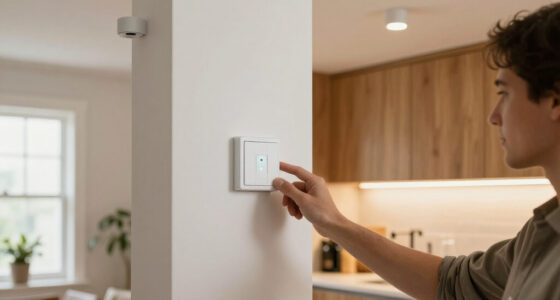
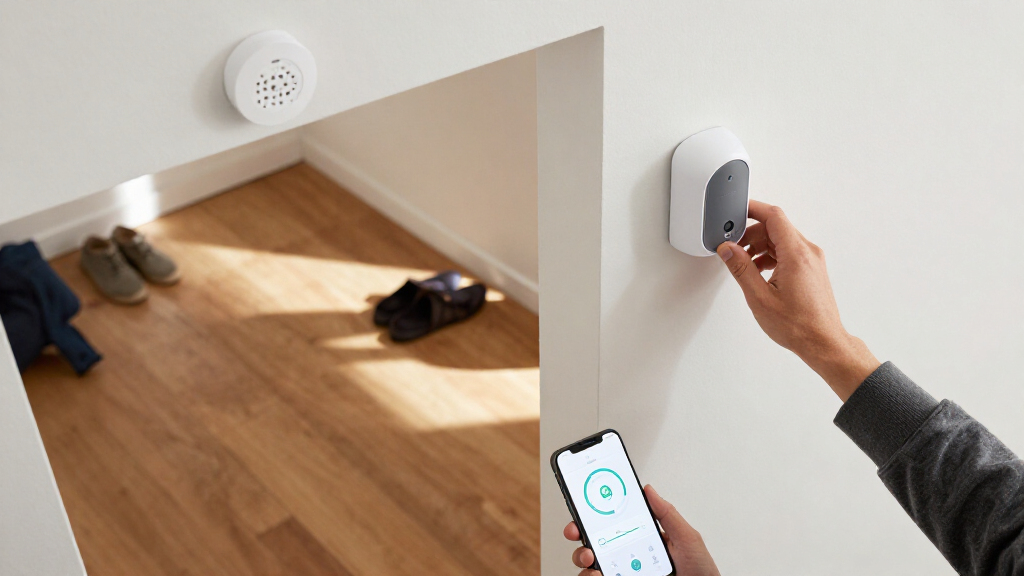
PIR sensors detect movement and are generally cheaper, simpler and more power-efficient, making them a practical fit for hallways and entrances. mmWave sensors can detect people who are sitting still, but may need more power and careful adjustment to avoid false triggers.
A comparison by smart-home publication The Ambient says the choice between PIR motion sensors and mmWave presence sensors depends largely on whether a room is used for passing through or sitting still. PIR sensors detect movement at relatively low cost and power use, while mmWave models can register a person’s presence even when they are barely moving, a difference that can affect automated lighting and other routines.
PIR sensors detect changes in infrared energy—typically heat from a moving person—across their field of view. The Ambient describes them as inexpensive and straightforward to install, with low power needs that can allow battery life of a year or more. They are often suitable for hallways, stairs, entrances and other places where people tend to keep moving.
The main limitation is that PIR detects movement, not continued presence. If someone sits still to read or work, a sensor may stop registering activity; once its timeout expires, an automation can switch off the lights. PIR can also respond to pets, and movement directly toward a sensor may be harder to detect than movement across its view. The Ambient says radiators and direct sunlight can also cause false triggers.
mmWave sensors send out millimetre-wave radar signals, commonly at 24GHz or 60GHz, and measure the reflections. Their sensitivity can detect small movements, including breathing, so they can keep lights on while someone sits still. Some models offer distance limits or room zones, and more advanced options can track a person’s position. The Ambient cites the Aqara FP400 as an example of a sensor that can apply different automations to different zones.
That added sensitivity brings trade-offs. mmWave sensors typically use more power and may need mains or USB power, although battery-powered options are becoming more common, according to the report. Fans, curtains, plants, pets or activity beyond a thin wall can trigger detections. Many models require users to adjust sensitivity or zones; some offer setup routines to help. The report puts common PIR models under $20 and mmWave models at about $25 to $60 or more.
Match Sensors to Room Use
The choice matters because a sensor that detects the wrong thing can make an automation less useful: a light may turn off while someone is still in a room, or turn on because a pet or moving curtain triggered a reading. Selecting for the room’s typical use can reduce those problems without relying on one technology throughout the home.
For passageways and entrances, where the goal is to notice someone moving through, a low-cost PIR sensor may be sufficient. In a living room, office, bathroom or bedroom, where people may stay still, mmWave’s ability to detect presence can better match the task. That capability is not automatic proof of perfect performance: placement, room layout and sensitivity settings still matter.
Products Worth Considering

Bose TV Speaker Compact Soundbar with Bluetooth and HDMI-ARC, Black

eufy E15 Gen 2 Wire-Free Robotic Lawn Mower

eufy Security SoloCam E42 4-Camera Kit, 4K Solar Security System
As an affiliate, we earn on qualifying purchases.
How Detection Methods Differ
The comparison addresses a familiar issue in smart-home automation: many routines use a motion signal to decide when to turn lights or other devices on and off. A PIR sensor’s signal is based on changes in heat across its view, so a quiet occupant can appear absent after a configured timeout. mmWave instead measures reflected radio waves and can respond to much smaller movements.
The technologies also differ in what can interfere with them. The Ambient says mmWave can pass through some thin, non-metallic materials, including plasterboard, plastic and glass, which can allow detections beyond the intended room. It does not follow that every wall or material will let signals through: the source does not provide a universal range or performance guarantee. Brick and concrete are not described as equivalent to thin partitions.
Some devices combine PIR and mmWave, using PIR to register larger movement and mmWave to check whether presence continues. The report presents this as one design approach rather than a feature shared by every sensor. It also notes that PIR devices are commonly battery-powered, while mmWave models generally need more power.
Room Conditions Affect Results
The source is a buying comparison, not a controlled test of specific sensors across identical rooms. It does not establish how reliably every model detects breathing, how far signals travel through particular walls, or how much time and adjustment a typical installation will require. Results can vary with sensor placement, room layout and sensitivity settings.
Prices and battery options are presented as general ranges, not as a live survey of all products or retailers. The report says battery-powered mmWave models are becoming more common but does not identify a complete list or compare their runtime. Buyers should check the specifications and compatibility of the particular device they are considering.
Check Placement Before Buying
Before choosing a sensor, identify what the automation needs to detect: movement through an area, or someone remaining in it. For a busy corridor or entrance, compare PIR models for detection angle, battery life and compatibility with the existing smart-home system. For a room where people sit still, check whether an mmWave model supports useful zones, range limits and sensitivity controls.
After installation, test the sensor during ordinary use and adjust its timeout, placement and detection zones if the system responds to pets, curtains or activity in another room. The Ambient points readers to its separate guide to motion-sensor picks, but the supplied report does not specify a particular model as the best choice for every home.
Key Questions
Which rooms are best suited to PIR sensors?
Hallways, stairs, entrances, utility rooms and garages are typical choices when people move through the area and the system needs to register that movement. PIR may be less suitable where occupants often remain still.
When is an mmWave sensor a better fit?
Consider mmWave in a living room, home office, bathroom or bedroom if an automation should recognize someone who is sitting or lying still. Placement and sensitivity may need adjustment to limit unwanted detections.
Can mmWave sensors detect activity through walls?
The Ambient says mmWave can pass through some thin, non-metallic materials, such as plasterboard, plastic and glass, so activity beyond a room may sometimes be detected. The report does not give a universal range, and performance depends on the material and installation.
Do mmWave sensors use more power?
Generally, yes. The comparison says mmWave models use more power and are often mains- or USB-powered, while PIR models can run on batteries for a year or more. Battery-powered mmWave options exist, but the source does not provide typical runtime figures.
Can pets trigger either type of sensor?
Yes. The report identifies pets as a possible source of unwanted detections for both technologies. It also lists fans, curtains and plants as possible mmWave triggers, while describing PIR as vulnerable to pet movement and, in some cases, heat-related changes such as radiators or direct sunlight.
Source: the-ambient.com