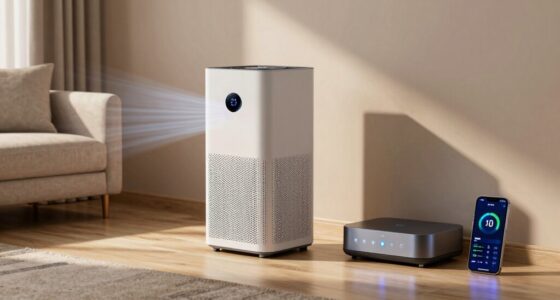
Smart air quality sensors can collect detailed environmental data that might include your personal habits and home conditions. If not properly secured, hackers could access this sensitive information, risking your privacy. These devices might also link data to your identity, making it easier for others to track your routines. Ensuring encryption, anonymization, and transparent data practices helps protect you. Keep exploring to learn how to keep your data safe and your privacy intact.

Get home appliances delivered free — and shop member deals
- Fast, free delivery on millions of items
- Access to Prime Big Deal Days deals on October 6–7
- Prime Video, Amazon Music and more included
Key Takeaways
- Smart air quality sensors can transmit personal environmental data that may be vulnerable to hacking or unauthorized access.
- User identities can be linked to sensor data, risking exposure of personal routines and habits.
- Lack of transparent data handling policies can lead to misuse or sharing of sensitive information with third parties.
- Data encryption and anonymization are essential to prevent privacy breaches during data transmission and storage.
- Increased user awareness and strict security protocols help protect privacy and ensure responsible use of sensor technology.

Have you ever wondered how much of your personal information is accessible online? When it comes to smart air quality sensors, this concern becomes even more relevant. These devices collect a vast amount of data about your environment, but they can also inadvertently gather details about your daily routines and behaviors. One of the main issues is sensor data security. If these sensors aren’t properly protected, hackers could potentially access the data they transmit or store. This might include information about your home’s air quality, occupancy patterns, or even your personal habits. Without robust security measures, your privacy could be compromised, and sensitive information could fall into the wrong hands.
Protect your privacy: secure smart air quality sensors prevent data breaches and safeguard your personal routines.
The challenge extends beyond just securing the data. User anonymity is a critical aspect that often gets overlooked. When you set up or use these sensors, your identity might be linked to the data they generate, especially if the device is connected to other smart home systems. This can lead to a situation where your movements or routines become traceable. Maintaining user anonymity means designing systems that prevent your personal identity from being tied to the sensor data. This can involve encrypting data, anonymizing identifiers, or implementing strict access controls so that only authorized parties can view the information. When these measures are in place, it’s much harder for malicious actors to piece together personal details about you from sensor data alone.
Moreover, many companies collecting environmental data may not always be transparent about how they handle user information. You might not be aware of whether your data is being shared with third parties or stored securely. That lack of transparency increases the risk of data breaches or misuse, making it essential for consumers to demand clear privacy policies and robust security protocols. Ensuring proper data encryption and secure storage practices can greatly reduce these risks. When sensor data security is prioritized, it helps protect not just your personal information but also the integrity of the entire system. Similarly, preserving user anonymity reassures you that your routines and habits are not being tracked or exploited.
In essence, understanding the importance of sensor data security and user anonymity is key to safeguarding your privacy in a world increasingly dependent on connected devices. As you install and use smart air quality sensors, stay informed about how your data is protected and how your identity remains secure. By advocating for better security standards and privacy practices, you can enjoy the benefits of smart technology without sacrificing your personal privacy. After all, your environment’s data should serve you, not expose you.
smart air quality sensor with data encryption
As an affiliate, we earn on qualifying purchases.
As an affiliate, we earn on qualifying purchases.
Frequently Asked Questions
How Can Users Protect Their Data From Unauthorized Access?
To protect your data from unauthorized access, you should guarantee your sensor uses strong encryption to safeguard your information. Always read and give informed user consent before installing or sharing data with smart air quality sensors. Additionally, regularly update your device’s firmware, change default passwords, and review privacy settings to maintain control over your data. These steps help keep your personal information secure and private.
Are There Any Regulations Governing Data Collection by Sensors?
Oh, sure, there are strict regulations governing sensor data collection—just like your smart device’s privacy policy promises transparency. Laws often require sensor data encryption and demand clear privacy policies, yet many users still wonder if their info is truly protected. While regulations exist, enforcement varies, so you should stay vigilant. Trust only devices that prioritize privacy policy transparency and encrypt your sensor data to keep your personal info safe.
Can Sensor Data Be Hacked or Manipulated?
Sensor data can definitely be hacked or manipulated if vulnerabilities exist. Hackers target sensor data vulnerabilities through cyberattacks, risking data integrity and privacy. To prevent hacking, guarantee robust security measures like encryption, regular updates, and strong passwords are in place. By actively addressing these hacking prevention strategies, you can better protect your sensor data from malicious attacks, maintaining accurate air quality readings and safeguarding your privacy.
What Rights Do Consumers Have Over Their Collected Data?
You have rights over your collected data, including the right to consumer consent before it’s shared or used. Companies should also employ data anonymization to protect your identity. You can request access to your data, ask for it to be corrected or deleted, and opt out of data collection where possible. Always review privacy policies and exercise your rights to guarantee your personal information remains secure and under your control.
How Long Is the Data Retained by Manufacturers?
Think of data retention policies like a sand timer—once the grains fall, they’re gone. Manufacturers typically keep your data for a set period, often ranging from a few months to several years, depending on their policies. They should be transparent about this, so you know exactly how long your data stays stored. Always review the manufacturer’s transparency documentation to understand their data retention practices and your rights.
privacy-focused air quality monitor
As an affiliate, we earn on qualifying purchases.
As an affiliate, we earn on qualifying purchases.
Conclusion
So, here you are, trusting these smart sensors to keep your air clean, while secretly handing over your personal data on the sly. It’s ironic, isn’t it? You want protection from pollution, yet you might be exposing yourself to privacy breaches in the process. Next time you check your air quality app, remember—sometimes the biggest threat isn’t the pollution outside, but the data you unwittingly give away inside. Stay alert; your privacy’s more fragile than you think.
As an affiliate, we earn on qualifying purchases.
air quality sensor with anonymization features
As an affiliate, we earn on qualifying purchases.
As an affiliate, we earn on qualifying purchases.
NFL season / tailgating Picks
team gear
As an affiliate, we earn on qualifying purchases.