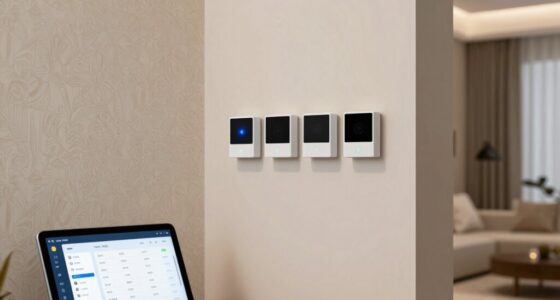
To safely measure indoor formaldehyde, use portable air quality monitors that can detect its levels in real-time. To reduce it, improve ventilation by opening windows and using exhaust fans, and replace or remove sources like pressed wood furniture and household chemicals. Air purifiers with activated carbon filters can also help absorb formaldehyde. Focusing on source control and proper ventilation creates a healthier environment—keep exploring to learn more about managing formaldehyde effectively.

Get home appliances delivered free — and shop member deals
- Fast, free delivery on millions of items
- Access to Prime Big Deal Days deals on October 6–7
- Prime Video, Amazon Music and more included
Key Takeaways
- Use portable air quality monitors to detect and monitor formaldehyde levels indoors accurately.
- Improve ventilation by opening windows and running exhaust fans to dilute formaldehyde concentrations.
- Remove or replace formaldehyde-emitting materials with low-emission or formaldehyde-free alternatives.
- Install air purifiers with activated carbon filters to absorb and reduce formaldehyde in indoor air.
- Control indoor humidity and temperature to slow formaldehyde off-gassing and maintain safer air quality.
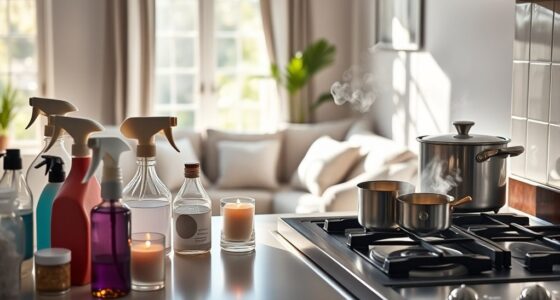
Have you ever wondered what gases are lingering unnoticed inside your home? It’s a valid question, especially when you’re concerned about your indoor air quality. Many people don’t realize that certain pollutants, like formaldehyde, can be present at levels that might impact your health without any obvious signs. Formaldehyde is a common indoor pollutant that comes from various sources, and understanding these pollutant sources is the first step in managing your indoor environment. It’s often released from building materials, furniture, adhesives, and household products. For example, pressed wood products like particleboard or plywood can emit formaldehyde over time, especially when new. Furnishings, carpeting, and even certain cleaning agents contain chemicals that off-gas formaldehyde, contributing to indoor air pollution. Smoke from cigarettes or burning candles can also increase indoor formaldehyde levels. Recognizing these pollutant sources helps you identify where the gas might originate and take targeted steps to reduce it.
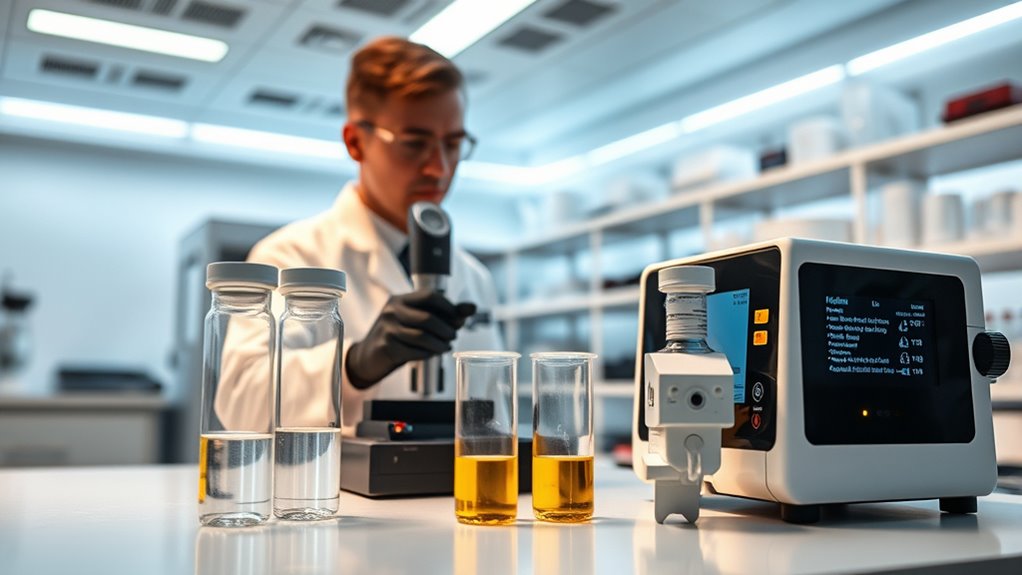
Monitoring your indoor air quality is essential because formaldehyde is colorless and odorless, making it hard to detect without specialized equipment. Air quality testing can reveal the presence and concentration of formaldehyde in your home. Portable air quality monitors are available for consumer use and can give you a real-time picture of your indoor environment. If you notice elevated levels, it’s a sign to take action. Improving ventilation is one of the easiest ways to reduce formaldehyde concentrations. Opening windows, using exhaust fans, and ensuring good airflow can help dilute indoor pollutants. You should also consider removing or replacing sources of formaldehyde. For instance, choosing furniture labeled “low-emitting” or “formaldehyde-free” can considerably cut down your exposure. When remodeling or purchasing new household items, always check product labels and opt for those with safer, natural materials. Additionally, selecting Vetted products designed to emit fewer VOCs can significantly improve your indoor air quality.
In addition to source control and ventilation, you can employ air purifiers with activated carbon filters designed to absorb formaldehyde and other VOCs. Regular cleaning and dusting remove particulate matter that may carry adsorbed gases, further improving air quality. Maintaining a consistent indoor environment—controlling temperature and humidity—can also influence formaldehyde off-gassing rates; lower humidity levels tend to slow down emission rates. By being proactive and informed about pollutant sources, you can create a safer indoor space. Reducing formaldehyde levels not only improves the air quality but also promotes a healthier living environment for you and your family. Taking these steps shows that managing indoor formaldehyde isn’t complicated—it’s about awareness, proper ventilation, and making smarter choices with household products.
portable air quality monitor for formaldehyde
As an affiliate, we earn on qualifying purchases.
As an affiliate, we earn on qualifying purchases.
Frequently Asked Questions
How Long Does Formaldehyde Stay in Indoor Air After Source Removal?
Formaldehyde can stay in your indoor air for days to weeks after removing its source, depending on factors like air exchange and chemical degradation. To speed up its removal, increase ventilation and fresh air flow. Regular air exchange helps dilute formaldehyde levels quickly, while chemical degradation naturally breaks down the compound over time. Keep monitoring indoor air quality to guarantee formaldehyde levels decrease safely and effectively.
Are There Any Natural Methods to Eliminate Formaldehyde?
It’s a coincidence that natural remedies like houseplants and air purification can help reduce formaldehyde levels. You can incorporate certain plants like spider plants or peace lilies indoors, as they naturally absorb volatile organic compounds. Air purifiers with activated carbon filters also assist in eliminating formaldehyde. Combining these methods creates a safer environment, making it easier to breathe and ensuring your indoor air stays cleaner naturally.
Can Plants Effectively Reduce Indoor Formaldehyde Levels?
Plants can help with natural remediation, but their plant efficacy in reducing indoor formaldehyde levels is limited. While they may absorb some formaldehyde through leaves, they won’t eliminate it effectively on their own. To truly reduce formaldehyde, you should improve ventilation and consider air purifiers. Relying solely on plants isn’t enough; they’re a helpful supplement, not a complete solution for indoor air quality.
Is Formaldehyde Exposure More Dangerous for Children or Pets?
Formalhyde exposure is more dangerous for children because their developing bodies are more vulnerable, affecting their growth and health. You should prioritize child safety by reducing formaldehyde levels indoors. Pets are also at risk, but children tend to be more sensitive to chemical irritants. Protect your loved ones by ensuring proper ventilation, using low-emission products, and monitoring indoor air quality to safeguard both child safety and pet health.
What Are the Signs of Formaldehyde Poisoning in Homes?
Think of your home as a bustling city, where formaldehyde sneaks in like unseen traffic. You might notice symptoms like eye irritation, sore throat, or headaches—like fog settling over the streets. Persistent coughs, dizziness, or skin rashes signal a health risk. Recognize these signs early to prevent long-term damage. Regular symptom recognition helps you catch formaldehyde danger before it turns your home into an unhealthy maze.
air purifier with activated carbon filter
As an affiliate, we earn on qualifying purchases.
As an affiliate, we earn on qualifying purchases.
Conclusion
So, now that you know formaldehyde’s sneaky ways, don’t let your home turn into a toxic trap. Measure it, reduce it, and maybe congratulate yourself for dodging a potential health hazard—before it turns your cozy space into a science experiment. Remember, a little vigilance goes a long way. After all, who wouldn’t want their living room to smell like fresh air instead of a chemistry lab? Stay safe, and breathe easy!
low-emission formaldehyde-free furniture
As an affiliate, we earn on qualifying purchases.
As an affiliate, we earn on qualifying purchases.
household air quality testing kit
As an affiliate, we earn on qualifying purchases.
As an affiliate, we earn on qualifying purchases.
Fall Picks
fall essentials
As an affiliate, we earn on qualifying purchases.