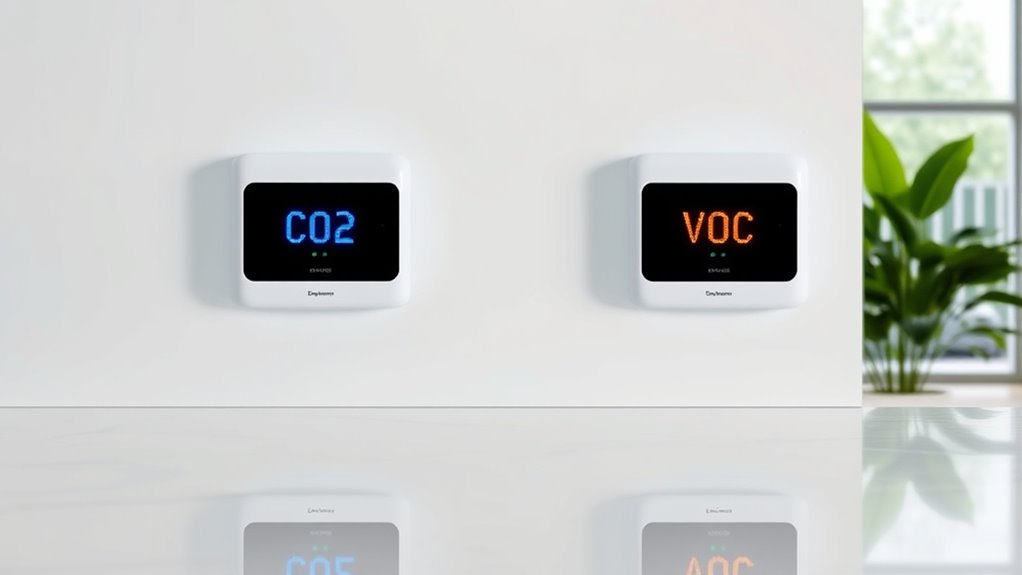

CO₂ sensors measure carbon dioxide levels to show how well your space is ventilated and if occupancy is high. VOC sensors detect volatile organic compounds from household products, indicating chemical pollution. While high CO₂ suggests poor air circulation, elevated VOCs point to harmful chemical presence. Both sensors give you valuable information to improve your indoor environment, but understanding each helps you target ventilation or source removal. Keep exploring to get a clearer picture of how these tools work together.
Key Takeaways
- CO₂ sensors measure air circulation and occupancy levels, indicating ventilation efficiency, while VOC sensors detect chemical pollutants from household items.
- Elevated CO₂ levels suggest poor airflow, whereas high VOC readings indicate the presence of potentially harmful chemicals indoors.
- CO₂ provides insights into general air quality related to breathing comfort, while VOC levels relate to chemical emissions and long-term health risks.
- Regular calibration enhances sensor accuracy; CO₂ sensors often use calibration gases, while VOC sensors may require standard VOC mixtures.
- Using both sensors together offers a comprehensive view of indoor air quality, guiding ventilation improvements and source control strategies.
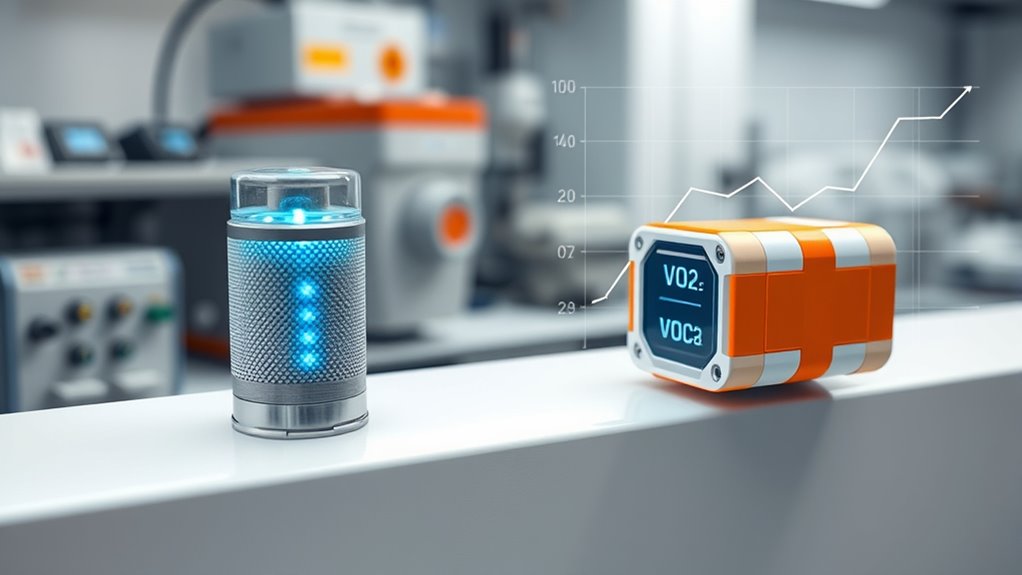
When it comes to monitoring indoor air quality, understanding the differences between CO₂ and VOC sensors is crucial. Both play critical roles in ensuring indoor air safety, but they measure different aspects of air pollution. CO₂ sensors detect carbon dioxide levels, which serve as an indicator of ventilation efficiency and occupancy. Elevated CO₂ levels often mean the air isn’t circulating well, leading to stuffiness, drowsiness, or decreased cognitive function. VOC sensors, on the other hand, measure volatile organic compounds—gases emitted from paints, cleaning products, furniture, and other household items. High VOC readings can indicate the presence of potentially harmful chemicals that may cause headaches, respiratory irritation, or long-term health issues. Proper sensor calibration is crucial for maintaining accurate readings. Over time, sensors can drift from their original calibration, leading to false alarms or missed hazards. Regular calibration ensures your device provides reliable data, so you can respond appropriately. For CO₂ sensors, calibration involves exposing the sensor to a known CO₂ concentration or using a calibration gas. For VOC sensors, calibration might require exposure to a standard VOC mixture or using manufacturer-recommended procedures. Many modern sensors have auto-calibration features, but manual calibration periodically improves accuracy, especially in environments with fluctuating air quality. Ignoring calibration can compromise your indoor air safety, as inaccurate readings may cause you to overlook poor ventilation or chemical buildup. Additionally, understanding the sensor technology behind each device can help you select the right tools for your needs. Understanding what each sensor measures helps you interpret their readings correctly. If your CO₂ levels are high, it’s often a sign to increase ventilation—opening windows or running an air purifier with a fresh air intake. Elevated VOC levels may require identifying and removing sources of chemical emissions or improving air filtration. Both sensors together give you a detailed picture: CO₂ indicates how well your space is ventilated, while VOCs reveal chemical pollutants that might be present. Using this information, you can make informed decisions to improve indoor air quality, such as adjusting ventilation strategies or reducing sources of indoor pollution.
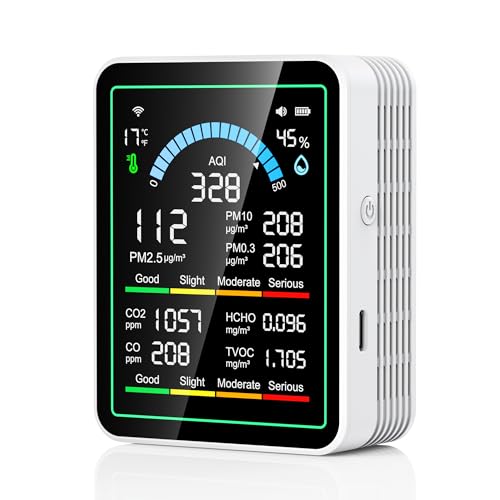
Air Quality Monitor Indoor, 10 in 1 Portable Smartair Quality Tester for CO2 | CO | TVOC | HCHO | Temp | AQI | PM0.3-1 Detection Suitable for Home, Cars, Plants, Pets and Hotels
【10-in-1 Smart Air Quality Monitor: Your All-Round Environmental Guardian】 This portable intelligent air quality tester delivers ultra-precise multi-gas…
As an affiliate, we earn on qualifying purchases.
As an affiliate, we earn on qualifying purchases.
Frequently Asked Questions
How Often Should Co₂ and VOC Sensors Be Calibrated?
You should calibrate your CO₂ and VOC sensors at least once every six months to guarantee accurate readings, considering their sensor lifespan. Regular calibration helps maintain sensor accuracy, especially in environments with fluctuating air quality. If you notice inconsistent or unexpected readings, increase calibration frequency. Proper upkeep extends sensor lifespan, reduces false alarms, and keeps your air quality measurements reliable.
Can Sensors Distinguish Between Different Types of VOCS?
Most VOC sensors can’t distinguish between different types of VOCs because their sensor specificity is limited. They detect the presence of volatile organic compounds generally, but VOC differentiation requires advanced, specialized sensors. If you’re aiming to identify specific VOCs, look for sensors with enhanced sensor specificity, which can target particular compounds. This helps you better understand air quality nuances, especially in environments where certain VOCs pose more significant health risks.
Are There Health Risks From False Readings in Sensors?
False readings from sensors can pose health risks because they affect sensor reliability and may cause false alarms or missed dangers. If your sensor isn’t accurate, you might ignore real issues or panic unnecessarily. To stay safe, choose high-quality sensors, regularly calibrate them, and stay aware of their limitations. This way, you guarantee reliable data that helps protect your health without unnecessary worry or complacency.
How Do Sensor Readings Correlate With Actual Air Quality Standards?
Sensor readings directly influence your understanding of air quality standards, but their accuracy depends on proper calibration frequency and sensor reliability. Regular calibration ensures readings remain precise, helping you make informed decisions. If sensors aren’t reliable or haven’t been calibrated recently, the data might be misleading, affecting your health and safety. Always check calibration schedules and choose high-quality sensors to trust the data and maintain a safe environment.
What Maintenance Is Required for Long-Term Sensor Accuracy?
Think of your sensors like a vintage car; they need regular tune-ups to run smoothly. To maintain long-term accuracy, check the sensor lifespan and perform calibration every few months. Keep the sensors clean and protect them from dust and moisture. Regular calibration guarantees your device stays reliable, much like a well-maintained engine. This routine keeps your air quality readings precise, helping you make informed decisions for healthier indoor environments.

16 in 1 Air Quality Monitor Indoor 7" Large Display 9 AQI+7 Alerts, CO2 Monitor Air Quality Tester for CO2, TVOC, PM2.5 PM1.0 PM10, HCHO Temperature Humidity AQI & Time Air Quality Meter for Home
【16-in-1 Air Quality Monitor Indoor】Experience the ultimate indoor air quality monitoring with our 16-in-1 Air Quality Monitor, offering…
As an affiliate, we earn on qualifying purchases.
As an affiliate, we earn on qualifying purchases.
Conclusion
Understanding the differences between CO₂ and VOC sensors helps you get a clear picture of your air quality. While CO₂ sensors show how well your ventilation is working, VOC sensors detect a broader range of pollutants. Don’t put all your eggs in one basket—using both gives you a complete story. By paying attention to these sensors, you can breathe easier knowing you’re in the driver’s seat of a healthier environment.

Smart Air Quality Monitor Indoor for Home, Portable CO2 Detector for Travel, Multi Pollutant Air Quality Tester for CO2, VOC, HCHO, PM2.5, PM10, PM0.3, Temperature and Humidity, Digital Display
Air Quality Detection – Monitors CO₂, formaldehyde, VOC, PM2.5, PM10, PM0.3, temperature, and humidity. Get a complete picture…
As an affiliate, we earn on qualifying purchases.
As an affiliate, we earn on qualifying purchases.
Air Quality Monitor Indoor, 10 in 1 Portable Smartair Quality Tester for CO2 | CO | TVOC | HCHO | Temp | AQI | PM0.3-1 Detection Suitable for Home, Cars, Plants, Pets and Hotels
【10-in-1 Smart Air Quality Monitor: Your All-Round Environmental Guardian】 This portable intelligent air quality tester delivers ultra-precise multi-gas…
As an affiliate, we earn on qualifying purchases.
As an affiliate, we earn on qualifying purchases.