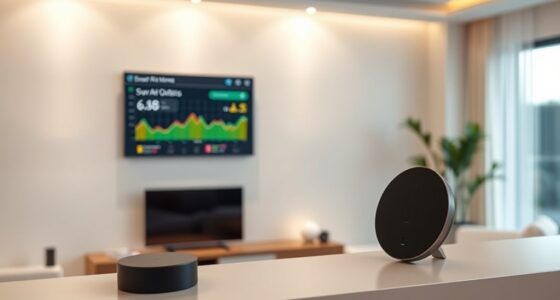
To measure formaldehyde at home, use portable detectors or DIY test kits that change color with exposure. Improve air flow by opening windows, using exhaust fans, and running air purifiers with activated carbon filters to help lower levels. Removing sources like pressed-wood furniture and sealing wood surfaces also reduces emissions. If you’re curious about more ways to detect and cut formaldehyde, keep exploring tips to create a healthier indoor space.
Listen free for 30 days with Audible
Thousands of audiobooks and originals — cancel anytime.
As an affiliate, we earn on qualifying purchases.
Key Takeaways
- Use portable formaldehyde detectors or DIY test kits to measure indoor levels accurately.
- Increase ventilation by opening windows and using exhaust fans to lower formaldehyde concentrations.
- Install air purifiers with activated carbon filters to absorb formaldehyde from indoor air.
- Remove or reduce sources like pressed-wood furniture and new carpeting that emit formaldehyde.
- Maintain indoor humidity between 30-50% and regularly test air quality to prevent buildup.
As an affiliate, we earn on qualifying purchases.
What Is Formaldehyde and Why Should You Care?

Formaldehyde is a colorless, strong-smelling gas commonly found in many household products. It can linger in your indoor air, often unnoticed, but it impacts your health and your ability to live healthily. Exposure to formaldehyde may cause eye, nose, and throat irritation, and long-term exposure has been linked to more serious health issues. Because it can off-gas from furniture, cleaning supplies, and building materials, it’s essential to be aware of its presence in your home. Protecting your indoor air quality is vital for maintaining healthy living environments. Understanding what formaldehyde is helps you make better choices about the products you bring into your home, reducing health risks and creating a safer space for you and your family. Monitoring indoor air pollutants can help identify formaldehyde levels and guide mitigation efforts. Regularly assessing indoor air quality allows you to detect formaldehyde presence early and take steps to reduce its concentration. Additionally, being aware of emission sources in your home can help you implement effective strategies for reducing formaldehyde exposure. Recognizing indoor air pollution as a health concern emphasizes the importance of these measures.
As an affiliate, we earn on qualifying purchases.
How Can I Detect and Measure Formaldehyde in My Home?

Since formaldehyde can off-gas from various household items without obvious signs, detecting its presence requires specific methods. You have several detector options, including portable formaldehyde detectors and professional air quality monitors. These measurement methods provide real-time readings of formaldehyde levels, helping you identify if indoor concentrations are safe. Some devices are small and easy to use, while others are more sophisticated, offering detailed analysis. When choosing a detector, consider accuracy, ease of use, and your budget. Keep in mind that spot measurements can give you a snapshot, but continuous monitoring provides a clearer picture of fluctuations over time. Indoor air quality monitoring can help you better understand your home’s formaldehyde levels and take appropriate steps to reduce exposure. To improve the accuracy of your readings, ensure proper placement and calibration of your air quality device. Additionally, understanding formaldehyde sources in your home can assist in targeted reduction efforts, especially since certain household items are known to off-gas formaldehyde over time.
air purifier with activated carbon filter
As an affiliate, we earn on qualifying purchases.
As an affiliate, we earn on qualifying purchases.
Easy DIY Ways to Check Formaldehyde Levels at Home

While professional testing provides the most accurate results, there are simple DIY methods you can use at home to get a basic idea of formaldehyde levels. One option is to purchase DIY tests designed specifically for formaldehyde detection; these kits typically involve exposing a test strip to the air for a set period and then comparing the color change to a chart. Although less precise, they can give you an early warning of elevated levels. Additionally, using air purifiers with activated carbon filters can help reduce formaldehyde concentrations over time, but they can also serve as an indirect indicator—if levels drop after running a purifier, it suggests there was harmful formaldehyde present. Regularly monitoring indoor air quality can help you identify potential sources of pollutants and take appropriate actions. The placement of these air purifiers in high-traffic areas can maximize their effectiveness in reducing pollutant levels. Incorporating air quality sensors can provide more consistent and real-time data, making it easier to track improvements over time. For an even better understanding, you might consider DIY air quality testing methods that utilize household items to detect pollutants. These simple methods are accessible ways to monitor your indoor air quality. Recognizing indoor air pollutants can help you take proactive steps to improve your living environment.
As an affiliate, we earn on qualifying purchases.
Simple Steps to Reduce Formaldehyde in Your Living Space

After checking your indoor air for formaldehyde levels, taking steps to reduce its presence becomes the next priority. You can improve air quality by using air purification devices equipped with activated carbon filters, which absorb formaldehyde effectively. Improving ventilation is also key—try opening windows regularly or using exhaust fans to circulate fresh air. Additionally, consider the following actions:
- Remove or limit sources like pressed wood furniture and new carpeting
- Use exhaust fans in kitchens and bathrooms to reduce indoor pollutants
- Increase airflow with fans or air purifiers to disperse formaldehyde particles
- Choose low-emission, formaldehyde-free products for home renovations
- Keep humidity levels between 30-50% to minimize formaldehyde off-gassing
- Water-cooled mattress pads can help control indoor humidity levels, which influences formaldehyde emissions.
- Regularly monitoring indoor air quality with formaldehyde detectors can help track the effectiveness of your reduction efforts.
- Selecting VOC-free paints and sealants can further reduce the release of formaldehyde and other harmful chemicals into your living space.
- Ensuring proper air exchange rates in your home can significantly decrease indoor formaldehyde concentrations, especially in tightly sealed environments.
- Maintaining adequate humidity levels can help prevent excessive formaldehyde emission from household materials.
These simple steps help lower formaldehyde levels and promote a healthier living environment.
What Should I Do If Formaldehyde Levels Are High?

If your indoor air tests show high levels of formaldehyde, it’s important to act quickly to reduce your exposure. Start by improving ventilation—open windows, use exhaust fans, and increase airflow to dilute indoor pollutants. Consider installing ventilation improvements like HEPA filters or exhaust systems to help remove formaldehyde from the air. Additionally, air purifier options can be effective; choose models equipped with activated carbon or HEPA filters designed to target chemical vapors. Regularly run these purifiers in rooms where you spend the most time. Combining better ventilation with air purifiers can markedly lower formaldehyde levels, making your home safer. Remember, reducing sources of formaldehyde remains essential, but these steps help manage existing high levels effectively. Understanding indoor air quality can help you identify other potential hazards in your home environment. Incorporating air quality testing can also provide ongoing insights into your home’s pollutant levels. To effectively manage indoor pollutants, it’s also beneficial to understand the importance of proper ventilation techniques and their role in maintaining healthy indoor air. Additionally, paying attention to indoor pollutant sources can prevent future buildup of formaldehyde and other harmful substances.
Frequently Asked Questions
Are There Any Health Symptoms Directly Linked to Formaldehyde Exposure?
Yes, you should be symptom-aware of exposure symptoms like eye, nose, and throat irritation, coughing, and skin rashes. Formaldehyde exposure can also cause respiratory issues and allergic reactions. If you notice these symptoms, it’s important to check your home’s formaldehyde levels. Reducing exposure by improving ventilation and using low-emission products can help minimize health risks. Stay alert to symptoms to protect your well-being effectively.
How Long Does Formaldehyde Typically Stay in Indoor Air?
Formaldehyde off gassing can persist in indoor air for days to years, depending on factors like temperature and ventilation. Usually, it stays in indoor air for several days to weeks after installation or new product use, but in poorly ventilated spaces, it may linger much longer. Improving ventilation, using air purifiers, and choosing low-emitting materials can help reduce indoor air persistence and lower formaldehyde levels.
Can Plants Effectively Remove Formaldehyde From My Home?
Plants can help with air purification, but their efficacy in removing formaldehyde is limited. While some houseplants like pothos and snake plants may slightly reduce formaldehyde levels, they shouldn’t be relied upon as the primary method for air purification. For effective formaldehyde removal, consider using dedicated air purifiers with activated carbon filters alongside plants. Combining these strategies provides a better approach to maintaining healthier indoor air quality.
Is Formaldehyde Exposure More Dangerous for Children or Pets?
Both children and pets are more vulnerable to formaldehyde exposure because their developing bodies and smaller sizes make them more sensitive. You should prioritize child safety and pet health by reducing formaldehyde levels in your home. Make sure to increase ventilation, use air purifiers, and choose low-formaldehyde products. Protecting your loved ones from harmful fumes is essential, especially since children and pets can experience more severe health effects.
What Indoor Activities Can Increase Formaldehyde Levels?
Cooking fumes and furniture emissions are common indoor activities that can increase formaldehyde levels. When you cook, especially at high temperatures or using gas stoves, you release fumes containing formaldehyde. Additionally, new furniture or pressed wood products emit formaldehyde over time. To reduce exposure, guarantee proper ventilation during cooking and limit the use of new furniture, especially if it’s pressed or treated with adhesives.
Conclusion
Think of managing formaldehyde like tending a garden—you need to stay vigilant and take action. By knowing how to measure it and applying simple steps to reduce its presence, you create a healthier home environment. If levels are high, don’t wait—take immediate steps to ventilate and remove sources. Just like a well-maintained garden flourishes, your home will become safer and more comfortable when you actively keep formaldehyde in check.
Flea & tick season Picks
flea and tick prevention
As an affiliate, we earn on qualifying purchases.