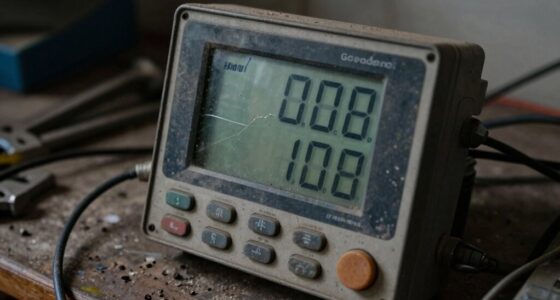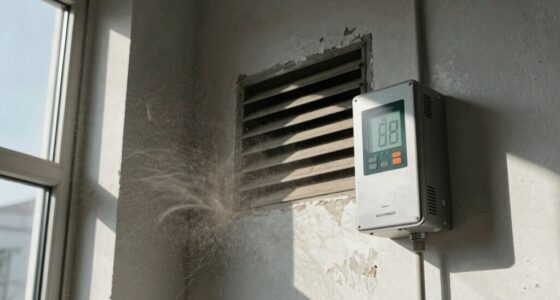
Your sensor spikes after showers because rapid humidity increases temporarily disrupt their accuracy. Even in clean bathrooms, quick moisture changes cause these fluctuations, especially if ventilation isn’t efficient. Poor airflow can prolong high humidity, making sensors signal false alarms. Understanding how environmental factors like airflow and weather influence moisture levels helps explain these spikes. If you keep exploring, you’ll discover more about how to best manage these issues and keep your sensors stable.

Get home appliances delivered free with Prime
- Fast, free delivery on millions of items
- Prime Video, Amazon Music and more included
- Member-only deals all year
Key Takeaways
- Rapid humidity increases after showers can cause temporary sensor spikes, regardless of bathroom cleanliness.
- Poor or slow ventilation prolongs moisture retention, leading to elevated sensor readings.
- External environmental factors, like weather, can influence indoor humidity and sensor accuracy post-shower.
- Fluctuations in indoor moisture levels, not dirt or cleanliness, primarily cause sensor spikes.
- Better air circulation helps stabilize humidity levels and reduces false sensor alerts after showers.
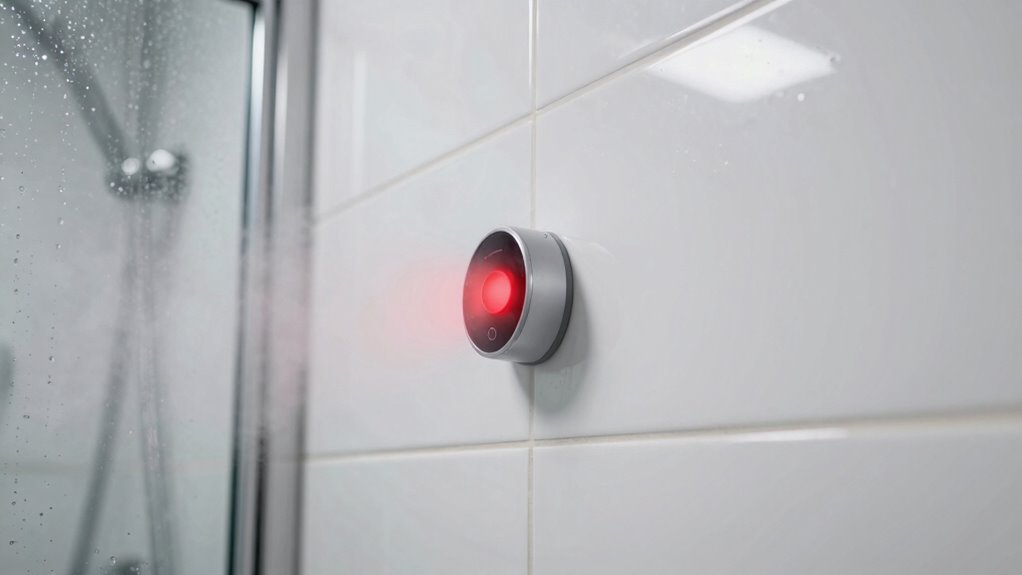
After a shower, sensor readings often spike unexpectedly, revealing how weather conditions directly influence data accuracy. Even in a “clean” bathroom, these fluctuations can seem confusing, but they’re mostly caused by the rapid change in humidity levels. When you step out of the shower, moisture quickly accumulates in the air, causing a sudden rise in humidity. This spike can trigger readings on sensors that monitor environmental factors, making it seem like there’s an issue with the equipment or that something else is amiss.
Sensor spikes after showers are caused by rapid humidity changes affecting data accuracy.
Your bathroom’s ventilation system plays a significant role here. If it’s not properly functioning or is slow to activate, the moisture from your shower remains trapped inside longer. As a result, humidity levels stay elevated for a longer period, leading sensors to register higher readings. Conversely, a well-designed ventilation system quickly pulls moist air out, helping humidity levels drop faster. This rapid change in humidity can cause the sensors to momentarily record abnormal values, even though your bathroom is technically “clean.” Additionally, environmental factors like air circulation can influence how quickly moisture disperses, affecting sensor accuracy. Proper humidity regulation is essential to maintaining accurate sensor readings and stable indoor conditions. Recognizing these environmental influences helps in understanding sensor sensitivity and avoiding false alarms or misinterpretations. A better understanding of weather effects on indoor environments allows for more accurate data interpretation and improved sensor performance.
Products Worth Considering

Blueair Blue Pure 511i Max Smart Air Purifier

Levoit Core 400S-P Smart Air Purifier for Large Rooms

LEVOIT Vital 200S-P Smart Air Purifier for Large Rooms
As an affiliate, we earn on qualifying purchases.
Frequently Asked Questions
Can Sensor Spikes Occur Without Any Visible Water Use?
Yes, sensor spikes can happen without visible water use. Humidity fluctuations caused by things like dust accumulation or air drafts can trigger these spikes. Even in a clean bathroom, dust or mold can affect sensor readings. Additionally, small leaks or condensation from nearby pipes might increase humidity subtly. So, if you notice spikes without water use, check for dust, drafts, or hidden sources of moisture that could be influencing the sensor.
Do Different Bathroom Materials Affect Sensor Readings?
Like a knight’s armor, bathroom surfaces can influence sensor readings. Different materials, such as ceramic, tile, or laminate, affect how moisture and heat are retained, impacting sensor calibration. You’ll notice spikes vary depending on surface types, as some absorb or reflect humidity differently. To keep readings accurate, regularly check your sensor calibration, especially if you notice inconsistent results across various bathroom surfaces.
How Long Do Elevated Sensor Levels Typically Last?
Elevated sensor levels usually last for about 30 minutes to an hour after a shower, depending on ventilation. During this time, humidity buildup can create a damp environment, increasing the risk of mold growth if not properly ventilated. To reduce this, run the exhaust fan or open a window during and after showers. Proper airflow helps humidity levels drop faster, preventing mold and keeping sensor readings stable.
Are Certain Types of Sensors More Prone to False Spikes?
Think of sensors like weather predictors—some are more prone to false alarms than others. Certain types, such as low-cost or older sensors, are more susceptible to false spikes. To guarantee data accuracy, you should regularly calibrate your sensors and choose higher-quality models designed for your specific environment. Doing so minimizes false readings, keeps your data trustworthy, and prevents unnecessary concerns caused by misleading sensor signals.
Can Ventilation Influence Post-Shower Sensor Readings?
Yes, ventilation can influence post-shower sensor readings. When you improve air circulation and humidity control through proper ventilation, you help dissipate excess moisture and airborne particles quickly. This reduces the humidity levels and minimizes the sensor’s false spikes after showers. Ensuring good ventilation not only maintains a cleaner environment but also helps your sensors provide more accurate readings, preventing unnecessary alerts caused by lingering humidity.
Conclusion
So, next time your bathroom sensor spikes after a shower, remember it’s not just about cleanliness. Humidity and moisture cause these readings to rise, even in a “clean” space. Surprisingly, research shows that humidity levels can increase by up to 30% during a typical shower, affecting sensor accuracy. Understanding this helps you interpret sensor data better and reminds you that some fluctuations are natural, not necessarily a sign of dirt or contamination.