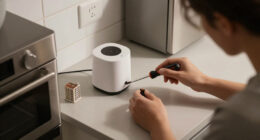
The most common reason you might stop trusting your air monitor is inaccurate readings caused by sensor calibration issues. Over time, sensors can drift or age, leading to false data that makes you doubt the device’s reliability. Skipping proper calibration or neglecting maintenance can worsen this problem, causing fluctuations or errors. By understanding these issues, you can guarantee your monitor stays trustworthy—stick around to learn how to keep your device accurate and dependable.
Key Takeaways
- Inaccurate readings caused by improper or neglected sensor calibration lead users to doubt device reliability.
- Sensor drift and aging produce inconsistent data, eroding trust over time.
- Misinterpretation of fluctuating or unexpected data results in skepticism about the monitor’s accuracy.
- Lack of maintenance and calibration causes sensor performance decline, reducing confidence in measurements.
- Unexplained data variability may be mistaken for device malfunction, causing users to lose trust.

Many users are questioning the reliability of air monitors today, as trust issues with these devices continue to surface. One of the most common reasons people lose confidence in their monitors is due to inconsistent or inaccurate readings. These inaccuracies often stem from improper sensor calibration, which is vital for maintaining measurement precision. If your device’s sensors aren’t calibrated correctly, it can produce false readings, leading you to believe the air quality is either better or worse than it truly is. Over time, neglecting regular calibration can cause your monitor to drift, making it unreliable and frustrating to rely on for important health decisions.
Proper sensor calibration is essential for accurate air quality readings and reliable device performance.
Another factor contributing to mistrust is user misinformation. Many users might not fully understand how their air monitor works or interpret its readings incorrectly. For example, some may assume that a single high reading indicates a persistent problem, when in fact, it might be a temporary fluctuation or a sensor artifact. Without proper education on how to read and respond to the data, users can become anxious or dismiss their monitors altogether. Misinformation can also lead to misguided actions, such as unnecessary ventilation or expensive air purifiers, which can further erode trust if the results don’t match expectations. Understanding sensor drift and how it affects readings can help users better maintain their devices over time.
The importance of sensor calibration can’t be overstated. If you don’t routinely calibrate your device, you risk getting skewed data that doesn’t reflect the actual air quality. Many monitors require periodic calibration with a reference standard to guarantee accuracy. Skipping this step might seem minor but can markedly impact the device’s performance. When your monitor gives inconsistent results, you may start questioning whether it’s faulty or if the sensor is aging, leading to doubts about its reliability altogether. Additionally, understanding sensor accuracy is crucial for ensuring trustworthy measurements, especially as environmental conditions change. Recognizing the role of sensor performance and sensor calibration can help catch calibration needs early and maintain confidence in your device. Properly interpreting air quality data can significantly improve confidence in your monitor and help you respond appropriately.

BREATHE Airmonitor Plus Indoor Air Quality Monitor with CO₂, PM & App
- Professional Indoor Air Monitoring: Tracks CO2, PM, VOC, Formaldehyde, Temp, Humidity
- Multi-Sensor Accuracy: Combines particle and gas detection for detailed insights
- Identify Air Quality Impacts: Detects effects of cooking, cleaning, HVAC, and occupancy
As an affiliate, we earn on qualifying purchases.
As an affiliate, we earn on qualifying purchases.
Frequently Asked Questions
How Often Should I Calibrate My Air Monitor?
You should calibrate your air monitor regularly to prevent sensor drift from affecting accuracy. Typically, calibration frequency depends on your device and usage, but most recommend doing it at least once every three to six months. If you notice inconsistent readings or suspect sensor drift, calibrate sooner. Regular calibration guarantees your air monitor provides reliable data and maintains trust in its readings over time.
Can Environmental Factors Affect My Air Monitor’s Accuracy?
Yes, environmental factors can affect your air monitor’s accuracy. Changes in air quality, temperature, humidity, and pollution levels can influence sensor performance over time, leading to sensor degradation. These factors may cause your device to give false readings or become less reliable. To maintain accuracy, regularly calibrate your air monitor and consider environmental conditions, especially if you notice inconsistent readings or suspect sensor degradation.
What Signs Indicate My Air Monitor Needs Replacement?
If your air monitor starts giving false alarms or shows inconsistent readings, it’s a sign it needs replacing. Sensor degradation over time reduces accuracy, making the device unreliable. When you notice persistent errors, slow response times, or the monitor fails calibration tests, it’s time for a new one. Ignoring these signs can compromise your safety, so trust your device’s cues and replace it promptly for peace of mind.
Are There Specific Brands With More Reliable Trustworthiness?
Certain brands tend to be more reliable based on their reputation and positive consumer reviews. You should consider brands like AirVisual, Temtop, and IQAir, which are known for their accuracy and durability. Checking consumer reviews can give you real-world insights into their trustworthiness. By focusing on trusted brands with solid reputations, you’re more likely to find an air monitor that provides consistent, reliable readings you can depend on.
How Do I Troubleshoot Inconsistent Readings on My Device?
Think of your air monitor as a finely tuned instrument; inconsistent readings often mean it’s struggling with sensor sensitivity or power stability. First, make certain the device is placed away from drafts, heat sources, or humidity that can interfere. Check that the power supply is stable and batteries are fresh. Calibrate your sensor regularly, and if problems persist, reset or update the device’s firmware to restore accuracy.
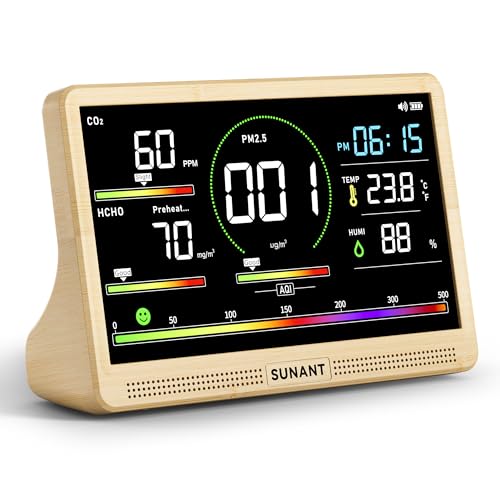
16-in-1 Air Quality Monitor Indoor, 7' Smart Large Display 9 AQI+7 Alarm Alerts, Real Time CO2, Formaldehyde, TVOC, PM2.5, PM10, Temperature & Humidity Portable Battery Powered Tester for Home, Office
- 16-in-1 Indoor Air Quality Monitoring: Detects 9 key air parameters and 7 AQI alerts
- High-Precision External Sensors: Provides accurate, stable measurements with fast updates
- Real-Time AQI Alerts with Mute: Offers audible alerts and silent mode options
As an affiliate, we earn on qualifying purchases.
As an affiliate, we earn on qualifying purchases.
Conclusion
If you find yourself losing trust in your air monitor, you’re not alone—about 30% of users face similar doubts over time. Sometimes, sensors drift or batteries weaken, causing inaccuracies. To keep your trust intact, regularly calibrate your device and replace faulty parts. Remember, staying vigilant about your monitor’s performance helps guarantee you’re always aware of your air quality. Trust in your device is vital for your safety, so don’t ignore signs it might need some TLC.

New Air Tool Parts 3914 Emglo Air Compressor Dipstick Jenny 630-012008000
- Hand Carry Air Compressor Dipstick: Portable air compressor dipstick
- Part Number: 630-012008000
- Customer Support: Assistance with model verification
As an affiliate, we earn on qualifying purchases.
As an affiliate, we earn on qualifying purchases.
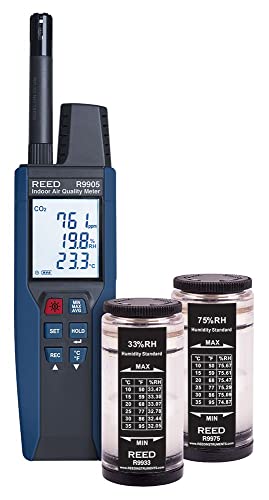
REED Instruments R9905-KIT Data Logging Indoor Air Quality Meter with Humidity Calibration Standards
- Kit Includes: Indoor Air Quality Meter and Calibration Kit
As an affiliate, we earn on qualifying purchases.
As an affiliate, we earn on qualifying purchases.