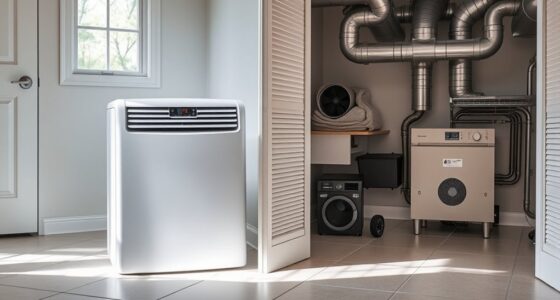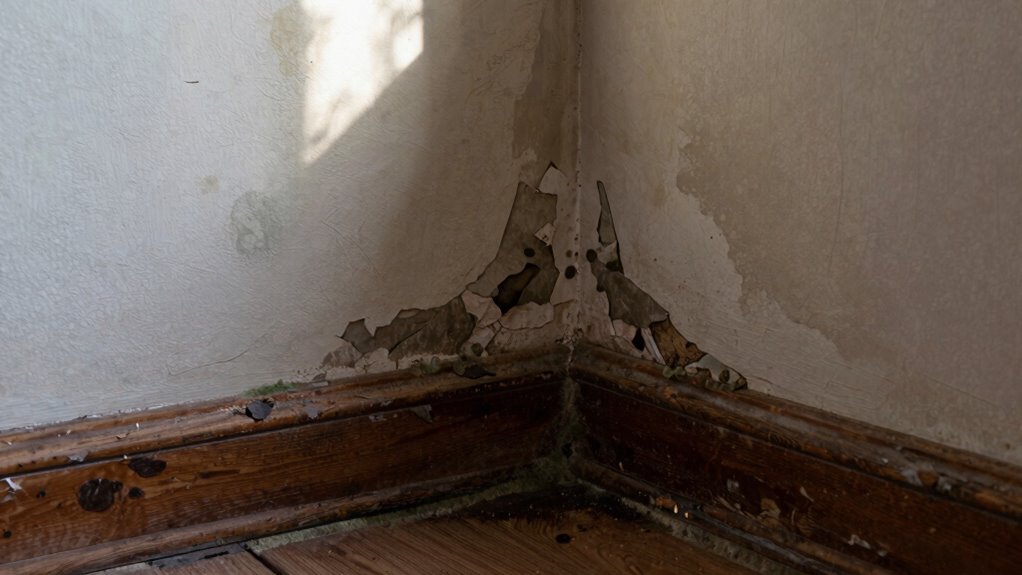

When you notice dampness in one corner, it’s usually a sign of broader issues affecting your whole space. Poor ventilation, high humidity, or damaged materials can cause moisture to accumulate in multiple areas, not just that spot. Tackling the problem means looking at the root causes, like improving airflow or using moisture-resistant materials. Keep exploring, and you’ll discover more ways to prevent persistent dampness and protect your home long-term.

Get home appliances delivered free with Prime
- Fast, free delivery on millions of items
- Prime Video, Amazon Music and more included
- Member-only deals all year
Key Takeaways
- Underlying issues like poor ventilation often cause dampness in multiple areas, not just the visible corner.
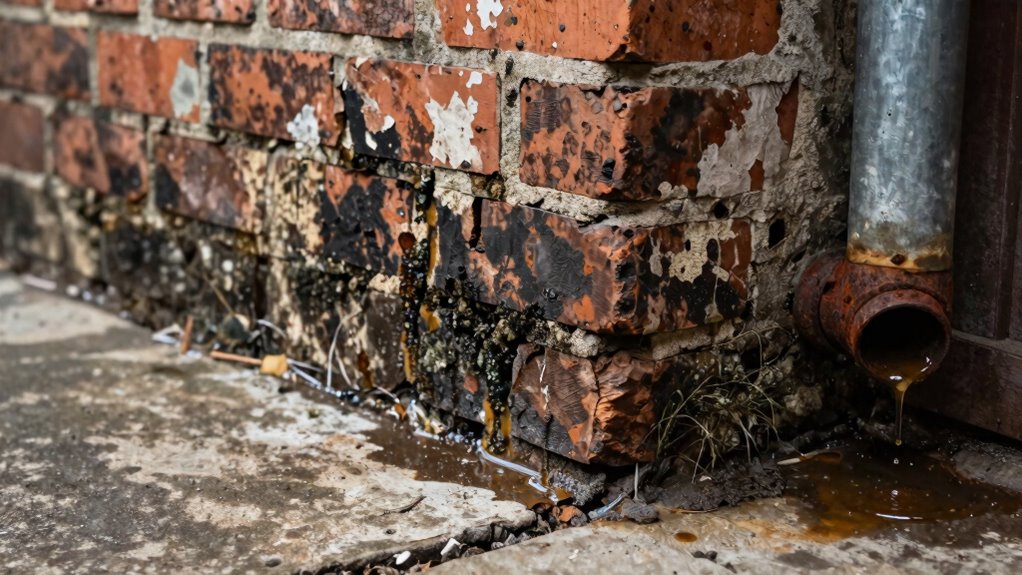
- Moisture may originate from external sources such as leaks or groundwater seepage affecting broader walls.
- Inadequate airflow traps humidity throughout the space, leading to damp patches in various locations.
- Building materials and insulation deficiencies can contribute to widespread moisture problems.
- Addressing the root causes, such as ventilation and material quality, prevents dampness from recurring in multiple spots.
If you’ve ever noticed a damp, musty smell lingering in the corner of a room, you’re not alone. That persistent odor often signals more than just a local problem; it points to underlying issues with your home’s ventilation or material choices. Often, people focus on cleaning or treating the damp spot itself, but the root cause usually lies elsewhere, affecting the entire space. Poor ventilation is a common culprit, trapping moisture inside and preventing it from escaping. When air isn’t circulating properly, humidity levels rise, especially in corners where air flow naturally stagnates. This creates the perfect environment for mold and mildew to thrive, making the damp patch seem to appear out of nowhere. Improving ventilation—whether by installing exhaust fans, opening windows regularly, or using dehumidifiers—can drastically reduce moisture buildup and stop the damp corner problem from recurring.
Material choices also play a vital role in how your home handles moisture. If your walls, flooring, or insulation are made from materials that absorb or retain water, you’re setting yourself up for ongoing issues. For example, porous surfaces like certain types of drywall or untreated wood can soak up moisture, leading to persistent dampness even after you’ve addressed ventilation. Choosing moisture-resistant materials, such as waterproof drywall or treated wood, can prevent this problem altogether. Additionally, sealants and paints designed for high-humidity environments act as barriers, keeping moisture out and reducing the chances of damp patches forming. Incorporating moisture-resistant building materials is an essential step toward long-term prevention. Using appropriate construction techniques can further help in minimizing moisture intrusion and ensuring durability. Being aware of building design considerations can also help in creating a more moisture-resilient environment.
It’s tempting to think that fixing the visible dampness is enough, but it’s like treating symptoms rather than the disease. You need to assess the entire environment—airflow, material integrity, and humidity levels. Sometimes, the problem may not be instantly visible, but you might notice residual condensation or peeling paint, signs that moisture is still lingering in the background. Addressing ventilation issues is often the first step; ensuring air circulates freely helps dry out excess moisture. Improving home ventilation and upgrading your materials helps prevent moisture from seeping into or being trapped within your walls. Proper moisture management is crucial for avoiding recurring dampness and maintaining a healthy indoor environment. Together, these strategies create a less hospitable environment for dampness to develop, making that damp corner a problem of the past. Remember, tackling the root causes is far more effective than just treating the surface, and a proactive approach keeps your home healthier and more comfortable.
As an affiliate, we earn on qualifying purchases.
Frequently Asked Questions
Can Interior Design Choices Affect Damp Corner Issues?
Yes, your interior design choices can influence damp corner issues. By selecting appropriate color schemes, you can make the area feel less gloomy and more inviting, helping to reduce the perception of dampness. Proper furniture placement allows for better airflow and reduces moisture buildup. Combining these strategies, you can improve the space’s appearance and help manage dampness more effectively, preventing further damage and creating a healthier environment.
How Long Does It Typically Take to Fix Damp Corners?
Fixing damp corners typically takes a few days to a week, depending on the severity. You’ll want to install moisture barriers to prevent further water intrusion and apply proper wall treatments to address existing dampness. The process involves inspecting the area, repairing leaks or drainage issues, and allowing treatments to dry. If moisture persists, it might extend the timeline, but proactive measures like barriers and treatments help speed up resolution.
Are There Seasonal Factors That Worsen Damp Problems?
Coincidences happen, and seasonal changes can worsen damp problems unexpectedly. During winter, humidity levels often rise due to heating and less ventilation, making damp issues more noticeable. You can counteract this by improving your ventilation strategies, like using extractor fans or opening windows when possible. In summer, increased humidity from outdoor air can also contribute, so maintaining proper airflow helps keep dampness at bay year-round.
What Are the Health Risks Associated With Damp Walls?
Damp walls can pose serious health risks, especially through mold growth that thrives in moist environments. Breathing in mold spores can worsen respiratory health, causing asthma, allergies, and other breathing problems. If you notice dampness, it’s essential to address the source quickly to prevent mold from spreading. Protect your health by improving ventilation, reducing moisture, and seeking professional help to eliminate dampness and mold effectively.
Is Professional Inspection Necessary for Diagnosing Damp Issues?
You should definitely consider a professional inspection for diagnosing damp issues. Studies show that up to 70% of damp problems are misdiagnosed by untrained eyes. A professional can use moisture sensors to accurately identify hidden moisture sources, saving you money on unnecessary repairs. While inspection costs vary, investing in an expert guarantees you get a precise diagnosis and effective solution, ultimately protecting your home’s structure and your health.
home dehumidifier for damp rooms
As an affiliate, we earn on qualifying purchases.
As an affiliate, we earn on qualifying purchases.
Conclusion
Remember, the damp corner issue isn’t just about that one spot; it often signals underlying problems like poor ventilation or hidden leaks. Nearly 60% of homeowners overlook these signs until significant damage occurs, making early detection essential. By paying attention to minor dampness, you can prevent costly repairs and health issues down the line. So, stay vigilant, address issues promptly, and turn that damp corner into a thing of the past before it spreads further.
exhaust fan for bathroom ventilation
As an affiliate, we earn on qualifying purchases.
As an affiliate, we earn on qualifying purchases.
moisture barrier paint for walls
As an affiliate, we earn on qualifying purchases.
As an affiliate, we earn on qualifying purchases.
Fall yard work Picks
leaf blowers
As an affiliate, we earn on qualifying purchases.