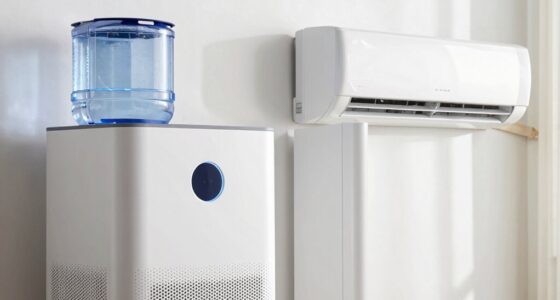
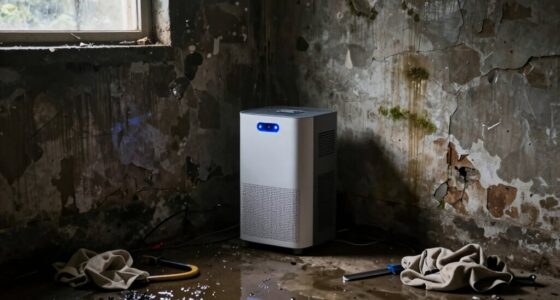
Moisture from your shower doesn’t stay in the bathroom; it travels far beyond, seeping into walls, ceilings, and floors through gaps, cracks, and ventilation ducts. Warm, damp air rises and escapes into adjacent rooms, encouraging hidden mold and damage over time. Poor ventilation and unsealed spaces allow moisture to spread silently, putting your home’s structure and your health at risk. Keep going to discover the best ways to control this moisture migration and protect your home.
Open a free Amazon Business account
Business pricing, bulk buying and tax-exempt orders.
As an affiliate, we earn on qualifying purchases.
Key Takeaways
- Moisture from showers can seep into walls, ceilings, and floors, spreading beyond the bathroom area over time.
- Gaps, cracks, and ventilation ducts facilitate the migration of moist air into other parts of the house.
- Poor ventilation traps damp air, allowing it to linger and travel into adjoining rooms, causing hidden damage.
- Without proper humidity control, moisture can condense and seep into structural components far from the source.
- Sealing gaps and enhancing ventilation effectively contain moisture within the bathroom, preventing wider spread.

When you take a shower, moisture doesn’t stay confined to the bathroom—it travels through your house, often causing hidden problems. This moisture can seep into walls, ceilings, and even floors, leading to issues like mold growth, wood rot, and peeling paint. The key to preventing these problems is effective bathroom ventilation and humidity control. Without proper ventilation, the damp air lingers in your space and spreads beyond the bathroom, making other areas vulnerable to damage.
Every time you shower, warm, moist air rises and escapes into the room. If your bathroom lacks adequate ventilation—like an exhaust fan or window—this humid air will find its way into adjoining rooms through gaps, cracks, and ventilation ducts. Over time, this continuous moisture transfer can cause hidden mold colonies behind drywall or wallpaper, which are often invisible until they become a serious health concern. Good bathroom ventilation doesn’t just remove unpleasant odors; it actively pulls moisture out of the air, reducing the risk of dampness traveling farther into your house.
Humidity control plays a vital role in managing how far shower moisture spreads. Dehumidifiers and exhaust fans work together to keep humidity levels low, especially during and after showers. Ideally, you want to keep indoor humidity below 50%. When humidity levels stay high, moisture can condense on cooler surfaces in other rooms, creating a perfect environment for mold and mildew. Using a bathroom exhaust fan during showers and for at least 15 minutes afterward ensures that the moist air is expelled outside, rather than lingering and seeping into neighboring spaces. Proper humidity management is essential for preventing moisture from traveling farther through your house.
You should also consider sealing gaps around windows, doors, and vents to prevent moist air from migrating. Insulating walls and installing vapor barriers can further limit the spread of humidity. If you notice persistent moisture or condensation, it’s a sign that your ventilation system isn’t enough or isn’t functioning properly. Upgrading to a more powerful exhaust fan or adding an additional vent can make a significant difference in controlling indoor humidity. These steps help contain the moisture, preventing it from traveling farther through your house and causing damage over time. Proper ventilation is a crucial factor in managing indoor moisture levels effectively.
In short, managing bathroom ventilation and humidity control isn’t just about comfort; it’s about protecting your entire home. By ensuring moist air is quickly and efficiently removed, you can prevent hidden problems that develop far from the bathroom itself. Taking these precautions keeps your living space healthier, safer, and free from the unseen damage caused by shower moisture traveling beyond its origin. Proper humidity management is essential for maintaining a healthy indoor environment.
As an affiliate, we earn on qualifying purchases.
Frequently Asked Questions
How Quickly Can Moisture Spread to Distant Rooms?
Moisture can spread to distant rooms within hours, especially if airflow patterns in your house are unobstructed. As humidity levels rise after a shower, warm moist air rises and moves through vents, gaps, or open doorways, quickly seeping into other areas. To slow this, control airflow and maintain lower humidity levels, using exhaust fans or dehumidifiers, which help prevent moisture from dispersing too rapidly and causing potential damage.
Can Moisture Damage Walls Without Visible Signs?
Yes, moisture can damage walls without visible signs, especially if hidden plumbing leaks or high paint permeability are involved. You might not see mold or warping right away, but moisture still seeps into the wall structure, causing rot or mold over time. Keep an eye on unexplained musty smells or increased humidity. Regular inspections and proper ventilation help prevent hidden damage caused by unseen moisture infiltration.
What Materials Are Most Resistant to Moisture Transfer?
You should choose moisture barriers and water-resistant materials like cement board, vinyl, or certain plastics for areas prone to moisture. These materials resist water transfer more effectively, preventing damage. When installing, guarantee proper sealing and ventilation to block moisture from spreading. Using these resistant materials helps protect walls and structures from hidden damage caused by unseen moisture transfer, keeping your home safer and more durable over time.
Does Bathroom Ventilation Affect Moisture Travel?
Did you know that poor bathroom ventilation can increase moisture spread by up to 50%? Yes, your ventilation system plays a vital role in controlling moisture travel. A well-designed system helps remove humid air, preventing moisture from seeping into walls and ceilings. Additionally, using effective moisture barriers behind walls further restricts this transfer. So, maintaining proper ventilation and moisture barriers keeps your entire house drier and healthier.
How Can I Prevent Mold Caused by Hidden Moisture?
To prevent mold caused by hidden moisture, you should control moisture absorption in your home. Use dehumidifiers and guarantee proper ventilation, especially in bathrooms and basements. Regularly check for leaks and dry out any damp areas promptly. Keep surfaces clean and dry, and consider mold-resistant paints. These steps help reduce hidden moisture, preventing mold growth and protecting your home’s air quality.
As an affiliate, we earn on qualifying purchases.
Conclusion
So, next time you shower, remember that moisture doesn’t stay put. It travels farther than you think, sneaking into walls and ceilings, potentially causing unseen damage. Don’t rely solely on visible signs; investigate thoroughly if you suspect excess moisture. Proper ventilation and regular checks can help catch issues early. Trust the science—moisture moves farther and faster than you imagine, so stay vigilant to protect your home’s health and integrity.
As an affiliate, we earn on qualifying purchases.
As an affiliate, we earn on qualifying purchases.
Evergreen bestsellers Picks
bestsellers
As an affiliate, we earn on qualifying purchases.