
When you habitually replace your filter without checking its condition, you waste its lifespan and energy. Relying solely on a schedule ignores factors like household activity, pets, or environment, causing unnecessary changes. This practice strains your HVAC system, increases energy bills, and shortens its lifespan. Instead, checking your filter regularly helps catch signs of dirt and clogs early. Keep these tips in mind, and you’ll discover how to make your system more efficient.

Get home appliances delivered free with Prime
- Fast, free delivery on millions of items
- Prime Video, Amazon Music and more included
- Member-only deals all year
Key Takeaways
- Ignoring regular filter condition checks leads to unnecessary replacements and shortens filter lifespan.
- Relying solely on schedule-based replacements without monitoring can cause premature filter disposal.
- Consistently neglecting signs of a clogged filter results in decreased system efficiency and increased energy use.
- Using filters beyond their effective lifespan due to routine replacement habits reduces air quality.
- Failing to consider environmental factors like pets or pollution accelerates filter clogging and waste.
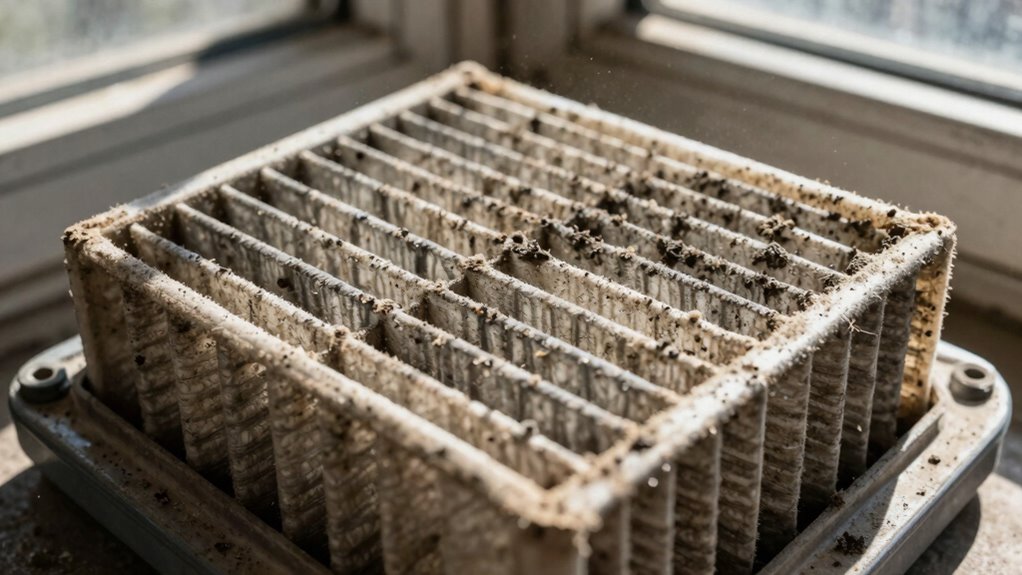
When you get used to changing your air filters on a set schedule, it’s easy to overlook their true importance. Many people see it as just another task in the maintenance routine, but in reality, this simple action plays a crucial role in maintaining your home’s air quality. A clean air filter traps dust, pollen, pet dander, and other airborne particles that can cause allergies or respiratory issues. When filters aren’t replaced regularly, these pollutants circulate freely, reducing the overall air quality inside your home and potentially impacting your health.
If you treat filter replacement as a chore you do automatically without paying attention, you risk wasting their lifespan. Many homeowners stick to rigid schedules without considering the actual condition of the filter. Filters don’t have a set lifespan that applies universally; factors like the number of people in your house, pets, smoking, and even the local environment affect how quickly they become clogged. When you neglect to check the filter’s condition and replace it only because of a schedule, you might be wasting money on filters that are still effective or, conversely, using a filter that’s already past its prime. This approach undermines your maintenance routine and can lead to inefficiencies in your HVAC system.
Wasting filter life isn’t just about money; it affects your system’s performance and energy efficiency. When filters are clogged, your HVAC has to work harder to circulate air, which increases energy consumption and can raise your utility bills. Over time, this added strain can cause wear and tear on components, leading to costly repairs and a shorter lifespan for your system. If you’re not attentive to the actual condition of your filters, you might find yourself replacing them more frequently than necessary or, worse, ignoring signs that they need immediate attention. Regularly checking filter condition ensures you replace them only when needed, prolonging their effectiveness and saving money. Additionally, understanding how filter lifespan is influenced by environmental factors can help you make more informed decisions about maintenance and replacements. Recognizing the impact on energy efficiency of clogged filters can motivate you to stay vigilant about timely replacements. Being aware of proper maintenance practices can further help you optimize your system’s longevity and performance. Knowing the signs of a clogged filter can help you identify when it’s time for a replacement before issues arise.
Products Worth Considering

Levoit Vital 100S-P Air Purifier with Washable Pre-Filter

Coway Mighty AP-1512HH(W) Air Purifier, White

LEVOIT Vital 200S-P Smart Air Purifier for Large Rooms
As an affiliate, we earn on qualifying purchases.
Frequently Asked Questions
How Can I Tell if My Filter Needs Replacing Early?
You can tell if your filter needs replacing early by checking the air quality; if you notice increased dust or odors, it’s time. Also, inspect the filter materials—if they’re visibly dirty or clogged, they’re less effective. Regularly monitor these signs, and don’t wait for the filter to be completely covered in debris, as it compromises air quality and shortens filter life. Replacing filters promptly keeps your air fresh and clean.
Does Using Cheap Filters Affect Filter Lifespan?
Using cheap filters is like building a house on shaky ground—your filter’s lifespan shortens considerably. Lower-quality filter material often doesn’t trap dirt effectively, causing it to clog faster and wear out sooner. While cost-effective alternatives may seem appealing, they rarely match the durability of higher-quality filters. Investing in better filters guarantees your system runs smoothly longer, saving you money and hassle in the long run.
Are There Specific Habits That Damage Filters Faster?
Yes, certain habits can damage filters faster, especially neglecting air quality monitoring and overusing filters beyond their recommended lifespan. When you ignore air quality monitoring, you miss signs of poor air, leading to filter overload. Additionally, using filters with inferior filter material durability causes them to wear out quickly. Regularly replacing filters, monitoring air quality, and choosing high-quality materials help extend filter life and maintain ideal air quality.
How Often Should Filter Maintenance Be Scheduled?
Did you know that neglecting regular filter maintenance can reduce filter efficiency by up to 50%? You should schedule filter maintenance every 3 to 6 months, depending on usage and air quality. Regular checks guarantee your filters effectively improve air quality and last longer. By staying consistent, you prevent unnecessary replacements and maintain peak air cleanliness in your space.
Can Filter Lifespan Vary by Device or Environment?
Yes, filter lifespan can vary based on device compatibility and filter material. If you use a filter that’s not compatible with your device, it might clog or wear out faster. Similarly, filters made of lower-quality materials tend to degrade quicker, reducing their effective life. You should always select filters suited for your device and made from durable materials to maximize longevity and guarantee peak performance.
Conclusion
Remember, habits shape your outcomes. When you take your filter’s lifespan for granted, you’re throwing away valuable resources and risking your health. Don’t let complacency turn into waste—think of it as “a stitch in time saves nine.” By staying mindful and replacing your filter when needed, you preserve its effectiveness and save money in the long run. Stay proactive, and you’ll keep your environment cleaner and your wallet happier.