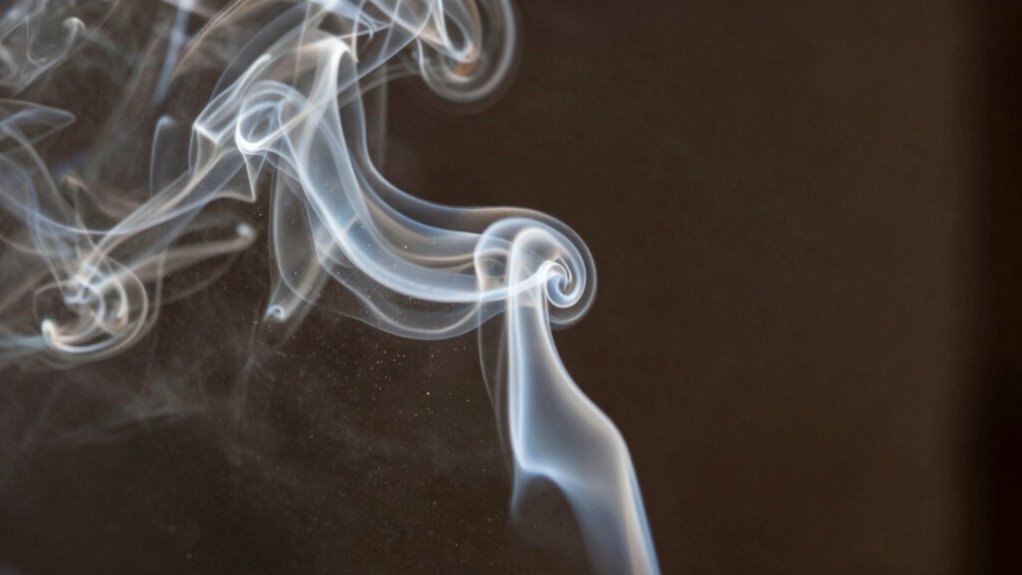

Smoke particles are solid remnants that settle on surfaces and can be physically cleaned, but they hide in tiny crevices and often require deep cleaning and filtration to remove fully. Smoke odor, however, consists of gaseous molecules that penetrate porous materials and chemically bond inside surfaces, making it much harder to eliminate. Because of these chemical bonds, odors tend to linger longer and need specialized treatments. Continue exploring to discover effective methods for both issues.
Key Takeaways
- Smoke particles are solid residues that settle on surfaces and are physically removable, while odors are gaseous molecules that penetrate porous materials.
- Smoke odors chemically bond with surfaces and residues, making them more resistant to standard cleaning compared to particles.
- Particles can be filtered out with air purification, but odors require specialized neutralizers to break chemical bonds.
- Odor molecules infiltrate deep into porous materials, making their complete removal more challenging than surface-settled particles.
- Persistent smoke odors often linger despite cleaning, because their chemical bonds trap scent molecules inside surfaces.

Levoit Air Purifiers for Bedroom Home Pets Dorm Room, Small Air Purifiers
- Certified for Performance: AHAM Verifide certified for reliability
- Removes Pollutants: Captures lint, pet dander, smoke
- Odor Neutralization: Reduces smoke, odors, fumes
As an affiliate, we earn on qualifying purchases.
What’s the Difference Between Smoke Particles and Smoke Odor?

Although smoke often comes together as a single problem, smoke particles and smoke odor are actually different issues. Smoke particle size varies widely, from tiny particles less than a micron to larger soot clumps, which affects how deeply they penetrate surfaces. These particles are made up of unburned carbon, ash, and chemicals that can cling to furniture and walls. In contrast, smoke odor results from odor molecules, whose chemistry determines how they smell and how long they linger. These molecules are tiny, volatile compounds that dissolve into porous materials and circulate through the air. Understanding this difference is key: particles are solid remnants, while odor molecules are gaseous compounds. Particle penetration depth influences how challenging it is to fully remove smoke residues, because deeper particles require more intensive cleaning methods. Addressing one doesn’t automatically eliminate the other, because their behaviors and removal requirements differ.

VOOPNU Air Purifiers for Bedroom, High Efficiency Filter, 1076 Ft², Black
- Easy-to-Use Control Panel: Intuitive design for effortless operation
- Compact and Powerful: Covers 1076 ft² in a small size
- 360° Air Intake: Ensures comprehensive air purification
As an affiliate, we earn on qualifying purchases.
Are Smoke Particles Easier to Remove Than Smoke Odor?

Removing smoke particles can be challenging because they often cling tightly to surfaces and require powerful cleaning methods. In contrast, smoke odor molecules tend to linger in the air and materials, making them harder to eliminate completely. So, you might find that odor removal takes more time and effort than clearing out visible smoke particles. Additionally, air purification techniques can help you better understand the various methods and terminology used in smoke removal. Understanding the microplastics in dust and how they can harbor residual odors can further improve your cleaning strategies, ensuring a healthier indoor environment. Furthermore, knowing how different Glycolic Acid benefits improve skin health can inform your approach to maintaining a fresh atmosphere, especially when dealing with lingering odors. Recognizing how smoke particles adhere to surfaces can also guide more effective cleaning procedures.
Particle Removal Challenges
Are smoke particles easier to remove than the lingering odor? Not necessarily. Smoke particles are tiny airborne particles that settle on surfaces, causing contamination. Removing them involves cleaning surfaces and filtering the air, but particles can hide in hard-to-reach spots. Additionally, golf history shows that thorough cleaning and proper ventilation are key to eliminating residual smoke effects. Here’s a quick comparison:
| Aspect | Smoke Particles | Smoke Odor |
|---|---|---|
| Removal Difficulty | Difficult due to surface contamination | Hard because odor molecules embed deeply |
| Methods Needed | HEPA filters, deep cleaning | Odor absorbers, ventilation |
| Persistence | May linger on surfaces | Can linger in porous materials |
| Airborne Presence | Yes, airborne particles | No, odor molecules stay longer |
While particles seem easier to physically remove, their stubborn surface contamination makes complete removal challenging.
Odor Molecule Persistence
Smoke odor molecules penetrate porous surfaces and materials, making them difficult to eliminate completely. Their persistence is due to chemical reactions that cause these molecules to bond with surfaces, trapping the odor deep within. Unlike smoke particles, which can often be physically removed, odor molecules can linger long after visible particles are gone. Ventilation techniques help by replacing indoor air but don’t always fully break these chemical bonds. To effectively remove persistent smoke odors, you need to target these molecules directly—using specialized cleaning agents or odor neutralizers that chemically react with and deactivate them. Effective odor removal methods include using HEPA filters and activated charcoal, which help trap and neutralize odor molecules at a chemical level. Understanding chemical bonding can help you choose the most effective cleaning strategies for stubborn smoke odors, especially since some porous materials can absorb molecules more deeply, complicating the removal process. Additionally, using sophisticated filtration systems can enhance the removal of residual odor molecules that are resistant to standard cleaning techniques. Employing professional-grade odor treatments may be necessary for particularly severe cases where common methods fall short.
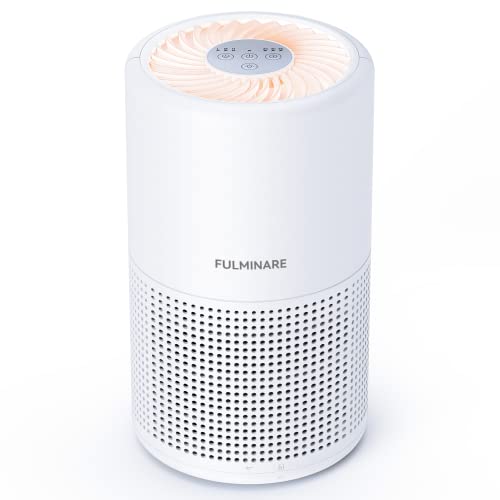
Air Purifiers for Bedroom, FULMINARE H13 True HEPA Filter
- Efficient Particle Filtration: H13 HEPA filter for clean air
- High Circulation Rate: 360° air outlet, refreshes 5x/hour
- Suitable for 215 sq ft rooms: Effective in small to medium rooms
As an affiliate, we earn on qualifying purchases.
How Does Smoke Odor Get Trapped in Surfaces and Materials?

Smoke odor can seep into porous materials like drywall, upholstery, and carpets, making it hard to remove. It also binds to surface residues, trapping the smell within microscopic crevices. Understanding these processes helps you choose the right cleaning methods to eliminate lingering odors effectively. Additionally, porous materials can absorb and retain smoke particles more readily, increasing the difficulty of complete odor removal. Recognizing how smoke particles interact with surfaces can guide targeted cleaning strategies to better combat stubborn odors, especially when considering material porosity and its impact on odor entrapment. Moreover, porous surfaces can act as reservoirs for smoke residues, complicating odor elimination even after cleaning. A deeper understanding of material absorption properties can help in selecting appropriate deodorizing techniques.
Absorption Into Porous Materials
When smoke particles settle on surfaces, they don’t simply sit on top; instead, they often penetrate and become trapped within porous materials like drywall, fabric, and wood. These porous materials allow smoke to seep in, leading to odor absorption that’s difficult to eliminate. The materials’ texture and composition facilitate the infiltration of smoke compounds, making odor removal more challenging. The tiny pores and fibers in these materials act like sponges, soaking up smoke compounds and harboring them deep inside. As a result, even after cleaning the surface, the smell can persist because the odor-causing molecules remain embedded within the material’s structure. Additionally, porous material porosity increases the difficulty of complete odor removal, as it allows smoke particles to penetrate even further. porous materials effectively absorb smoke odor, making it challenging to completely remove the smell through standard cleaning methods. This deep absorption is a key reason why smoke odors often linger long after the visible damage or surface contamination appears to be gone. Moreover, specialized deodorization techniques may be required to effectively neutralize these embedded odors and restore the affected environment. Understanding the structure of porous materials can help in selecting the most effective cleaning and deodorizing approaches for smoke damage.
Binding to Surface Residues
Surface residues such as soot, ash, and oily deposits play a significant role in trapping smoke odors through chemical bonding. These residues create surfaces where odor molecules can attach, forming bonds that are difficult to break. When smoke particles settle, they leave behind residues rich in chemicals that readily bind with odor compounds. This chemical bonding occurs at a molecular level, making it harder to remove the odor through simple cleaning. Instead, specialized treatments are often necessary to break these bonds and release the trapped odors. The more surface residues present, the greater the area available for binding, increasing the persistence of smoke smell. Understanding this process highlights why odors can linger long after the visible damage appears cleaned.

AIRTHEREAL MA5000 Commercial Ozone Generator, 5000mg/h O3 Machine Home Air Ionizers Deodorizer for Rooms, Smoke, Cars and Pets, Blue
- Powerful Odor Elimination: Removes stubborn odors permanently at the molecular level
- Suitable for Any Space: Covers areas up to 2000 sq ft, from cars to homes
- Easy, Safe Operation: Features timer and automatic shut-off for safety
As an affiliate, we earn on qualifying purchases.
Effective Ways to Remove Smoke Particles From Your Home

To effectively remove smoke particles from your home, you need to focus on thorough ventilation and the right cleaning methods. Start by opening windows and using fans to circulate fresh air, reducing airborne particles. Air filtration systems, like HEPA filters, are essential for capturing tiny smoke particles that settle on surfaces or linger in the air. Regular vacuuming with HEPA-equipped vacuums helps remove embedded particles from carpets and upholstery. Additionally, odor neutralization products can help eliminate residual smoke odors that cling to surfaces. Combining filtration with meticulous cleaning guarantees smoke particles are effectively removed, improving indoor air quality. Remember, the goal is to physically eliminate particles and prevent them from recirculating, creating a healthier environment free of smoke residues.
How to Permanently Get Rid of Stubborn Smoke Odor

Eliminating stubborn smoke odor permanently requires more than just masking the smell; it demands targeted, deep-cleaning strategies. Start by thoroughly cleaning all surfaces, including walls, ceilings, and furniture, to remove lingering smoke particles, cooking fumes, and pet dander that trap odors. Use a HEPA vacuum to eliminate dust and dander from carpets and upholstery. Follow up with an ozone treatment or professional odor removal service for deep penetration. Air out the space by opening windows and running fans. Incorporate air purifiers equipped with activated carbon filters to absorb residual odors continuously. Regularly clean HVAC filters to prevent recirculating smoke smells. Consistency in cleaning and ventilation is key to permanently banishing stubborn smoke odors from your home.
Tips to Prevent Smoke Odor From Coming Back

After thoroughly cleaning and treating your space to remove existing smoke odors, maintaining a fresh environment requires ongoing vigilance. To prevent the smell from returning, focus on these key strategies:
- Use air filtration systems with HEPA filters to trap smoke particles before they settle.
- Regularly surface clean curtains, furniture, and walls to eliminate residual odor-causing particles.
- Ventilate your space daily by opening windows or running fans to let fresh air in and push out lingering smoke particles.
Frequently Asked Questions
Can Regular Cleaning Eliminate All Smoke Odors Completely?
Regular cleaning can’t eliminate all smoke odors completely because of cleaning challenges and residual residues. Smoke particles penetrate surfaces deeply, leaving behind residues that trap odors. Simply wiping or vacuuming isn’t enough; you need thorough cleaning methods like deep cleaning, specialized products, or professional treatments. Without addressing these residues, lingering smoke smell persists, making complete odor removal difficult. So, expect some odors to require extra effort beyond regular cleaning.
Do Some Materials Trap Smoke Particles More Than Others?
Did you know porous materials trap over 80% of smoke particles more effectively than non-porous ones? Porous materials like carpets, upholstery, or drywall absorb smoke particles through their tiny openings, making smoke absorption much harder to remove. You’ll find that these materials retain smoke longer, requiring specialized cleaning methods. So, if you’re trying to eliminate smoke, focus on porous surfaces first—they trap particles more, making standard cleaning less effective.
Is Smoke Odor More Persistent Than Visible Smoke Particles?
Yes, smoke odor is more persistent than visible smoke particles because odor molecules from smoke residue cling to surfaces and fabrics, making them hard to eliminate. While smoke particles can be seen and removed with cleaning, odor molecules often remain embedded in materials, causing lingering smells. You need specialized cleaning methods like deep cleaning or air purification to fully remove smoke odor and restore freshness.
Are Commercial Air Purifiers Effective Against Smoke Odors?
Commercial air purifiers can be effective against smoke odors if they have activated carbon filters designed for odor removal. Air purifier effectiveness varies depending on the filter type and room size. To maximize smoke odor removal, choose a purifier with a high-quality activated carbon filter and HEPA filter. Regularly maintain and replace filters to guarantee peak performance. Proper ventilation also enhances the purifier’s ability to eliminate stubborn smoke smells.
How Long Does It Typically Take to Remove Smoke Odor Permanently?
It usually takes several days to a few weeks to permanently remove smoke odor, depending on the extent of smoke residue and odor absorption. You need to thoroughly clean surfaces, ventilate the space, and use specialized air purifiers with activated carbon filters. Consistent effort is key because smoke particles embed deep into materials, making odor removal a gradual process. Patience and persistent cleaning will help you achieve a fresh, odor-free environment.
Conclusion
In the battle against smoke, knowing the difference between particles and odor is your secret weapon. Smoke odor is like an unshakable ghost that clings to every surface, refusing to leave without a fight. With the right techniques, you can banish it forever—turning your home from a smoky prison into a fresh paradise. Stay vigilant, follow these tips, and never let smoke’s stubborn grip take over your space again. Victory over smoke is within your reach!