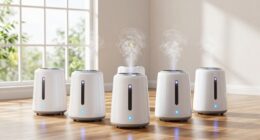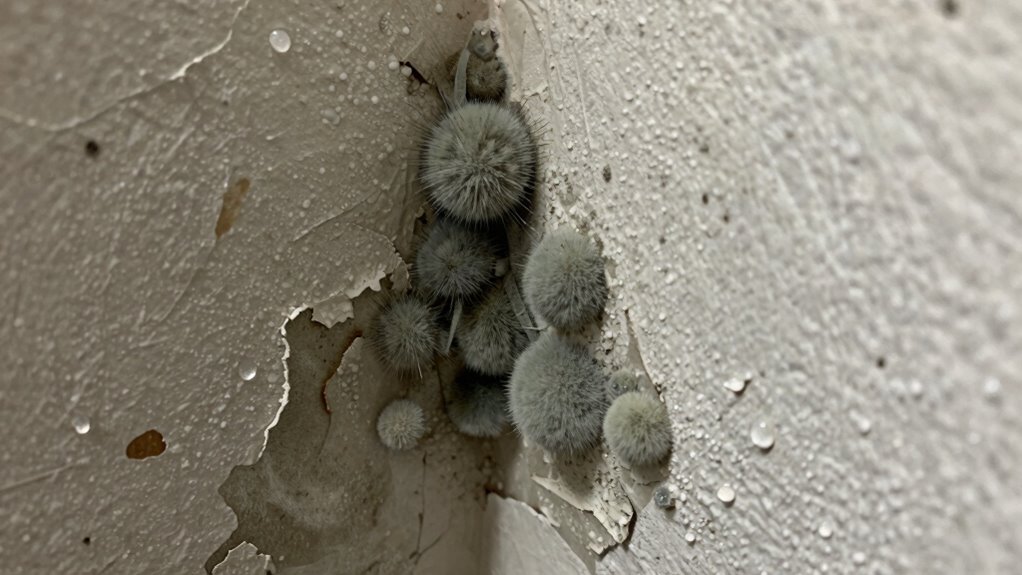
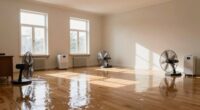
To prevent mold growth, keep your indoor humidity below 50%. High humidity above this threshold creates ideal conditions for mold spores to settle and thrive, especially in damp areas. Regularly monitor your home’s moisture levels using a hygrometer placed in central, well-ventilated spots. If your humidity exceeds 50%, take steps like using a dehumidifier, improving ventilation, and sealing damp areas. Continuing helps you discover effective strategies for mold prevention and healthier indoor air.

Get home appliances delivered free — and shop member deals
- Fast, free delivery on millions of items
- Access to Prime Big Deal Days deals on October 6–7
- Prime Video, Amazon Music and more included
Key Takeaways
- Maintain indoor humidity between 30% and 50% to prevent mold growth.
- Humidity levels above 50% significantly increase mold spores settling and thriving.
- Use hygrometers to monitor and ensure humidity stays within the ideal range.
- Proper dehumidifier maintenance and ventilation are essential to control moisture levels.
- Early detection of mold signs, like musty odors or stains, helps prevent health and property issues.
digital hygrometer for indoor humidity
As an affiliate, we earn on qualifying purchases.
As an affiliate, we earn on qualifying purchases.
How Humidity Promotes Mold Growth in Your Home
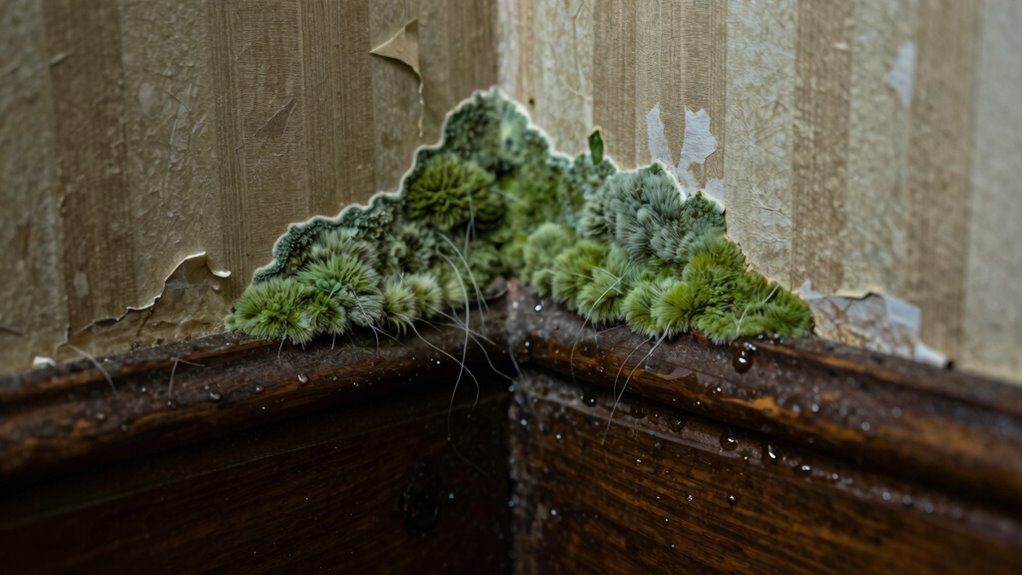
High humidity levels create the perfect environment for mold to thrive in your home. When humidity rises, it increases moisture on surfaces and in the air, which mold spores need to grow. Airborne spores are constantly floating around, and in damp conditions, they settle and develop into visible mold. To prevent this, you need to understand how humidity influences mold growth and take steps to control it. Mold prevention involves reducing moisture levels and keeping the environment dry. Proper ventilation, fixing leaks, and using dehumidifiers are effective ways to limit airborne spores from settling and growing. Additionally, microplastics in dust can carry mold spores and other pollutants, further impacting indoor air quality. Managing cycling gear and household items to stay dry is essential for mold prevention. By managing humidity, you make your home less hospitable for mold, protecting your health and preserving your living space. Understanding the role of humidity control is crucial for maintaining a healthy indoor environment. Moreover, indoor air quality can significantly improve when humidity levels are kept in check, making your home safer and more comfortable.
As an affiliate, we earn on qualifying purchases.
What Is the Ideal Indoor Humidity Level to Prevent Mold?

Maintaining the right indoor humidity level is key to preventing mold growth. The ideal range is generally between 30% and 50%, but you should also be aware of how high humidity can promote mold and how to monitor and adjust it effectively. Using simple tools and techniques can help you keep your home safe and mold-free. Being aware of AI-driven monitoring tools can further enhance your ability to maintain optimal humidity levels efficiently. Regularly checking humidity levels with reliable hygrometer devices can provide real-time data, enabling more precise control over your indoor environment. Additionally, understanding humidity thresholds ensures you respond promptly to conditions conducive to mold development.
Optimal Humidity Range
The ideal indoor humidity level to prevent mold growth typically falls between 30% and 50%. Maintaining this range helps you control mold spores and improve indoor air quality. Using a dehumidifier offers clear benefits, such as maintaining consistent humidity and reducing excess moisture. To keep your environment suitable, consider these tips:
- Use a hygrometer to monitor humidity levels regularly.
- Adjust your dehumidifier settings to stay within the 30%-50% range.
- Ventilate your home properly, especially in high-moisture areas like bathrooms and kitchens.
- Proper indoor plant placement can also help regulate humidity levels and prevent mold growth. Additionally, ensuring proper ventilation can significantly reduce indoor moisture accumulation. Proper humidity control techniques are crucial in creating a healthy indoor environment. Staying within this optimal range not only deters mold but also enhances your indoor air quality, making your living space healthier and more comfortable. Maintaining humidity regulation is essential for a mold-free home and can be supported by connected home technology that tracks and manages indoor conditions automatically.
Effects of High Humidity
When indoor humidity levels rise above the recommended 30% to 50%, moisture accumulates on surfaces and within the air, creating ideal conditions for mold growth. Excess humidity can lead to mold spores settling and thriving, damaging surfaces and impacting health. To combat this, regular dehumidifier maintenance is essential; neglecting it can reduce effectiveness. Using mold-resistant paints on walls can also help prevent mold formation. Additionally, high humidity encourages dust mites and allergens, worsening indoor air quality. Consider implementing these strategies to keep humidity in check and protect your home: smart humidity monitors can help you track and maintain optimal levels effectively. Maintaining proper piercing hygiene and avoiding irritants can also reduce the risk of infections that may be exacerbated by mold exposure. Moreover, understanding the effects of high humidity can assist in creating a healthier indoor environment. Regularly checking indoor air quality levels can further prevent mold issues before they become severe.
Monitoring and Control Methods
To prevent mold growth, keeping indoor humidity levels within the recommended range of 30% to 50% is essential. Monitoring tools like hygrometers help you track humidity accurately. To maintain ideal levels, consider these control methods:
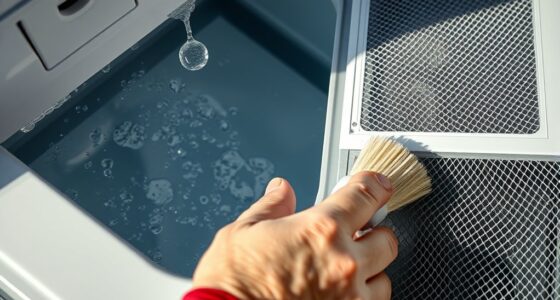
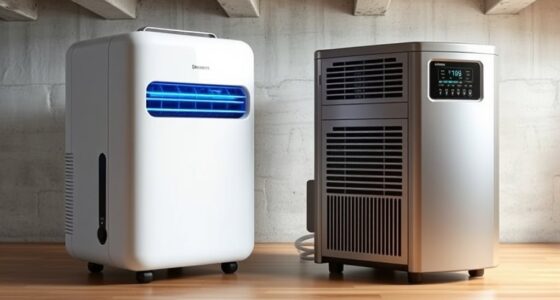
- Regular dehumidifier maintenance ensures it operates efficiently, removing excess moisture effectively.
- Implement ventilation strategies such as exhaust fans in bathrooms and kitchens to improve airflow and reduce humidity buildup.
- Use natural ventilation by opening windows when outdoor conditions are dry, helping to balance indoor moisture levels.
- Understanding the role of hive health in preventing mold and maintaining a stable environment can help inform better humidity control practices. Additionally, choosing reliable Gold IRA providers can give you peace of mind when investing in precious metals, ensuring transparency and quality.
- Proper placement of air purifiers, following the air purifier maintenance dos and don’ts, can further reduce airborne mold spores and improve air quality.
Consistently monitoring humidity and maintaining equipment like dehumidifiers, along with proper ventilation, keeps your environment mold-free and healthy. Staying vigilant with these methods helps you avoid the risks associated with high humidity.
As an affiliate, we earn on qualifying purchases.
How to Measure Humidity Levels in Your Home
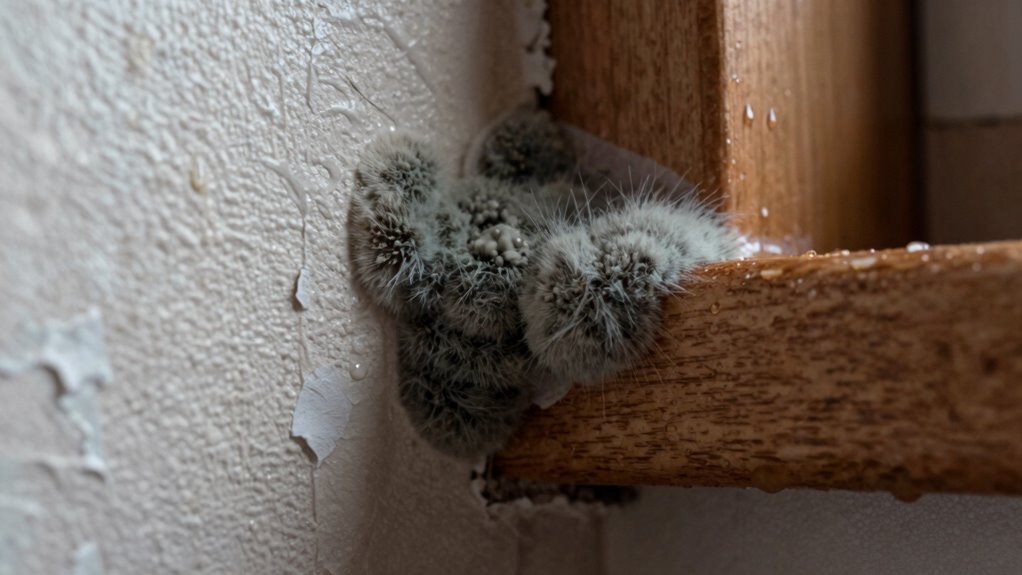
To keep an eye on your home’s humidity, you need to choose the right hygrometer. Proper placement guarantees accurate readings, so avoid areas like corners or near windows. Once you have your readings, learn how to interpret them to maintain ideal humidity levels and prevent mold growth. Incorporating specialized kitchen gear, such as moisture meters designed for food storage, can also help monitor environmental conditions more precisely. Understanding humidity levels and their impact on health and home safety is essential for effective mold prevention. Additionally, regularly checking natural ventilation can assist in maintaining balanced humidity and reducing moisture buildup.
Choosing a Hygrometer Type
Choosing the right hygrometer depends on your specific needs and budget. You have two main options: digital sensors and analog gauges. Digital hygrometers use electronic sensors to provide precise, instant readings, making them ideal for detailed monitoring. They often come with features like humidity alerts and data logging. Analog gauges, on the other hand, use a dial and needle to display humidity levels. They’re simple, reliable, and don’t require batteries, making them great for basic home use. Consider your preferences and how much detail you want. For accuracy and modern features, digital sensors are best. If you prefer simplicity and durability, analog gauges work well. Whichever you choose, confirm it fits your home’s environment and your budget.
Proper Placement Techniques
Ensuring accurate humidity readings starts with proper placement of your hygrometer. Position it in a central location, away from direct sunlight, vents, and windows, to avoid skewed results. Avoid placing it near humidity barriers like bathrooms or kitchens, which may have fluctuating levels. Instead, choose a spot in a common living area, ideally at eye level, to monitor consistent readings. Good ventilation strategies, such as cross-ventilation, help maintain stable humidity and prevent mold growth. Regularly check and reposition your hygrometer if needed to guarantee accuracy. Proper placement ensures you get reliable data, enabling you to adjust ventilation and humidity barriers effectively, keeping your home mold-free and healthy.
Interpreting Humidity Readings
Understanding how to interpret humidity readings is essential for maintaining a healthy indoor environment. Accurate readings help you determine if your home’s humidity levels are safe or if mold risk increases. Use reliable humidity sensors for the most precise information about your indoor air. Keep in mind that reading accuracy can vary between devices, so choose high-quality sensors. To interpret your readings effectively:
- Check if the humidity level is between 30-50%, the ideal range for preventing mold growth.
- Watch for fluctuations; sudden spikes or drops might indicate environmental issues.
- Calibrate your sensors regularly to guarantee reading accuracy over time.
As an affiliate, we earn on qualifying purchases.
Signs Your Home Has Too Much Moisture and Could Grow Mold

If you notice a persistent musty smell or visible mold patches, your home likely has excess moisture that could lead to mold growth. Keep an eye out for water stains on walls or ceilings, which indicate ongoing moisture problems. Poor dehumidifier maintenance can allow humidity levels to rise unnoticed, so regularly clean and check your device to guarantee it’s functioning properly. Additionally, inadequate ventilation can trap moisture inside, encouraging mold development. Improving airflow by opening windows, using exhaust fans, or installing air vents can make a difference. If you suspect high humidity, addressing these issues promptly helps prevent mold from taking hold. Recognizing these signs early lets you take action before mold causes health issues or costly damage.
Humidity Levels That Can Lead to Mold Development
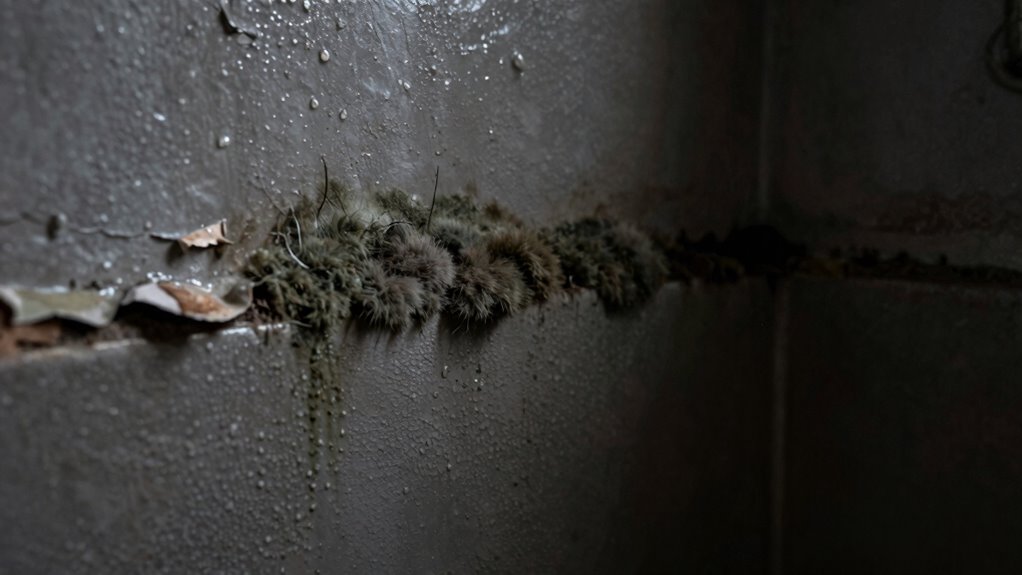
Maintaining proper humidity levels is key to preventing mold growth in your home. When humidity rises above 60%, you’re risking mold development. To keep moisture in check, consider these thresholds:
- Humidity above 60% can encourage mold spores to thrive. Regular dehumidifier maintenance ensures it functions effectively to keep levels low.
- Humidity between 50-60% is risky, especially in bathrooms and basements. Using mold resistant paint on walls can help reduce mold adhesion.
- Humidity below 40% is ideal but can cause other issues like dry skin. Maintaining a balanced level prevents mold while keeping your air comfortable.
Keeping humidity within the safe range is essential for mold prevention, so monitor moisture levels diligently.
Easy Ways to Control Indoor Humidity and Keep Mold Away
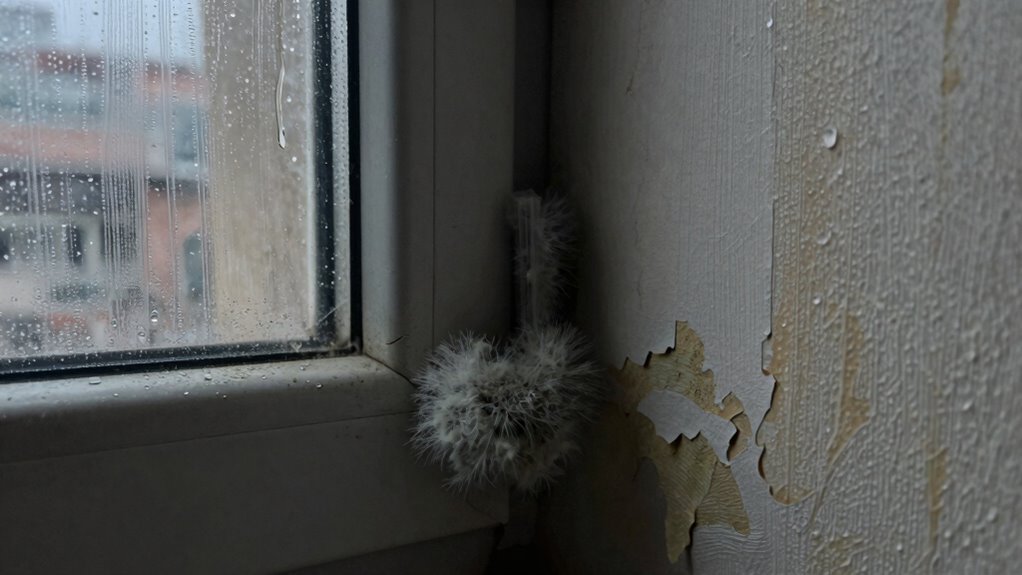
Controlling indoor humidity is one of the most effective ways to prevent mold growth in your home. Using a dehumidifier helps maintain ideal moisture levels, but regular dehumidifier maintenance is essential to ensure it works efficiently. Empty water trays, clean filters, and check for leaks often. Additionally, applying mold resistant paint in high-humidity areas creates a barrier against mold spores and makes cleaning easier. Ventilate rooms properly by opening windows or using exhaust fans, especially in bathrooms and kitchens. Keep indoor temperatures consistent, and avoid drying clothes indoors. These simple steps, combined with proper equipment upkeep and protective paint, considerably reduce mold risk. Staying proactive not only preserves your home’s integrity but also safeguards your health from mold-related issues.
What to Do If You Find Mold Caused by High Humidity
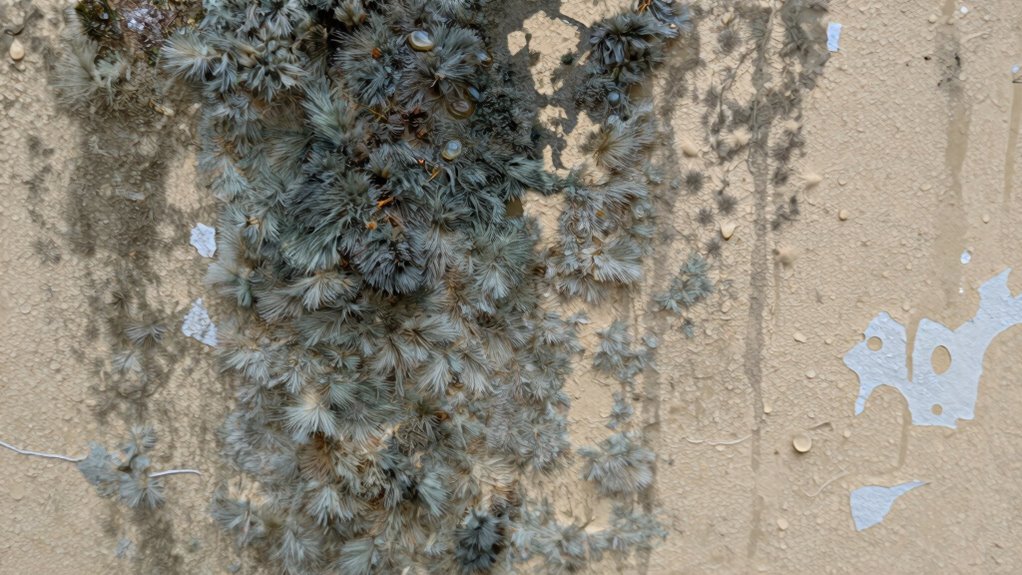
Discovering mold caused by high humidity can be concerning, but addressing it promptly is essential to prevent further damage and health risks. First, perform mold remediation by safely removing affected materials or hiring professionals if the mold covers a large area. Next, improve ventilation by installing exhaust fans, opening windows, or using dehumidifiers to reduce indoor moisture. Finally, identify and fix any sources of excess humidity, such as leaks or poor insulation, to prevent mold from returning. Regularly monitor indoor humidity levels and ensure they stay below 60%. These steps help eliminate existing mold and create an environment less conducive to future growth. Acting quickly and effectively is key to protecting your home and health from mold caused by high humidity.
Frequently Asked Questions
How Quickly Can Mold Develop After Humidity Levels Rise?
Mold growth can start within 24 to 48 hours after a humidity increase, especially in damp or poorly ventilated areas. As humidity levels rise, mold spores quickly settle and begin to grow on moist surfaces. You should act fast once humidity climbs above 60%, as delaying can lead to rapid mold development. Keep humidity levels in check and guarantee proper ventilation to prevent mold from forming so quickly.
Are Certain Materials More Vulnerable to Mold Growth?
Some building materials are more vulnerable to mold growth than others, especially those with high moisture susceptibility. Porous materials like drywall, wood, and carpet absorb moisture easily, making them prime targets for mold. In contrast, non-porous surfaces like tile or metal resist mold development. You should pay close attention to moisture-prone materials, as their propensity to harbor mold increases quickly when humidity rises, risking health and structural integrity.
Can Low Humidity Cause Other Indoor Air Quality Issues?
Low humidity can cause indoor air pollutants to become more concentrated, leading to dryness and irritation in your respiratory system. It also affects your comfort and can increase static electricity. To combat this, you should improve your ventilation strategies, like using humidifiers and ensuring proper airflow. Keeping humidity levels balanced helps reduce indoor air quality issues and creates a healthier, more comfortable environment for you.
What Are the Long-Term Health Effects of Mold Exposure?
Imagine living in a damp home for years; over time, mold-related illnesses may develop, leading to chronic respiratory problems like asthma or persistent coughs. Long-term mold exposure can weaken your immune system and worsen allergies. You might not notice immediate effects, but continued exposure increases risks of serious health issues. Protect your environment now to prevent lasting health impacts and maintain good indoor air quality for the long haul.
How Does Outdoor Climate Influence Indoor Humidity Control?
Outdoor climate notably influences your indoor humidity levels. Warm, humid weather raises indoor moisture, making it harder to control humidity. You should use humidity sensors to monitor these changes actively. During high outdoor humidity, run dehumidifiers and ensure proper ventilation. Conversely, in dry weather, you might need to add moisture. Adjusting your indoor climate based on outdoor conditions helps prevent mold growth and maintains a healthier environment.
Conclusion
Keeping your home’s humidity in check is the ultimate armor against mold. Ignoring this tiny detail could release a mold invasion that’s more relentless than a wildfire. By monitoring and controlling moisture levels, you’re not just protecting your walls and belongings—you’re safeguarding your health and peace of mind. Don’t wait for mold to take over like an unstoppable force; act now and keep your home mold-free for good!
Fall yard work Picks
leaf blowers
As an affiliate, we earn on qualifying purchases.