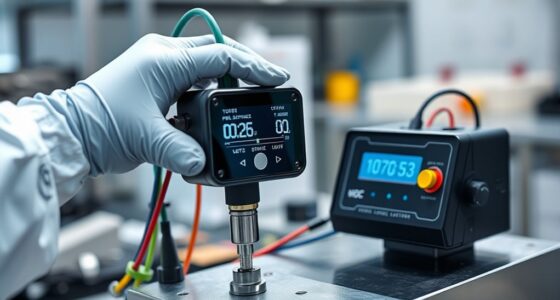
The future of air quality technology will see smart sensor networks providing continuous, real-time data on indoor pollutants and conditions. Using predictive analytics and AI, you can forecast pollution patterns and take preemptive actions like adjusting ventilation or activating air purifiers automatically. This proactive approach helps maintain healthier indoor environments, reducing health risks. As these technologies evolve, you’ll gain even more insights into air quality trends, opening up new ways to improve your space’s safety and comfort.
Key Takeaways
- AI-powered sensor networks enable real-time monitoring and proactive management of indoor air quality.
- Predictive analytics forecast pollution trends, allowing preventive actions before hazards occur.
- Automated AI responses optimize ventilation, filtration, and window controls for healthier indoor environments.
- Long-term data insights inform building design, usage, and seasonal adjustments to improve air quality.
- Integration of AI and predictive analytics transforms air quality management into a proactive, data-driven process.

As concerns about air pollution grow, innovative technologies are shaping the future of air quality management. One of the most promising developments is the use of sensor networks to monitor indoor air. These networks consist of multiple sensors placed throughout buildings, capable of continuously measuring pollutants, humidity, temperature, and other air quality indicators. By deploying sensor networks, you can gain real-time insights into indoor air conditions, allowing for immediate responses to harmful levels of pollutants. This technology helps you identify sources of indoor pollution, such as mold, volatile organic compounds, or particulate matter, and take corrective action before health issues arise. With sensor networks, indoor air quality isn’t just a static measurement; it’s an active, dynamic system that gives you ongoing data to make informed decisions. This proactive approach is critical because indoor air often contains higher concentrations of pollutants than outdoor air, and poor indoor air quality can lead to respiratory issues, allergies, and other health problems.
Furthermore, integrating sensor networks with air quality standards ensures that monitoring remains aligned with health guidelines and regulatory requirements. These sensor networks are integrated with advanced analytics, making it possible to predict patterns and potential hazards before they become serious. By analyzing data collected from indoor air sensors, predictive analytics can forecast when and where air quality might deteriorate, prompting timely interventions. For example, if sensors detect rising levels of a specific pollutant during certain times of the day, you can adjust ventilation systems or activate air purifiers proactively. This prevents exposure and maintains healthier indoor environments. The combination of sensor networks and predictive analytics empowers you to manage air quality more effectively, transforming reactive measures into proactive strategies.
Artificial intelligence takes this a step further by automating responses based on sensor data. AI algorithms can learn from patterns in indoor air quality, continuously refining their predictions and control actions. For instance, AI-enabled systems can automatically adjust HVAC settings, open windows, or activate air filtration units when sensors detect pollutants exceeding safe thresholds. This automation minimizes your effort and ensures ideal air quality at all times. Additionally, AI-driven insights can help you identify long-term trends, such as seasonal variations or the impact of specific activities, allowing you to implement preventive measures or modify building usage to improve indoor air quality.
Frequently Asked Questions
How Affordable Are Advanced Air Quality Monitoring Systems?
Advanced air quality monitoring systems are becoming increasingly affordable, especially as technology advances and more options enter the market. You’ll find that cost comparison shows prices vary based on features and accuracy, but overall, affordability factors like scalability and integration with existing systems help lower costs. While high-end models remain pricey, basic and mid-range devices offer a cost-effective way to monitor air quality without breaking the bank.
What Are the Privacy Concerns With AI in AIr Quality Tech?
You should be aware that AI in air quality tech raises privacy concerns, especially around data privacy and ethical considerations. Your location and personal health data might be collected, stored, and analyzed without clear consent, risking misuse or breaches. It is crucial to advocate for transparent data practices and regulations that protect your privacy, ensuring that advancements serve public health without compromising individual rights.
How Accurate Are AI Predictions Compared to Traditional Methods?
AI predictions are generally more accurate than traditional methods because they leverage advanced algorithms that analyze vast amounts of sensor data. With high sensor accuracy and reliable data inputs, AI models can detect subtle pollution patterns and forecast air quality changes more precisely. This leads to better real-time monitoring and proactive responses, ultimately improving air quality management compared to conventional techniques that rely on limited, less dynamic data collection.
Can Predictive Analytics Prevent Air Quality Crises Proactively?
Can predictive analytics truly prevent air quality crises before they happen? Absolutely. By integrating sensors and ensuring data transparency, you can identify early warning signs and act proactively. This approach allows you to monitor real-time conditions, anticipate issues, and implement preventive measures. As a result, you reduce health risks and improve environmental management, making crises less likely. Isn’t prevention better than cure?
What Is the Global Adoption Rate of Ai-Driven Air Quality Solutions?
You’ll find that the global adoption of AI-driven air quality solutions is steadily increasing, with many regions integrating AI into their monitoring systems. Countries in North America, Europe, and Asia lead this shift, recognizing AI’s potential to enhance air quality management. As awareness grows, more organizations are embracing AI integration, making these advanced solutions a common part of environmental monitoring efforts worldwide, helping to improve air quality proactively.
Conclusion
As you embrace the future of air quality technology, remember that predictive analytics and AI are your guiding stars in clearing the air. They’re like a lighthouse, illuminating hidden dangers before they strike. By harnessing these innovations, you become part of a movement to breathe cleaner, healthier air. The path ahead is bright, and with these tools, you’ll navigate the skies of tomorrow with confidence and clarity—making the air we share safer for everyone.