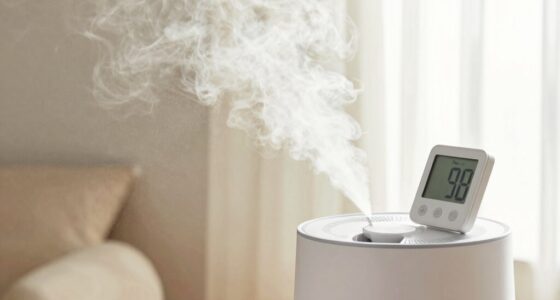
Ceiling fans can quietly change how humidity feels in your room by improving air circulation and promoting evaporation, which helps reduce dampness and clammy feelings. They don’t alter the actual moisture levels but influence how moisture is experienced, making your space feel less sticky or musty. With proper settings and placement, fans create a comfortable environment without noise. Keep exploring to discover how airflow management and fan adjustments can enhance your comfort even further.

Get home appliances delivered free with Prime
- Fast, free delivery on millions of items
- Prime Video, Amazon Music and more included
- Member-only deals all year
Key Takeaways
- Ceiling fans circulate air smoothly, influencing how humid or dry a room feels without altering actual moisture levels.
- Proper fan speed and direction can enhance evaporation, making a space feel less damp or clammy.
- Quiet, advanced motors allow continuous operation for effective humidity perception without noise disturbance.
- Strategic placement improves airflow, helping to evenly distribute humidity and prevent damp spots.
- Combining airflow adjustments with fan settings optimizes comfort and moisture perception quietly.

Ceiling fans are a popular way to keep your room comfortable, but many people overlook their impact on humidity levels. While they primarily circulate air, their influence on how humid or dry a room feels can be surprisingly significant. When used correctly, ceiling fans can help manage moisture, making the environment feel cooler or warmer without actually changing the temperature. This effect hinges on proper usage and understanding how fans interact with humidity.
One of the key advantages of ceiling fans is their energy efficiency. Unlike air conditioners, they consume much less power, making them an economical choice for maintaining comfort. By promoting better air circulation, ceiling fans can help prevent the buildup of dampness or stagnation, which often leads to musty odors or mold growth. This continuous movement not only enhances your comfort but also reduces the need for dehumidifiers or AC units, saving you money on energy bills. When you run your ceiling fan at *ideal* settings, it can help you maintain a balanced humidity level, making the room feel less clammy without increasing energy consumption.
Noise reduction is another benefit that often goes unnoticed. Modern ceiling fans are designed with advanced technology and quieter motors, enabling them to operate smoothly without disruptive sounds. This quiet operation allows you to run the fan continuously without disturbing your sleep or work, subtly influencing the room’s humidity perception. Less noise means you’re less likely to turn off the fan, ensuring consistent air movement that helps manage moisture levels effectively. When you don’t have to deal with loud, distracting noises, you’re more likely to keep the fan running, which helps maintain a steady environment. Proper airflow management can further optimize these effects, enhancing comfort and humidity control. Additionally, understanding how air circulation impacts moisture levels can help you fine-tune your fan’s settings for optimal results. Furthermore, choosing the right fan placement can maximize airflow and humidity regulation throughout the room.
Incorporating the right fan speed and direction settings can also improve your control over moisture and comfort. During warmer months, setting the fan to rotate counterclockwise creates a breeze that enhances evaporation from your skin, making you feel cooler even if the actual humidity remains unchanged. In the winter, reversing the direction can help circulate warm air trapped at the ceiling, reducing cold spots and the damp feeling often associated with high humidity. These subtle adjustments allow you to control the comfort level without relying on energy-intensive systems or creating noise disturbances. Moreover, understanding the interaction between airflow and humidity can help you optimize your fan’s settings for maximum comfort. In essence, ceiling fans quietly and efficiently influence how humidity feels in your room. Their energy efficiency means you’ll save on power, and their noise reduction features ensure you can enjoy a peaceful environment. By understanding how to use your ceiling fan effectively, you can enhance your comfort, control moisture, and create a more pleasant living space—all without sacrificing quietness or spending a lot on energy.
quiet ceiling fan with adjustable speed
As an affiliate, we earn on qualifying purchases.
As an affiliate, we earn on qualifying purchases.
Frequently Asked Questions
Do Ceiling Fans Reduce Actual Humidity Levels?
Ceiling fans don’t actually reduce humidity levels, but they improve air circulation, making the room feel cooler and more comfortable. By promoting airflow, they can help your space feel less humid without changing the moisture content. Plus, ceiling fans are energy-efficient, so you get better comfort without high electricity costs. Using a ceiling fan can make a humid room feel less sticky, even though the actual humidity remains unchanged.
Can Ceiling Fans Prevent Mold Growth?
You can’t entirely prevent mold growth with ceiling fans alone, but you’re not throwing in the towel either. Proper air circulation and moisture control are your best allies. Ceiling fans help by reducing humidity and preventing stagnant air, which mold loves. Keep your space dry and well-ventilated, and you’ll cut down the chances of mold taking hold. Think of fans as part of your mold-fighting toolkit, not the whole solution.
How Does Fan Speed Affect Humidity Perception?
When you adjust fan speed, it directly influences air circulation and your temperature perception. Higher speeds increase air movement, making the room feel cooler and reducing humidity buildup on your skin, which can make humidity feel less intense. Conversely, slower speeds decrease air circulation, making the room feel warmer and humidity more noticeable. By controlling fan speed, you can better manage how humidity feels, improving comfort and perceived air quality.
Are There Specific Ceiling Fan Features for Humidity Control?
Sure, some ceiling fans come with features like smart technology that let you control humidity levels easily, and energy efficiency to save you money while battling moisture. These fans might include humidity sensors or integrated timers, making humidity control effortless. So, if you want to turn your home into a humidity fortress without breaking a sweat, look for these high-tech, eco-friendly options—they do the thinking for you!
Do Ceiling Fans Work Better With Dehumidifiers?
Yes, ceiling fans work better with dehumidifiers, especially for improving energy efficiency and maintaining comfortable noise levels. Using both helps circulate air more effectively, reducing humidity without overloading your cooling system. The fan’s quiet operation complements the dehumidifier’s function, creating a more comfortable environment. Together, they optimize humidity control while keeping noise levels low, making your space more pleasant without increasing energy consumption.
energy-efficient ceiling fan for humidity control
As an affiliate, we earn on qualifying purchases.
As an affiliate, we earn on qualifying purchases.
Conclusion
So next time you’re sweating like a soap opera star, just remember your ceiling fan’s secret superpower: it’s not just cooling the room, it’s subtly fooling your senses about humidity. With a gentle spin, it might just turn that muggy mess into a breezy paradise—without you lifting a finger or breaking a sweat. Who knew that a humble ceiling fan could be your sneaky ally in the battle against humidity’s cruel tricks?
ceiling fan with remote control and reversible blades
As an affiliate, we earn on qualifying purchases.
As an affiliate, we earn on qualifying purchases.
modern ceiling fan for living room
As an affiliate, we earn on qualifying purchases.
As an affiliate, we earn on qualifying purchases.
NFL season / tailgating Picks
team gear
As an affiliate, we earn on qualifying purchases.