
During winter, indoor heating dries out the air, which can quickly stress your houseplants and throw your room’s humidity off balance. You might notice leaves curling, yellowing, or browning, indicating dehydration. When humidity drops too low, plants struggle to absorb water, risking damage or death. Managing indoor humidity by grouping plants, using trays, or a humidifier can restore balance. Keep exploring how to maintain ideal conditions to prevent abrupt changes affecting your space’s atmosphere.

Get home appliances delivered free — and shop member deals
- Fast, free delivery on millions of items
- Access to Prime Big Deal Days deals on October 6–7
- Prime Video, Amazon Music and more included
Key Takeaways
- Dry indoor air from heating can stress houseplants, affecting their health and overall room humidity levels.
- Houseplants release moisture, which can temporarily increase indoor humidity but may also disrupt room balance.
- Overly dry air can cause plant leaves to wilt or yellow, impacting room aesthetics and air quality.
- Proper humidity management around plants helps maintain stable indoor conditions and prevents room imbalance.
- Monitoring humidity levels ensures plants thrive without causing unintended effects on room environment.
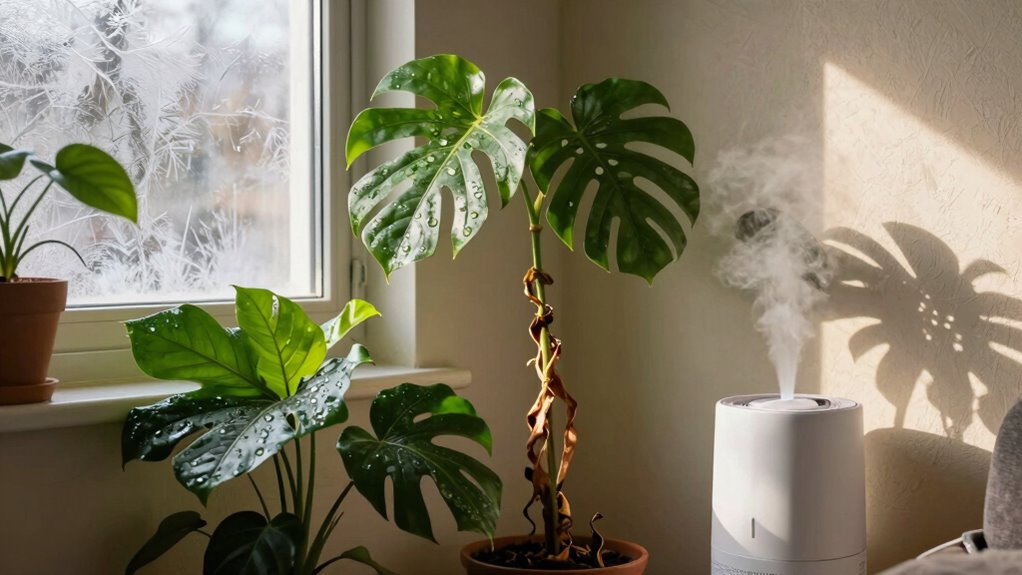
As winter sets in and indoor heating dries out the air, maintaining proper humidity levels becomes essential for your houseplants’ health. The indoor air you’re breathing in this season isn’t just affecting you—it impacts your plants too. When the air is too dry, your houseplants can quickly show signs of stress, which can throw off the balance of your plant care routine. You might notice their leaves curling, turning yellow, or developing brown edges, all signs that they’re struggling with the low humidity. The key is to understand how winter’s dry indoor air can undermine your efforts and take steps to keep it at a healthy level for your plants.
During winter, the heating system in your home actively pulls moisture from the air, creating a harsh environment for your houseplants. Unlike summer, when outdoor humidity levels are higher, winter’s indoor air becomes considerably drier, often falling below the ideal range for most plants. This dryness not only affects the appearance of your plants but also their overall health and growth. If you ignore these changes, you risk stunting their development or even causing them to die. That’s why good plant care during winter involves more than just watering; it requires managing the air’s humidity to mimic their natural environment as closely as possible. Indoor humidity levels play a crucial role in maintaining healthy plant growth during these months. Proper humidity management can make a significant difference in preventing stress and promoting thriving plants.
Winter indoor heating dries the air, stressing plants and hindering growth—manage humidity for healthy houseplants.
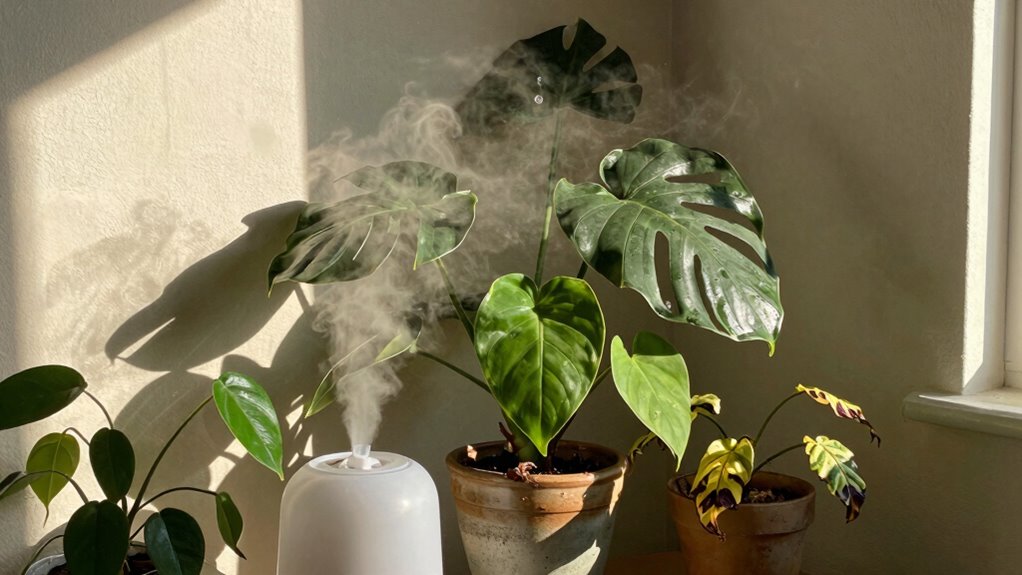
You might think watering alone will suffice, but it’s only part of the solution. When indoor air is too dry, water evaporates from your plants’ leaves faster than they can absorb it, leading to dehydration. To combat this, you can increase humidity around your plants by grouping them together, which creates a microenvironment with higher humidity. Placing a tray of water with pebbles beneath your plants also helps; as the water evaporates, it adds moisture to the air. Using a humidifier is another effective way to maintain consistent humidity levels, especially if you have multiple plants or larger indoor spaces. Humidity levels can vary depending on your home’s heating system and layout, so regular monitoring is essential. Additionally, understanding plant-specific humidity needs can help you tailor your care to each species, ensuring their optimal health during winter. Remember, each plant species has its own preferred humidity range, so adjusting based on their specific needs is essential for proper plant care.
Monitoring indoor air quality and humidity levels regularly is crucial during winter. A simple hygrometer can help you keep track without much effort. If you notice your plants’ leaves becoming crispy or dull, it’s a clear sign that the air’s dryness is affecting their health. By taking these steps, you create a more hospitable environment, reducing the risk of your houseplants becoming stressed or damaged. Overall, paying attention to indoor air and understanding its impact on plant care makes all the difference in keeping your houseplants thriving through the winter months.
As an affiliate, we earn on qualifying purchases.
Frequently Asked Questions
How Can I Measure Indoor Humidity Levels Accurately?
To measure indoor humidity accurately, you should use a digital hygrometer, which provides precise readings. Regularly calibrate your hygrometer to guarantee accuracy, especially if it’s been a while since the last calibration. Also, maintain your humidifier properly, cleaning it regularly to prevent false readings. By combining these steps, you’ll get a reliable measure of your indoor humidity, helping you adjust your environment for houseplants and comfort.
Are There Specific Houseplants That Thrive in Low Humidity?
Yes, you can choose houseplants that thrive in low humidity, like succulents and certain tropical plants. Succulent care involves minimal watering, making them perfect for dry environments. Tropical plants such as snake plants or pothos can also adapt well to low humidity if you avoid overwatering. These plants help maintain a balanced indoor atmosphere and are easier to care for during winter months when humidity drops.
What Are Natural Ways to Increase Winter Indoor Humidity?
While dry winter air triggers low humidity, you can naturally boost moisture by strategically placing plants near your radiator or windows. Use humidifiers or bowls of water as well. These methods create a gentle, consistent increase in humidity, balancing the room’s environment. Keep in mind, plant placement matters—placing them where they can absorb moisture and release it helps maintain a healthier, more comfortable indoor climate during winter months.
Can Changing Humidity Affect My Home’s Air Quality?
Yes, changing humidity can affect your home’s air quality. When humidity levels fluctuate, it impacts plant growth and overall air comfort. Too low humidity can cause dryness and respiratory issues, while high humidity encourages mold and dust mites. By maintaining proper humidity control, you support healthy plant growth and improve air quality, making your living space more comfortable and healthier for everyone.
How Often Should I Water Houseplants During Winter?
Think of your houseplants as little winter warriors—they need just enough water to stay strong. During winter, water your plants when the top inch of soil feels dry, usually every 1-2 weeks. Remember, overwatering invites pests and hampers plant fertilization. Keep a close eye, and if pests appear, act swiftly to control them. Proper watering, pest control, and fertilization help your plants thrive through the cold months.
plant humidity tray with pebbles
As an affiliate, we earn on qualifying purchases.
As an affiliate, we earn on qualifying purchases.
Conclusion
Just like the whispers of ancient forests, houseplants breathe life into your space, but winter’s dry air can turn their lushness to dust overnight. Remember, maintaining proper humidity is your secret weapon—keeping your green companions happy and your room balanced. Think of it as tending to a delicate ecosystem, where every small effort preserves nature’s harmony. Stay attentive, nurture your plants, and your home will flourish, echoing the resilience of a timeless woodland.
As an affiliate, we earn on qualifying purchases.
As an affiliate, we earn on qualifying purchases.
Evergreen bestsellers Picks
bestsellers
As an affiliate, we earn on qualifying purchases.