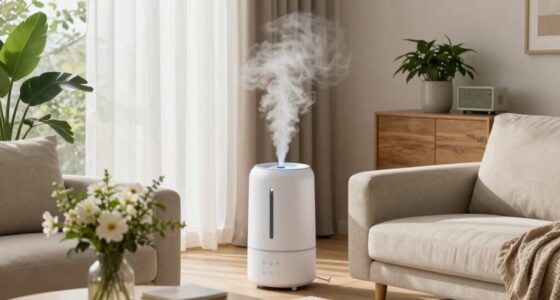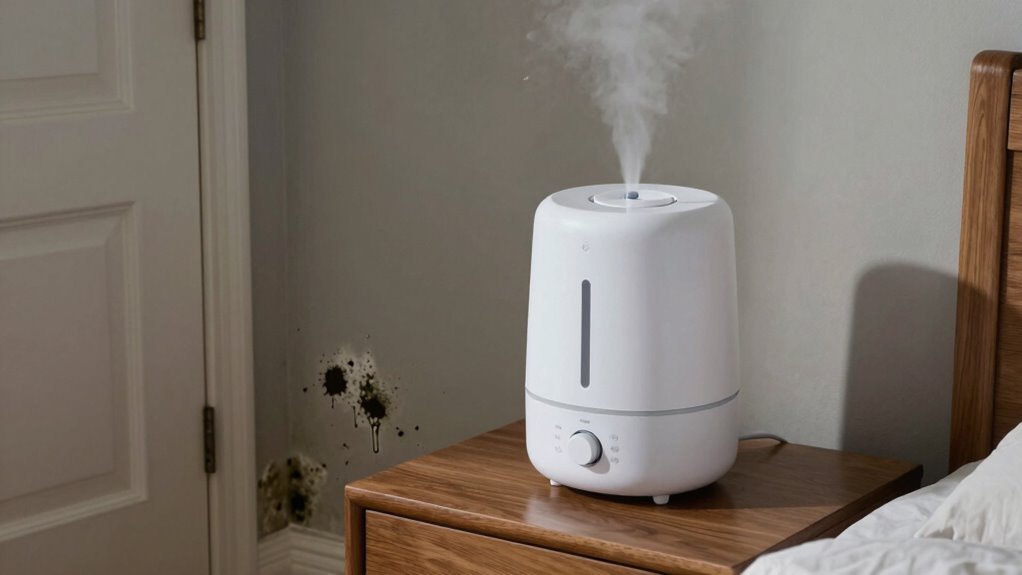

To prevent mold growth, avoid placing your humidifier in damp areas like basements and closets, where excess moisture promotes mold and mildew. Be cautious about putting it in bathrooms and kitchens, as high humidity and poor airflow can trap moisture and damage surfaces, creating mold risks. Also, don’t direct the mist at windows or carpets, which can promote mold spores. For tips on safe placement and maintenance, keep exploring how to protect your home’s air quality.

Get home appliances delivered free with Prime
- Fast, free delivery on millions of items
- Prime Video, Amazon Music and more included
- Member-only deals all year
Key Takeaways
- Avoid placing humidifiers in basements, as excess moisture can promote mold growth.
- Keep humidifiers away from closets to prevent mold and mildew on clothes and stored items.
- Do not position humidifiers directly near windows or carpets to reduce mold spores settling.
- Place humidifiers in well-ventilated, central locations to prevent damp spots and mold development.
- Regularly clean and maintain the device to prevent mold spread, especially in high-humidity regions.
As an affiliate, we earn on qualifying purchases.
Where in Your Home Should You Avoid Placing a Humidifier?

You should avoid placing a humidifier in areas where excess moisture can cause damage or create health issues. Basements often have dampness, which can lead to mold growth if a humidifier adds moisture there. The same applies to closets, especially if they’re poorly ventilated; increased humidity encourages mold and mildew on clothes and stored items. Placing a humidifier in these spaces can worsen existing moisture problems, promoting mold spores that may trigger allergies or respiratory issues. Additionally, basement dampness and closet moisture are harder to control, making it difficult to maintain proper humidity levels. To prevent mold and damage, keep humidifiers away from these damp areas and instead place them in well-ventilated, central locations where moisture levels are easier to manage. Proper humidity levels are crucial for avoiding mold growth and maintaining a healthy home environment. Proper placement helps ensure consistent humidity control and reduces the risk of mold proliferation due to poor ventilation. Being aware of indoor moisture sources can further help you select the best locations for your humidifier and prevent unseen mold development. Ensuring proper air circulation contributes significantly to reducing moisture accumulation and mold risk in your home. Additionally, monitoring humidity levels regularly can help you maintain a safe environment and prevent mold growth.
As an affiliate, we earn on qualifying purchases.
Why Are Bathrooms and Kitchens Risky for Humidifier Placement?

Bathrooms and kitchens are particularly risky spots for placing a humidifier because these areas already have high moisture levels. Poor air circulation can trap excess humidity, creating a perfect environment for mold. Improper device maintenance in these humid zones can lead to mold spores spreading quickly. Consider these risks:
- Increased mold growth due to trapped moisture and stagnant air
- Damage to surfaces like walls and cabinets from excess humidity
- Health hazards from mold spores affecting breathing and allergies
- Device malfunction caused by constant exposure to steam and condensation
Placing a humidifier here can unintentionally turn your space into a mold hotspot. Always guarantee good air circulation and regular device maintenance to prevent mold from forming.
air circulation fan for humidifier
As an affiliate, we earn on qualifying purchases.
As an affiliate, we earn on qualifying purchases.
How to Prevent Mold Growth Near Windows and Carpets When Using a Humidifier?

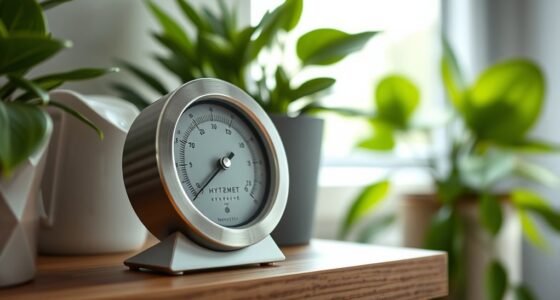
To prevent mold growth near windows and carpets when using a humidifier, controlling moisture levels and improving ventilation in these areas is essential. Mold hotspots often develop where moisture buildup occurs, especially around windows and on carpets. To minimize this, keep humidity levels between 30-50%, using a hygrometer to monitor the air. Avoid directing humidifier output straight at windows or carpets, as this increases dampness. Confirm proper airflow by opening windows regularly or using exhaust fans to reduce moisture accumulation. Cleaning and drying windows and carpets frequently helps prevent mold spores from settling. Additionally, understanding regional climate variations and the impact of additives like chicory or tea blends can influence overall indoor air quality. Being aware of regional climate factors can help tailor humidity control strategies more effectively. Proper humidifier maintenance routines are vital in preventing mold growth, ensuring that your device functions correctly and does not contribute to excess moisture. By managing moisture and enhancing ventilation, you lower the risk of mold growth and protect your home from mold hotspots caused by excess humidity.
As an affiliate, we earn on qualifying purchases.
Frequently Asked Questions
Can a Humidifier Be Safely Placed Near Indoor Plants?
Yes, you can safely place a humidifier near indoor plants, but you should do so carefully. Keep the humidifier at a reasonable distance to maintain a good humidity balance without over-saturating the air. This helps protect plant health by preventing mold growth and excess moisture. Regularly monitor both the humidity levels and plant condition to ensure ideal environment, promoting healthy growth and avoiding mold issues.
Is It Okay to Put a Humidifier in the Basement?
Placing a humidifier in your basement is like adding a splash of rain to a dry garden—you need to do it carefully. Basements often have excess moisture, which can lead to mold growth if humidity control isn’t managed well. Use a hygrometer to monitor basement moisture levels and set your humidifier wisely. Proper placement and humidity levels help prevent mold and keep your basement comfortable and safe.
How Does Humidity Level Affect Mold Growth?
Higher humidity levels promote mold growth, making mold prevention difficult. When humidity exceeds 60%, mold spores thrive and settle, especially in damp areas. To control mold, you need effective humidity control, keeping levels between 30-50%. Use a hygrometer to monitor, and adjust your humidifier accordingly. Proper humidity control reduces moisture, discourages mold, and keeps your space healthier. Always guarantee your environment stays within the recommended range for ideal mold prevention.
Should Humidifiers Be Used in Bedrooms With Pets?
Yes, you should use humidifiers in bedrooms with pets, but prioritize pet safety and allergy concerns. Keep the humidity level moderate to prevent mold growth and avoid excess moisture that can harm your pets or worsen allergies. Regularly clean your humidifier to prevent mold spores from spreading. Monitor your pets for any signs of discomfort or allergic reactions, and adjust the humidity to maintain a healthy, safe environment for everyone.
Can Improper Placement Cause Damage to Furniture?
Yes, improper humidifier placement can cause damage to furniture. When placed too close or in damp spots, it can lead to excess moisture that damages wood or upholstery. This moisture not only harms your furniture but also promotes mold growth. To prevent this, position your humidifier carefully, ensuring good air circulation, and regularly check for signs of mold or moisture buildup. Proper placement is key to mold prevention and protecting your furniture.
Conclusion
Think of your home as a delicate garden; the right placement of your humidifier is like tending to your plants. By avoiding spots prone to mold—like bathrooms, kitchens, windows, and carpets—you’re nurturing a healthy, thriving environment. Keep these areas in check, and your home will flourish with comfort and freshness. Remember, a well-placed humidifier is the gentle gardener that helps your space bloom without inviting unwanted mold.
Fall Picks
fall essentials
As an affiliate, we earn on qualifying purchases.