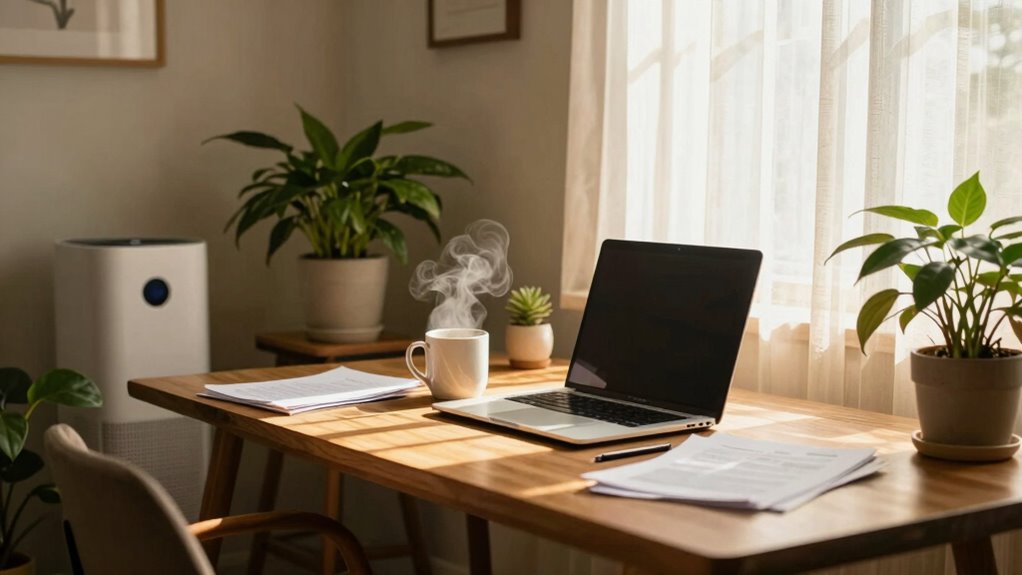

Poor indoor air quality can make it harder to stay focused during long work-from-home days. Stale, musty air, pollutants, and allergens can cause headaches, fatigue, and distraction, lowering your productivity and creativity. Without proper ventilation, dust, VOCs, and clutter accumulate, further impairing your concentration. Enhancing air circulation and using air purifiers can boost mental clarity. If you want to discover simple ways to improve your environment, keep exploring how small changes make a difference.

Get home appliances delivered free with Prime
- Fast, free delivery on millions of items
- Prime Video, Amazon Music and more included
- Member-only deals all year
Key Takeaways
- Poor indoor air quality can cause fatigue and headaches, reducing concentration during extended work sessions.
- Stale or polluted air impairs cognitive functions like problem-solving and creativity.
- Inadequate ventilation leads to pollutant buildup, making it harder to stay focused over long periods.
- Allergens and dust can trigger discomfort and distraction, decreasing work productivity.
- Improving air circulation and filtration supports mental clarity and sustained focus.

Working from home offers flexibility, but it also means your indoor environment directly impacts your focus and productivity. One of the most overlooked factors is air quality. When the air inside your home isn’t fresh or clean, it can considerably hinder your cognitive performance. Poor air quality might seem like a minor issue, but over long workdays, it can sap your energy, cloud your thinking, and even cause headaches or fatigue. Recognizing how indoor air influences your mental clarity is essential to maintaining high productivity during extended work periods.
Indoor air quality is affected by various elements, including dust, mold, volatile organic compounds (VOCs), and even the air exchange rate in your home. If your space is poorly ventilated or if you’re surrounded by clutter and allergens, your ability to concentrate diminishes. You might notice you’re more easily distracted, less creative, or slower to solve problems. These symptoms are often linked to reduced cognitive performance caused by inhaling pollutants or stale air. When the air feels stuffy or smells musty, your brain struggles to function at its best, making it harder to stay on task. Additionally, understanding how indoor air quality directly impacts cognitive function can motivate you to take proactive steps. Improving air exchange in your home by increasing ventilation can significantly boost your mental clarity.
Poor ventilation and clutter can reduce focus and creativity by increasing pollutants and stale air.
Furthermore, air circulation plays a crucial role in dispersing indoor pollutants and maintaining a healthy environment. You can take simple steps to improve your indoor air quality and boost your focus. Regularly opening windows introduces fresh air, diluting indoor pollutants and bringing in oxygen, which your brain needs for peak function. Using air purifiers equipped with HEPA filters can remove dust, pet dander, and other airborne particles that might impair your cognitive performance. Avoiding or reducing sources of VOCs—like certain cleaning products, paints, or new furniture—also helps create a cleaner environment. Additionally, maintaining a clean space by dusting and vacuuming frequently prevents allergen build-up.
Monitoring humidity levels can also enhance air quality. Too much humidity encourages mold growth, while too little can dry out your nasal passages, making you more prone to irritation and distraction. Keeping humidity between 40% and 60% strikes a balance that supports both air quality and comfort. Incorporating indoor plants can also naturally improve air quality, as many plants filter out toxins and release oxygen, creating a healthier workspace.
Ultimately, by paying attention to your indoor air quality, you directly support your cognitive performance. When the air around you is clean and well-ventilated, your mind functions more clearly, and your focus sharpens. This simple adjustment can make a noticeable difference during long work-from-home days, helping you stay productive, alert, and motivated. Remember, your environment is a powerful tool—treat it as an ally in your quest for sustained focus and efficiency.
HEPA air purifier for indoor air quality
As an affiliate, we earn on qualifying purchases.
As an affiliate, we earn on qualifying purchases.
Frequently Asked Questions
How Does Humidity Influence Concentration Levels Indoors?
Humidity levels directly impact your concentration by affecting comfort and air quality. When humidity is too high, you may feel sluggish and distracted, reducing focus. Conversely, low humidity can cause dry eyes and irritation, also hampering concentration. Maintaining ideal humidity levels—around 40-60%—creates a comfortable environment that boosts your focus and productivity during long work-from-home days. Proper humidity management helps you stay alert and efficient.
Can Plants Improve Indoor Air Quality for Better Focus?
Plant varieties like snake plants and pothos can improve indoor air quality by naturally filtering out toxins, which helps you stay focused longer. They boost air filtration, reducing pollutants and increasing oxygen levels, creating a healthier workspace. By incorporating these plants into your home office, you promote better concentration, lower stress, and a more invigorating environment, ultimately enhancing your productivity during long work-from-home days.
Are Air Purifiers Effective in Reducing Indoor Pollutants?
Air purifiers are effective at reducing indoor pollutants when you choose the right model and maintain the filters properly. Don’t fall for air purifier myths claiming they eliminate all airborne contaminants; they mainly target common pollutants like dust, pet dander, and smoke. Regular filter maintenance is essential—replace or clean filters as recommended to keep your device working efficiently, ensuring cleaner air and better focus during long work-from-home days.
Does Lighting Impact Indoor Air Quality and Mental Clarity?
Yes, lighting impacts your indoor air quality and mental clarity more than you’d think. Natural sunlight boosts your mood and reduces stress, while the right color temperature can sharpen your focus. Poor lighting can create a dull, sluggish environment, making it harder to concentrate. So, when you optimize your space with bright, natural light and balanced color temperature, you’ll notice a significant difference in your mental clarity and overall well-being.
How Often Should Indoor Air Be Ventilated for Optimal Focus?
You should ventilate your indoor space at least once every 2 to 3 hours to promote effective air exchange. Stick to consistent ventilation schedules, such as opening windows or using air purifiers, to keep fresh air circulating. This routine helps reduce indoor pollutants, boosts mental clarity, and maintains your focus during long work-from-home days. Regular airflow guarantees your environment remains healthy and conducive to productivity.
air circulation fan for home office
As an affiliate, we earn on qualifying purchases.
As an affiliate, we earn on qualifying purchases.
Conclusion
Think of your indoor air as the invisible current guiding your focus through a vast ocean. When it’s clean and fresh, your mind sails smoothly, charting courses with clarity and purpose. But if the air is stale or polluted, it’s like battling stormy seas—confusing, exhausting, and difficult to navigate. Keep your indoor air pristine, and you’ll find your focus sailing effortlessly, turning each workday into a voyage of productivity and peace.
humidifier for optimal humidity levels
As an affiliate, we earn on qualifying purchases.
As an affiliate, we earn on qualifying purchases.
As an affiliate, we earn on qualifying purchases.
Fall yard work Picks
leaf blowers
As an affiliate, we earn on qualifying purchases.