To reduce allergens during allergy season, focus on optimizing your indoor environment. Use HEPA air purifiers in main living areas to trap pollen, pet dander, and dust mites. Keep bedding and upholstery allergy-friendly by washing and covering them with hypoallergenic protectors. Maintain indoor humidity around 40-50% with a hygrometer to prevent mold and dust mites. Set your HVAC to recirculate air and replace filters regularly. Discover how these five settings can make a big difference inside your home.

Get home appliances delivered free with Prime
- Fast, free delivery on millions of items
- Prime Video, Amazon Music and more included
- Member-only deals all year
Key Takeaways
- Optimize indoor air quality by using HEPA air purifiers and maintaining proper humidity levels between 30-50%.
- Regularly replace HVAC filters and set the system to recirculate indoor air to block outdoor allergens.
- Use hypoallergenic bedding, wash it weekly in hot water, and cover pillows and mattresses with allergen-proof cases.
- Control indoor humidity with dehumidifiers or humidifiers to prevent mold growth and dust mite proliferation.
- Schedule professional HVAC assessments, keep vents clean, and monitor air quality for personalized allergy management.
As an affiliate, we earn on qualifying purchases.
How Can I Reduce Indoor Allergens During Allergy Season?
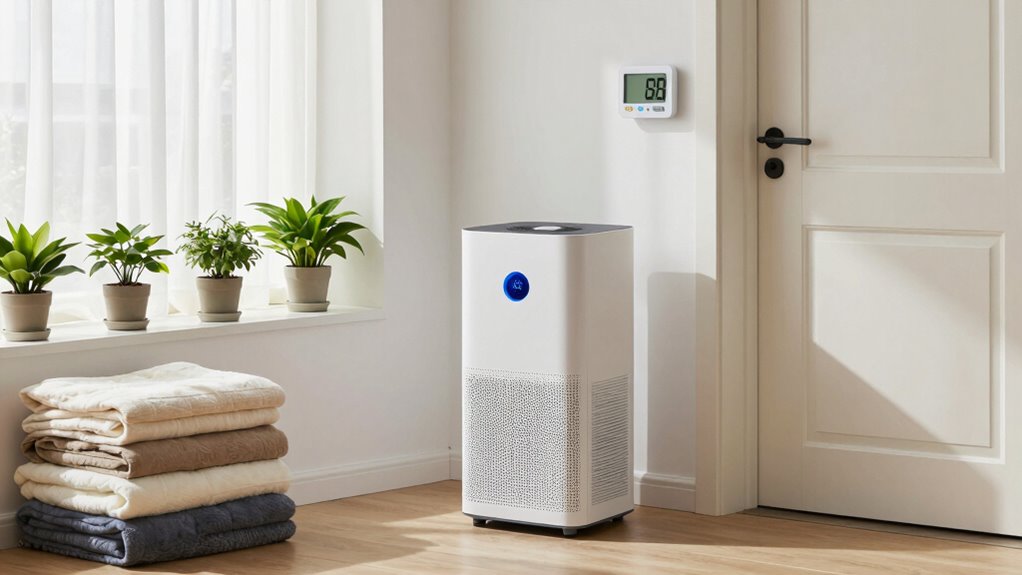
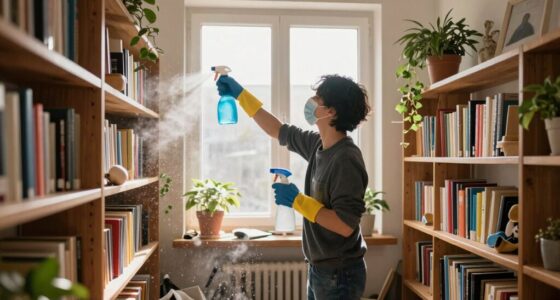
During allergy season, reducing indoor allergens can markedly ease your symptoms. One of the best ways to do this is by maintaining your air purifier properly—regular air purifier maintenance ensures it works efficiently to trap airborne irritants. Additionally, using allergen-proof bedding creates a physical barrier against dust mites and pet dander while you sleep. Wash your bedding weekly in hot water and consider encasing pillows and mattresses in allergen-proof covers. Keep your bedroom clean by vacuuming with a HEPA-filter vacuum, and minimize clutter that can trap dust. Proper ventilation and air quality management can further reduce indoor allergens and improve overall comfort. Incorporating specialized cleaning tools designed for allergen removal can enhance your efforts. Regularly monitoring indoor air quality helps you identify and address allergen sources proactively. Using air purifiers with HEPA filters is especially effective at capturing small particles that trigger allergies, significantly improving the air you breathe. By combining these strategies, you greatly cut down on indoor allergens, making your environment less triggering and more comfortable during allergy season.
hypoallergenic pillow and mattress covers
As an affiliate, we earn on qualifying purchases.
As an affiliate, we earn on qualifying purchases.
Use HEPA Air Purifiers to Capture Pollen, Pet Dander, and Dust Mites
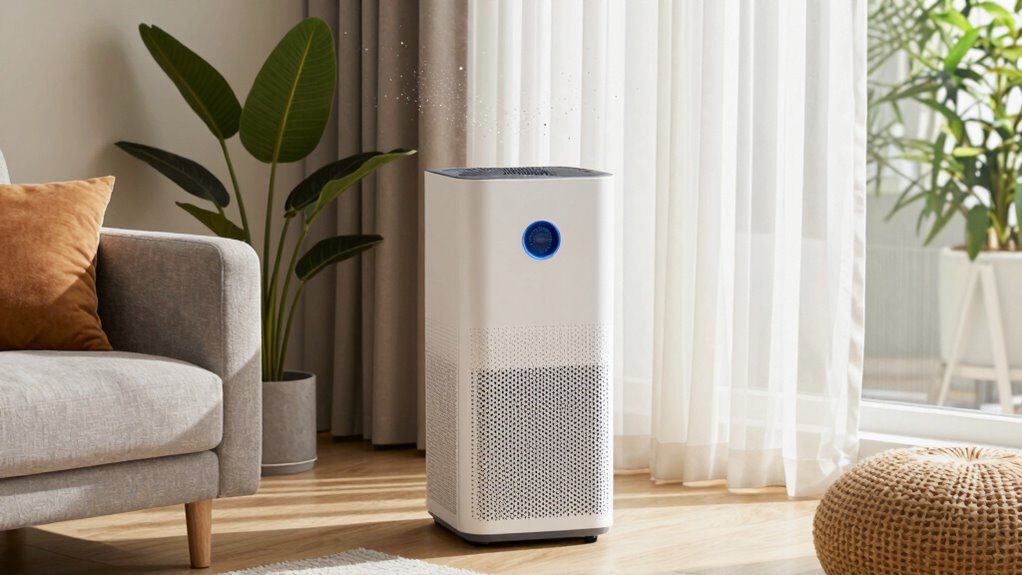
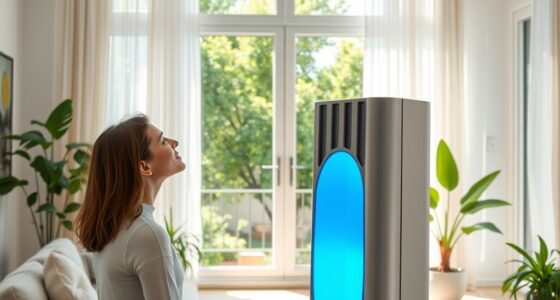
Using HEPA air purifiers is one of the most effective ways to improve indoor air quality during allergy season. These purifiers trap pollen, pet dander, and dust mites, reducing allergens you breathe in. To maximize their effectiveness, ensure proper air purifier placement—preferably in rooms where you spend the most time, like bedrooms or living areas. Regular HEPA filter maintenance is vital; check filters monthly and replace them as recommended to keep the purifier working efficiently. Avoid placing air purifiers near sources of airflow disruption or clutter, which can hinder airflow and filtration. Proper placement and maintenance guarantee your HEPA purifier continuously captures airborne allergens, providing relief and creating a healthier indoor environment during allergy season. Additionally, understanding air filtration principles can help you choose the most effective device for your space. Ensuring good humidity control can also prevent mold growth and dust mite proliferation, further improving indoor air quality. Proper ventilation is essential for reducing indoor allergens and enhancing air quality. Incorporating air exchange rates can optimize overall airflow and allergen removal in your home. Moreover, being aware of airflow patterns can help you identify the best locations for your air purifiers to maximize their allergen-removing capabilities.
indoor humidity monitor hygrometer
As an affiliate, we earn on qualifying purchases.
As an affiliate, we earn on qualifying purchases.
Make Your Bedding and Upholstery Allergy-Friendly to Minimize Dust Mites
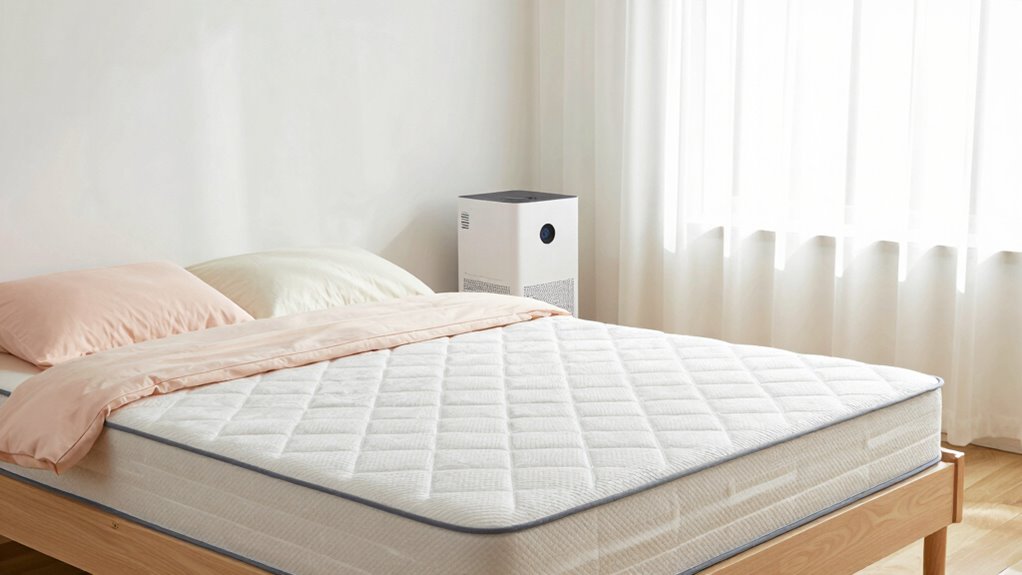
To minimize dust mites in your home, it is essential to make your bedding and upholstery allergy-friendly. Use hypoallergenic bedding, such as allergen-proof covers on pillows and mattresses, to create a barrier against dust mites. Regular upholstery cleaning helps remove accumulated dust and mites from furniture surfaces. Washing bedding weekly in hot water (130°F) also reduces mite populations. Consider replacing soft furnishings with easier-to-clean alternatives. Here’s a quick guide:
| Item | Action | Frequency |
|---|---|---|
| Pillow & Mattress | Use hypoallergenic bedding | Weekly |
| Upholstery | Regular upholstery cleaning | Monthly |
| Bedding & Linens | Wash in hot water | Weekly |
| Furniture Covers | Use allergen-proof covers | Always |
| Soft Furnishings | Replace or clean thoroughly | Every 3-6 months |
Additionally, maintaining proper charger settings and adhering to low-voltage cutoff specifications can help extend the lifespan of your batteries, ensuring reliable performance—just as proper bedding maintenance sustains a healthy sleeping environment. Regular air filtration systems can further reduce airborne dust and mites, enhancing allergy protection. Incorporating proper cleaning techniques can also prevent the buildup of dust mites and other allergens over time. Using dust-mite-resistant materials for upholstery and bedding provides an extra layer of defense against allergens. Furthermore, choosing furniture with easy-to-clean surfaces can simplify allergen management and maintenance.
air purifier replacement filters
As an affiliate, we earn on qualifying purchases.
As an affiliate, we earn on qualifying purchases.
Keep Indoor Humidity Between 40-50% to Prevent Mold and Dust Mites

Maintaining proper indoor humidity levels plays a vital role in controlling dust mites and preventing mold growth. Keeping your humidity between 40-50% creates an environment that’s less hospitable for dust mite proliferation and mold development. If humidity is too high, moisture encourages mold spores to settle and grow, which can worsen allergy symptoms. Conversely, if it’s too low, it can dry out your skin and respiratory passages, making allergies worse. Use a hygrometer to monitor indoor humidity regularly, and adjust with a dehumidifier or humidifier as needed. Proper mold prevention and dust mite control hinge on consistent humidity management. Additionally, AI-powered monitoring tools can help automate and optimize humidity control for a healthier indoor environment. Regularly checking and adjusting humidity levels ensures that indoor air quality remains optimal and reduces allergy triggers. Maintaining appropriate humidity levels also helps prevent the growth of other allergens and contributes to overall indoor comfort. For example, using smart humidity controllers can help maintain precise levels more efficiently. By maintaining this balance, you help create a healthier indoor environment, reducing allergy triggers and improving overall comfort during allergy season. Incorporating humidity sensors into your home can further enhance your ability to maintain ideal conditions effortlessly.
Set Your HVAC System to Minimize Allergens and Change Filters Regularly
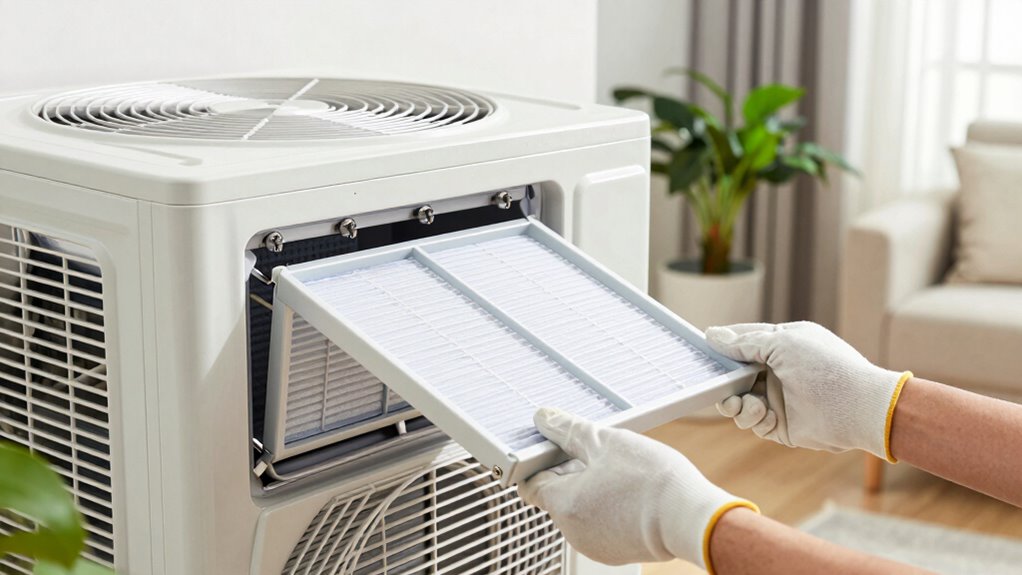
Setting your HVAC system to effectively filter out allergens is essential during allergy season. Regular HVAC maintenance guarantees your system runs efficiently and helps prevent allergen buildup. Start by selecting high-quality filters with a MERV rating of 13 or higher, which can trap smaller particles like pollen and dust mites. Change filters every 1 to 3 months, or more often if you have pets or allergies. Proper filter selection and timely replacements reduce airborne allergens and improve indoor air quality. Additionally, ensure your system’s air vents are clean and unobstructed. Maintaining your HVAC system not only minimizes allergens but also prolongs its lifespan. Using appropriate air filter types can significantly enhance allergen removal. Regularly inspecting your system’s airflow efficiency can help detect issues early and maintain optimal performance. Consistent HVAC maintenance and strategic filter choices are key to creating a healthier indoor environment during allergy season. For optimal results, consider consulting HVAC professionals for system assessments and personalized recommendations.
Frequently Asked Questions
What Are the Best Times of Day to Ventilate My Home During Allergy Season?
You should ventilate your home early in the morning or late at night, as pollen counts are typically lower then. Timing considerations include avoiding mid-day when pollen levels peak. Ventilation best practices involve opening windows briefly to exchange indoor air without letting in too much pollen. Keep windows closed during peak allergy hours, and use air purifiers to further reduce allergens. This helps maintain a healthier indoor environment during allergy season.
How Often Should I Replace or Clean My HVAC Filters for Optimal Allergy Control?
You should replace or clean your HVAC filters every 1 to 3 months for maximum allergy control. Regular HVAC maintenance helps extend filter lifespan and ensures your system effectively traps allergens. During allergy season, check filters more frequently, especially if you have pets or high pollen levels. Keeping filters clean reduces airborne irritants, improving indoor air quality. Don’t forget to upgrade to high-efficiency filters if needed for better allergen filtration.
Can Houseplants Worsen Indoor Allergy Symptoms?
Yes, houseplants can worsen indoor allergy symptoms if they harbor plant pests or release soil allergens. Pests like mites or aphids can trigger allergies, while soil allergens such as mold or dust mites may worsen your symptoms. To reduce risks, regularly inspect your plants, keep soil dry, and consider washing or repotting them. Choosing low-pollen, pest-free plants also helps minimize indoor allergy issues.
Are Natural Air Purifiers Effective Against Pollen and Pet Dander?
Natural air purifiers like plants can help improve indoor air quality, but they aren’t very effective against pollen removal or pet dander. Air purifiers with HEPA filters are much better because they actively trap pollen and dander particles. If you want to reduce allergy symptoms, rely on air purifiers designed for pollen removal, and keep your home clean and well-ventilated to minimize allergen buildup.
How Can I Identify and Eliminate Hidden Sources of Indoor Allergens?
To identify hidden sources of indoor allergens, look for areas with hidden mold in damp spots like bathrooms or basements, and inspect bedding and upholstery for dust mite habitats. Regularly clean and vacuum using HEPA filters, and reduce humidity to under 50%. Keep clutter to a minimum, wash bedding weekly, and fix leaks promptly. These steps help eliminate hidden allergens and improve your indoor air quality.
Conclusion
By tuning your home like a finely crafted symphony, you can silence the allergens that threaten your comfort. Think of your space as a fortress, where each setting is a battalion defending against pollen, pet dander, and mold. With these five simple adjustments, you’re not just managing allergies—you’re orchestrating a sanctuary of fresh, breathable air. Take control now, and let your home breathe easy, turning allergy season into just another quiet chapter.
NFL season / tailgating Picks
team gear
As an affiliate, we earn on qualifying purchases.