To keep your photos safe at home, maintain the relative humidity between 30% and 50%. Staying within this range prevents warping, mold, and deterioration caused by excess moisture or dryness. Consistent humidity levels are essential for long-term preservation, so use a hygrometer to monitor conditions and adjust accordingly with humidifiers or dehumidifiers. Knowing these tips helps protect your photos — and there’s more you can do to guarantee they last for years to come.

Get home appliances delivered free with Prime
- Fast, free delivery on millions of items
- Prime Video, Amazon Music and more included
- Member-only deals all year
Key Takeaways
- Maintain relative humidity between 30% and 50% for optimal photo preservation.
- Avoid excessive dryness or dampness to prevent damage like warping or mold growth.
- Use a hygrometer to monitor humidity levels regularly in your storage area.
- Adjust humidity with dehumidifiers or humidifiers depending on seasonal conditions.
- Consistent environmental control helps protect photos from moisture-related deterioration.
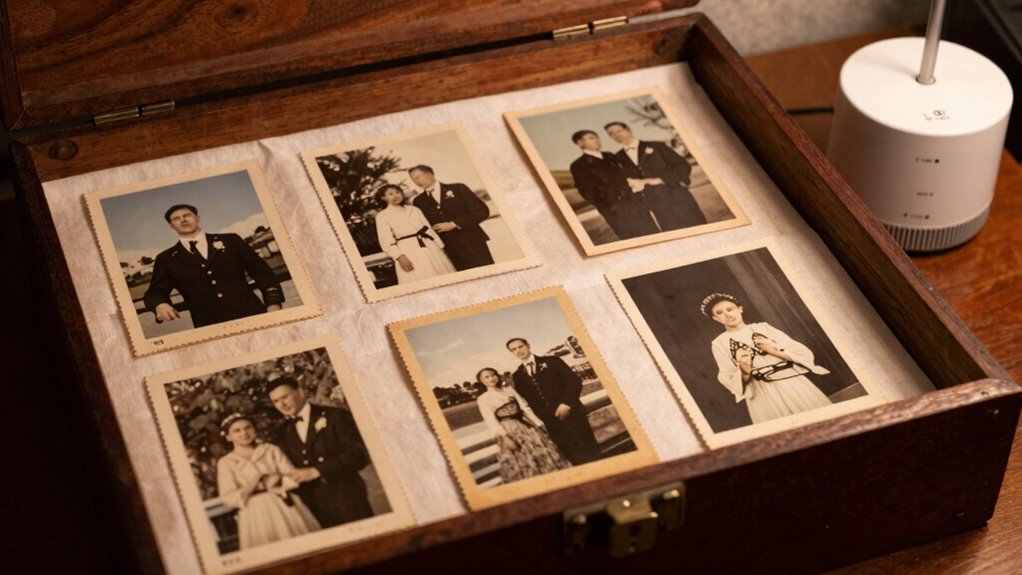
Storing photographs in the right moisture environment is essential to preserving their quality over time. When you keep your photos in conditions with proper humidity control, you prevent issues like warping, mold growth, and deterioration. The key is maintaining a safe moisture range that protects the integrity of your images without risking damage from excessive dryness or dampness. Generally, a relative humidity level between 30% and 50% is recommended for photo storage. Staying within this range helps keep your photographs stable and minimizes the risk of physical harm caused by moisture fluctuations.
Proper moisture control between 30% and 50% preserves photos, preventing warping, mold, and deterioration over time.
Temperature stability plays a vital role alongside humidity control. Fluctuations in temperature can cause expansion and contraction of the photographic materials, leading to cracks, warping, or fading over time. You should aim to store your photos in a space where temperature remains consistent, ideally between 65°F and 70°F (18°C to 21°C). Avoid areas prone to temperature swings, such as attics, basements, or garages, which often experience extreme heat or cold. Consistent temperature helps preserve the chemical stability of the images and prevents deterioration that can occur due to thermal stress. Additionally, maintaining proper climate control can significantly extend the lifespan of your photographs. Regularly checking and adjusting your storage environment can also help mitigate the effects of seasonal changes.
When you are setting up your storage environment, consider using climate-controlled rooms or storage cabinets designed for archival purposes. These options allow you to better regulate both humidity and temperature. Additionally, avoid placing photographs near sources of heat, direct sunlight, or damp areas, all of which can undermine your efforts to maintain stable conditions. Using dehumidifiers or humidifiers can help fine-tune the moisture level in your storage space, ensuring it stays within the safe range. Proper environmental monitoring with reliable devices helps you maintain optimal conditions consistently. Being aware of seasonal fluctuations can further help prevent environmental stressors that may harm your photographs.
It’s important to be mindful of seasonal changes. During humid summers, you may need to increase ventilation or use dehumidifiers, while in dry winters, humidifiers can add necessary moisture. Regularly monitoring the environment with a hygrometer and thermometer helps you catch any deviations early. If you notice high humidity levels or temperature swings, take prompt action to correct them, because prolonged exposure to unsuitable conditions can cause irreparable damage. Proper storage environment management is crucial for long-term preservation of your photographs.
Products Worth Considering

Shark Rotator Lift-Away Upright Vacuum with DuoClean PowerFins, Wine Purple, LA702

Shark NV752 Rotator Powered Lift-Away TruePet Upright Vacuum, Bordeaux

Bose TV Speaker (2nd Gen) Compact Soundbar
As an affiliate, we earn on qualifying purchases.
Frequently Asked Questions
How Do I Measure Humidity Levels Accurately at Home?
To measure humidity levels accurately at home, you can use a DIY hygrometer or digital humidity meters. A DIY hygrometer involves simple materials like a glass of water and a strip of paper to gauge moisture, while digital meters provide precise readings instantly. Place the device in your storage area and regularly check the readings to guarantee humidity stays within the safe range for your photos.
What Are Common Signs of Photo Damage Due to Moisture?
You’ll notice signs of moisture damage like photo mold growing on your pictures or a musty smell. Paper warping is also common, causing photos to curl or bend. Colors might fade or develop spots, and the surface could appear sticky or stained. If you see any of these signs, it’s essential to address humidity issues immediately to prevent further damage and preserve your photos’ quality.
Can Temperature Fluctuations Affect Photo Storage Safety?
Ever notice how sudden temperature changes seem to coincide with photo damage? They definitely can affect your storage safety. Fluctuations disrupt humidity control and compromise temperature stability, leading to warping, mold, or fading. To protect your memories, keep your photos in a cool, stable environment with consistent temperature and humidity levels. This minimizes risks, ensuring your cherished images stay vibrant and intact for years.
Are There Specific Storage Materials That Help Control Moisture?
Yes, you should use archival storage materials like acid-free boxes and albums to control moisture. Silica gel packets are especially effective, as they absorb excess humidity and keep your photos dry. Place these packets inside your storage containers to prevent mold and deterioration. Regularly check and replace silica gel to maintain ideal moisture levels, ensuring your photos stay safe over time.
How Often Should I Check My Stored Photos’ Environment?
Think of your photo storage like tending a garden—you need regular care. You should check your environment every 3 to 6 months, inspecting storage containers and ensuring proper humidity. Use photo labeling to organize and track your collection efficiently. This routine helps catch any moisture issues early, preventing damage. Keep a close eye on your photos, and you’ll preserve their beauty for generations to come.
Conclusion
Keeping your photos safe is like tending a delicate garden—too much moisture and they’ll rot, too little and they’ll wither away. By maintaining a moisture level between 30-50%, you create a cozy, balanced environment that preserves your memories for years to come. Think of it as giving your photos a spa day—just the right humidity to keep them vibrant and intact. Stay vigilant, and your treasured moments will stay alive, vivid as ever.