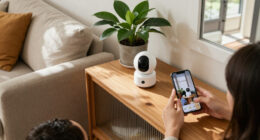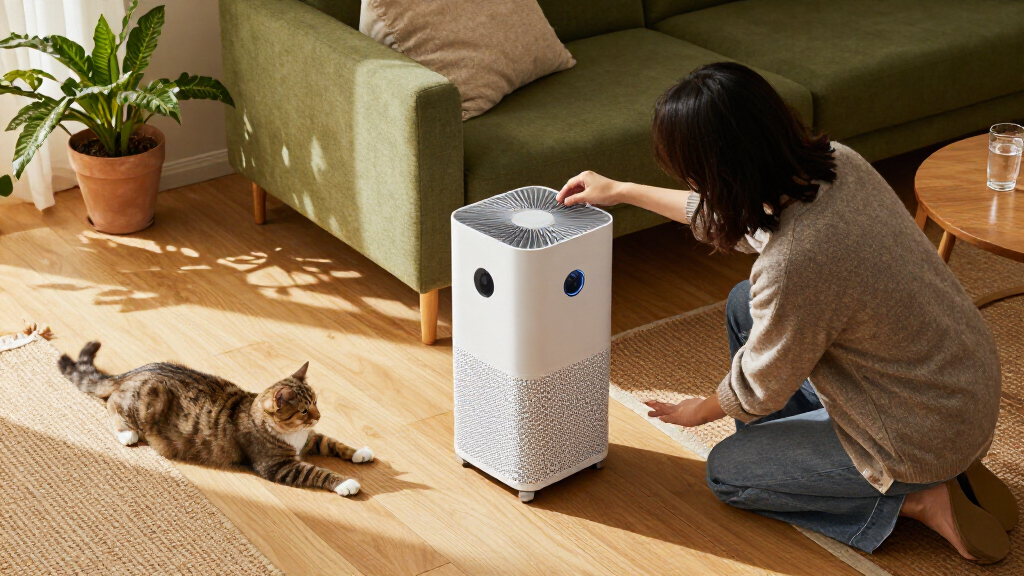
When comparing automatic air purifiers for home, the real choice is usually not whether a machine can change fan speed by itself. Many models in both categories use particle sensors to raise or lower airflow. The decision is whether app controls, remote air-quality readings, and scheduling justify paying more for a connected model.

Get home appliances delivered free with Prime
- Fast, free delivery on millions of items
- Prime Video, Amazon Music and more included
- Member-only deals all year

MOOKA PR1 Air Purifier with H13 True HEPA Filter for Large Rooms
- ✔ Coverage area: Up to 2,200 sq. ft.
- ✔ Filter: H13 True HEPA, four-stage filtration
- ✔ Pre-filter: Washable

VOOPNU Air Purifier for Home, 360° Airflow, White
- ✔ Coverage area: Up to 1,076 sq. ft.
- ✔ Dimensions: 6.69 x 6.69 x 9.84 inches
- ✔ Filtration: Triple-layer

ECOSELF Air Purifier for Large Rooms up to 1,800 sq. ft.
- ✔ Coverage area: Up to 1,800 sq. ft.
- ✔ Air intake: 360°
- ✔ Filtration: Pre-filter, HEPA filter, activated carbon layer
This comparison looks at onboard automatic HEPA purifiers and smart automatic HEPA purifiers using the same criteria: filtration, room coverage, sensor behavior, controls, noise, upkeep, and cost. A well-sized basic model can be the better buy for a bedroom or living room where someone can operate it directly. A connected model fits households that want to check readings remotely, set schedules, or manage more than one room from a phone. Neither category guarantees clean air by its label alone; filter fit, airflow, room size, and placement still matter.
At a Glance
| Criteria | Automatic HEPA air purifiers with onboard controls | Smart automatic HEPA air purifiers with app and connected controls | Winner |
|---|---|---|---|
| Particle filtration | Usually a replaceable HEPA or HEPA-type filter; check the stated efficiency and replacement guidance. | Can use the same HEPA filtration; connectivity does not itself improve particle capture. | Tie |
| Room coverage and airflow | Ranges by model; compare clean-air delivery rate or stated room size at the intended air-change rate. | Coverage still depends on the model’s airflow and room conditions, not app features. | Depends |
| Automatic sensing | Often adjusts fan speed using onboard particle readings; sensor detail varies by model. | May show sensor readings in an app and support additional modes; sensors remain model-dependent. | Depends |
| Controls and monitoring | Physical buttons and onboard indicators; operation is available at the unit. | App access can add remote readings, schedules, alerts, and controls; features differ. | B |
| Noise management | Often includes multiple speeds and sometimes sleep mode; quieter settings move less air. | Some offer remote scheduling or quieter routines; app access does not make the fan quieter. | Depends |
| Maintenance and running costs | Filter replacement and energy use vary; reminders may be basic or absent. | May provide filter-life tracking or reminders; replacement filters and power still drive ongoing costs. | Depends |
| Upfront value | Often less expensive for similar filtration and airflow, where specifications truly match. | Costs more; the premium pays for added convenience and visibility, not automatically stronger cleaning. | A |
MOOKA PR1 Air Purifier with H13 True HEPA Filter for Large Rooms
The MOOKA PR1 ranks first because it combines the broadest stated coverage in this group, a PM2.5 sensor, and controls aimed at changing household conditions. Its Auto mode is intended to adjust purification based on detected air quality, while Pet mode gives households dealing with hair and pet-related odors a dedicated setting. The washable pre-filter can catch larger debris before it reaches the rest of the four-stage system, a practical advantage over the listed ECOSELF and VOOPNU configurations, which do not specify a washable pre-filter.Its stated coverage of up to 2,200 sq. ft. is the highest here, but that figure should not be taken as a promise of identical cleaning across every layout or use case. Compared with the more compact VOOPNU, the PR1 is the more capable fit for a larger, busier space, while the ECOSELF offers a quieter stated sleep setting and turns off its display lights. MOOKA’s sleep mode is listed as low as 26 dB, and the air quality indicator may flash during a one-minute sensor warm-up after startup. Plan for filter replacement every three to six months as well as the washable pre-filter’s upkeep.
Pros:
- PM2.5 sensor supports automatic fan adjustment.
- Auto and Pet modes address changing air conditions and pet-related use.
- Washable pre-filter can catch larger debris before it reaches the other filter stages.
- Highest stated coverage in this lineup, at up to 2,200 sq. ft.
Cons:
- Replacement filters are recommended every three to six months.
- The air quality indicator may flash for about one minute while its sensor preheats.
- Its stated Sleep Mode noise is higher than ECOSELF’s listed 20 dB.
Best for: Households seeking sensor-based automatic adjustment for a larger room, especially those with pets and airborne hair to manage.
Not ideal for: Buyers who prioritize the smallest footprint, the lowest stated sleep noise, or a purifier without recurring filter replacements.
Bottom line: For a larger home that needs sensor-based operation and pet-oriented controls, MOOKA offers the most complete feature mix in this comparison.
“For a larger home that needs sensor-based operation and pet-oriented controls, MOOKA offers the most complete feature mix in this comparison.”
VOOPNU Air Purifier for Home, 360° Airflow, White
VOOPNU takes a different approach from the sensor-led MOOKA and ECOSELF: it puts compact placement and simple controls first. At 6.69 x 6.69 x 9.84 inches, it is the easiest of these three to fit on a desk or in a narrow corner. Its 360° intake and triple-layer filter are paired with a stated air cleaning rate of 250 sq. ft. every 15 minutes, giving buyers a more specific rate alongside its maximum listed coverage of up to 1,076 sq. ft.The tradeoff for that small footprint is that the supplied details do not list a PM2.5 sensor or Auto mode. We would choose MOOKA or ECOSELF when automatic fan adjustment is central to the purchase; VOOPNU instead offers a one-tap control panel and operation as quiet as 22 dB. That is a lower stated figure than MOOKA’s, but it is not specified as a Sleep Mode measurement like ECOSELF’s 20 dB. An essential oil tray adds an optional fragrance feature, while continuous operation is recommended for optimal performance. Buyers should also be comfortable sourcing official VOOPNU filters, with Standard and Pet-Care editions listed.
Pros:
- Compact dimensions suit desk and corner placement.
- 360° intake and triple-layer filtration.
- One-tap controls keep operation simple.
- Stated noise level is as low as 22 dB, with an essential oil tray included.
Cons:
- The supplied product details do not list a PM2.5 sensor or Auto mode.
- Continuous operation is recommended for optimal performance.
- The manufacturer recommends official VOOPNU replacement filters.
Best for: Someone who wants a small, quiet purifier with straightforward controls for a desk, compact room, or corner placement.
Not ideal for: Buyers who want sensor-triggered automatic fan changes, dedicated auto operation, or the broadest stated coverage.
Bottom line: Choose VOOPNU when easy placement and simple operation matter more than automatic sensor response or the lineup’s widest stated coverage.
“Choose VOOPNU when easy placement and simple operation matter more than automatic sensor response or the lineup’s widest stated coverage.”
ECOSELF Air Purifier for Large Rooms up to 1,800 sq. ft.
ECOSELF is the strongest choice here for people who want automatic air adjustment alongside a sleep setup designed to keep the bedroom dark and quiet. Its PM2.5 sensor adjusts fan speed in Auto mode, and Sleep Mode is listed at 20 dB with the display and indicator lights off. Compared with MOOKA, it has a lower stated sleep noise level and more explicit light control; compared with VOOPNU, it adds the sensor-based automatic operation that makes a purifier easier to leave running without choosing a speed yourself.The three-stage filter combines a pre-filter, HEPA filter, and activated carbon layer to help capture dust, lint, and pet hair while reducing everyday odors. Its stated coverage of up to 1,800 sq. ft. sits between MOOKA’s 2,200 and VOOPNU’s 1,076, though coverage claims should be considered in the context of your room and desired cleaning rate. ECOSELF offers three fan speeds, a 1–24 hour timer, child/pet lock, and a replacement reminder. As with the other models, filter replacement is recommended every three to six months, and the manufacturer advises using genuine ECOSELF filters. It is a more bedroom-focused alternative to MOOKA’s pet-specific modes, but it does not list a washable pre-filter.
Pros:
- PM2.5 sensor adjusts fan speed in Auto mode.
- Sleep Mode is listed at 20 dB and turns off display and indicator lights.
- 360° intake with pre-filter, HEPA filter, and activated carbon layer.
- Timer, light control, Child/Pet Lock, and filter reminder are included.
Cons:
- Filter replacement is recommended every three to six months, depending on conditions.
- The manufacturer recommends genuine ECOSELF replacement filters.
- Its stated coverage is below MOOKA’s in this lineup.
Best for: Buyers who want PM2.5-based automatic adjustment in a bedroom or quiet space, with lights that can be switched off during sleep.
Not ideal for: Households that need the widest stated coverage, a washable pre-filter, or a dedicated Pet mode.
Bottom line: ECOSELF is the better fit when quiet, dark nighttime operation and automatic sensor response outweigh maximum coverage or pet-specific modes.
“ECOSELF is the better fit when quiet, dark nighttime operation and automatic sensor response outweigh maximum coverage or pet-specific modes.”
As an Amazon Associate we earn from qualifying purchases.
Key Differences
The most important distinction is control, not filtration. A connected purifier may let you check an air-quality reading or change a setting while away, but those features do not establish that it cleans more effectively. For particle removal, compare the filter specification and airflow. If two models provide similar filtration and suitable clean-air delivery for the same room, the less expensive one may deliver the same practical air-cleaning result.
Automatic mode also needs a close look. A sensor responds to what it detects near the machine, and its readings are not a complete measurement of every pollutant in a home. Sensor type, placement, and control logic differ. Treat app graphs and onboard indicators as useful operating signals, not a guarantee of overall indoor air quality. For either category, size the unit for the room, place it where air can circulate, and keep up with filter changes.
Value comes down to whether connected features change how you use the purifier. Remote control and schedules can be worthwhile for a busy household or several rooms. If you will leave the machine on automatic mode and rarely open the app, paying extra is hard to justify. In that case, spend attention on airflow, filter availability, noise at a useful speed, and replacement costs.
Detailed Comparison
Particle filtration (major difference)
Both categories can use HEPA filters, so neither wins on connectivity alone. Compare the actual filter description, sealing and replacement guidance for each model; marketing labels do not make two filters equivalent. If specifications match, this is a tie, and the smart model’s app does not add particle capture.
Room coverage and airflow (major difference)
Neither category has an inherent coverage advantage. The specific purifier’s clean-air delivery rate and stated room size matter more than whether it connects to Wi-Fi. A model rated for a larger room may move more air, often with more fan noise. Compare coverage using the same assumptions about room size and air changes; the winner depends on the models.
Automatic sensing (moderate difference)
Both may raise fan speed when onboard sensors detect more particles. Smart models can make readings easier to check over time, but a phone display does not prove that the sensor is more accurate or the automatic response more effective. The deciding factor is the sensor and control behavior in the specific model, so this is model-dependent.
Controls and monitoring (Smart automatic HEPA air purifiers with app and connected controls wins — moderate)
Smart models win by a moderate margin for convenience: an app may add remote status checks, schedules, alerts, and adjustments. That helps when the purifier is in another room or when you manage several devices. A basic unit’s onboard controls are simpler and still work without a network or phone, which can suit a single-room setup.
Noise management (moderate difference)
Neither type is automatically quieter. A purifier’s sound depends on fan design and operating speed, and high airflow commonly comes with more noise. Smart scheduling may let you run a quieter routine at chosen hours, but it cannot change the sound of a given speed. Compare sound ratings and available low-speed settings for the exact models.
Maintenance and running costs (minor difference)
Both require filter upkeep, and ongoing costs depend on replacement frequency, filter price, and electricity use. An app may make filter reminders easier to track, giving smart models a minor convenience advantage. It does not make replacement filters cheaper or last longer by itself. Check availability and cost before buying either unit.
Upfront value (Automatic HEPA air purifiers with onboard controls wins — moderate)
A basic automatic model usually offers stronger value when it matches the smart model’s filtration and airflow at a lower price. The smart option earns its premium only if remote checks, alerts, or schedules will be used regularly. A price difference is not worthwhile merely for an app screen when the core cleaning specifications are otherwise similar.
Automatic HEPA air purifiers with onboard controls: Pros and Cons
Pros:
- Often costs less than a connected model with similar filtration and airflow.
- Onboard controls work without an app, account, or network.
- Can still adjust fan speed automatically when its sensors detect changes.
Cons:
- No remote readings or adjustments on models without connectivity.
- Schedules and reminders may be limited.
- Sensor information may be basic or unavailable beyond an indicator.
Smart automatic HEPA air purifiers with app and connected controls: Pros and Cons
Pros:
- May support remote status checks, schedules, alerts, and app controls.
- Can make it easier to manage multiple purifiers or check a unit in another room.
- May offer convenient filter tracking and air-quality history.
Cons:
- Usually costs more without inherently filtering particles better.
- App features vary and may depend on a stable network or ongoing software support.
- The app cannot compensate for insufficient airflow, poor placement, or overdue filters.
Who Should Choose What
Choose Automatic HEPA air purifiers with onboard controls if:
- You want automatic fan adjustment for one room and can use controls on the purifier.
- A lower purchase price matters more than remote readings or schedules.
- You have found a model with suitable airflow, filter specifications, and replacement filters.
Choose Smart automatic HEPA air purifiers with app and connected controls if:
- You regularly want to check or adjust the purifier when you are away from it.
- You plan schedules or alerts for rooms that are not used at the same times.
- You manage several connected devices and will use app monitoring often enough to justify the added cost.
Skip both if: Skip a particular model if its airflow is inadequate for your room, its filter replacements are difficult to obtain, or its noise at a useful setting would keep you from running it. Compare other purifier types or models that meet those practical needs.
Value for Money
Paying more for a smart model is worthwhile when remote control, scheduling, or alerts solve a real routine problem. For example, checking a purifier in a nursery from elsewhere in the home or setting different schedules across rooms can make the added control useful. The premium buys convenience and visibility; it should not be treated as a filtration upgrade unless the model’s filter and airflow specifications independently support that claim.
For many single-room buyers, the basic automatic model is the better value. Put the difference toward a unit with suitable airflow, a quieter usable speed, or filters that are easy to source. Check both the replacement price and the recommended replacement interval, since recurring costs can outweigh a small initial saving. When core specifications are comparable, buy the connected version only if you expect to use its features regularly.
Final Verdict
For most households choosing between otherwise comparable models, start with the automatic HEPA purifier with onboard controls. It can provide automatic fan adjustment without adding app costs, and connectivity alone does not improve filtration. Choose the smart version when remote monitoring, scheduled operation, or alerts will change how you manage the unit. The biggest deciding factor is whether you will use those controls: if yes, the premium can be fair; if no, the basic model is the clearer value. In either case, room-appropriate airflow, filter quality and availability, and acceptable noise should decide between specific products.
Frequently Asked Questions
Do smart air purifiers clean better than automatic models without an app?
Not by virtue of being smart. Cleaning depends on the particular filter, airflow, room size, and how the unit is operated and maintained. An app can add controls and readings, but compare the cleaning specifications separately.
Does automatic mode mean I can leave a purifier on its lowest setting?
Not necessarily. Automatic mode may raise or lower fan speed in response to the purifier’s sensor, but the behavior differs by model. Check how the unit handles its sensor readings and whether its airflow is suitable for the room.
Is an air-quality reading in the app a full measure of indoor air quality?
No. It reflects what the purifier’s sensors detect, which can be limited by sensor type and placement. Treat it as an operating indicator rather than a complete assessment of all indoor pollutants.
When is paying more for a connected purifier worth it?
It can be worthwhile if you regularly use remote checks, schedules, or alerts, especially across multiple rooms. If you set the purifier to automatic mode and rarely open the app, the extra cost is unlikely to add much value.
Evergreen bestsellers Picks

KitchenAid Artisan 5-Quart Tilt-Head Stand Mixer, Blue Velvet

KitchenAid Artisan 5-Qt Tilt Head Stand Mixer, Milkshake

De'Longhi Rivelia Automatic Espresso Machine with Grinder and Milk Frother, Beige
As an affiliate, we earn on qualifying purchases.