Your dehumidifier may freeze up because of cold temperatures, dirty filters, or blocked airflow that disrupt its cooling cycle. If humidity levels are too high or set too low, or if the room is below 65°F, frost can form on the coils. Regularly clean filters and coils, position the unit away from drafts, and adjust humidity settings. For more tips on fixing and preventing freezing, keep exploring how to keep your dehumidifier running smoothly.
Key Takeaways
- Low room temperatures below 65°F and high humidity levels cause coils to freeze.
- Dirty filters, coils, or blocked vents impair airflow, increasing frost buildup.
- Refrigerant leaks or malfunctions disrupt cooling, leading to ice formation.
- Improper placement near drafts or cold sources reduces airflow and promotes freezing.
- Turning off and defrosting the unit, then cleaning filters and coils, prevents and fixes freezing issues.

14 x 17.5 x1.75 MERV 13 Replacement Dehumidifier Filter Compatible with Santa Fe Advance90, Advance100, Advance120, Honeywell DR90 & DR120 dehumidifier Models, 2 Pack
- Compatibility: Fits Santa Fe and Honeywell models
- High-Efficiency Filtration: Removes 95% of airborne particles
- Durable Construction: Long-lasting and reliable performance
As an affiliate, we earn on qualifying purchases.
As an affiliate, we earn on qualifying purchases.
Why Does My Dehumidifier Freeze? The Science Explained

If your dehumidifier is freezing up, it’s usually because the temperature or humidity levels are outside the device’s ideal range. A common cause is setting the humidistat too low, which causes the unit to run excessively and create cold spots where ice forms. Additionally, a refrigerant leak can disrupt the cooling cycle, leading to abnormal frost buildup. When refrigerant levels are low, the evaporator coil struggles to absorb heat, increasing the chances of ice forming on the coils. To prevent this, verify your humidistat is set correctly and check for signs of refrigerant leaks, such as hissing sounds or oily residue. Refrigerant maintenance and keeping the humidity in the recommended range help avoid freezing issues. Regularly maintaining your dehumidifier can also help prevent frost buildup and ensure optimal performance. Proper temperature regulation within the room is essential to prevent the dehumidifier from freezing, especially in colder environments. Ensuring proper airflow around the unit can also reduce the risk of ice formation on the coils. Additionally, ensuring correct drainage can prevent excess moisture from accumulating and contributing to freezing problems.

HVAC Guys Complete Mini Split Cleaning Kit | Mini Split Coil Cleaner Kit Includes 360 Degree Mini Split Cleaning Bag, Bucket, Spray Nozzle, Coil Cleaner, Faucet/Hose Adapter
- Complete Cleaning Kit: Includes all necessary cleaning tools and accessories
- 360 Degree Cleaning Cover: Easily installs to prevent overspray and ensure thorough cleaning
- Deep Cleaning for Efficiency: Restores peak performance and air quality
As an affiliate, we earn on qualifying purchases.
As an affiliate, we earn on qualifying purchases.
What Causes Dehumidifiers to Freeze Up? Common Issues

Many common issues can cause your dehumidifier to freeze up, disrupting its performance and potentially damaging the unit. Poor humidity control can lead to excess moisture, causing the coil to become too cold and freeze. Additionally, if the coil efficiency drops due to dirt buildup, it struggles to remove humidity properly, increasing the risk of freezing. Other causes include:
Common causes of dehumidifier freezing include poor humidity control and dirty coils.
- Low room temperature, which makes the coil more prone to freezing.
- Dirty or clogged air filters blocking airflow, reducing coil efficiency.
- Malfunctioning fans that don’t circulate air effectively.
- Thermostat issues causing the unit to run excessively.
- Proper maintenance techniques can help identify and prevent these issues before they lead to freezing.
Addressing these problems helps maintain proper humidity control and prevents the coil from freezing up. Regular maintenance ensures your dehumidifier operates efficiently, avoiding damage.

1500 Sq. ft Dehumidifier for Basement and Large Room, 21 Pints Dehumidifiers for Home with Drain Hose, Intelligent Humidity Control, 3 Modes, 24H Timer, Ideal for RV, Bathroom, Bedroom
- Coverage Area: Removes moisture from up to 1500 sq. ft.
- Moisture Removal: Removes up to 21 pints daily
- Humidity Control: Adjusts humidity between 30%-80%
As an affiliate, we earn on qualifying purchases.
As an affiliate, we earn on qualifying purchases.
How Do Temperature and Humidity Levels Lead to Freezing?

Temperature and humidity levels directly influence whether your dehumidifier’s coil freezes. When humidity fluctuations cause moisture levels to spike, the coil becomes colder as it works harder to remove excess moisture. If the surrounding air temperature drops or varies markedly, the coil’s surface can reach freezing temperatures. Proper airflow is essential to prevent ice buildup and ensure efficient operation. Adequate air circulation helps distribute temperature evenly and reduces the risk of localized freezing. Temperature variations can also reduce the dehumidifier’s ability to regulate moisture effectively, leading to ice formation. Low temperatures mean the refrigerant inside the coil cools rapidly, increasing the risk of freezing, especially if humidity levels are high. Conversely, high humidity combined with cooler air creates ideal conditions for frost formation. Maintaining proper ambient conditions helps prevent these issues, and keeping temperature and humidity within recommended ranges helps prevent these issues, maintaining your dehumidifier’s efficiency and avoiding freeze-ups. Additionally, understanding the refrigeration cycle can help identify why these freezing issues occur under certain conditions. Incorporating proper maintenance practices can further help mitigate these problems and prolong the lifespan of your dehumidifier.

Leak Saver Leak Shot Dye Inject Kit – Complete UV Dye Refrigerant Leak Detection Kit for Automotive, Home, Commercial, Marine Air Conditioner, and Refrigeration Systems – Made in The USA
- Bright UV Dye for Leak Detection: Illuminates leaks visibly with UV flashlight
- Universal Compatibility: Works with all refrigerants and systems
- Easy to Install: Simple injection with manifold gauge or kits
As an affiliate, we earn on qualifying purchases.
As an affiliate, we earn on qualifying purchases.
How to Check and Clean Your Dehumidifier’s Air Filter and Coils

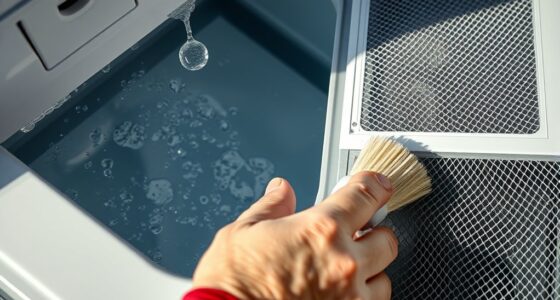
Regularly checking and cleaning your dehumidifier’s air filter and coils is essential to keep it running efficiently and prevent freezing issues. Proper air filter maintenance ensures unobstructed airflow, while coil cleaning removes dust and debris that can cause the unit to overwork. To inspect your dehumidifier:
- Turn off the unit and unplug it for safety.
- Remove the front panel or filter cover.
- Carefully take out the air filter and clean it with warm, soapy water or replace it if necessary.
- Use a soft brush or cloth to gently wipe down the coils, removing dirt and buildup.
- Ensuring proper airflow is crucial for preventing ice formation and maintaining optimal performance. Additionally, checking the humidity levels in your environment helps prevent the dehumidifier from overcooling and freezing up. Maintaining consistent temperature settings also contributes to preventing ice buildup. Doing this regularly keeps airflow smooth, prevents ice formation, and extends your dehumidifier’s lifespan. Proper air filter maintenance and coil cleaning are key to avoiding freezing problems.
What’s the Best Way to Position Your Dehumidifier for Proper Airflow?

To guarantee your dehumidifier works efficiently, you need to position it correctly for ideal airflow. Proper airflow orientation ensures the unit can draw in moist air and distribute dry air effectively. Place it away from walls and furniture, maintaining at least 6 inches of clearance around all sides. Avoid cramped spaces or corners where airflow can be restricted. Consider placement considerations like avoiding direct sunlight or heat sources, which can affect performance. Keep the intake and exhaust vents unobstructed to prevent airflow blockages. Elevate the unit slightly off the ground if possible, especially on uneven surfaces. Additionally, ensuring proper airflow management can prevent overheating and freezing issues, promoting consistent operation and extending your dehumidifier’s lifespan. Proper airflow orientation and thoughtful placement are key to maximum dehumidifier performance, especially when considering dehumidifier placement for optimal efficiency. Ensuring correct placement also helps maintain ideal humidity levels indoors, which is crucial for overall air quality and comfort. Proper placement can also reduce the likelihood of the unit freezing up unexpectedly, saving you maintenance time. Regularly inspecting and cleaning filters can further enhance airflow and prevent clogging, keeping your dehumidifier running smoothly.
How to Adjust Settings to Prevent Freezing in Your Dehumidifier

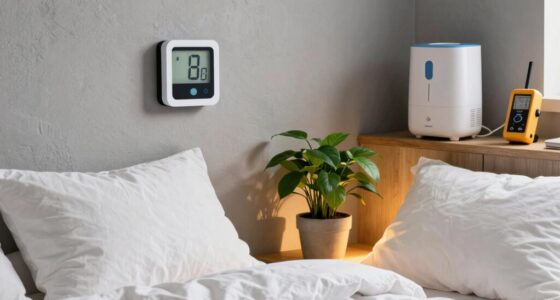
Adjusting your dehumidifier’s settings can make a significant difference in preventing it from freezing up. First, set your humidity gauge to around 50-55%, which balances moisture removal without overworking the unit. Second, guarantee your air purifier filter is clean; a clogged filter can cause the unit to work harder and freeze. Third, if your dehumidifier has a fan speed option, set it to a higher level to improve airflow. Fourth, avoid placing the dehumidifier near cold drafts or in overly humid spaces. Properly calibrated settings help maintain ideal conditions, reducing the risk of freezing. Regularly monitor the humidity gauge and make adjustments as needed to keep the air dry without pushing the system to its limits.
When and How to Thaw or Defrost Your Dehumidifier Safely

When your dehumidifier becomes frozen or begins to ice over, it is vital to defrost it promptly to prevent damage and restore proper function. Regular humidifier maintenance helps avoid frost buildup, but when ice forms, turn off the unit and unplug it. Allow the frost to melt naturally or speed up the process with a soft cloth or sponge—never use sharp objects or hot water, as these can damage components. Once the ice has melted, wipe away any excess moisture and clean the filter if needed. Make certain the room is warm enough to prevent immediate re-icing. Additionally, ensuring proper airflow and avoiding setting the humidity level too low can significantly reduce the risk of ice formation. Proper humidity control and maintaining good airflow can also contribute to preventing frost buildup and prolong the lifespan of your dehumidifier. Regularly monitoring your dehumidifier and practicing good humidifier maintenance habits will help prevent future frost buildup and keep your appliance running smoothly.
Troubleshooting Mechanical and Electrical Parts That Might Cause Freezing

If your dehumidifier keeps freezing, start by inspecting the fan motor to verify it runs smoothly. Next, check that the thermostat settings are correct and functioning properly. Finally, test the defrost components to see if they’re working as they should, preventing ice buildup.
Inspect Fan Motor Function
Since the fan motor plays a essential role in maintaining proper airflow and heat exchange, inspecting its function is indispensable when troubleshooting a dehumidifier that’s freezing up. A malfunctioning fan motor can disrupt airflow, causing cold spots and ice buildup. To check, start by:
- Listening for unusual noises or vibrations from the fan.
- Visually inspecting the fan blades for dirt, debris, or damage.
- Ensuring the fan spins freely without obstruction.
- Testing the fan motor with a multimeter for electrical continuity.
If the fan motor isn’t working correctly, airflow blockage can occur, leading to freezing issues. Clearing debris, tightening connections, or replacing the motor can restore proper airflow and prevent freezing. Proper fan operation is crucial for optimal dehumidifier performance.
Check Thermostat Settings
Could faulty thermostat settings be causing your dehumidifier to freeze up? If the thermostat isn’t properly calibrated, it may misjudge the room’s temperature, leading to improper temperature regulation. Check your thermostat’s settings and confirm they match the recommended levels for your unit. An incorrectly set thermostat causes the dehumidifier to run longer than necessary, increasing the risk of freezing. Use this simple guide to troubleshoot:
| Thermostat Setting | Ideal Temperature | Effect on Dehumidifier |
|---|---|---|
| Too low | 50-60°F | Overworking, freezing |
| Too high | 65-75°F | Insufficient operation |
| Calibration check | Accurate reading | Proper temperature regulation |
| Manual adjustment | Follow manufacturer instructions | Corrects miscalibration |
| Resetting | Restart unit | Restores proper function |
Ensure your thermostat is calibrated for best temperature regulation.
Test Defrost Components
Faulty defrost components are often behind a dehumidifier freezing up. To troubleshoot, you need to test defrost components in the defrost system. Here’s what to check:
- Inspect the defrost thermostat for continuity with a multimeter—if it doesn’t beep, replace it.
- Examine the defrost heater for burns or breaks; test for resistance to ensure it’s functioning.
- Verify the defrost timer or control board is advancing correctly; a stuck timer can hinder proper defrost cycles.
- Check the defrost sensor or temperature sensor for accurate readings; faulty sensors won’t trigger defrosting.
Testing these defrost components helps identify if the system is causing ice buildup. Properly functioning parts prevent freezing and keep your dehumidifier running smoothly.
Tips to Maintain Your Dehumidifier and Prevent Freezing Problems

To prevent your dehumidifier from freezing up, regular maintenance is essential. First, listen for unusual dehumidifier noise, which can indicate issues with airflow or components. Keep the air filter clean and replace it if it’s dirty, as obstructed filters reduce airflow and cause cold spots that lead to freezing. Check water drainage regularly to ensure it flows freely; clogged or blocked drainage can cause excess moisture and ice buildup. Keep the coils clean by wiping away dust and debris, which helps maintain proper temperature and airflow. Additionally, position your dehumidifier away from cold drafts or sources of cold air. Proper maintenance ensures consistent operation, prevents freezing, and extends your dehumidifier’s lifespan.
How to Avoid Dehumidifier Freezing: Easy Prevention Tips

Maintaining proper airflow and keeping your dehumidifier in the right environment can considerably reduce the risk of freezing. Regular humidifier maintenance ensures dust and debris don’t obstruct airflow, which helps prevent ice buildup. To avoid freezing, consider these easy tips:
Ensure proper airflow and environment to prevent dehumidifier freezing. Regular maintenance keeps your unit running smoothly.
- Keep the room temperature above 65°F to prevent cold air from causing frost.
- Ensure vents are unblocked and airflow is unobstructed.
- Clean filters and coils regularly for maximum energy efficiency.
- Use a humidifier in conjunction with your dehumidifier to maintain proper humidity levels, reducing strain on the unit.
Following these steps will help your dehumidifier run smoothly, minimize freezing issues, and maximize energy efficiency. Proper maintenance ensures reliable performance and a longer lifespan.
Frequently Asked Questions
Can Low Outdoor Temperatures Cause My Dehumidifier to Freeze?
Yes, outdoor cold temperatures can cause your dehumidifier to freeze. When the air outside is freezing, the dehumidifier’s coils can’t effectively remove moisture, increasing the freezing risk. You might notice it stopping or working less efficiently. To prevent this, avoid running your dehumidifier in outdoor cold conditions, especially during winter. If it freezes, turn it off, defrost, and wait until temperatures rise before restarting to prevent damage.
Does High Indoor Humidity Increase the Risk of Freezing?
High indoor humidity can indeed raise the risk of your dehumidifier freezing. When moisture levels soar, the device works harder, causing colder coils that are prone to ice buildup. This not only hampers mold prevention but also damages your unit. To avoid this, keep humidity levels balanced. Regularly empty the water tank and ensure proper airflow, so your dehumidifier functions efficiently without risking a freeze-up.
Are Certain Dehumidifier Models More Prone to Freezing Issues?
Some dehumidifier models are more prone to freezing due to specific model issues and design flaws. You might notice that units with poorly insulated coils or inadequate airflow tend to freeze more often. Cheaper or older models may lack advanced features that prevent freezing, making them more susceptible. To avoid this, choose a reputable brand with good reviews, and guarantee your dehumidifier is properly maintained and positioned for ideal airflow.
How Often Should I Schedule Maintenance to Prevent Freezing?
Think of your dehumidifier as a delicate dancer that needs regular practice. You should schedule maintenance every three to six months, depending on usage and environment. An inspection frequency of once a month can catch early signs of trouble. This routine keeps your dehumidifier performing smoothly, preventing ice buildup. By staying proactive, you guarantee it keeps the air dry without missing a beat.
Can Using a Dehumidifier in a Garage Lead to Freezing Problems?
Using a dehumidifier in your garage can lead to freezing issues if you don’t pay attention to garage condensation and dehumidifier placement. Cold garage temperatures cause the unit’s coil to freeze, especially if it’s placed near cold walls or in damp areas. To prevent this, make certain proper placement away from cold surfaces, maintain adequate airflow, and consider a dehumidifier designed for low temperatures. Regular maintenance also helps avoid freezing problems.
Conclusion
To keep your dehumidifier working worry-free, regularly review, rinse, and reposition for ideal airflow. Avoid icy incidents by checking filters, clearing coils, and maintaining a mindful moisture level. With simple steps and savvy servicing, you can prevent freezing frustrations and keep your space dry and comfortable. Stay attentive, stay ahead, and enjoy an effortless, efficient dehumidifying experience every time!