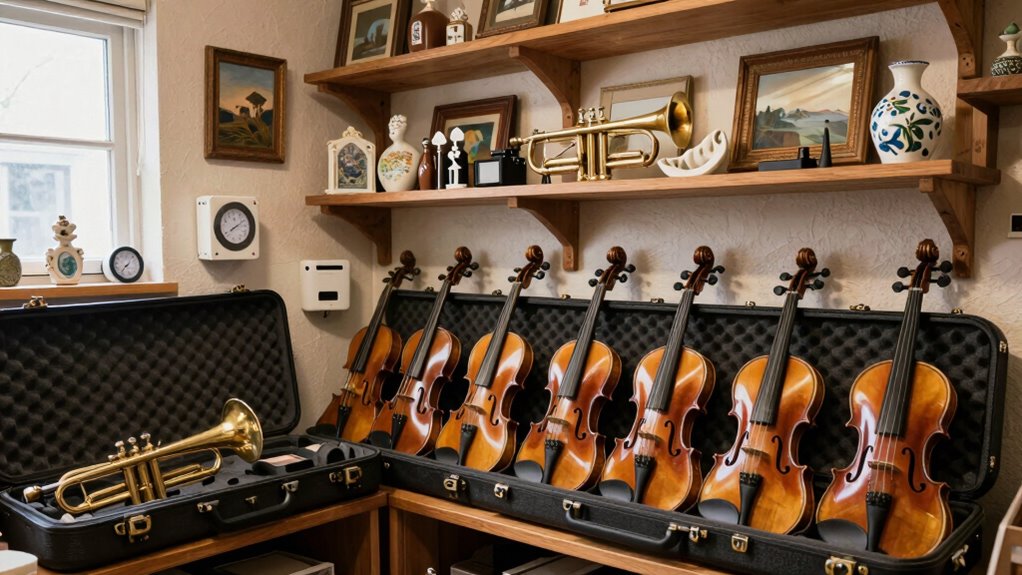
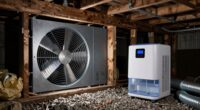
To protect your instruments and artwork, keep humidity levels between 40% and 60%. Fluctuations outside this range can cause cracking, warping, mold, and deterioration. Avoid extreme dryness or dampness by using dehumidifiers or humidifiers to maintain stability. Confirm your storage environment is consistent, well-ventilated, and free from drafts or direct sunlight. Staying within this range minimizes damage, and if you want to learn more about controlling humidity effectively, keep exploring helpful tips.

Get home appliances delivered free with Prime
- Fast, free delivery on millions of items
- Prime Video, Amazon Music and more included
- Member-only deals all year
Key Takeaways
- Maintain indoor humidity levels between 40% and 60% to prevent cracking, warping, and mold growth on instruments and artwork.
- Avoid rapid fluctuations; aim for gradual seasonal adjustments within the recommended humidity range.
- Use dehumidifiers or humidifiers to stabilize environment conditions and prevent moisture-related damage.
- Regularly monitor humidity with calibrated hygrometers placed in key storage areas for consistent readings.
- Store items in airtight, climate-controlled containers with desiccants to maintain stable humidity levels.
Why Proper Humidity Control Is Essential for Your Instruments and Artwork

Have you ever noticed how your instruments or artwork can crack, warp, or peel over time? That’s often caused by improper humidity control. Different climate zones have varying humidity levels, which can affect your items if not monitored carefully. Using humidity sensors helps you maintain ideal conditions, preventing damage from excessive dryness or dampness. When humidity fluctuates too much, materials expand and contract, leading to cracks or warping. Proper humidity control creates a stable environment, preserving the integrity of your instruments and artwork. Whether you live in a dry desert or a humid coastal area, understanding your climate zone and using reliable humidity sensors ensures your valuables stay in top condition. Additionally, Free Floating environments can also influence humidity stability, making sensor placement crucial. For example, insufficient ventilation can lead to uneven humidity distribution, increasing the risk of damage. Recognizing the significance of climate zones helps in selecting the appropriate humidity control measures for your space. Implementing these strategies can also mitigate environmental fluctuations, which are common in unpredictable weather patterns and can harm delicate materials. Being aware of humidity fluctuations allows you to take proactive steps to safeguard your collection from long-term damage.
How Humidity Fluctuations Damage Art and Instruments: And How to Prevent It

Humidity fluctuations can cause significant damage to your art and instruments by making materials expand and contract unpredictably. These changes create a humidity cycle that stresses delicate surfaces and structures. Over time, this can lead to cracking, warping, or splitting. To prevent this, you must control the environment to minimize rapid shifts. Maintaining stable humidity levels reduces expansion and contraction. Fluctuations encourage mold growth, risking mold prevention issues. Sudden changes weaken adhesives and paint layers. Proper storage and climate control are essential for preserving your valuables’ integrity. Implementing effective home soundproofing techniques can also help regulate indoor humidity by reducing external influences and maintaining a stable environment. Additionally, using humidifiers and dehumidifiers can help keep humidity levels consistent, further protecting your possessions from damage. Regular monitoring with hygrometers ensures that humidity stays within safe ranges. Understanding indoor air quality and controlling dust and microplastics can also contribute to a healthier environment for your belongings.
What Is the Ideal Humidity Range for Preserving Your Valuables?

Maintaining the right humidity level is essential for preserving your valuables, as it helps prevent damage caused by expansion, contraction, and mold growth. Ideally, keep humidity between 40% and 60%, which balances moisture levels and minimizes risks. Humidity sensors are valuable tools to monitor this range accurately, alerting you to fluctuations that could harm your items. When storing instruments or art, use proper storage containers that help regulate humidity and provide a stable environment. These containers should be airtight and designed to prevent rapid changes in moisture levels. Proper humidity control is key to long-term preservation, preventing issues such as warping and cracking. Additionally, understanding how environmental factors influence humidity can help you better manage storage conditions. Consistently maintaining this ideal range reduces the chances of warping, cracking, and mold, ensuring your valuables stay in pristine condition over time. Proper humidity control is key to long-term preservation and can be further supported by climate regulation devices that help maintain a consistent environment. Regularly monitoring ambient conditions can also help detect unexpected changes early, safeguarding your investments.
The Best Tools to Monitor and Maintain Humidity Levels

To protect your instruments and art, you need reliable tools to keep humidity levels in check. Hygrometers and thermometers give you accurate readings, so you can respond quickly to changes. Humidity control devices help maintain the ideal environment, ensuring your valuables stay in perfect condition. Using vetted equipment ensures optimal performance and peace of mind. Additionally, understanding proper storage techniques can further safeguard your collection from fluctuations that cause damage. Incorporating environmental monitoring tools can provide continuous insights, allowing for proactive adjustments to maintain the perfect humidity range. Being aware of recommended humidity levels is crucial for preventing deterioration caused by improper humidity levels.
Hygrometers and Thermometers
Monitoring the environment where you store your instruments and artwork is essential, and hygrometers and thermometers are the best tools for this task. These devices help you track humidity and temperature, preventing damage. When selecting a hygrometer, consider options like digital, analog, or even historical hygrometer types for a stylish touch. You can perform diy calibration to guarantee accuracy, keeping your readings reliable. Additionally, integrating smart home automation systems can enable continuous environmental monitoring and automated adjustments to maintain ideal conditions. Remember, consistent monitoring helps you maintain ideal conditions. Key points include: – Regular calibration for precision – Choosing reliable, easy-to-read models – Understanding different hygrometer types – Using thermometers alongside for complete climate control
Investing in quality tools allows you to sustain ideal storage environments and protect your valuable items effectively.
Humidity Control Devices
Effective humidity control devices are essential for preserving instruments and artwork, ensuring the environment stays within safe moisture levels. A reliable dehumidifier helps maintain consistent humidity, but it requires regular dehumidifier maintenance to perform at its best. You should also regularly check and calibrate your humidity sensors to ensure accurate readings. Proper calibration prevents false alarms or overlooked issues that could damage your collection. Using quality humidity sensors paired with control devices allows you to fine-tune humidity levels precisely. Keep an eye on these devices, perform routine maintenance, and calibrate sensors as recommended by manufacturers. Regular humidity sensor calibration is crucial for maintaining accurate environmental monitoring. Maintaining optimal environmental conditions through proper humidity management helps prevent mold, warping, and other moisture-related damage, giving you peace of mind that your valuables remain safe and well-preserved over time.
Practical Tips to Keep Humidity Stable at Home or in Storage

Maintaining stable humidity levels is essential for preserving your instruments and artwork, as fluctuations can cause warping, cracking, or deterioration. To achieve this, avoid common humidity myths that suggest drastic changes are harmless. Instead, make seasonal adjustments gradually, based on the environment’s needs. Here are practical tips:
- Use a dehumidifier or humidifier to maintain consistent levels.
- Place hygrometers in key areas to monitor fluctuations.
- Keep items away from windows, radiators, or vents that cause drafts.
- Store items in climate-controlled spaces whenever possible.
Choosing the Right Storage Environment and Materials

You need to create the right environment and choose proper materials to protect your instruments and art. Stable temperature and humidity levels are essential to prevent damage, so select a space that maintains consistent conditions. Use archival-quality materials that won’t react with or harm your items over time.
Proper Storage Conditions
Choosing the right storage environment and materials is essential for preserving your instruments and artwork. You need to consider climate zones to maintain consistent humidity and temperature levels, preventing damage. A suitable environment supports the longevity of your items and enhances storage aesthetics. To achieve this, focus on:
- Maintaining stable humidity and temperature levels
- Using climate-controlled storage spaces when possible
- Avoiding direct sunlight and extreme temperature fluctuations
- Selecting containers that protect against dust, pests, and pollutants
These steps ensure your items stay in ideal condition. Proper storage conditions reduce the risk of warping, cracking, or mold growth. By paying attention to climate zones and choosing appropriate storage aesthetics, you safeguard your collection effectively and keep it looking its best.
Selecting Suitable Materials
Selecting the right materials for storage is key to protecting your instruments and artwork from damage. You need to regard material compatibility to prevent chemical reactions or deterioration over time. For example, choose storage container types made from inert materials like acid-free paper, glass, or certain plastics that won’t emit harmful vapors. Avoid containers with metal components or adhesives that can corrode or stain your items. The container’s material should support proper humidity control, making sure it doesn’t absorb or release moisture that could harm your collection. Properly selected containers also help maintain stable temperature and humidity levels, reducing the risk of warping, cracking, or mold growth. By choosing suitable materials and containers, you assure your valuables remain preserved and protected for years to come.
Troubleshooting Common Humidity Problems During Storage

Humidity fluctuations can cause significant damage to stored instruments and artwork if not properly managed. To troubleshoot common humidity problems, start by regularly checking your humidity sensors to guarantee accurate readings. If you notice sudden changes, consider adjusting your dehumidifier or humidifier accordingly. High humidity promotes mold prevention issues, so monitor for mold growth and address it immediately. Low humidity can cause cracking or warping; use humidifiers or moisture packs to stabilize levels. Key points to remember include:
- Regularly calibrate humidity sensors for accuracy
- Maintain consistent humidity levels within recommended ranges
- Use desiccants or humidifiers as needed
- Inspect items frequently for signs of mold or cracking
Staying vigilant helps prevent long-term damage and keeps your stored items in prime condition.
Long-Term Strategies to Protect Your Items From Humidity Damage

To effectively protect your items from long-term humidity damage, you need to implement strategic, proactive measures that address environmental stability. Use desiccant packs inside airtight containers to absorb excess moisture and maintain consistent humidity levels. Store delicate items in sealed environments, reducing exposure to fluctuating conditions. Regularly check and replace desiccants to ensure their effectiveness. Additionally, consider using dehumidifiers in storage areas for ongoing control. Here’s a quick comparison:
| Method | Benefit |
|---|---|
| Airtight containers | Blocks external humidity sources |
| Desiccant packs | Absorbs internal moisture |
Combining these strategies helps create a stable environment, protecting your instruments and art for years to come. Staying vigilant and proactive minimizes long-term humidity-related risks effectively.
Frequently Asked Questions
How Often Should Humidity Levels Be Checked in Storage Areas?
You should check humidity levels at least once a week to guarantee proper storage maintenance. Regular humidity monitoring helps you catch fluctuations early, preventing damage to your instruments and art. If you notice significant changes, it’s best to make adjustments promptly. Consistent checks keep your storage environment stable, protecting your valuable items from moisture-related issues and ensuring they remain in ideal condition over time.
Can Dehumidifiers or Humidifiers Damage Stored Items?
While dehumidifiers and humidifiers are essential for moisture absorption and mold prevention, they can harm your stored items if misused. Excess humidity from humidifiers causes mold and warping, whereas overly dry conditions from dehumidifiers can make materials brittle. You must monitor humidity levels carefully, maintaining a balanced environment to protect your collectibles without risking damage from extreme dryness or dampness. Proper control ensures your items stay safe and preserved.
What Are Signs of Humidity-Related Damage on Instruments and Art?
You’ll notice signs of humidity-related damage like mold growth or material warping on your instruments and art. Mold appears as fuzzy or discolored spots, often with a musty smell, while warping causes surfaces to bend or distort. Keep an eye out for peeling paint, cracked surfaces, or irregularities in shape. Addressing these issues early helps prevent further damage, so monitor your items regularly and maintain proper humidity levels.
Are There Specific Storage Containers That Better Regulate Humidity?
Think of your storage like Pandora’s box—airtight containers keep humidity at bay. Using these, paired with silica gel packs, creates a dry environment that shields your instruments and art from moisture damage. These containers lock out excess humidity, while silica gel absorbs any residual moisture. Together, they form an effective barrier, ensuring your valuable items stay pristine and protected, much like a treasure chest safeguarding priceless gems.
How Do Seasonal Changes Affect Humidity Control Strategies?
Seasonal fluctuations require you to adapt your humidity control strategies throughout the year. As outdoor humidity levels change, you should adjust your dehumidifiers or humidifiers accordingly to maintain a stable environment. Climate adaptation means regularly monitoring humidity levels and using appropriate storage solutions, like sealed containers or climate-controlled spaces. Staying proactive guarantees your instruments and art stay protected from damage caused by seasonal shifts in humidity.
Conclusion
If you ignore humidity control, your precious instruments and artwork could face unseen damage over time. The right environment isn’t just a detail—it’s your best defense against costly repairs or irreversible loss. Are you prepared to take the necessary steps now? Remember, a small oversight today might lead to unexpected surprises tomorrow. Stay vigilant, keep your storage environment stable, and safeguard your valuables before it’s too late. The future of your collection depends on the choices you make now.
Evergreen bestsellers Picks
bestsellers
As an affiliate, we earn on qualifying purchases.