
You might be surprised to learn how much crawl space air rises into your living areas, affecting indoor air quality more than you realize. Moisture, mold spores, and odors can be carried upward through natural airflow patterns driven by temperature and pressure differences. Gaps and vents often make it easier for damp air to enter your home. To prevent hidden moisture problems, it’s important to understand these airflow dynamics—keep exploring to discover how you can better control your indoor environment.

Get home appliances delivered free with Prime
- Fast, free delivery on millions of items
- Prime Video, Amazon Music and more included
- Member-only deals all year
Key Takeaways
- Crawl space air naturally rises into living areas through gaps, vents, and cracks, impacting indoor air quality.
- Temperature and pressure differences drive moist air movement from the crawl space upward.
- Poor ventilation traps damp air, increasing mold risk and moisture accumulation inside the home.
- Sealing vents and installing vapor barriers can significantly reduce upward moisture migration.
- Understanding airflow patterns helps homeowners implement targeted moisture and air quality controls.
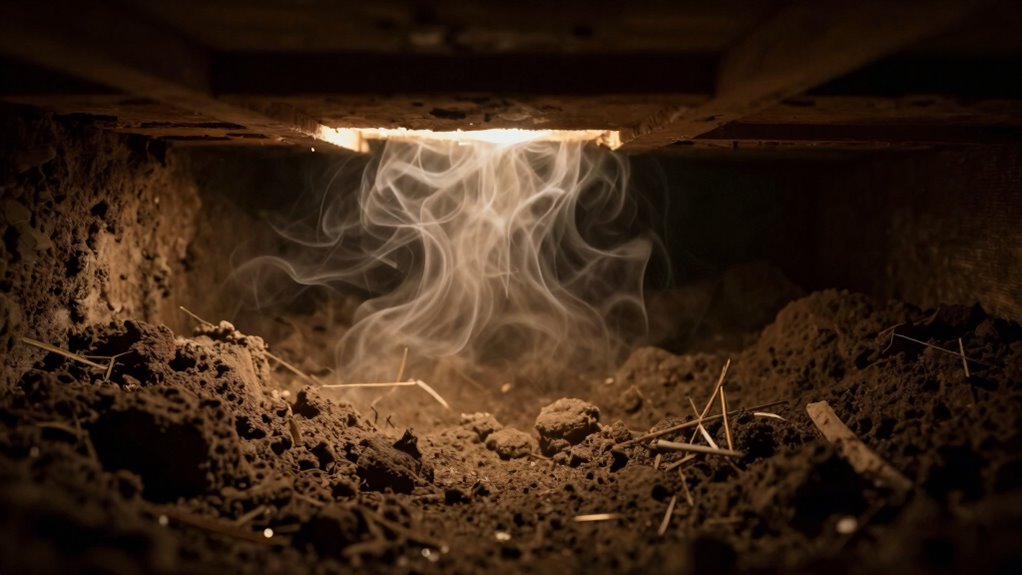
Many homeowners underestimate how much crawl space air rises into their living areas. They often think that the space beneath their home is isolated, but in reality, air from the crawl space can substantially influence indoor air quality. This movement isn’t just accidental; it’s driven by natural airflow patterns, which means that the ventilation effectiveness of your crawl space directly impacts the air you breathe inside your home. If your crawl space isn’t properly ventilated, it can become a source of moisture migration—hot, humid air from below can seep into your living spaces, carrying with it dampness, musty odors, and even mold spores.
Crawl space air can significantly impact indoor air quality through natural airflow and moisture migration.
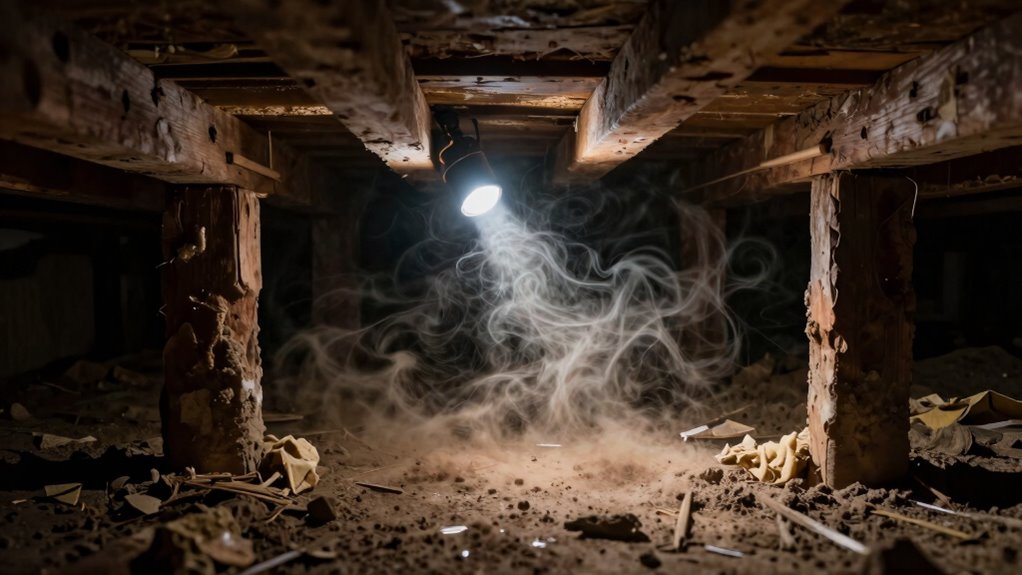
Understanding this upward movement is key to maintaining a healthy home environment. When warm, moist air from the crawl space rises, it often finds its way through gaps, vents, and cracks into your living areas. This process is influenced by temperature differences, pressure variations, and the design of your home’s ventilation system. If your crawl space lacks adequate ventilation, moisture can accumulate, creating a breeding ground for mold and wood rot. As this moisture migrates upward, it compromises the integrity of your home’s structure and can lead to costly repairs down the line.
You might assume that simply opening vents or installing fans will fix the problem, but it’s not that straightforward. Effective ventilation doesn’t just mean moving air around; it means controlling the quality, flow, and moisture content of that air. Poorly designed or insufficient ventilation can actually worsen moisture migration, trapping damp air in the crawl space and pushing more moisture upward. On the other hand, a well-planned ventilation system helps maintain balanced airflow, reducing the amount of moisture that drifts into your home and improving overall ventilation effectiveness. Properly managing airflow patterns is crucial for preventing moisture-related issues in your home. Additionally, understanding how ventilation strategies impact moisture control can help you implement more effective measures. Proper sealing, insulation, and vapor barriers can also significantly reduce the moisture migration process, further protecting your home.
You should also consider that moisture migration isn’t just about humidity levels. It’s about how moisture-laden air travels from the crawl space into your living areas. Proper sealing of vents, insulating the crawl space, and installing vapor barriers can markedly slow this process. These measures help control the airflow, reducing the volume of moisture migration and preventing dampness from reaching your home’s interior. In fact, air pressure differences can play a significant role in driving moisture upward, making it important to address all aspects of ventilation and sealing. By addressing these factors, you can limit the upward movement of crawl space air, creating a healthier, more stable environment inside your home.
In addition, understanding the role of natural airflow patterns can help you implement more effective solutions for moisture control. In the end, understanding how crawl space air moves and influences your home allows you to take targeted steps to improve ventilation effectiveness. Recognizing that moisture migration can travel upward more than most homeowners think is essential for protecting your investment and maintaining a safe, comfortable living space.
As an affiliate, we earn on qualifying purchases.
Frequently Asked Questions
How Can I Tell if Crawl Space Air Is Affecting Indoor Air Quality?
You can tell if crawl space air affects your indoor air quality by noticing musty odors, increased allergies, or respiratory issues. Check for excess moisture, mold, or condensation under the house. Improving ventilation strategies and moisture control in the crawl space help prevent contaminated air from rising. Regular inspections and installing vapor barriers or dehumidifiers are effective ways to keep indoor air safe and healthy.
What Are the Health Risks Associated With Crawl Space Air Infiltration?
You face health risks like mold growth and pest intrusion from crawl space air infiltration. Mold spores can trigger allergies, asthma, and respiratory issues, especially if moisture encourages mold development. Pest intrusion can bring bacteria and allergens into your home, worsening indoor air quality and causing health problems. Protect yourself by sealing and ventilating your crawl space properly, reducing the chances of airborne contaminants reaching your living areas.
Can Crawl Space Air Movement Cause Structural Damage Over Time?
Think of your crawl space like a hidden engine that powers your home’s stability. If moisture control isn’t maintained with vapor barriers, air movement can lead to wood rot and mold, weakening structural elements over time. Continuous exposure to damp air causes wood to warp and decay, risking foundational damage. Properly sealing with vapor barriers and controlling moisture prevents this, ensuring your home stays strong and safe for years to come.
How Does Insulation Impact Crawl Space Air Movement?
Insulation impacts crawl space air movement by improving insulation effectiveness and acting as an airflow barrier. Properly installed insulation reduces warm air from rising and prevents unwanted drafts, helping control moisture and airflow. When insulation is missing or damaged, air moves more freely, causing temperature fluctuations and potential moisture issues. To minimize crawl space air movement, guarantee your insulation is continuous, well-sealed, and meets recommended standards.
What Preventive Measures Can Reduce Upward Air Migration From Crawl Spaces?
Did you know that up to 50% of indoor air can come from crawl spaces? To reduce upward air migration, you should install vapor barriers on the floor to block moisture and improve moisture control. Sealing vents and adding insulation can also help. These preventive measures create a barrier, preventing air and moisture from rising, which keeps your home healthier and more energy-efficient.
As an affiliate, we earn on qualifying purchases.
Conclusion
Now that you know crawl space air tends to rise more than you might expect, isn’t it worth checking how this affects your home’s comfort and energy bills? Imagine the impact of unfiltered, damp air sneaking into your living spaces—could that be why you’re battling drafts or high heating costs? Taking action now can improve your home’s air quality and efficiency. Don’t wait until small problems turn into costly repairs—your home’s health depends on it.
As an affiliate, we earn on qualifying purchases.
As an affiliate, we earn on qualifying purchases.
Fall Picks
fall essentials
As an affiliate, we earn on qualifying purchases.