
Rain increases indoor humidity even when windows are shut, causing particles like dust, allergens, and bacteria to become heavier and settle faster on surfaces. Higher moisture can also promote mold growth if humidity stays high. While outdoor rain helps wash particles away, the moisture indoors changes how particles behave, affecting air quality and surface contamination. Understanding these effects can help you better manage your indoor environment—there’s more to this impact than meets the eye.

Get home appliances delivered free with Prime
- Fast, free delivery on millions of items
- Prime Video, Amazon Music and more included
- Member-only deals all year
Key Takeaways
- Rain increases indoor humidity, causing particles like dust and allergens to become heavier and settle faster.
- Elevated humidity from rain can promote mold growth, affecting indoor air quality even with windows closed.
- Moist conditions may reduce the efficiency of air filters and purification systems inside, requiring maintenance.
- Outside rain facilitates natural removal of airborne particles, but indoor particles may resuspend if humidity or airflow changes.
- Managing indoor humidity with dehumidifiers or air conditioning helps control particle behavior during rainy weather.
Rain can profoundly alter indoor particle behavior even when your windows are shut, challenging the common belief that keeping windows closed keeps your indoor air clean. When rain pours outside, it influences more than just the weather; it affects how particles move, settle, and linger inside your home. You might think that sealing your windows keeps pollutants out, but rain’s impact on humidity and air filtration means indoor air quality can change unexpectedly.
Rain increases humidity levels indoors, which can cause particles—like dust, allergens, and even airborne bacteria—to behave differently. Higher humidity makes these particles heavier, causing them to settle faster onto surfaces. This process might seem like a good thing because it reduces airborne particles, but it can also lead to mold growth if moisture persists. That’s why humidity control becomes vital during rainy days. Using dehumidifiers or air conditioning helps maintain a balanced humidity level, preventing excess moisture that can foster mold or dust mites. Proper humidity control guarantees that particles don’t settle excessively or become more airborne due to dry conditions.
In addition to humidity, rain influences air filtration systems. Many homes rely on air purifiers to remove airborne pollutants, but the effectiveness of these devices can shift during rainy weather. Increased humidity may cause some filters, especially those not designed for high-moisture environments, to clog or become less efficient. Conversely, the moist air can also promote the removal of certain particles through natural processes like wet deposition, where rain essentially “washes out” particles from the air outside. However, once these particles settle on surfaces or are absorbed into the indoor environment, your air filtration systems need to work harder to clean the air effectively. Regularly replacing or maintaining filters during rainy periods ensures they continue functioning properly. Additionally, understanding the impact of weather conditions like rain on indoor particle behavior can help you better prepare and adapt your air quality management strategies during these times. Recognizing how indoor humidity interacts with particle dynamics can further optimize your efforts to maintain a clean indoor environment.
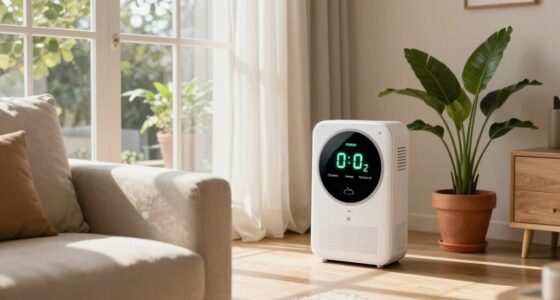
dehumidifier for indoor humidity control
As an affiliate, we earn on qualifying purchases.
As an affiliate, we earn on qualifying purchases.
Frequently Asked Questions
How Does Rain Affect Indoor Air Quality During Storms?
During storms, rain increases outdoor humidity, which can affect your indoor air quality by promoting mold growth and dust mite proliferation. Rain also influences indoor particle behavior, even with windows shut, as moisture can carry particles inside. To maintain good air quality, you should use effective air filtration systems that trap pollutants and reduce humidity levels, preventing allergens and airborne particles from impacting your health during rainy weather.
Can Indoor Particles Become More Harmful When It Rains Outside?
Like the Wright brothers’ first flight, rain can unexpectedly change indoor particle harm. When it rains outside, outdoor pollution particles may linger longer indoors, especially if humidity rises. Increased indoor humidity can cause particles to settle differently or even grow, making them more harmful. So, yes, rain can make indoor particles more dangerous, particularly if you don’t ventilate properly or control indoor humidity levels during storms.
Do Different Types of Rain Impact Indoor Particles Differently?
Yes, different types of rain can impact indoor particles differently. Heavy rain with unique rain chemistry can cause particles to break down or change composition, potentially making them more harmful or easier to filter out. Light drizzle might have less effect. You can improve indoor air quality by using effective particle filtration systems, especially during or after specific rain events, ensuring harmful particles are removed regardless of rain type.
How Long Do Rain-Induced Indoor Particle Changes Last?
Rain-induced indoor particle changes typically last a few hours to a couple of days, depending on rain intensity and indoor moisture levels. As rain influences particle dynamics by increasing indoor moisture, particles may settle or change behavior during this period. Once rain stops and indoor moisture stabilizes, indoor particle behavior gradually returns to normal. Maintaining good ventilation helps speed up this process, reducing lingering effects of rain on indoor air quality.
Are There Specific Indoor Areas More Affected by Rain-Related Particles?
You’ll notice that areas like bedrooms and living rooms are more affected by rain-related particles because they often have higher humidity fluctuations and less ventilation. These conditions promote dust accumulation and make particles linger longer. In contrast, well-ventilated spaces with controlled humidity see fewer impacts. To reduce effects, consider using air purifiers and maintaining consistent humidity levels, especially during rainy weather, to minimize indoor particle buildup.
air purifier with high moisture tolerance
As an affiliate, we earn on qualifying purchases.
As an affiliate, we earn on qualifying purchases.
Conclusion
So, stay savvy about sudden showers, and remember, rain’s ripple reaches beyond rooftops, altering indoor air. With windows shut, you might still see particles shift and settle, subtly shaping your space. Shield your sanctuary by staying aware of this weather-whispered wonder. Rain’s ripple reminds you that even closed curtains can’t completely contain atmospheric antics. Stay smart, stay safe, and keep your space serene, despite the storm’s silent, sneaky sway.
As an affiliate, we earn on qualifying purchases.
As an affiliate, we earn on qualifying purchases.
Halloween Picks
halloween
As an affiliate, we earn on qualifying purchases.