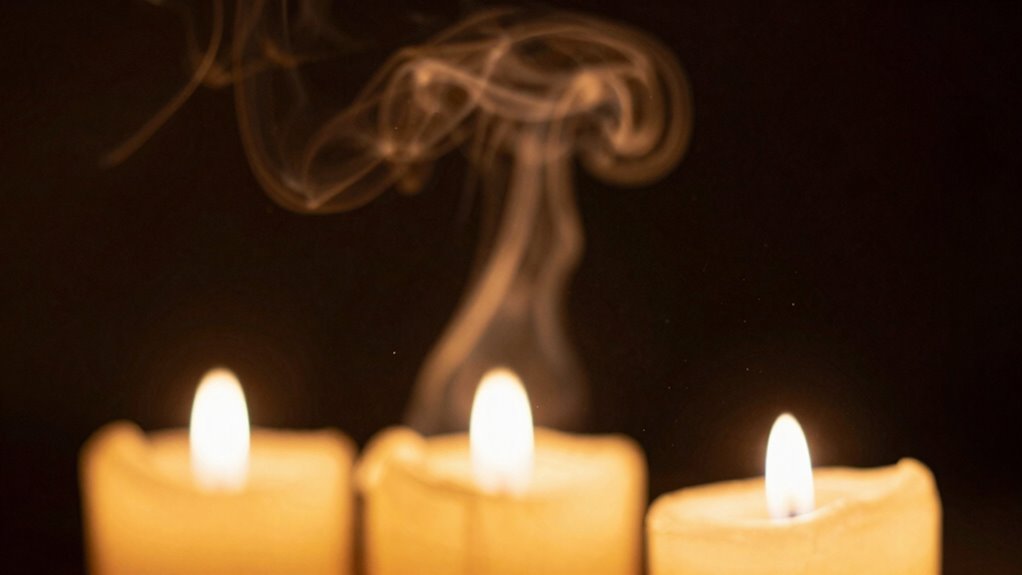

When you burn candles, especially those made with paraffin or synthetic additives, particle levels can spike quickly and disturb indoor air quality more than you might realize. Different wax types and combustion processes release soot, VOCs, and smaller particles that stay airborne longer or settle faster, depending on size. Poor ventilation makes these effects worse. If you keep burning candles without understanding their impact, you might be surprised how fast particle trends change. Discover more about how wax choices influence indoor air health.
Open a free Amazon Business account
Business pricing, bulk buying and tax-exempt orders.
As an affiliate, we earn on qualifying purchases.
Key Takeaways
- Candle burning releases soot and VOCs that rapidly increase airborne particles, altering indoor air quality trends.
- Small, dispersible particles from candles can stay suspended longer, skewing typical particle level patterns.
- Different wax compositions produce varying emission rates, causing unpredictable fluctuations in particle concentrations.
- Extended or frequent candle use accelerates changes in particle levels, making trend predictions less accurate.
- Poor ventilation exacerbates particle accumulation, intensifying distortion of normal indoor particle trend trajectories.
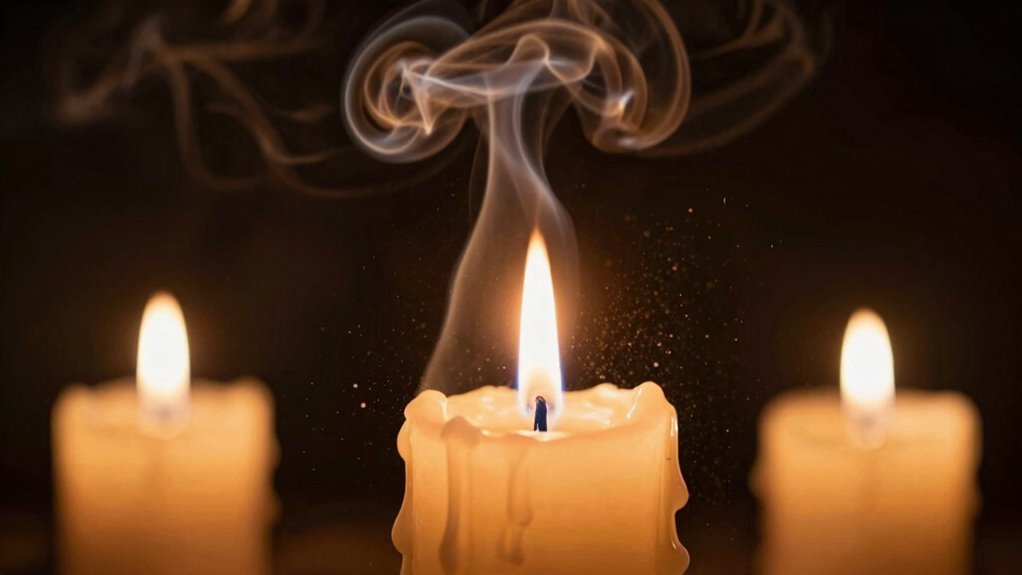
Candles have long been a favorite for creating cozy atmospheres and enhancing home decor, but recent trends reveal they’re also gaining popularity in the world of particle science. When you light a candle, you might think about the warm glow and comforting scent, but beneath that, complex chemical and physical processes happen that can influence particle trends in your space. The key factors at play include wax composition and air quality effects, both of which can change how quickly particles distribute and settle.
Your choice of wax composition matters more than you might realize. Traditional paraffin wax, derived from petroleum, tends to produce more particulate matter when burned. If your candle uses additives or dyes, these can release additional particles into the air. Soy wax, beeswax, and other natural options generally produce fewer particles, but they’re not entirely free of emissions. The specific blend of wax influences how many particles are emitted and how they behave once airborne. For example, candles with synthetic additives may emit smaller, more easily dispersible particles, which can travel farther and linger longer in your environment. Wax composition plays a crucial role in particle emissions, impacting indoor air quality more than you might realize. Additionally, the chemical emissions from different waxes can vary significantly, affecting the overall air quality in your space. Understanding the combustion process can help you select candles that minimize particle release.
Wax type influences particle emissions; natural options like soy and beeswax emit fewer particles than paraffin or synthetic blends.
The effects on air quality are immediate and significant. When you light a candle, combustion releases a mixture of soot, volatile organic compounds (VOCs), and other particles into the air. These particles can distort particle trends by increasing overall particle counts in a room, especially if you burn candles frequently or for extended periods. The size and composition of these particles determine how they move, settle, or remain suspended. Smaller particles stay airborne longer, potentially penetrating deep into your respiratory system, affecting your health over time. Larger soot particles tend to settle more quickly, but they can still contribute to surface contamination and poor indoor air quality. Understanding particle behavior can help mitigate some of these effects through better ventilation and candle choices.
It’s easy to underestimate how quickly candle burning can alter the particle landscape in your home. If you’re using candles regularly, particle trends can shift faster than you expect, especially when considering factors like wax composition and air circulation. Ventilation plays a pivotal role—without proper airflow, particles can accumulate, creating a persistent indoor pollution problem. The more you burn candles with certain wax compositions, the more you influence these trends, making it essential to choose your candles carefully if you’re concerned about air quality. In short, while candles add warmth and ambiance, they also have the power to distort particle trends at a surprisingly rapid pace, affecting both your environment and your health. Indoor air quality can be significantly impacted by these factors, emphasizing the importance of mindful candle use.
As an affiliate, we earn on qualifying purchases.
Frequently Asked Questions
How Do Different Candle Scents Affect Particle Dispersion?
Different candle scents influence particle dispersion through scent longevity and fragrance intensity. Stronger scents with high fragrance intensity release more particles into the air, potentially affecting how quickly particles spread. Longer-lasting scents keep particles airborne longer, increasing dispersion chances. You’ll notice that citrus or floral scents tend to disperse faster due to their volatility, while woody or spicy scents linger, affecting air quality and how particles move around your space.
Can Candle Types Influence the Rate of Particle Trend Distortion?
Imagine a candle flame dancing like a mischievous sprite, influencing the air around it. Yes, candle types do affect how quickly particle trends distort. The wax composition determines the amount of soot and pollutants released, which can accelerate particle dispersion. A higher-quality wax produces cleaner burns, reducing distortion, whereas cheaper waxes with additives can intensify particle spread, making the trend shift faster than you’d expect.
Do Candles Impact Indoor Air Quality Over Long Periods?
Yes, candles can impact indoor air quality over time, especially if you burn them frequently or for long periods. They release particles and potentially harmful chemicals that can accumulate indoors. To minimize this, use air filtration systems and guarantee proper ventilation strategies, like opening windows or running exhaust fans. Regularly swapping candles for alternatives with lower emissions also helps maintain better air quality over the long term.
Are Certain Candle Materials Safer for Controlling Particle Levels?
Certain candle materials are safer for controlling particle levels, especially when considering the candle wick and color. Choose candles with natural, cotton, or wood wicks, as they produce fewer soot particles. Additionally, lighter-colored candles tend to emit fewer particles than dark-colored ones, which can contain dyes that release additional pollutants. By selecting these options, you can reduce indoor particle contamination and improve air quality over time.
How Does Candle Burning Duration Relate to Particle Trend Changes?
Candle combustion directly correlates with particle fluctuation; longer burning durations lead to more particles released into the air. As you burn a candle longer, expect increased emissions, which can distort particle trends faster than anticipated. You might notice a spike in airborne particles with extended use. To minimize this, keep candle burning periods brief, allowing you to control particle levels and prevent sudden surges in airborne pollutants.
As an affiliate, we earn on qualifying purchases.
Conclusion
Just like a flickering candle can quickly reshape a room’s atmosphere, candles can distort particle trends faster than you might expect. Their subtle flickers and shadows can obscure the true data, leading you astray if you’re not careful. Keep this in mind when analyzing trends—sometimes what’s visible isn’t the full story, much like how a candle’s glow can hide more than it reveals. Stay vigilant, and don’t let fleeting illusions cloud your judgment.
As an affiliate, we earn on qualifying purchases.
As an affiliate, we earn on qualifying purchases.
NFL season / tailgating Picks
team gear
As an affiliate, we earn on qualifying purchases.






![Pedestrian Walkways No Place For Chairs And Tables [WATCH] - NST Online](https://pureairadviser.com/wp-content/uploads/2026/09/pedestrian-walkways-no-place-for-chairs-and-tables-watch-nst-online-featured-260x140.jpg)
