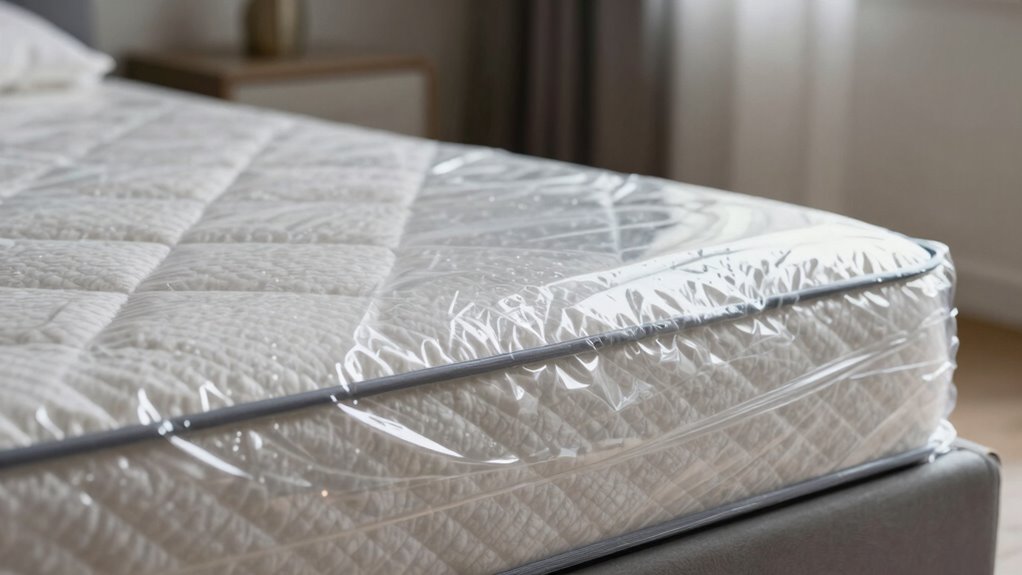

Your mattress’s off-gassing usually lasts much longer than the few days brands claim, often taking weeks or even months. The strong chemical smells come from VOC emissions from foam, adhesives, and synthetic materials. While airing it out helps, complete ventilation can take time to reduce emissions and guarantee safety. Being aware of this timeline helps you manage expectations and take better precautions. To discover more about how to safely handle off-gassing, keep exploring.

Get home appliances delivered free with Prime
- Fast, free delivery on millions of items
- Prime Video, Amazon Music and more included
- Member-only deals all year
Key Takeaways
- Off-gassing typically lasts weeks or months, often longer than the few hours or days claimed by packaging.
- Persistent chemical emissions can pose health risks, especially for sensitive individuals.
- Proper airing and ventilation are essential, as short-term airing is usually insufficient.
- VOC emissions gradually decrease over time but may remain detectable for an extended period.
- Awareness of realistic timelines helps set proper expectations and promotes safer home environments.

Have you ever noticed a strong chemical smell when you first unbox a new mattress? That scent is often a sign of chemical emissions, a common result of the materials used during manufacturing. Many mattress brands advertise quick off-gassing periods, claiming you’ll be free of odors within a few hours or days. But the reality is usually quite different. The off-gassing process can take weeks or even months, and this timeline is rarely as short as packaging suggests. You might be enthusiastic to enjoy your new purchase without worries, but understanding the true off-gassing timeline is essential for your safety and comfort.
New mattresses often emit chemical odors for weeks; patience and proper airing are key to safety and comfort.
When you bring a new mattress into your home, the initial chemical emissions can be intense. These emissions come from volatile organic compounds (VOCs) released from foams, adhesives, and other synthetic materials. While manufacturers often try to minimize these emissions, some level of off-gassing is inevitable. The concern here is safety; prolonged exposure to high levels of VOCs can trigger respiratory issues, headaches, or skin irritation, especially in sensitive individuals. That’s why it’s important not to dismiss the initial smell as merely a minor inconvenience. It’s a sign that your mattress is still releasing chemicals, and you should give it time to air out.
Many people assume that airing out the mattress for a day or two will eliminate the smell and the associated chemical emissions. However, this is rarely the case. Off-gassing can persist for weeks, as the materials gradually release VOCs into the air. During this period, the concentration of chemicals decreases, but it doesn’t disappear overnight. To reduce safety concerns, experts recommend letting your mattress air in a well-ventilated space for an extended period before sleeping on it. Using an air purifier or keeping windows open can help speed up this process, but patience remains key. Recognizing that VOC emissions can linger for a significant time helps set realistic expectations and promotes safer practices. Additionally, understanding the off-gassing timelines can help you better plan for your comfort and safety during this period. Being aware of the materials used during manufacturing can also assist in selecting mattresses with lower chemical emissions, further enhancing safety. Knowing how to identify safe off-gassing practices can make a substantial difference in your overall experience. It’s also helpful to stay informed about the typical duration of off-gassing periods to better prepare your environment accordingly.
Products Worth Considering

Levoit Core 400S-P Smart Air Purifier for Large Rooms

LEVOIT Vital 200S-P Smart Air Purifier for Large Rooms

Blueair Blue Pure 511i Max Smart Air Purifier
As an affiliate, we earn on qualifying purchases.
Frequently Asked Questions
Are There Health Risks Associated With Off-Gassing?
Yes, there are health risks associated with off-gassing, especially if you’re exposed to indoor air containing volatile organic compounds (VOCs). When your mattress releases chemicals, you may experience headaches, allergies, or respiratory issues. To minimize risks, air out your mattress before use and promote good ventilation in your bedroom. Reducing chemical exposure helps protect your indoor air quality and overall health.
Can Off-Gassing Occur With All Mattress Types?
You can’t judge a book by its cover, and the same goes for mattresses. Off-gassing can occur with all mattress types because of chemical emissions from various mattress materials. Whether it’s memory foam, latex, or innerspring, chemicals can release into the air during and after manufacturing. So, it’s wise to air out your mattress regardless of the type, as chemical emissions are a common concern across all materials.
How Can I Speed up Off-Gassing at Home?
To speed up off-gassing at home, increase air circulation by opening windows and using fans. This helps dissipate odors faster. Additionally, place odor-absorbing materials like baking soda or activated charcoal near your mattress to reduce smells. Regularly airing out your mattress and keeping the room well-ventilated accelerates the process, making off-gassing quicker and more manageable.
Is Off-Gassing Dangerous for Children or Pets?
Off-gassing can pose risks for children and pets because of chemical exposure, especially in indoor air. You should guarantee good ventilation during and after unboxing your mattress, allowing fresh air to circulate. Keep kids and pets away until off-gassing subsides, typically a few days. Using air purifiers can also help reduce chemical fumes. Prioritizing these steps safeguards your loved ones from potential health issues linked to indoor air quality.
Do Natural or Organic Mattresses Off-Gas Less?
You’ll find that natural or organic mattresses generally off-gas less due to their emphasis on chemical emissions and material safety. Studies show conventional mattresses can emit volatile organic compounds (VOCs) for weeks, while natural options tend to have minimal emissions. This means you’re exposed to fewer chemicals, making organic choices safer for sensitive sleepers. By choosing natural, you reduce chemical exposure and prioritize material safety for a healthier sleep environment.
Conclusion
Remember, mattress off-gassing timelines often take longer than packaging claims. For instance, imagine buying a new memory foam mattress and expecting it to be odor-free within a few days. You might notice lingering smells even after a week, which is normal. It’s best to ventilate your room and give the mattress time to release gases fully. Patience ensures you enjoy a safer, more comfortable sleep environment without rushing the process.