TL;DR

Get home appliances delivered free with Prime
- Fast, free delivery on millions of items
- Prime Video, Amazon Music and more included
- Member-only deals all year
Amazon has announced Alexa Home Map, an interface that places compatible smart-home devices on an interactive 3D model of a home. The company says an iOS preview is planned for later in 2026; Android support is expected in early 2027. Setup requires a LiDAR-equipped iPhone, and pricing, device compatibility and rollout details have not been specified in the report.
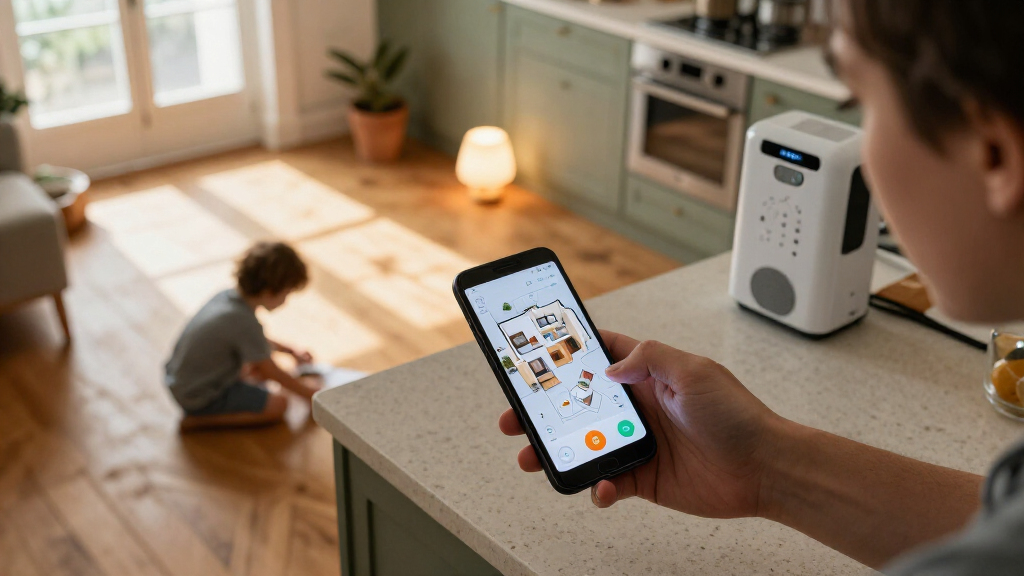
Amazon has announced Alexa Home Map, a smart-home interface that places connected devices on an interactive 3D model of a house, allowing users to control equipment by selecting its location. Amazon says the feature is expected to begin rolling out in preview through a dedicated iOS app later in 2026, with Android support planned for early 2027.
The map is designed to provide an alternative to scrolling through device lists or recalling the names assigned to individual lights, plugs and speakers. Users can select a device where it appears in the home layout, and Amazon says controls will be available for individual devices and rooms. The interface is not limited to a flat floor plan: users can zoom into rooms, move between floors and filter devices by category.
Amazon says the display will reflect some devices’ current activity. Smart lights will appear in their current colour and brightness, while speakers playing music will show animated notes. For outdoor security cameras, the map can display animated representations of people and vehicles moving around the property, rather than photorealistic images. The company also says the layout can reflect local weather, including rain and snow.
To set up the feature, users will enter their address to generate the home’s exterior, then scan the interior using a compatible iPhone with LiDAR. They will also have to place connected devices in the appropriate positions on the map. The reported setup process includes light and dark display modes once configuration is complete. The report does not specify how much manual work is required for a large home with many devices.
A Spatial Alternative to Device Lists
For homes with many connected products, the proposed interface could make everyday control more straightforward by tying a device to a visible room and location. A user looking for a particular lamp, for example, would not have to know whether it appears in Alexa under a formal room label or a custom device name. That may reduce friction for households whose device lists have grown over time.
The map could also offer a single visual view of activity across indoor and outdoor devices. Showing lights at their current colour and brightness, or indicating movement detected by cameras, would give users information beyond a simple on-off control. These are capabilities described by Amazon; the announcement does not establish how reliably the feature will work in different home layouts or how useful users will find it in practice.
Setup is a relevant trade-off. A LiDAR scan and manual positioning of devices may take time, particularly in larger homes or households with numerous connected products. The value of the map will depend in part on how much effort configuration takes and how well the interface handles devices that are moved, renamed or added later.
Products Worth Considering

eufy Security eufyCam C37 4-Camera Kit with 360° Pan and Tilt

Philips Hue Bridge Pro Smart Lighting Hub

Philips Hue Festavia Globe Outdoor String Lights, 32 Bulbs, 91 ft
As an affiliate, we earn on qualifying purchases.
A New View of Alexa Devices
Amazon announced Alexa Home Map alongside its latest Echo devices, presenting it as a new way to manage a connected home. The development shifts the focus from organizing equipment primarily through app lists to showing it in a representation of the home itself. The announcement describes the interface and its planned rollout, rather than a generally available product.
The initial preview is planned for a dedicated iOS app later in 2026. Amazon also plans to bring the feature to the Alexa and Ring apps, larger Echo Show devices, new Alexa tablets and compatible displays. Android support is expected in early 2027. These are future plans, and the source report does not provide exact release dates for each platform or device category.
Alexa Home Map is intended to combine device control with a visual layout, including room-level navigation and outdoor activity indicators. The company’s stated setup method relies on a LiDAR-equipped iPhone for the interior scan, making the first announced setup path dependent on specific hardware even as Amazon describes a wider range of planned displays and apps.
“Smart lights will appear in their current colour and brightness.”
— Amazon, as reported by The Ambient
Setup, Compatibility and Rollout Details
Several practical details remain unconfirmed in the source report. Amazon has not provided an exact preview date, information about pricing or subscription requirements, or a complete list of compatible devices and camera systems. The extent to which older Echo products, third-party smart-home equipment or different home layouts will be supported is also not specified.
The setup description calls for a LiDAR-equipped iPhone, but it is not clear which iPhone models qualify or whether users will have another way to create or edit a home layout. The report also does not say how long scanning and device placement will take, whether the map updates automatically when equipment is moved, or how users can correct inaccurate placements.
Amazon’s description of animated camera activity and weather information does not establish what data sources those features use or how they will work in every location. The report says the camera display will use animated representations rather than photorealistic imagery; further details on privacy controls, data handling and camera compatibility are not given.
Preview Before Wider Platform Support
The next stated milestone is an iOS preview later in 2026. Amazon plans to extend Alexa Home Map to the Alexa and Ring apps, larger Echo Show devices, new Alexa tablets and compatible displays, but has not announced dates for those releases in the source material. Android support is expected in early 2027.
As the preview approaches, users will need more information to judge whether the feature fits their homes: a supported-device list, precise iPhone requirements, setup instructions and details about privacy controls would clarify how the map works beyond the announced overview. Amazon has not said when those details will be published or whether the planned schedule will change.
For now, Alexa Home Map remains an announced feature, not a broadly available service. Its practical impact will depend on the preview’s performance, the time required to build and maintain a map, and the range of devices Amazon supports.
Key Questions
What is Alexa Home Map?
Alexa Home Map is an announced Amazon interface that shows connected smart-home devices on an interactive 3D representation of a home. Users are meant to select devices by location and control them from the map.
When will Alexa Home Map be available?
Amazon plans to begin a preview through a dedicated iOS app later in 2026. The source report says Android support is expected in early 2027; exact dates have not been given.
What equipment is needed to set it up?
The reported setup process requires users to enter their address and scan the interior with a compatible LiDAR-equipped iPhone. Users must also position their connected devices on the map. Amazon has not provided a full list of supported iPhone models.
Can the map show security-camera activity?
Amazon says the map can show animated representations of people and vehicles detected around a property, rather than photorealistic images. The source report does not specify camera compatibility or the details of data and privacy controls.
Will Alexa Home Map work on Android?
Android support is expected in early 2027, according to the report. The first planned preview is through a dedicated iOS app later in 2026.
Source: the-ambient.com