
TL;DR

Get home appliances delivered free with Prime
- Fast, free delivery on millions of items
- Prime Video, Amazon Music and more included
- Member-only deals all year
A Hunker report says diluted 3% hydrogen peroxide may help lighten some organic stains and remove grime from walls, but it is not a complete fix for mold. Mold remediation expert Michael Rubino says contamination must be physically removed, and mold growing into drywall may require replacement; the moisture source also needs attention.
A Hunker report on cleaning walls says 3% hydrogen peroxide may help lighten certain organic stains and remove some grime, but it should not be treated as a stand-alone solution for mold. Michael Rubino, a mold and air quality expert quoted by Hunker, says mold removal requires physically removing contamination, and mold embedded in porous drywall may call for replacing the affected material.
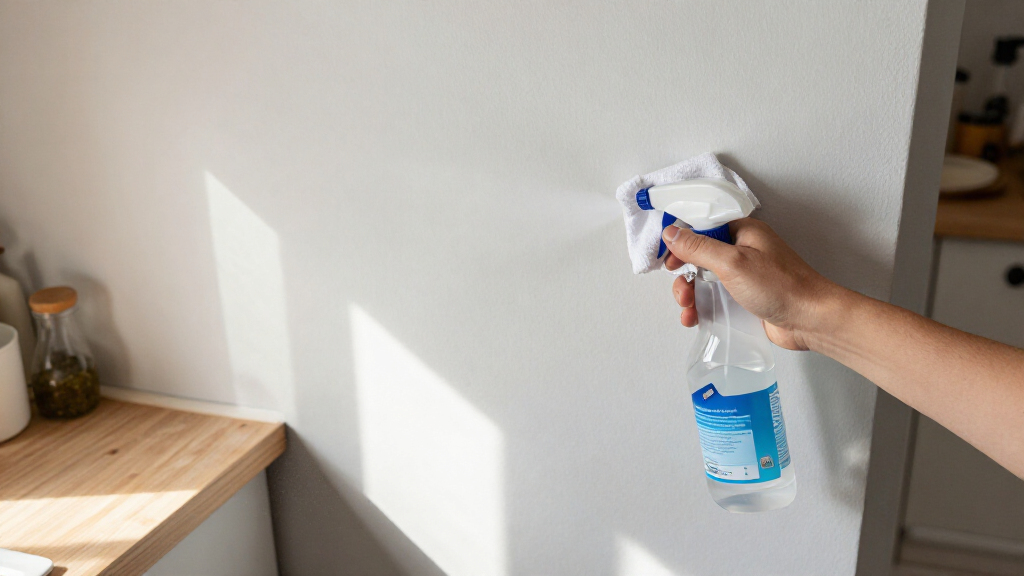
Rubino told Hunker that hydrogen peroxide works through oxidation, which can break down some organic material and lighten staining. For everyday marks such as fingerprints, the report says cleaners recommend mixing 3% hydrogen peroxide with a little dish soap, applying it gently with a clean rag, and rinsing the area with clear water after the stain lifts. The mixture should first be tested somewhere inconspicuous because a cleaning solution can affect paint or finishes.
The advice is limited: hydrogen peroxide is not necessarily effective on set-in stains, greasy spots or serious mold problems. Rubino said his company may use it as one treatment during mold remediation, alongside steps such as HEPA vacuuming and mechanical cleaning. The appropriate method depends on the surface and the extent of contamination.
Rubino also cautioned that bubbling after application does not prove mold is present, nor does the end of bubbling prove a surface is clean. The reaction can occur because of organic material or certain enzymes. Dead mold can still leave spores and fragments, so treatment that kills growth is not the same as removing residue that may affect indoor air quality.
When Wall Cleaning Becomes Mold Remediation
The distinction matters because spraying a wall can make a surface look treated without addressing contamination within it. On porous drywall, mold may grow into the material; Rubino told Hunker that removing and replacing affected drywall is a better option when growth has penetrated it. A quick peroxide application cannot establish whether hidden contamination remains.
There is also a recurrence risk if the damp conditions that enabled growth continue. Rubino recommended addressing the moisture source through measures such as improving airflow or using a dehumidifier. For homeowners, the practical takeaway is to reserve peroxide for limited cleaning tasks, rather than relying on it to solve persistent mold or moisture problems.
Products Worth Considering

LEVOIT Vital 200S-P Smart Air Purifier for Large Rooms

Dyson Car+Boat Cordless Handheld Vacuum

iRobot Roomba Max 715 Pet Robot Vacuum with AutoEmpty Dock
As an affiliate, we earn on qualifying purchases.
How Peroxide Fits Wall Care
Interior walls collect fingerprints, scuffs and dust over time, and cleaning may be worth trying before repainting. The Hunker report presents hydrogen peroxide as one possible option for some organic residue, not as a universal wall cleaner. Its effect can vary with the stain, paint and wall material, which is why a small test spot is recommended.
For ordinary dirt and grease, Rubino said gentle detergents designed for the task may be a better choice and may be less likely to discolor or damage painted walls. The supplied report does not identify a particular detergent brand or provide comparative test results. It also does not establish that peroxide is suitable for every finish or surface.
“Hydrogen peroxide can be useful in some situations for some types of residue, particularly organic buildup and staining.”
— Michael Rubino, founder of HomeCleanse and president of Change the Air Foundation, speaking to Hunker
Limits of the Cleaning Advice
The report does not provide controlled test results comparing hydrogen peroxide with other wall cleaners, or specify how well the suggested mixture performs across different paints and finishes. Results may depend on the stain, wall surface and extent of contamination; the material supplied does not set out a single procedure suitable for every home.
It also does not define a threshold for when mold growth requires professional remediation. If growth returns after cleaning or a musty smell persists, Rubino recommended contacting a qualified mold inspector. The source does not identify a specific inspection standard or guarantee that peroxide treatment will improve indoor air quality.
Check the Surface and Moisture Source
For a small, non-mold stain, homeowners considering the method can test a discreet area first, use the low-concentration mixture described in the report, apply it gently and rinse residue with clear water. Follow the cleaner’s directions and stop if the finish changes. For routine grime, a gentle detergent intended for painted surfaces may be a more suitable choice.
If mold is extensive, repeatedly returns, or is accompanied by a persistent musty odor, the next step is not simply another spray. Identify and address the source of moisture, and seek a qualified mold inspector or remediation professional. The supplied report gives no new inspection findings or follow-up schedule, so the condition of any particular wall cannot be determined from this advice alone.
Key Questions
Can hydrogen peroxide remove ordinary wall stains?
According to the Hunker report, 3% hydrogen peroxide may help lighten some organic stains and remove certain grime, including fingerprints. It may not work well on set-in stains or greasy spots, and the report advises testing a small hidden area first.
Does bubbling mean a wall has mold?
No. Rubino told Hunker that bubbling can result from organic material or certain enzymes. It does not by itself confirm mold is present, and its stopping does not prove the surface is clean.
Is spraying peroxide enough to remove mold?
Not necessarily. The report says mold remediation can involve physical cleaning and other steps, because spores and fragments may remain even after mold is killed. The correct approach depends on the surface and extent of growth.
When should someone contact a mold professional?
Rubino recommended contacting a qualified mold inspector if mold returns after treatment or a musty smell persists. Mold growing into drywall may require removing and replacing the affected material, rather than relying on a surface spray.
Source: rss