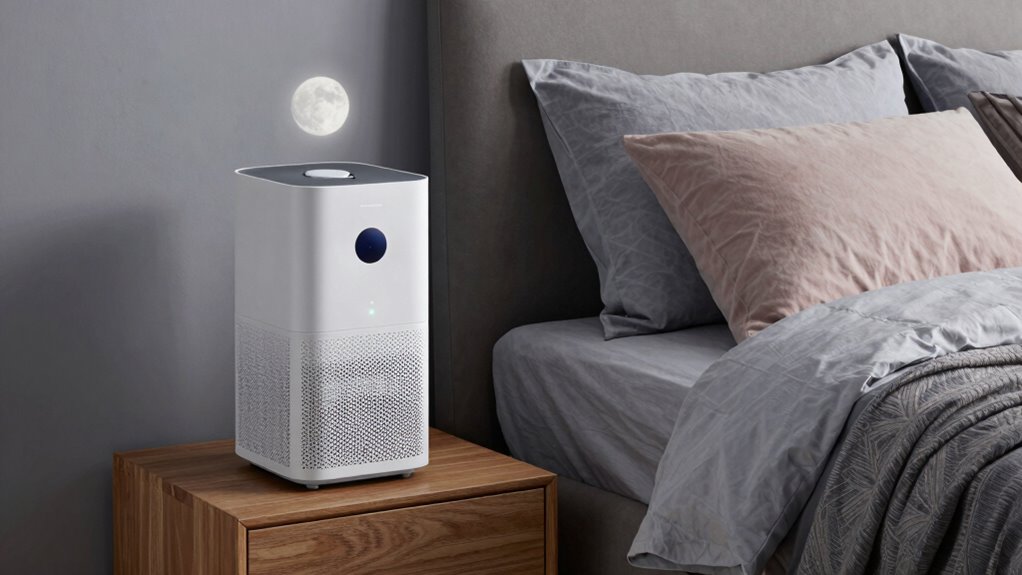
Balancing air quality and noise is key for a good night’s sleep. Instead of just setting your purifier to “low and quiet,” experiment with intermediate speeds or auto modes that respond to air quality. These settings can clear pollutants effectively without excessive noise. Placing your purifier strategically and using sleep mode can also improve comfort. Keep adjusting until you find the sweet spot that guarantees clean air without disturbing your rest—more tips await below.

Get home appliances delivered free with Prime
- Fast, free delivery on millions of items
- Prime Video, Amazon Music and more included
- Member-only deals all year
Key Takeaways
- Effective air purification may require higher fan speeds despite increased noise levels.
- Auto modes adjust filtration based on real-time air quality, balancing noise and clean air.
- Prioritize air quality over noise; optimal sleep depends on clean, pollutant-free air.
- Proper purifier placement near the bed enhances efficiency without unnecessary noise.
- Regular filter maintenance ensures consistent performance and minimizes noise from airflow issues.
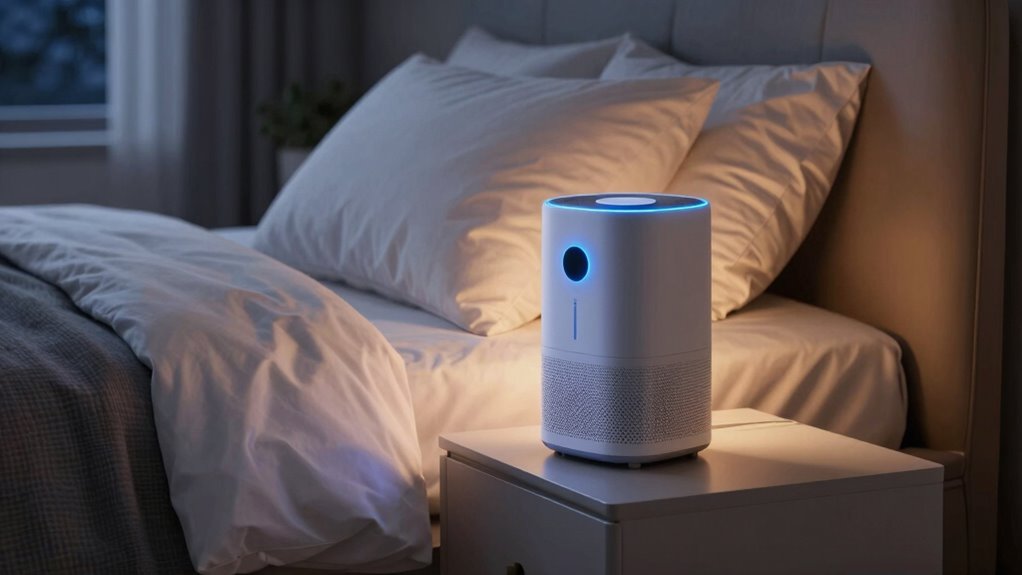
Setting your bedroom purifier correctly overnight can substantially improve your sleep quality by reducing allergens, dust, and pollutants in the air. While many people assume that setting their purifier to “low and quiet” is enough, it’s worth considering that optimal air quality isn’t just about noise levels. A low setting might minimize disturbances, but it may not effectively clear the air, especially if your bedroom has high levels of pollutants or allergens. To truly benefit from your purifier, you should think about balancing noise and air quality.
First, recognize that air quality is crucial for a restful night. If your purifier isn’t running adequately, dust mites, pet dander, pollen, and other irritants can linger, disrupting your sleep. Setting your purifier to a higher fan speed during the night might produce more noise, but it also ensures more thorough filtration. Many modern units come with auto modes that adjust fan speed based on the air quality sensors. If your purifier has this feature, turn it on. It allows the device to respond dynamically, increasing airflow when pollutant levels rise and reducing noise when the air is cleaner, giving you the best of both worlds—clean air and minimal disturbance.
However, noise levels are a real concern for light sleepers. If you’re sensitive to sound, don’t just default to the quietest setting. Instead, experiment with intermediate speeds that strike a balance between effective filtration and acceptable noise. Some purifiers have a “sleep mode” that dims indicator lights and lowers fan speeds to reduce noise further, but still maintains a level of filtration that improves air quality. Using this mode can help you sleep undisturbed while ensuring the air remains clean overnight. Additionally, understanding the air quality levels in your room can help you better determine when a higher or lower setting is necessary. Being aware of air quality trends can guide you in adjusting settings for optimal results.
Additionally, position your purifier strategically. Placing it close to your sleeping area can maximize its effectiveness, but avoid placing it directly next to your head or under a window where airflow might be obstructed. Proper placement ensures the device works efficiently, improving air quality without generating unnecessary noise. Regular maintenance, like changing filters, also plays a role; a clogged filter can hinder airflow, forcing the purifier to work harder and potentially increase noise levels. Incorporating air quality awareness into your routine can help you better understand and manage these factors.
In the end, effective overnight purifier settings aren’t just about keeping noise levels to a minimum. You need to prioritize clean air to promote better sleep, adjusting your device’s settings to find that sweet spot where air quality is optimal and noise doesn’t disturb you. By fine-tuning these settings, you’ll enjoy a healthier, more restful night’s sleep.
Products Worth Considering

LEVOIT Vital 200S-P Smart Air Purifier for Large Rooms

Blueair Blue Pure 511i Max Smart Air Purifier

Levoit Core 400S-P Smart Air Purifier for Large Rooms
As an affiliate, we earn on qualifying purchases.
Frequently Asked Questions
How Often Should I Clean or Replace My Purifier Filters?
You should clean or replace your purifier filters based on the filter lifespan recommended by the manufacturer, typically every 3 to 6 months. Following a regular maintenance schedule guarantees peak performance and air quality. Check your device’s manual for specific guidance, and don’t ignore signs like decreased airflow or unusual odors. Regular upkeep keeps your purifier working efficiently, providing cleaner, healthier air in your bedroom.
Can I Use a Purifier With a Humidifier in the Same Room?
You can use a purifier with a humidifier in the same room, but keep an eye on air quality indicators to guarantee they don’t clash. Some purifiers are more humidifier-compatible than others, preventing excess moisture or mold growth. It’s a balancing act—you don’t want to throw a wrench in your air quality goals. Monitor both devices regularly to keep the air fresh and safe without causing unintended issues.
Do Purifier Settings Change Based on Allergy Seasons?
Yes, your purifier settings should change with allergy seasons. During peak allergy triggers like pollen or mold, increase the fan speed or select a higher setting to better filter airborne particles. Seasonal changes bring different allergens, so adjusting your purifier guarantees you reduce symptoms efficiently. Keep an eye on local pollen counts and switch settings accordingly, helping you breathe easier and stay comfortable during allergy-prone times.
Is It Safe to Sleep With a Purifier Running All Night?
Yes, it’s safe to sleep with a purifier running all night. Maintaining good air quality can improve your sleep quality by reducing allergens, dust, and pollutants. Just make certain your purifier is appropriately sized for your room and has a filter in good condition. Using a setting that’s quiet and efficient helps you breathe cleaner air while sleeping comfortably, supporting overall health and restful sleep.
Are There Smart Features That Optimize Overnight Purifier Performance?
Think of your purifier as a smart guardian, always ready to adapt. Yes, many models feature smart sensors that detect air quality changes and make automatic adjustments. These functions optimize overnight performance by increasing airflow when needed and quieting down during cleaner air. This way, you don’t have to manually tweak settings, ensuring your sleep environment stays fresh and safe, like a breath of clean, crisp mountain air.
Conclusion
Don’t settle for a one-size-fits-all setting when it comes to your overnight purifier. Think of it as a gentle guardian, whispering sweet dreams while keeping the air crisp and clear. Customize your settings like tuning a delicate instrument, ensuring every breath feels like a fresh mountain breeze. With a little tweak here and there, your bedroom becomes a sanctuary where restful sleep blooms, and every inhale is a soothing lullaby.