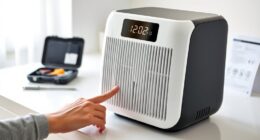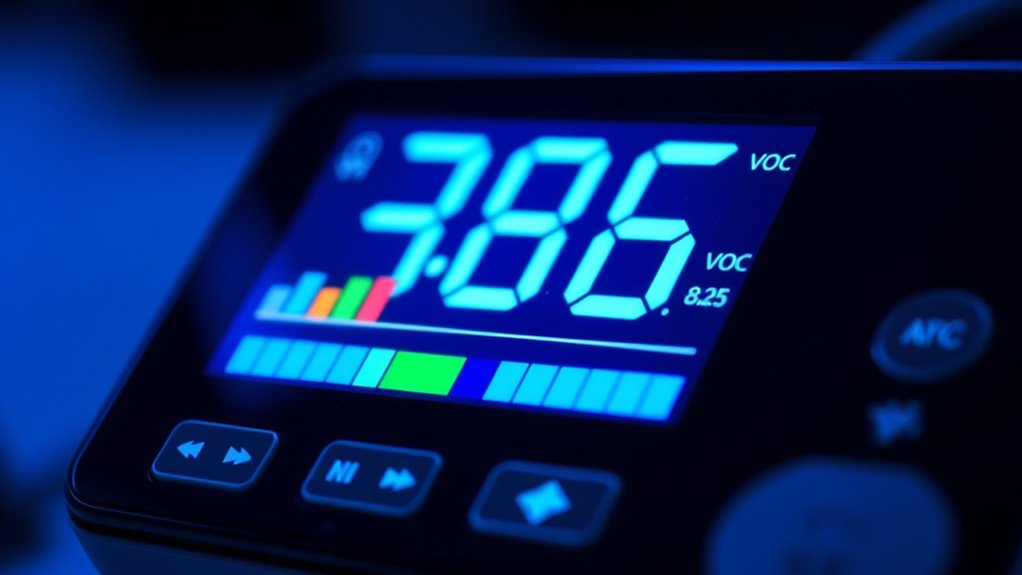

Understanding VOC sensor numbers helps you assess air quality. Higher values mean more VOCs, which could pose health risks if thresholds are exceeded. Units like ppm or ppb indicate concentration levels; the lower, the better. Regular calibration guarantees these figures reflect actual conditions, preventing false alarms or reassurance. Keeping track of spikes guides quick actions like ventilating the space. To learn more about interpreting levels accurately and maintaining your sensor’s reliability, keep reading.
Key Takeaways
- Higher VOC readings indicate increased concentrations of airborne chemicals like formaldehyde, benzene, and toluene, signaling poorer air quality.
- Readings are measured in ppm or ppb; compare them to safety thresholds from health agencies to assess potential health risks.
- Spikes in sensor data suggest sudden releases of VOCs, prompting immediate actions like ventilation or source removal.
- Proper calibration ensures sensor accuracy, providing trustworthy data for interpreting true air quality conditions.
- Consistently calibrated sensors help prevent false alarms or overlooked hazards, supporting effective indoor air quality management.
Volatile Organic Compound (VOC) sensor readings are essential for monitoring air quality and ensuring a safe environment. When you see these readings, you get a snapshot of the concentration of VOCs present in the air around you. These compounds, which include chemicals like formaldehyde, benzene, and toluene, can impact health, especially with prolonged exposure. Understanding what the numbers mean helps you assess whether the air is safe or if action needs to be taken. But to trust these readings, it’s vital that your sensor is properly calibrated. Sensor calibration aligns the device’s measurements with known standards, ensuring accuracy and reliability over time. Without regular calibration, readings can drift, leading you to misjudge air quality and potentially overlook hazardous conditions.
Once you have a VOC sensor in place, the first thing to consider is what the numbers represent. Typically, these readings are expressed in parts per million (ppm) or parts per billion (ppb). Higher numbers indicate a greater concentration of VOCs, which could signal poor air quality. If the sensor shows low levels, it generally suggests that the air is relatively clean, but it’s still important to compare these readings against safety thresholds established by health agencies. When readings spike, it’s a sign that VOC levels are rising, possibly due to sources like cleaning agents, paints, or new furnishings releasing fumes. Recognizing these patterns allows you to take immediate steps, such as increasing ventilation or removing sources of VOC emissions. Regularly inspecting and maintaining your sensors can prevent measurement errors caused by environmental factors or aging components.
Sensor calibration plays a crucial role in making these interpretations accurate. Over time, sensors can become less precise due to environmental factors or aging components. Regular calibration ensures that the sensor’s output matches the actual VOC concentrations in the air. This process involves exposing the sensor to a known concentration of VOCs and adjusting its response accordingly. When your sensor is well-calibrated, you can trust that the numbers it provides reflect real conditions, which is essential for making informed decisions about air quality management. Neglecting calibration could lead to false reassurance from falsely low readings or unnecessary alarm from false highs, both of which can either endanger health or cause unwarranted concern.
In essence, understanding VOC sensor readings requires more than just reading the numbers. It demands attention to the accuracy of your device through proper calibration. With reliable data, you can better interpret what those numbers mean for your environment’s air quality. Whether you’re monitoring a workplace, a home, or an industrial setting, consistent sensor calibration ensures you’re acting on trustworthy information. This way, you can maintain a safer space, respond appropriately to elevated VOC levels, and protect everyone’s health by making informed decisions based on precise, calibrated readings. Recognizing the importance of sensor accuracy helps in maintaining a healthy indoor environment and preventing health risks associated with VOC exposure.
Frequently Asked Questions
How Often Should VOC Sensors Be Calibrated for Accuracy?
You should calibrate your VOC sensors every 6 to 12 months for essential accuracy. Regular sensor maintenance is vital, so check calibration frequency based on your environment’s conditions and usage. If you notice inconsistent readings or sensor drift, recalibrate sooner. Consistent calibration guarantees your sensor provides dependable data, helping you make informed decisions about air quality and maintaining a safe environment.
What Factors Can Cause False VOC Readings?
False VOC readings can occur due to sensor drift over time, which causes the sensor to become less accurate. Environmental interference, such as high humidity, temperature fluctuations, or the presence of other chemicals, can also skew the readings. You should regularly calibrate your sensor and keep it in a controlled environment to minimize these factors. Avoid exposing it to strong odors or pollutants that could affect its performance.
Are There Health Risks From Low-Level VOC Exposure?
Low-level VOC exposure generally poses minimal health risks, especially when indoor air quality remains good. However, prolonged or repeated exposure to certain VOCs can cause irritation, headaches, or more serious health issues over time. It’s important to monitor indoor air quality and guarantee proper ventilation. Stay aware of VOC health risks, and if you notice persistent symptoms, consider improving air circulation or using air purifiers to reduce VOC levels.
How Do Temperature and Humidity Affect VOC Sensor Accuracy?
Temperature and humidity can cause sensor drift and environmental interference, affecting VOC sensor accuracy. When it’s hot or humid, the sensor may give false readings or become less reliable. You should regularly calibrate your sensor and consider environmental conditions during measurements. Keeping the sensor in a stable environment and avoiding extreme temperatures helps reduce interference, ensuring more accurate VOC detection and reliable data for your indoor air quality assessments.
Can VOC Sensors Detect All Types of Volatile Organic Compounds?
Did you know VOC sensors typically detect around 90% of common volatile organic compounds? However, their sensor limitations mean they don’t identify every VOC, especially due to chemical specificity issues. You should understand that some sensors are more sensitive to specific compounds, so they might miss others. This means relying solely on VOC sensors can sometimes give you an incomplete picture of air quality, especially with complex chemical mixtures.
Conclusion
Understanding VOC sensor readings is like decoding a secret message; once you grasp the numbers, you can better assess your environment. By paying attention to these readings, you become more aware of potential pollutants and can take steps to improve air quality. Remember, just as a compass guides a traveler, your VOC sensor guides you toward healthier, safer spaces. Stay vigilant, and use the data to make informed decisions for your well-being.