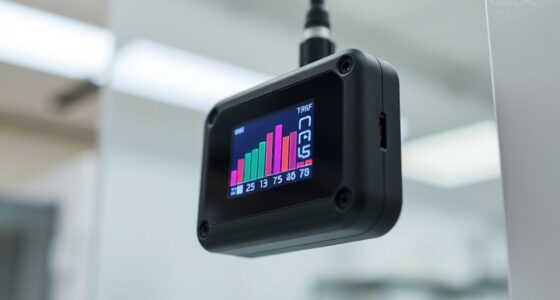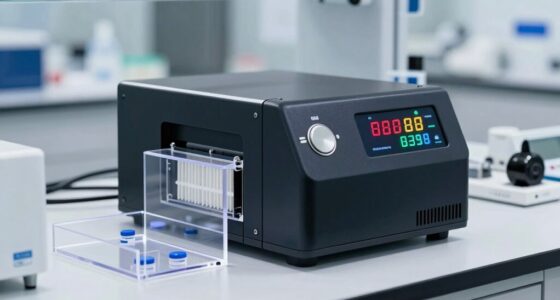

Particle counters detect smoke particles by continuously analyzing the air in a space, measuring the number, size, and concentration of airborne particles. When smoke enters their detection zone, these sensors identify increased particle counts, especially smaller smoke particles that indicate a fire risk. Proper calibration guarantees they distinguish smoke from dust or pollution, reducing false alarms. If you want to understand how these sensors fine-tune their sensitivity and improve fire safety, keep exploring further.
Key Takeaways
- Particle counters analyze airborne particles’ size and concentration to detect smoke presence early.
- They use calibrated sensors to distinguish smoke particles from dust or pollution.
- Continuous air quality monitoring triggers alarms when particle levels exceed safe thresholds.
- Proper calibration ensures sensors accurately interpret particle counts, reducing false alarms.
- Detecting microscopic smoke particles provides critical seconds for fire response and evacuation.
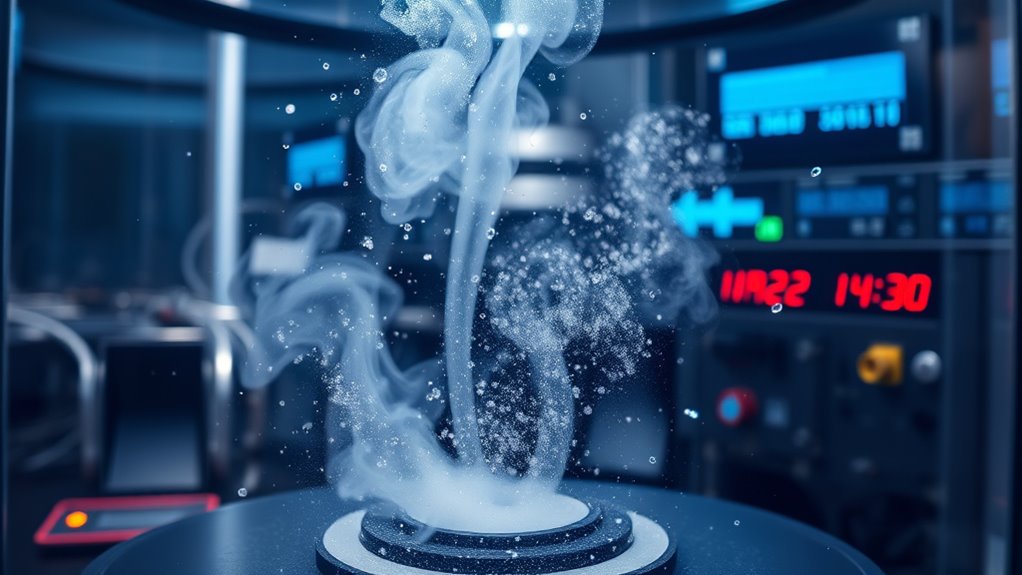
Smoke particles are tiny, often invisible, yet they play a essential role in fire detection and safety systems. When these particles drift into a sensor’s detection zone, they can signal the presence of smoke, alerting you before a fire becomes uncontrollable. Understanding how particle counters work involves recognizing their focus on air quality and the significance of sensor calibration. Since smoke particles are microscopic, accurate detection depends heavily on maintaining well-calibrated sensors that can distinguish smoke from other airborne particles like dust or pollen.
Tiny smoke particles are key to early fire detection through well-calibrated sensors.
In fire detection systems, particle counters are designed to monitor air quality continuously. They analyze the number, size, and concentration of particles suspended in the air. When the air quality deteriorates due to smoke, the sensor quickly registers this change, triggering an alarm. This rapid detection allows you to respond swiftly, potentially saving lives and property. But for these sensors to perform reliably, calibration is indispensable. Proper sensor calibration ensures that the device correctly interprets particle counts, minimizing false alarms caused by normal dust or pollution and avoiding missed detections of actual smoke.
Sensor calibration involves setting the particle counter with reference to known standards, often using clean air and air with a controlled amount of particles. Regular calibration checks are essential because sensors can drift over time due to environmental factors or wear and tear. If a sensor isn’t calibrated correctly, it might either overreact to harmless particles or fail to detect dangerous smoke levels, jeopardizing safety. By maintaining precise calibration, you ensure that the device accurately reflects the real-time air quality, providing dependable alerts whenever smoke particles reach dangerous concentrations.
Additionally, understanding the relationship between particle size and air quality helps you interpret sensor readings more effectively. Smoke particles are generally smaller than dust particles, so sensors must be sensitive enough to detect these fine particles. Proper calibration tunes the sensor’s sensitivity, allowing it to differentiate between different types of particles and avoid false alarms from non-smoke airborne matter. This precision enhances the reliability of your fire detection system, ensuring it responds only when necessary.
In essence, the effectiveness of smoke detection hinges on recognizing the importance of air quality monitoring and maintaining proper sensor calibration. By doing so, you keep your safety systems responsive and trustworthy. When smoke particles are detected accurately, you gain essential extra seconds to evacuate or respond, preventing injury and damage. Ensuring your sensors are correctly calibrated and focused on air quality allows your fire detection system to perform at its best, giving you peace of mind that you’re protected against unseen threats lurking in the air. The integration of AI in mobile devices is projected to redefine user interactions, potentially enhancing the capabilities of future safety systems like smoke detectors.
Frequently Asked Questions
Can Particle Counters Differentiate Between Types of Smoke Particles?
Yes, particle counters can differentiate between types of smoke particles through particle differentiation, analyzing size, shape, and composition. By examining smoke composition, they identify specific particles from different sources, such as combustion or industrial processes. This helps you determine the origin and severity of smoke, improving safety and response accuracy. However, some advanced counters may require additional data or sensors to precisely identify specific smoke types.
How Often Should a Smoke Particle Counter Be Calibrated?
Calibrating your particle counter is like tuning a musical instrument—you want it just right. You should check your maintenance schedule and calibration frequency at least once a year, or more often if you’re in a high-risk environment. Regular calibration ensures accurate readings and reliable smoke detection. Keep track of calibration dates and follow manufacturer recommendations to maintain *accurate* performance and safety.
Are There Portable Particle Counters Suitable for Home Use?
Yes, there are portable devices suitable for home safety. These portable particle counters allow you to monitor indoor air quality easily and accurately. You can carry them around your home, checking for smoke particles and pollutants in different rooms. They’re compact, user-friendly, and provide real-time data to help you maintain a safe environment. Investing in a portable device helps guarantee you’re constantly aware of your home’s air quality.
What Is the Detection Limit of Typical Smoke Particle Counters?
You’ll find that typical smoke particle counters have detection thresholds around 0.3 micrometers, which means they can detect very small particles in the air. Their measurement sensitivity allows you to monitor even low concentrations of smoke particles effectively. This guarantees you get accurate readings, helping you identify smoke presence early. Keep in mind, higher-end models may have even lower detection limits for enhanced sensitivity.
How Do Environmental Factors Affect Particle Counter Accuracy?
Environmental influences, like humidity, temperature, and airborne pollutants, can substantially impact your particle counter’s accuracy. These factors may cause fluctuations or drift, affecting calibration stability over time. To guarantee reliable readings, you should regularly calibrate your device and consider environmental conditions during measurements. Maintaining a controlled environment or compensating for external influences helps you get more precise data, improving your ability to detect and monitor smoke particles effectively.
Conclusion
Now that you know how particle counters work, you can appreciate their essential role in smoke detection. They analyze tiny particles in the air, just like a modern-day Sherlock Holmes uncovering clues. Remember, whether you’re in a cozy cottage or a spaceship (yes, even in space!), these devices help keep you safe by catching smoke early. So, stay vigilant and trust in science to protect you—it’s the ultimate safeguard in any era.