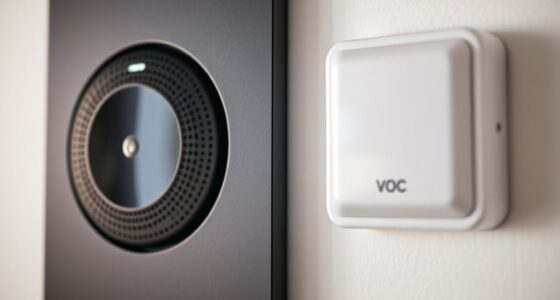
To manage allergies effectively, focus on air quality sensors that track indoor pollen and mold levels, as these directly trigger symptoms. It’s also helpful if the sensor measures humidity and temperature, since these conditions influence mold growth and pollen dispersal. By monitoring these key metrics, you can take proactive steps to improve your indoor environment. Want to learn more about choosing the best sensors and using their data to reduce allergy triggers? Keep exploring for expert tips.
Key Takeaways
- Detection of indoor pollen levels to identify allergy triggers during peak seasons.
- Mold spore concentration measurements for early identification of mold growth risks.
- Humidity monitoring to prevent conditions conducive to mold development.
- Temperature tracking to understand environmental factors influencing allergen dispersal.
- Additional air quality parameters like VOCs and particulate matter for comprehensive allergen management.
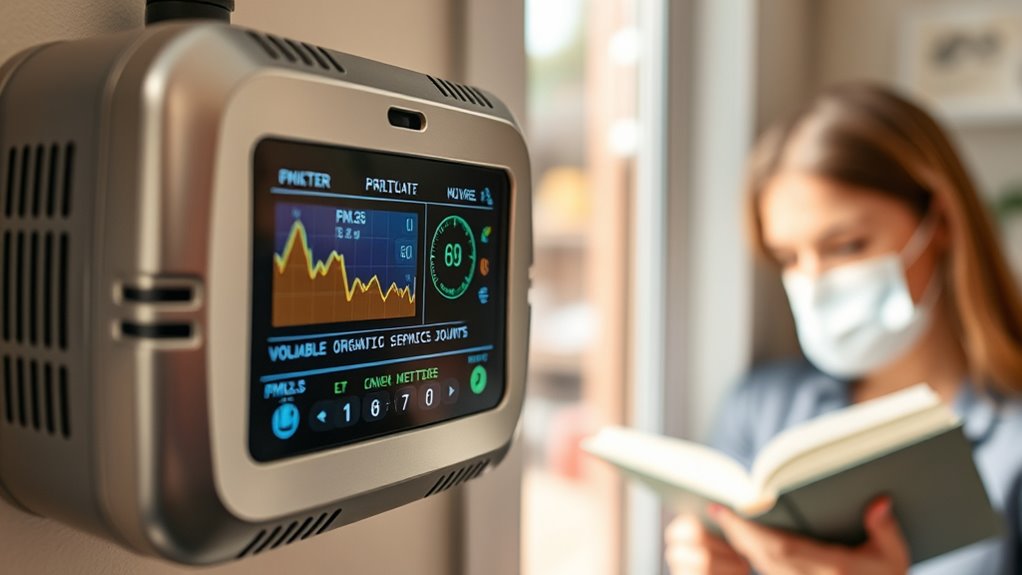
If you suffer from allergies, staying aware of your air quality can make a notable difference in managing your symptoms. Air quality sensors can help you identify potential triggers inside your home, especially when it comes to indoor pollen and mold. These two factors are common culprits that worsen allergy symptoms, so understanding their presence is key. Indoor pollen levels tend to spike during certain seasons or after opening windows, and mold can thrive in damp, poorly ventilated areas. By monitoring these metrics, you gain real-time insights that enable you to take prompt action, like increasing ventilation or using air purifiers to reduce allergen levels.
Monitoring indoor pollen and mold helps manage allergy symptoms effectively.
When selecting an air quality sensor, look for models that specifically detect indoor pollen and mold. Not all sensors measure these components directly, so choosing one with dedicated capabilities ensures you’re getting accurate data. Indoor pollen detection is particularly useful during high pollen seasons, helping you identify when pollen particles are present at elevated levels inside your home. This awareness allows you to adjust your routines—maybe keep windows closed, run the air purifier, or avoid outdoor activities during peak times. Mold detection is equally critical because mold spores can linger unseen, especially in areas like bathrooms, basements, or behind walls. A sensor that identifies mold spores can alert you to hidden mold growth before it becomes a serious health concern.
Beyond just detecting these allergens, good air quality sensors provide actionable data. For example, if you notice a spike in indoor pollen or mold, you can increase ventilation, clean surfaces more frequently, or activate dehumidifiers. Some advanced sensors even track humidity and temperature, giving you a comprehensive view of environmental conditions that promote mold growth or pollen dispersal. The key is consistent monitoring—by regularly checking your sensor’s readings, you stay ahead of potential allergy triggers. This proactive approach can notably reduce allergy flare-ups and improve your overall comfort at home.
In addition, integrating your air quality sensor with smart home devices can automate responses—like turning on air purifiers or adjusting ventilation systems when allergen levels rise. This automation simplifies keeping your indoor environment safe and comfortable without constant manual intervention. Remember, the goal is to create an allergy-friendly space by understanding and controlling indoor pollen and mold levels. With the right sensor and attentive monitoring, you gain control over your environment, empowering you to breathe easier and live more comfortably despite allergy challenges.
Frequently Asked Questions
How Often Should Allergy Sensors Be Calibrated?
You should calibrate your allergy sensors every 3 to 6 months to guarantee accurate readings. Regular sensor maintenance, including calibration, is vital for reliable data. Check your device’s manufacturer recommendations, as calibration frequency can vary based on usage and environment. Staying consistent with calibration helps you track allergen levels precisely, so you can take timely actions to manage your allergies effectively.
Can Sensors Detect Specific Allergens Like Pollen or Mold?
Yes, sensors can detect specific allergens like pollen or mold, but their accuracy depends on allergen specificity. High-quality sensors are designed to identify particular particles, improving sensor accuracy. However, lower-cost models may not differentiate allergens well, affecting reliability. You should choose sensors with proven allergen specificity and good sensor accuracy to get precise allergy readings, helping you manage exposure effectively.
What Is the Typical Lifespan of an Air Quality Sensor?
Your air quality sensor typically lasts between 2 to 5 years, but it depends on sensor durability and usage. You might find yourself questioning how often you’ll need replacements, especially if it’s exposed to dust or humidity. Regular calibration and maintenance can extend its lifespan, yet eventually, replacements become inevitable. Stay vigilant for signs of declining performance, so you’re always aware when it’s time for a new sensor.
Are Allergy Sensors Suitable for Outdoor Use?
Yes, allergy sensors can be suitable for outdoor use if they have good sensor durability and are designed for outdoor placement. You should look for models that withstand weather conditions like rain, wind, and sunlight. Proper outdoor sensors are built with protective casings and resistant materials, ensuring accurate readings over time. When choosing, prioritize durability and weatherproof features to get reliable allergy data from your outdoor sensor.
Do Sensors Provide Real-Time Allergy Risk Alerts?
Ever wonder if sensors give you real-time allergy alerts? Yes, they do, but their accuracy depends on the quality of the sensor and how often it updates data. Keep in mind, data privacy is essential, so choose devices that protect your information. These sensors monitor allergen levels continuously, alerting you promptly when risks rise, helping you manage allergies better and stay safer outdoors.
Conclusion
When choosing air quality sensors for allergies, it’s wise to focus on the metrics that truly matter, like pollen levels and pollutant detection. While no device is perfect, paying attention to these key features can gently guide you toward a healthier indoor environment. Remember, even the most advanced sensors are just tools—your awareness and actions make the real difference. By staying informed, you’re subtly but surely creating a more comfortable space for yourself.