To get real, accurate data, focus on placing sensors where environmental factors are stable and representative, away from heat sources, drafts, and interference. Set clear monitoring goals to determine what metrics matter most, then choose locations that align with those objectives. Secure sensors properly and avoid common mistakes like poor calibration or improper mounting. For more tips on optimizing sensor placement for reliable data, keep exploring these practical strategies.
Key Takeaways
- Position sensors in stable, representative environments away from heat sources, drafts, electromagnetic interference, and vibrations.
- Place sensors close to the target source to improve data relevance and accuracy.
- Use environmental analysis to identify areas with minimal variability and interference for sensor deployment.
- Mount sensors securely with proper alignment, avoiding locations prone to movement or damage.
- Regularly evaluate data, adjusting sensor locations based on trends, feedback, and environmental changes.
What Are the Key Factors That Influence Sensor Placement?
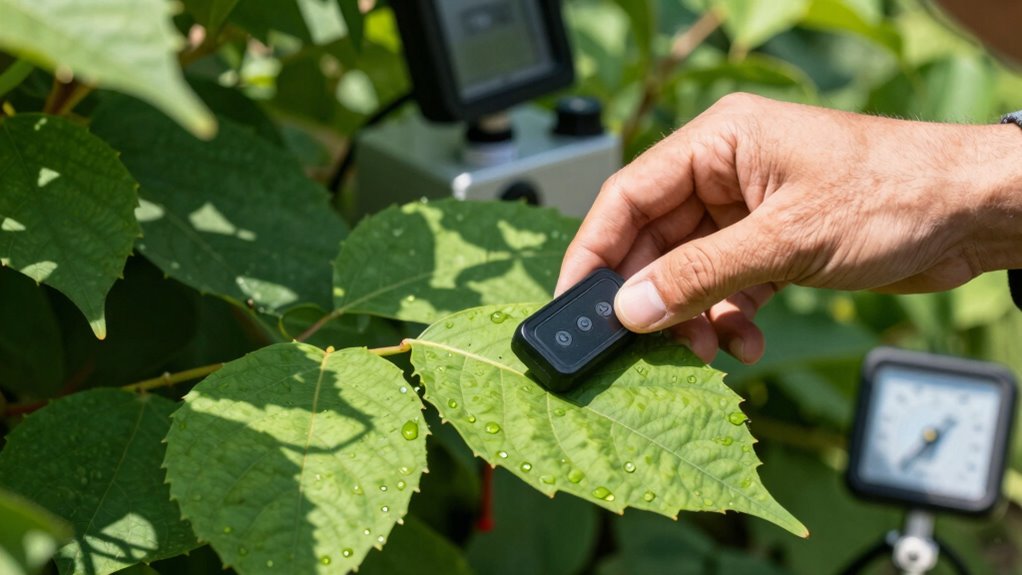
Choosing the right location for sensors is essential because it directly affects the accuracy and reliability of the data collected. One key factor is sensor calibration; if your sensors aren’t properly calibrated for their environment, the readings can be off. Environmental factors also play a pivotal role—they include temperature, humidity, airflow, and potential interference. For example, placing a sensor in direct sunlight or near a heat source can skew results, while drafts or vibrations may cause unstable readings. Consider the surrounding environment carefully, ensuring the sensor is positioned where it can accurately capture the intended data without interference. Regularly check and adjust sensor calibration as needed to maintain precision, especially when environmental conditions change. Proper placement minimizes errors and improves data quality. Additionally, understanding sensor sensitivity helps optimize placement to ensure the most accurate data collection, as different sensors may respond differently depending on their location and sensitivity range. Being aware of sensor durability is also critical to ensure the sensor’s longevity and consistent performance in varying conditions. Furthermore, evaluating sensor placement principles can help determine the optimal spots that balance accessibility and data accuracy. Recognizing the importance of environmental stability can further enhance data consistency over time.
How Do I Set Clear Monitoring Goals?

To set effective monitoring goals, you need to clearly define what you want to accomplish. Identify the key data metrics that will help you measure progress and success. Knowing how you’ll use the data guarantees your goals stay focused and actionable. Considering Free Floating concepts can help you understand the importance of adaptable and dynamic data collection methods. Incorporating environmental considerations ensures your monitoring aligns with sustainability principles and minimizes ecological impact. Additionally, understanding industry trends can inform your strategy and keep your monitoring practices current. Emphasizing strategic planning can further enhance your ability to set targeted and achievable monitoring objectives. Being aware of media literacy can also aid in discerning trustworthy data sources and avoiding misinformation.
Define Monitoring Objectives Clearly
Before placing sensors, you need to clearly define what you want to achieve through monitoring. Are you tracking environmental conditions, equipment performance, or safety? Setting specific objectives guides sensor calibration and power management, assuring your system functions efficiently. Use this table to clarify your goals:
| Objective | Key Data Needed | Priority Level |
|---|---|---|
| Minimize energy use | Power consumption data | High |
| Ensure safety | Temperature, humidity | Medium |
| Optimize performance | Equipment metrics | High |
| Detect faults | Vibration, error logs | Medium |
| Extend sensor life | Battery life, maintenance | Low |
Defining clear objectives helps you choose the right sensors and placement, maximizing data relevance. Incorporating performance metrics can further refine your monitoring strategy by providing insights into system efficiency and operation.
Identify Key Data Metrics
How can you guarantee your sensors gather the most relevant data? Start by clearly identifying the key data metrics that align with your monitoring goals. Focus on metrics that provide actionable insights and can be accurately captured through sensor calibration. Once you’ve determined these metrics, use data visualization tools to interpret trends and anomalies effectively. This helps confirm you’re collecting meaningful information rather than noise. Prioritizing relevant data ensures your sensors are calibrated correctly and that your monitoring efforts stay targeted. Additionally, understanding dog breeds and their unique behaviors can help tailor sensor placement for specific activity monitoring and behavior analysis, especially when considering environmental conditions that affect sensor accuracy. Recognizing sensor calibration best practices further enhances data precision and reliability. To optimize your setup, consider sensor placement strategies that maximize data quality based on your specific context and objectives. Incorporating insights from curiosity benefits can also foster innovative approaches to sensor deployment and data interpretation, leading to more comprehensive monitoring outcomes.
Determine Data Usage Goals
Setting clear monitoring goals is essential to guarantee your sensors deliver meaningful data. First, define what you need to measure—temperature, humidity, or air quality—and how you’ll use that information. Accurate sensor calibration ensures reliable readings, so plan for periodic calibration to maintain data integrity. Consider environmental factors that might impact sensor performance, like extreme temperatures or humidity, and set goals that accommodate these conditions. Clarify whether you need real-time alerts or long-term trend analysis, as this influences sensor placement and data collection methods. By establishing specific, measurable objectives, you can select appropriate sensors and placement locations that effectively meet your data usage goals, ensuring the insights you gather are accurate and actionable. Proper understanding of sensor placement and environmental influences helps optimize data accuracy and reliability over time.
How Do I Choose the Best Sensor Locations?

Choosing the right sensor locations is essential for accurate monitoring and reliable data collection. To do this, consider environmental factors like temperature, humidity, and potential interference that could affect sensor performance. Make sure the sensor is placed where it can be calibrated properly, avoiding areas with rapid changes or extreme conditions that could skew readings. Think about proximity to the target source—whether it’s airflow, water flow, or other variables—and ensure the location doesn’t introduce unnecessary noise or disruptions. Also, avoid placing sensors near sources of electromagnetic interference or vibrations. By carefully evaluating environmental factors and guaranteeing proper sensor calibration at each location, you’ll optimize data accuracy and ensure your monitoring system provides trustworthy results. Additionally, understanding regional flavor profiles can help in selecting optimal placement areas if the sensors are used in food or beverage environments. Considering scientific skepticism can also guide you to focus on sensor placements that minimize potential biases and improve data validity. Moreover, assessing interference sources in the environment can prevent skewed data caused by external disruptions. It’s equally important to consider sensor lifespan and placement to ensure long-term reliability and reduce maintenance needs. Furthermore, evaluating the deployment environment thoroughly can aid in selecting the most suitable sensor locations for sustained performance.
How Should I Mount and Secure Sensors for Accuracy?
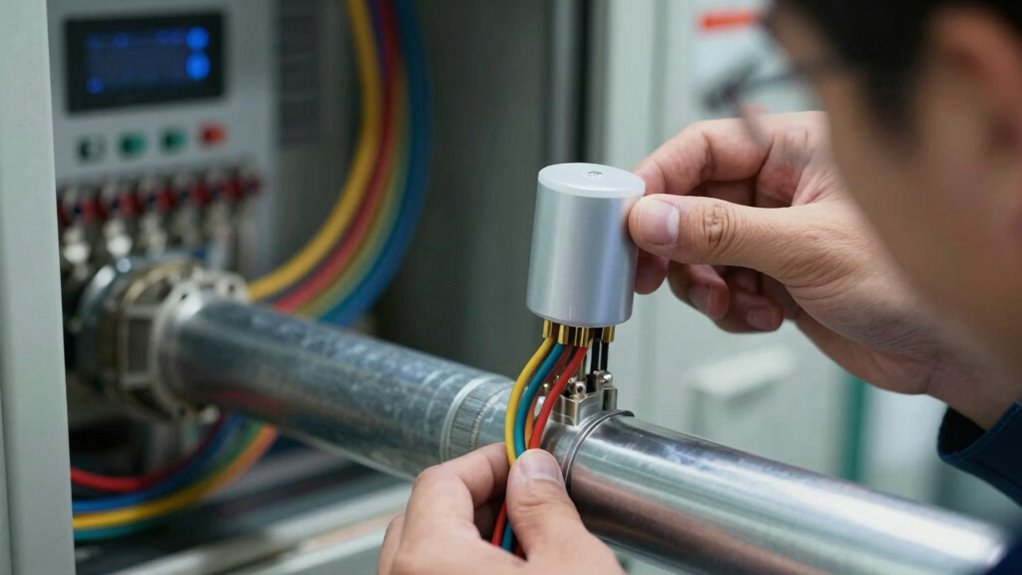
Proper mounting and securing of sensors are essential to guarantee consistent and accurate readings. If sensors move or are loosely attached, sensor calibration can be compromised, leading to unreliable data. Use appropriate mounting techniques, like brackets or adhesives, to ensure stability. Confirm that sensors are level and aligned with the measurement target to avoid skewed results. Secure cables properly to prevent movement or disconnection, which can affect performance. Regularly check mounts for wear or loosening and recalibrate sensors as needed. Proper mounting minimizes external influences, such as vibrations or environmental factors, that could distort data. Remember, a well-secured sensor maintains accuracy over time, providing reliable information for your analysis.
- Choose sturdy mounting surfaces
- Use appropriate fasteners or adhesives
- Regularly verify sensor stability
What Are Common Sensor Placement Mistakes to Avoid?
Avoiding common sensor placement mistakes is essential to ensuring accurate and reliable data. One mistake is neglecting proper sensor calibration before deployment, which can lead to skewed readings over time. Always calibrate sensors regularly to maintain accuracy. Another pitfall is choosing locations with poor wireless connectivity; weak signals can cause data loss or delays. Position sensors within strong signal zones, and verify connectivity during setup. Additionally, avoid placing sensors near sources of interference, such as electrical equipment or metal structures, which can distort measurements. Rushing the placement process or not considering environmental factors can undermine data quality. By paying attention to sensor calibration and wireless connectivity, you ensure your sensors function correctly and provide trustworthy data for analysis.
How Can I Use Data to Improve Sensor Positioning?

To improve sensor placement, start by analyzing how data varies across different locations to spot patterns and hotspots. Next, identify areas where data is missing or unclear, so you can fill those gaps with targeted sensor adjustments. Finally, use trend information to fine-tune positions, ensuring your sensors stay effective over time.
Analyze Spatial Variability
How can you effectively use data to understand the spatial variability in your environment? By analyzing variations in your sensor data, you can identify areas of high and low readings, revealing underlying spatial variability. Recognizing data heterogeneity helps you see where conditions change dramatically over space, guiding better sensor placement. To analyze this, consider:
- Mapping sensor readings to visualize distribution patterns
- Calculating statistical measures like variance across locations
- Comparing data clusters to identify zones of high heterogeneity
This approach allows you to pinpoint where environmental factors fluctuate most, ensuring sensors are placed where they’ll capture meaningful differences. Understanding spatial variability improves data quality and helps optimize sensor locations for holistic environmental monitoring.
Identify Data Gaps
Building on your understanding of spatial variability, the next step is to identify where your data falls short. Look for sensor blind spots where measurements are missing or inconsistent, revealing gaps in your coverage. Analyzing your data can show areas with little to no information, indicating potential blind spots. Also, watch out for data redundancy, where multiple sensors monitor the same zone unnecessarily, wasting resources and leaving other areas underserved. By pinpointing these gaps, you can optimize sensor placement to ensure thorough coverage. Addressing data gaps helps you avoid blind spots and reduces redundancy, leading to more accurate and reliable data collection. This process ensures your sensors work together efficiently, giving you a complete picture of the environment you’re monitoring.
Adjust Based on Trends
Have you considered how current data trends can guide your sensor placement? By analyzing ongoing data patterns, you can optimize sensor locations for better accuracy and efficiency. Trends may reveal areas with fluctuating readings, indicating the need to reposition sensors for more reliable data. Adjusting based on these insights also helps manage wireless connectivity issues, ensuring sensors stay connected and transmit data smoothly. Additionally, monitoring power consumption trends allows you to improve power management, extending sensor battery life and reducing maintenance. To implement these adjustments effectively, consider:
- Repositioning sensors toward areas with more consistent data patterns
- Enhancing wireless connectivity by relocating sensors closer to access points
- Adjusting sensor settings to optimize power management based on usage trends
Real-World Sensor Placement Strategies That Work

Effective sensor placement is crucial for gathering accurate data in real-world environments, where variables can be unpredictable. To achieve this, consider environmental factors like temperature, humidity, and interference, which can impact sensor readings. Regular sensor calibration ensures your devices stay accurate over time, especially when conditions change. Position sensors away from sources of noise or vibration that could distort data. Place them where they can capture representative samples of the area you’re monitoring—whether that’s airflow in a ventilation system or soil moisture in agriculture. Be strategic about height, orientation, and proximity to key features, adjusting as needed based on environmental feedback. These strategies help guarantee your sensors deliver reliable data, enabling better decision-making and system performance.
Frequently Asked Questions
How Often Should Sensor Placement Be Reassessed Over Time?
You should reassess your sensor placement regularly, at least every few months, to guarantee accurate data. Changes in sensor calibration or placement ergonomics can affect results. If you notice inconsistent readings or discomfort, it’s time to check and adjust the sensors. Regularly verifying placement helps maintain data integrity, especially in dynamic environments. Staying proactive ensures your sensors continue to deliver reliable, real-world insights.
What Environmental Factors Affect Sensor Accuracy?
Environmental interference like dust, humidity, and electromagnetic fields impacts your sensor’s accuracy. To combat this, use proper calibration techniques regularly, ensuring your sensors remain precise. Avoid placing monitors near sources of electromagnetic interference or in extreme conditions. Keep sensors clean and protected from dust and moisture, and check their placement periodically. These steps help minimize environmental effects, maintaining reliable data collection over time.
Can Multiple Sensors Improve Data Reliability?
Yes, multiple sensors can improve data reliability by providing data redundancy, which helps identify anomalies and reduce errors. Guarantee proper sensor calibration across all units to maintain accuracy. Placing sensors in varied locations also captures a broader environmental picture, increasing confidence in your data. This approach minimizes the impact of individual sensor failures and assures you get consistent, trustworthy readings vital for informed decision-making.
How Do Sensor Placement Choices Impact Maintenance Needs?
Your sensor placement choices directly impact maintenance needs by affecting calibration and consistency. Proper placement reduces the chances of sensor drift, minimizing frequent recalibration. Consistent placement ensures reliable data over time, lowering maintenance efforts. Avoid placing sensors in harsh environments or areas prone to interference, which can cause inaccuracies and increase maintenance. Regular checks and strategic placement help maintain sensor health, guaranteeing accurate data collection and reducing overall maintenance frequency.
Are There Industry Standards for Sensor Positioning?
While industry standards for sensor positioning are often guided by best practices rather than strict rules, you should prioritize placement optimization and sensor calibration to guarantee accuracy. Standards may suggest ideal locations, but you have the flexibility to adapt based on your specific environment. By focusing on strategic placement, you’ll gather more reliable data, minimize calibration issues, and enhance overall system performance—contributing to smoother operations and better insights.
Conclusion
By carefully choosing where to place your sensors, you guarantee accurate, meaningful data collection. Trust the theory that strategic placement directly impacts sensor performance—it’s not just guesswork. Test different locations, analyze your data, and adapt your setup accordingly. When you follow proven strategies, you’ll optimize results and avoid costly mistakes. Remember, effective sensor placement isn’t luck; it’s about understanding your goals and applying best practices to achieve real, reliable insights.