To keep your nursery safe, regularly check air quality by using an air purifier that removes dust, allergens, and germs. Maintain proper humidity levels between 40-60% to prevent mold and dust mites. Guarantee good ventilation by opening windows when possible or using filtered mechanical ventilation. Frequently clean surfaces, bedding, and filters with child-safe products to reduce allergens. Avoid smoke, strong perfumes, and fumes. Staying aware of these practices helps create a healthier space for your little one; explore more helpful tips ahead.
Key Takeaways
- Ensure proper air purification with regularly maintained filters to remove allergens and airborne germs.
- Maintain indoor humidity levels between 40-60% to prevent mold and dust mites.
- Promote good ventilation by opening windows or using mechanical systems when outdoor air quality is safe.
- Keep nursery surfaces clean and dust-free, using child-safe cleaning products.
- Avoid indoor pollutants like tobacco smoke, strong perfumes, and fumes to ensure a safe breathing environment.
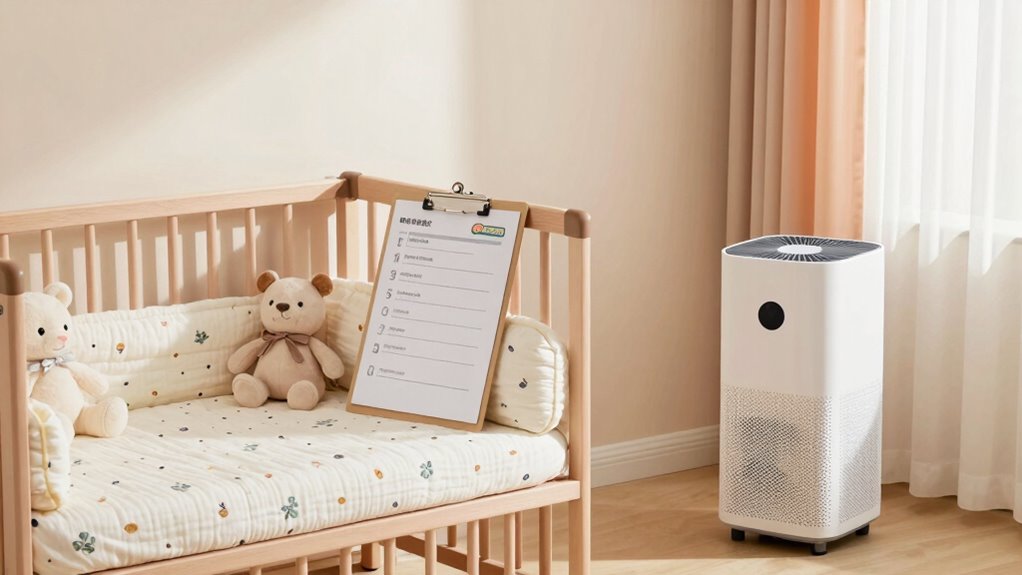
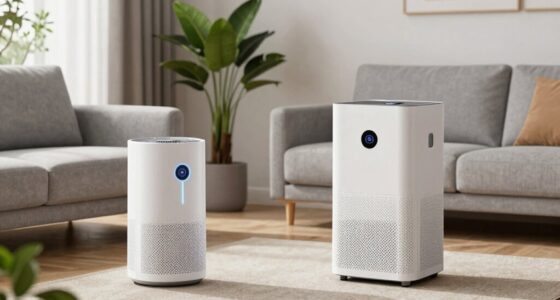
Are you confident that your nursery’s air quality is safe for children? As a parent, ensuring a healthy environment is a top priority, and maintaining good air quality plays a vital role. One of the best ways to achieve this is by keeping an air purifier nearby. The benefits of air purifiers are well-documented—they help remove dust, allergens, pet dander, and even airborne germs, creating a safer space for your little one. By filtering out these pollutants, you reduce the risk of respiratory issues and allergies, which are common concerns in nurseries.
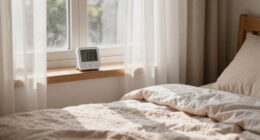
However, an air purifier isn’t enough on its own. Humidity control is equally important. Too much humidity can encourage mold growth and dust mites, while too little can dry out your child’s skin and irritate their respiratory system. A device that combines air purification with humidity regulation helps maintain an ideal level of moisture—generally between 40-60%. This balance prevents mold and dust mites from thriving while keeping the air comfortably moist. Proper humidity levels also help your child’s nasal passages stay moist, reducing discomfort and infection risk. Maintaining optimal humidity levels is especially important because indoor air quality can be significantly impacted by humidity fluctuations. Additionally, monitoring air quality parameters helps ensure your nursery environment remains safe and healthy.
Beyond air purifiers and humidity regulation, your checklist should include guaranteeing proper ventilation. Regularly opening windows when weather permits introduces fresh air, dilutes indoor pollutants, and helps maintain a healthy atmosphere. If outdoor air quality isn’t good, a mechanical ventilation system with filters can help. It’s also wise to keep an eye on indoor temperature; overly warm or cold conditions can impact your child’s comfort and health, so aim for a steady, moderate temperature. Ensuring good air circulation can also help prevent stale air buildup and reduce indoor pollutants. Good ventilation is further supported by proper airflow management, which ensures that indoor air remains fresh and contaminant-free. Proper ventilation not only improves air quality but also reduces indoor pollutants, making it a critical component of nursery safety.
Cleaning regularly is essential, too. Dust surfaces, wash bedding, and vacuum carpets frequently to reduce allergens and dust buildup. Use non-toxic, child-safe cleaning products to avoid introducing harmful chemicals into the environment. Additionally, check that your nursery has good air circulation and that air vents or filters are clean and functioning properly. If you use humidifiers or air purifiers, follow the manufacturer’s instructions for maintenance to keep them operating effectively.
Finally, stay aware of potential indoor pollutants like tobacco smoke, strong perfumes, or cleaning fumes. These can compromise air quality and should be avoided in your child’s space. Keeping a close eye on the air quality and maintaining these elements will help you create a safe, healthy environment. Remember, your proactive efforts to regulate humidity, purify the air, and guarantee good ventilation will give your child a cleaner, safer nursery to grow, learn, and thrive in.
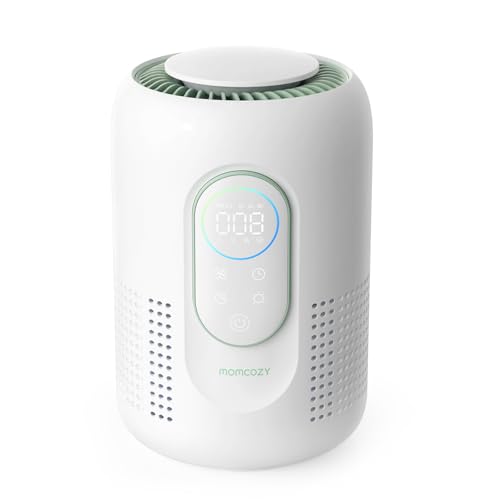
Momcozy Air Purifier for Bedroom with Dimmable Night Light for Small Room
- Quad-Layer Filtration System: 4-stage filter for superior air cleaning
- H13 HEPA & Activated Carbon: Traps particles, odors, and allergens
- Real-Time PM2.5 Monitoring: Displays live air quality levels
As an affiliate, we earn on qualifying purchases.
As an affiliate, we earn on qualifying purchases.
Frequently Asked Questions
How Often Should I Update My Nursery Air Safety Checklist?
You should update your nursery air safety checklist regularly, ideally every three to six months, or whenever there are changes in air quality standards or nursery safety protocols. Staying current ensures your baby’s environment remains safe and healthy. Keep an eye on updates from health authorities and adjust your checklist as needed. Regular reviews help you spot potential hazards early and maintain ideal air quality for your little one’s well-being.
Are Air Purifiers Necessary in Every Nursery?
While air purifiers aren’t always essential, they can offer notable air purifier benefits, especially in areas with high pollution or allergens. Nursery air filtration helps create a cleaner, healthier environment for your little one. Think of it as an extra layer of comfort, quietly working to reduce dust, pet dander, and other irritants. Ultimately, you’ll decide if nursery air filtration provides the peace of mind you’re seeking.
What Are Common Signs of Poor Air Quality in the Nursery?
You’ll notice signs of poor air quality when your baby shows frequent coughing, sneezing, or difficulty breathing. You might also observe a musty smell or visible mold spores around the nursery. Airborne pollutants can cause irritation, and mold spores can trigger allergies or asthma. If these signs appear, it’s essential to improve ventilation, clean regularly, and consider an air purifier to reduce airborne pollutants and mold spores, ensuring a safer environment.
Can Certain Plants Improve Nursery Air Safety?
Certain plants can improve nursery air safety by filtering toxins and increasing humidity, but you should be cautious of toxic plant risks. Beneficial plant types, like spider plants or snake plants, are known for their air-purifying qualities and are generally safe around children. Always research specific plants before introducing them, and keep toxic plants out of reach to guarantee a safe environment for your baby.
How Does Humidity Affect Air Safety in a Nursery?
Imagine the nursery as a gentle breeze guiding a sailboat; if humidity levels are too high, it’s like fog settling, obscuring safe passage. Proper air circulation keeps the air fresh and prevents mold growth. When humidity is balanced, it supports healthy breathing for your baby. Too much moisture can cause mold and dust mites, compromising air safety. Maintaining ideal humidity levels ensures a safe, comfortable environment for your little one.
humidifier with air purifier for children
As an affiliate, we earn on qualifying purchases.
As an affiliate, we earn on qualifying purchases.
Conclusion
So, while you diligently check off every item on this nursery air safety list, don’t forget the one thing that’s often overlooked—common sense. Ironically, in our quest for the safest environment, it’s easy to forget that sometimes, the simplest precautions make the biggest difference. Keep this checklist handy, but trust your instincts even more. After all, the best safety measure is a caring parent, not just a checklist—so breathe easy and enjoy those precious moments.
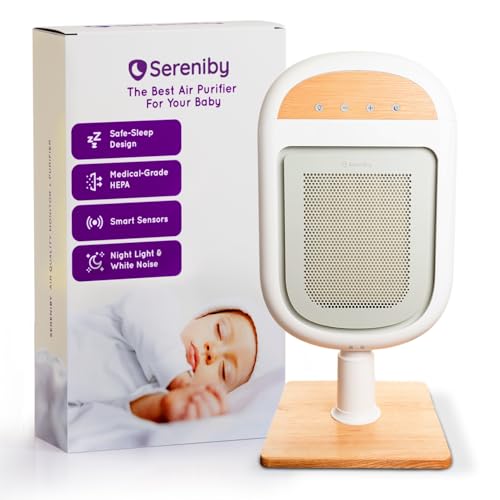
Sereniby Air Purifier for Baby | Proprietary Safe-Sleep Design | Medical-Grade HEPA Filtration | Laser-Accurate Air Quality & Temp Sensors | Smart Parent-Approved Features
- Safe Sleep Air Circulation: Gentle airflow for baby's breathing zone
- Medical-Grade HEPA Filtration: Eliminates viruses, smoke, pollutants, allergens
- Accurate Air Quality & Temp Sensors: Real-time monitoring with smart alerts
As an affiliate, we earn on qualifying purchases.
As an affiliate, we earn on qualifying purchases.

Pure Enrichment® Genuine 3-in-1 True HEPA Replacement Filter for the PureZone Kids Bear Air Purifier (PEAIRBER)
- 3-Stage Air Purification: Pre-Filter, Activated Carbon, True HEPA
- Pre-Filter: Captures dust and allergens
- Activated Carbon Filter: Absorbs odors and harmful gases
As an affiliate, we earn on qualifying purchases.
As an affiliate, we earn on qualifying purchases.