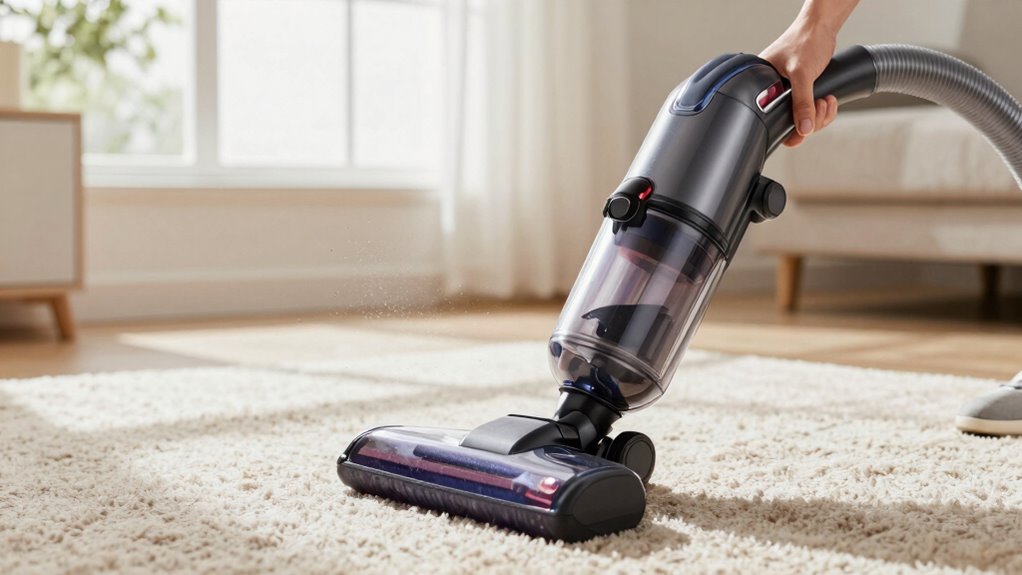
A spike in airborne particles right after vacuuming is normal because cleaning stirs up settled dust, pet dander, and allergens. It doesn’t mean your vacuum is failing; it’s just disturbing debris that becomes airborne temporarily. Using well-maintained equipment with filters like HEPA helps reduce long-term PM levels. Proper techniques and ventilation also improve air quality. To understand why these spikes happen and how to manage them effectively, keep exploring these helpful tips.

Get home appliances delivered free with Prime
- Fast, free delivery on millions of items
- Prime Video, Amazon Music and more included
- Member-only deals all year
Key Takeaways
- Temporary PM spikes are normal as vacuuming disturbs settled dust and allergens into the air.
- Elevated PM levels post-vacuuming indicate effective debris removal, not equipment failure.
- Proper maintenance, like cleaning filters and brushes, ensures optimal vacuum performance and reduces PM spikes.
- Using HEPA filters and venting during cleaning helps minimize airborne particles.
- Regular, thorough vacuuming improves indoor air quality over time, despite short-term PM increases.

If you notice a sudden spike in particulate matter (PM) levels after vacuuming, it doesn’t necessarily mean your vacuum has failed. In fact, this temporary increase can be a normal part of the cleaning process, especially if your indoor environment has accumulated a significant amount of dust, pet dander, or other allergens. When you start vacuuming, you disturb settled particles on carpets, upholstery, and floors, causing them to become airborne momentarily. This can lead to a spike in PM levels, but it doesn’t mean your vacuum isn’t working effectively. Instead, it’s a sign that your vacuum is doing its job of removing trapped debris, even if it temporarily causes higher indoor particle counts. Understanding this behavior is key to maintaining good indoor air quality, and recognizing that such PM spikes are often a normal response to cleaning can help set realistic expectations. To improve air quality, consider implementing some simple maintenance tips. For starters, always use a vacuum with a high-efficiency particulate air (HEPA) filter, which can trap smaller particles and prevent them from recirculating into the air. Regularly replacing or cleaning filters ensures they continue to function properly and optimize air quality improvement efforts. Additionally, check your vacuum’s brush roll and filters frequently, removing hair, dust, and debris that could impede performance. Proper maintenance keeps your vacuum running efficiently, reducing the likelihood of excessive PM spikes and ensuring cleaner, healthier indoor air. Another tip is to vacuum in well-ventilated areas whenever possible. Opening windows or turning on exhaust fans helps disperse airborne particles, preventing them from accumulating indoors. Using a microfiber cloth or damp mop on hard surfaces after vacuuming can also help pick up residual dust that might be stirred up during cleaning. If you have pets or allergy sensitivities, consider vacuuming more frequently, especially in high-traffic or dusty areas, to keep PM levels lower over time. Regular maintenance and using the right equipment are essential for effective cleaning, and paying attention to air circulation can significantly improve indoor air quality. Additionally, understanding the behavior of airborne particles during cleaning can help you better manage indoor air health. Recognizing the impact of cleaning methods on indoor air quality can further inform your maintenance routine. Remember, maintaining your vacuum and following best practices not only prolongs its lifespan but also supports your goal of improving indoor air quality.
As an affiliate, we earn on qualifying purchases.
Frequently Asked Questions
Can PM Spikes Occur Even With a New Vacuum?
Yes, PM spikes can occur even with a new vacuum. Regular vacuum maintenance helps keep your device working efficiently, but PM spikes might still happen if dust or allergens are released into the air during cleaning. Using an air purifier alongside your vacuum can help reduce airborne particles. Keep filters clean and replace them as needed, ensuring your vacuum and air purifier work together to improve indoor air quality effectively.
Are Certain Carpets More Prone to PM Spikes?
Absolutely, some carpets are more prone to PM spikes, thanks to their fiber sensitivity and durability. Think of delicate, plush fibers as fragile glass—they easily release dust when disturbed. In contrast, sturdy carpets with durable fibers resist spikes better. So, if you notice PM spikes, it’s likely your carpet’s fiber composition, not your vacuum’s failure, causing the issue. Your choice of carpet matters more than you might think.
How Long Do PM Spikes Typically Last?
PM spikes usually last from a few hours to a day, depending on dust accumulation and carpet texture. If your carpet has a rough or shaggy texture, it traps more dust, causing longer-lasting spikes. Regular vacuuming can help reduce these effects, but some dust particles are stubborn. Keep in mind, spikes typically diminish as dust settles or is dispersed, so patience and consistent cleaning are key to maintaining good air quality.
Do PM Spikes Indicate Airborne Allergen Release?
A watched pot never boils, and similarly, PM spikes don’t always mean airborne allergen release. When you see a spike after vacuuming, it might just be dust particles temporarily suspended in the air, not necessarily allergens. While airborne allergens can cause discomfort, these spikes often settle quickly. Keep in mind, a spike isn’t always an allergy warning, but it’s wise to ventilate and monitor your air quality afterward.
Can Vacuum Type Affect PM Spike Frequency?
Yes, the type of vacuum can affect PM spike frequency. Vacuums with better filtration systems, like HEPA filters, trap more airborne particles, reducing spikes. Additionally, proper air circulation during and after vacuuming prevents particle buildup in the air. Choosing a vacuum with effective filtration and ensuring good air circulation helps minimize PM spikes, so you breathe cleaner air and maintain healthier indoor environments.
As an affiliate, we earn on qualifying purchases.
Conclusion
Remember, a spike in particulate matter after vacuuming isn’t always a sign of a failing vacuum—it’s often just the dust dancing back into the air like a stubborn ghost. Your vacuum is doing its job, and the temporary increase is a sign that dust has been disturbed, not defeated. Keep your filters clean and maintain regular cleaning routines. With patience, your home will breathe easier, and those airborne particles will fade like shadows at dawn.
As an affiliate, we earn on qualifying purchases.
As an affiliate, we earn on qualifying purchases.
NFL season / tailgating Picks
team gear
As an affiliate, we earn on qualifying purchases.