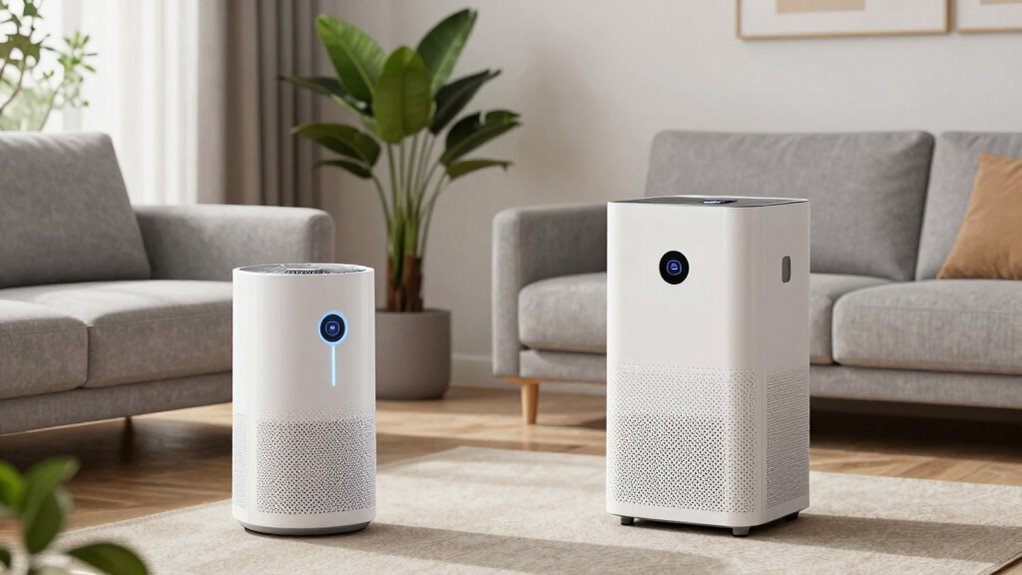

To decide between one room, two purifiers, or a whole-house system, you need to size units based on your room’s size and air quality needs. Measure your space’s square footage and height, then choose a purifier with the right capacity for pollutants like dust, smoke, or pet dander. For larger or multiple rooms, whole-house systems or multiple units work best. Proper sizing guarantees effective cleaning, longer filter life, and consistent air quality — keep exploring to learn more about optimizing your setup.

Get home appliances delivered free with Prime
- Fast, free delivery on millions of items
- Prime Video, Amazon Music and more included
- Member-only deals all year
Key Takeaways
- Match purifier capacity to your room’s size and volume for effective air cleaning.
- Use multiple purifiers in large or open-concept spaces for consistent air quality.
- Consider whole-house systems for high pollution levels or multiple rooms needing simultaneous filtration.
- Regularly maintain filters and monitor air quality to optimize purifier performance.
- Proper sizing prevents overworking or underperforming units, ensuring efficient and cost-effective air purification.

When selecting the right size for your clothing or equipment, using a consistent sizing logic can make all the difference. The same principle applies when choosing air purifiers for your space. Whether you’re considering one room, two purifiers, or a whole-house system, understanding how to size your setup guarantees ideal air quality and efficient filter maintenance. The goal is to match your purifier’s capacity with your space’s needs so that you’re effectively removing pollutants without wasting energy or overloading filters.
Start by evaluating the size of the area you want to purify. For a single room, measure its square footage and height to calculate the volume. This helps you determine the appropriate Clean Air Delivery Rate (CADR) of the purifier. A higher CADR generally indicates faster air cleaning, but if the purifier is too large for the room, it might cycle on and off more frequently, increasing wear and tear on filters. Conversely, an undersized unit won’t clean the air effectively. When considering multiple purifiers, focus on each room’s size and air quality concerns—like dust, pet dander, or smoke—to select units with suitable capacities. For larger spaces, like open-concept living areas or multiple rooms, a whole-house system becomes more efficient. These systems are designed to handle higher volumes and can provide consistent air quality throughout your home.
Air quality plays a vital role in your sizing decision. If you live in an area with high pollution, allergens, or frequent wildfire smoke, you’ll need a more powerful system or multiple units to keep indoor air safe. Pay attention to filter maintenance requirements as well. Larger systems or multiple purifiers might require more frequent filter replacements, so consider ease of access and ongoing costs. Proper filter maintenance ensures your system performs at its best, maintaining good air quality and preventing buildup of pollutants that can compromise health. Additionally, selecting systems with efficient filter replacement can help reduce ongoing costs and downtime. Regularly monitoring your indoor air quality with air quality sensors can help you adjust your setup as needed and ensure your system remains effective. Also, remember that filters need to be changed regularly—clogged filters reduce airflow and strain the system, decreasing efficiency and increasing energy use. Considering air purifier sizing principles can help optimize your setup for the best results.
As an affiliate, we earn on qualifying purchases.
Frequently Asked Questions
How Often Should I Replace the Filters in My Purifiers?
You should replace your purifier filters every 6 to 12 months to guarantee ideal air filter maintenance. The purifier lifespan depends on usage, air quality, and filter type. Regularly checking filters helps prevent buildup and maintains efficiency. If you notice decreased airflow or odors, it’s time for a replacement. Staying proactive with filter changes keeps your purifier working effectively and extends its lifespan.
Can Multiple Purifiers Work Together Effectively?
Multiple purifiers can work together effectively if you guarantee airflow compatibility and purifier synergy. You need to position them so airflow isn’t restricted or blocked, allowing each purifier to operate ideally. When they complement each other’s filtration capabilities, they create a more thorough purification system. Just be mindful of overlapping coverage areas and avoid redundancy. Properly coordinated, multiple purifiers can markedly improve indoor air quality.
What Is the Cost Difference Between Room and Whole-House Purifiers?
The cost difference between room and whole-house purifiers varies considerably. Room purifiers are usually more affordable upfront, making them a budget-friendly choice for improving air quality in a single space. Whole-house systems cost more initially but are more energy-efficient over time, providing thorough air quality improvement with less energy use. Consider your needs and budget to balance upfront costs with long-term energy efficiency benefits.
How Do I Determine the Right Purifier Size for a Large Space?
To properly size a purifier for a large space, imagine trying to clean a colossal mountain with a tiny sponge—ineffective and frustrating. Measure your room’s square footage, then select a purifier with a CADR (Clean Air Delivery Rate) that matches or exceeds that size. This guarantees ideal air quality and easier purifier maintenance. If your purifier is too small, it’ll struggle, leading to poor air quality and more frequent filter changes.
Are There Specific Brands Recommended for Different Needs?
You should choose brands based on your specific needs, focusing on brand compatibility and feature comparison. For allergy relief, consider brands known for HEPA filters like Dyson or Blueair. If you want smart features, look into brands like Molekule or Winix. Compare each brand’s capabilities, filter options, and user reviews to find the best fit. Prioritizing features that match your room size and air quality goals guarantees peak performance.
HEPA air purifier for pet dander
As an affiliate, we earn on qualifying purchases.
As an affiliate, we earn on qualifying purchases.
Conclusion
When choosing between a purifier for one room or the whole house, remember that proper sizing is key. Did you know that poor air quality affects over 90% of people worldwide? Using the right-sized purifier can dramatically improve your indoor air, reducing allergens and pollutants. So, whether you opt for a single device or a whole-house system, make sure it fits your space and needs. Your lungs will thank you for it!
As an affiliate, we earn on qualifying purchases.
As an affiliate, we earn on qualifying purchases.
Fall yard work Picks
leaf blowers
As an affiliate, we earn on qualifying purchases.