To prevent humidifier breakdowns during seasonal changes, establish a regular maintenance routine. Clean and inspect your unit, descale mineral buildup with vinegar, and replace filters every 1 to 3 months. Check water parts and seals for damage, adjust humidistat settings for comfort, and monitor water quality. Proper upkeep keeps your humidifier running smoothly. Keep these tips in mind, and you’ll guarantee reliable performance — and discover more ways to maintain your system effectively.
Key Takeaways
- Establish a seasonal maintenance schedule for cleaning, inspecting, and replacing filters to prevent mineral buildup and malfunctions.
- Regularly clean the water tank and internal parts with vinegar or appropriate descaling agents.
- Check water quality and ensure the water supply is free from debris and mineral deposits.
- Inspect nozzles, valves, and sensors for debris, damage, or wear, and replace filters as needed.
- Adjust humidity settings gradually to match seasonal changes and prevent system strain.

4 Pack Wf813 Eqwf813 Humidifier Filters Compatible with Equate Eq-2119-Ul
- Compatible Models: Fits various humidifier brands and models
- High-Quality Materials: Multi-layer natural mesh with aluminum foil
- Efficient Filtration: Captures mineral deposits and impurities
As an affiliate, we earn on qualifying purchases.
As an affiliate, we earn on qualifying purchases.
Why Seasonal Maintenance Keeps Your Humidifier Working Well

Regular seasonal maintenance is essential because it helps prevent mold, bacteria, and mineral buildup that can impair your humidifier’s performance. When you keep up with maintenance, you’ll notice less humidifier noise, making it operate more quietly. Proper humidifier placement also plays a role; placing it on a flat, stable surface away from walls or furniture reduces vibrations and noise. Neglecting maintenance can cause mineral deposits to clog components, increasing noise levels and decreasing efficiency. Keeping your humidifier clean and correctly positioned ensures it runs smoothly and quietly throughout the season. Regular checks help catch issues early, saving you from unexpected breakdowns and costly repairs. Additionally, understanding humidifier types can help you select the best model for your needs and maintain it properly. For optimal indoor air quality, consistent maintenance is crucial. Being familiar with humidifier maintenance practices can further extend your unit’s lifespan and effectiveness. Proper cleaning techniques also prevent the buildup of harmful microorganisms, which is vital for healthy indoor environments. Furthermore, choosing the right humidifier accessories can improve overall performance and ease of maintenance. Ultimately, diligent seasonal upkeep keeps your humidifier functioning well and maintains a comfortable indoor environment.

LeoTube Humidifier Cleaner Tablets for Humidifiers & Diffusers (40-Pack)
- Quick Deep Cleaning: Dissolves stains and deposits rapidly
- Complete Maintenance Kit: 40-pack for seasonal care
- Enhances Aromatherapy: Removes residues for pure scent
As an affiliate, we earn on qualifying purchases.
As an affiliate, we earn on qualifying purchases.
How to Clean and Inspect Your Humidifier Before Use

Before you start using your humidifier for the season, it’s important to clean and inspect it thoroughly. Start with cleaning techniques like descaling any mineral buildup, washing all removable parts with soap and water, and disinfecting with a mixture of vinegar and water. Be sure to rinse everything well to remove residue. Use an inspection checklist to check for cracks, mold, or damage to the tank and components. Look for signs of wear or corrosion that could affect performance. Ensure the water reservoir is free of debris and that all seals are intact. Proper cleaning and inspection prevent mold growth and guarantee your humidifier operates efficiently. Paying attention to air quality management can help maintain a healthier indoor environment. Additionally, inspecting for wear and corrosion can prolong the lifespan of your appliance and ensure safe operation. Regular maintenance, including filter checks, can help optimize performance and prevent unexpected breakdowns. Incorporating routine humidifier cleaning practices can further enhance the longevity and effectiveness of your device. Taking these steps helps avoid breakdowns and keeps your air quality healthy all season long.

Protec Humidifier Cleaning Fish, Tank Cleaner, Fights Slime & Odor, Lasts 30 Days, 1 Count, Color May Vary
- Continuous Cleaning: Keeps humidifier cleaner longer
- Easy to Use: Drop into humidifier tank for cleaner mist
- Long-Lasting: Cleans for up to 30 days
As an affiliate, we earn on qualifying purchases.
As an affiliate, we earn on qualifying purchases.
Replacing Filters and Checking Water Parts for Peak Performance

You should replace your humidifier filter regularly to keep the unit working efficiently. It’s also important to inspect water parts for buildup or damage that could affect performance. Staying on top of these tasks guarantees your humidifier runs smoothly and safely. Additionally, consider eco-friendly disposal methods for old filters and parts to minimize environmental impact. Regular maintenance can also help reduce the buildup of allergens and microplastics in dust, improving overall indoor air quality. Implementing proper measuring tools ensures accurate detection of potential issues before they lead to breakdowns. Using air quality sensors can provide real-time feedback on humidity and contaminant levels, helping you maintain optimal indoor conditions. Properly maintaining your humidifier can also extend its lifespan and ensure energy efficiency in your home.
Filter Replacement Schedule
To make certain your humidifier operates efficiently, it’s vital to replace filters regularly and inspect water parts for buildup or damage. A well-maintained filter prevents air filter degradation, ensuring ideal airflow and reducing humidifier noise levels. Follow this schedule to stay on top of filter replacements: 1. Replace filters every 1 to 3 months, depending on usage and water quality. 2. Check for signs of wear or mold weekly. 3. Clean or replace water parts if mineral buildup appears. 4. Monitor humidifier noise levels; increased noise may indicate filter or water part issues. Regular filter replacement keeps airflow smooth, prevents clogging, and minimizes unwanted noise. Staying consistent with this schedule ensures peak performance and extends your humidifier’s lifespan. Additionally, monitoring the electric power output of related devices can help optimize overall operation and efficiency. Proper humidifier maintenance can also prevent common issues such as mineral buildup and mold growth, which are influenced by the quality of water used and adherence to piercing care and hygiene practices. Incorporating energetic alignment techniques can further enhance your maintenance routine by promoting positive energy flow around your appliances.
Water Part Inspection
Regularly inspecting water parts guarantees your humidifier functions efficiently and maintains air quality. Check water quality regularly, as mineral buildup can affect performance and lead to clogs. If you notice mineral deposits, clean the water tank and water delivery components thoroughly using a vinegar solution to dissolve buildup. Replace filters as needed—clogged or dirty filters hinder airflow and reduce humidifier effectiveness. Pay close attention to water parts like nozzles, valves, and sensors, ensuring they’re free of debris and functioning correctly. Proper maintenance prevents mold growth and bacteria, which can compromise air quality. For optimal results, consider using antimicrobial essential oils in your humidifier to further inhibit microbial growth. Regularly monitoring water quality and maintaining the system safeguards your humidifier’s longevity. Understanding water quality parameters such as pH and mineral content can help you better assess the system’s needs. Consistent inspection and cleaning keep your humidifier running smoothly, extending its lifespan and ensuring you enjoy clean, healthy moisture in your space.
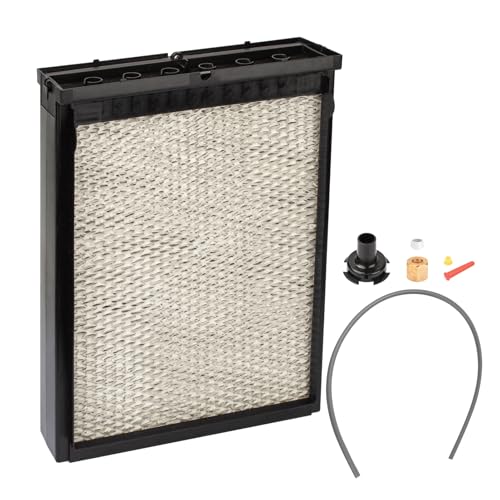
4839 Humidifier Maintenance Kit/Water Panel Model No. 35 Humidifier Filter Replacement for Aprilaire 600, 600A, 600M,Whole Home Humidifier Filter Fits for Aprilaire 600 Series
- Compatible Models: Fits Aprilaire 600 series humidifiers
- Complete Maintenance Kit: Includes water panel, scale control, and more
- Easy Installation: Quick and simple to install in minutes
As an affiliate, we earn on qualifying purchases.
As an affiliate, we earn on qualifying purchases.
How to Adjust Settings and Humidistat for Seasonal Comfort

Adjusting your humidistat settings helps maintain a comfortable environment throughout the seasons. You should change the settings based on outdoor weather and indoor humidity levels. Proper adjustments make sure your home stays cozy without over-humidifying or causing moisture issues.
Adjusting Humidistat Settings
When setting your humidistat for seasonal comfort, it’s important to find the right balance to avoid issues like dry skin or excess moisture. To do this effectively, consider these key steps:
- Set the humidity level between 40-50% for comfort and to reduce humidifier noise.
- Adjust the humidistat gradually, monitoring indoor air quality for any signs of excess moisture.
- Check water quality regularly; mineral buildup can cause noise and reduce efficiency.
- Ensure the humidifier’s water supply is clean and free of debris to prevent malfunctions and maintain proper humidity levels.
Seasonal Comfort Optimization
Optimizing your humidifier settings for seasonal comfort involves fine-tuning both the humidity level and the humidistat to match changing weather conditions. As temperatures fluctuate, adjusting these settings helps maintain a comfortable indoor environment while enhancing energy efficiency. Proper humidity levels prevent dryness or excess moisture, reducing strain on your heating or cooling systems. This balance also improves indoor air quality by reducing dust, allergens, and respiratory irritants. Regularly calibrate your humidistat to ensure it responds accurately to seasonal shifts. Keeping humidity within recommended ranges minimizes energy consumption, saving you money and lowering utility bills. By fine-tuning your humidifier for seasonal comfort, you create a healthier, more comfortable home environment that adapts seamlessly to weather changes.
Troubleshooting Common Humidifier Problems During Transitions

Changes between different humidity levels can sometimes cause your humidifier to behave unpredictably. You might notice increased humidifier noise or odd sounds during this change. Additionally, water tank cracking can occur if the unit isn’t prepared for temperature or humidity shifts. To troubleshoot, consider these steps:
- Check for water tank cracks and replace if necessary.
- Ensure the water tank is seated properly to prevent noise caused by vibrations.
- Inspect for mineral buildup, which can cause strange noises and block airflow.
- Adjust humidity settings gradually to avoid sudden system strain.
Creating a Routine Maintenance Schedule to Prevent Breakdowns

Establishing a routine maintenance schedule is essential for keeping your humidifier running smoothly and preventing unexpected breakdowns. Regularly replacing the air filter ensures ideal airflow and prevents dust buildup that can strain the unit. Set reminders to check and replace filters every few months, especially during peak usage seasons. Consistent maintenance extends your humidifier’s lifespan and keeps it functioning efficiently. Besides filter replacement, schedule periodic cleaning of the water tank and internal components to prevent mold and mineral deposits. Keeping a maintenance calendar helps you stay proactive, avoiding costly repairs and ensuring consistent humidity levels. By sticking to this routine, you’ll maintain a healthy indoor environment and maximize your humidifier’s performance year-round.
Frequently Asked Questions
How Often Should I Replace Humidifier Filters Annually?
You should replace your humidifier filter at least once a year, but the exact filter replacement schedule depends on your humidifier’s lifespan and usage. If you notice reduced mist output or increased mineral buildup, it’s time to change the filter sooner. Regular replacement keeps your humidifier running efficiently, prevents mold growth, and maintains air quality. Typically, check your manufacturer’s recommendations to guarantee peak performance and avoid breakdowns.
What Signs Indicate My Humidifier Needs Professional Repair?
You should call a professional if your humidifier shows signs of age-related wear or makes unusual noises, which indicate potential mechanical issues. Persistent leaks, foul odors, or inconsistent humidity levels also signal the need for expert repair. Don’t ignore these signs, as they can lead to breakdowns or reduced efficiency. Addressing problems early with a professional guarantees your humidifier runs smoothly and lasts longer.
Can Hard Water Damage My Humidifier Over Time?
Yes, hard water can damage your humidifier over time by causing mineral buildup, affecting water mineralization, and shortening the filter lifespan. Mineral deposits can clog parts, reduce efficiency, and lead to costly repairs. Regularly using filtered or softened water helps prevent these issues, ensuring your humidifier runs smoothly. Keep an eye on mineral buildup, replace filters as needed, and maintain proper water quality to prolong your device’s lifespan and performance.
Is There a Recommended Humidity Level for Different Seasons?
You should aim for seasonal humidity levels between 30-50% to maintain ideal moisture in your home. In winter, increase humidity slightly to combat dry air, but avoid exceeding 50% to prevent mold growth. During summer, lower humidity to prevent excess dampness. Monitoring your home’s seasonal humidity helps keep your space comfortable and healthy, ensuring your humidifier works efficiently without risking condensation or mold issues.
How Do I Prevent Mold and Bacteria Growth in My Humidifier?
You might think mold and bacteria can’t grow if you keep your humidifier clean, but they can if you neglect it. To prevent growth, regularly change filters and clean your humidifier with vinegar or disinfectant. This reduces airborne allergens and keeps the environment healthy. Proper filter maintenance and thorough cleaning prevent mold spores and bacteria from thriving, ensuring your humidifier stays safe and effective all season long.
Conclusion
By sticking to this seasonal humidifier maintenance checklist, you’ll keep your unit running smoothly all year long. Regular cleaning, inspections, and adjustments prevent breakdowns and save you from a disaster that’s bigger than a snowstorm. Think of it as giving your humidifier a spa day—it’ll thank you with cozy, perfectly humid air that makes your home feel like a warm, comforting hug. Stay diligent, and you’ll never face a humidifier meltdown again!