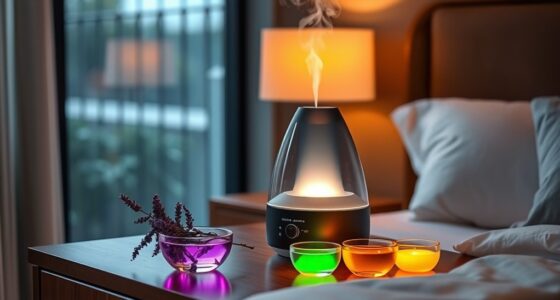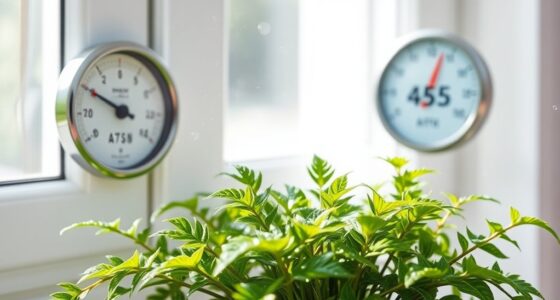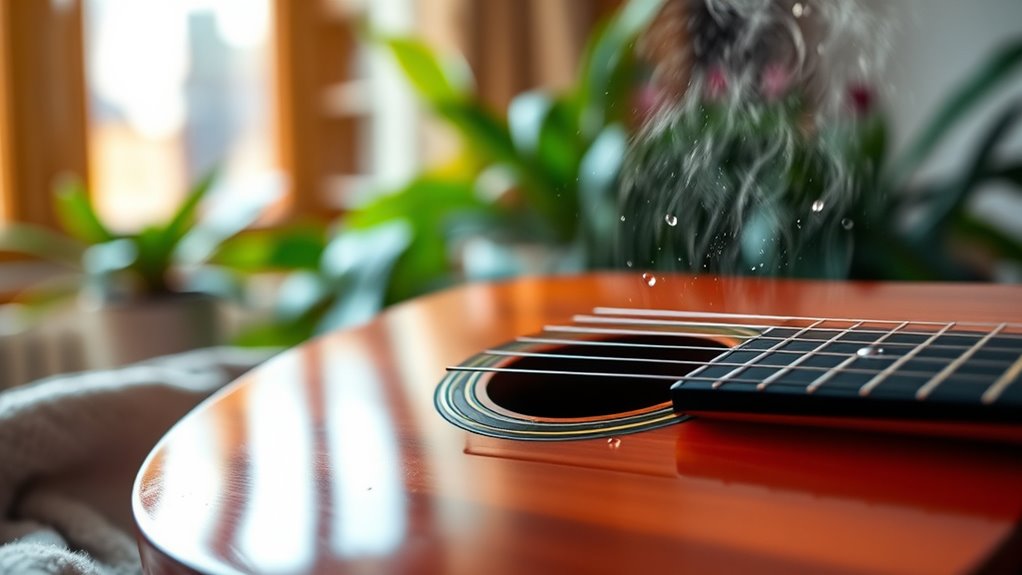

Using a humidifier to control humidity levels is essential for protecting your musical instruments from the damaging effects of dry air. When humidity stays between 40% and 60%, it helps prevent wood from shrinking, cracking, or warping, which can ruin the sound and cause costly repairs. Stable moisture levels also keep strings in tune longer and improve overall performance. Keep your instruments in ideal condition—continue to explore how proper humidity management can save your musical investments.
Key Takeaways
- Proper humidity levels prevent wood damage, warping, and cracking in musical instruments.
- Using a humidifier stabilizes moisture, maintaining consistent sound quality and tuning.
- Humidifiers help protect delicate wooden components from the detrimental effects of dry air.
- Maintaining 40-60% humidity minimizes seasonal and climate-related fluctuations.
- Effective humidifier use extends instrument lifespan and preserves its structural and tonal integrity.

Using a humidifier can be an effective way to protect your health during dry seasons or in environments with low humidity. But it’s not just about your well-being—proper humidity levels also preserve your musical instruments. When the air is too dry, wooden instruments like guitars, violins, or pianos can face issues that affect their sound and longevity. One of the key problems is wood expansion and contraction. As the humidity drops, the wood in your instrument loses moisture, causing it to shrink and become brittle. This can lead to cracks, warping, or other structural damages that are costly and frustrating to repair. Conversely, when you increase humidity with a humidifier, you help maintain a stable environment that keeps the wood at an ideal moisture level. This stability minimizes wood expansion and contraction, preserving the instrument’s shape and sound quality.
String tuning is another aspect affected by humidity fluctuations. When the wood in your instrument dries out, it may alter the tension of the strings, making tuning more difficult and less stable. You might find yourself constantly adjusting the tuning to compensate for the changes caused by dry air. By maintaining consistent humidity, a humidifier ensures that the wood remains at a healthy moisture level, which in turn helps keep your strings in tune longer. This not only saves you time but also prevents unnecessary wear on your strings and tuning pegs. Proper humidity levels foster a more stable environment so your instrument stays in tune and sounds its best.
Furthermore, using a humidifier is straightforward. It’s about creating a controlled environment where the moisture levels are kept within the ideal range—usually between 40% and 60%. When you do this, you’re protecting the delicate wooden components and the strings alike. This results in better sound quality, easier tuning, and less risk of damage from seasonal changes or climate variations. Whether you’re a professional musician or an avid hobbyist, investing in a good humidifier is a simple step that pays off by extending the life of your instruments and maintaining their prime performance.
In short, using a humidifier helps you manage the environmental factors that threaten your musical instruments. It prevents wood expansion issues, keeps your strings stable, and ensures your instrument remains in excellent condition. With consistent humidity, you’re not just protecting your health but also safeguarding your musical investments, making sure your sound stays true and your instruments stay in prime shape over time.
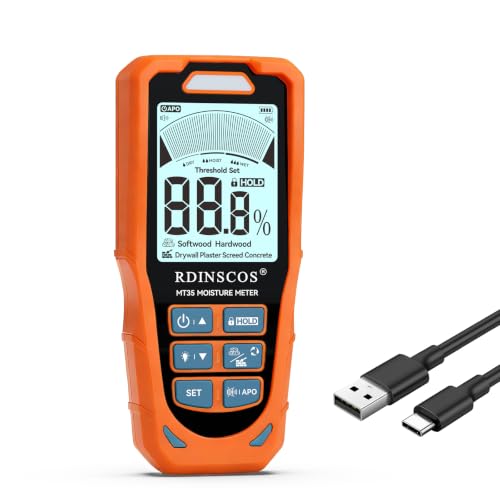
Pinless Moisture Meter Non-Invasive Digital Wood Moisture Tester (B-Orange)
- Material Measurement Modes: Six modes for various materials
- Adjustable Alarm System: Custom humidity alerts with LED and buzzer
- Backlit LCD Display: Clear 2.9-inch screen with hold function
As an affiliate, we earn on qualifying purchases.
Frequently Asked Questions
How Often Should I Check My Instrument’s Humidity Levels?
You should check your instrument’s humidity levels at least once a week to guarantee proper maintenance. Regular humidity monitoring helps prevent damage caused by fluctuations. Use a reliable hygrometer and keep a record of the readings. If levels drift outside the ideal range, adjust your humidifier accordingly. Consistent checks and maintenance tips keep your instrument in top shape, protecting it from cracks, warping, or other humidity-related issues.
What Types of Humidifiers Are Safest for Musical Instruments?
You should choose ultrasonic humidifiers or electronic diffusers because they’re safest for musical instruments. Ultrasonic humidifiers produce cool mist without heating, reducing risk of damage, while electronic diffusers evenly disperse moisture without excessive humidity spikes. Always opt for models with adjustable settings and automatic shut-off features. Regularly clean your humidifier to prevent mold, and keep humidity levels steady to protect your instruments from warping and cracking.
Can Too Much Humidity Damage My Instrument?
Think of your instrument as a sponge—too much excess moisture, and it can swell, warp, or crack. Excess humidity can indeed damage your instrument, leading to issues like mold growth and deterioration. High humidity levels cause wood to expand and contract unevenly, compromising sound quality. To protect your investment, maintain ideal humidity and avoid overusing humidifiers, which can create an environment where mold and other damage thrive.
Are There Specific Humidity Ranges Recommended for Different Instrument Types?
You should aim for specific humidity ranges to protect your instrument’s wooden resonance and string tension. Generally, 40-60% humidity works well for most wooden instruments, preventing cracks and warping. For stringed instruments, maintaining stable humidity helps keep string tension consistent, avoiding tuning issues. Too dry or too humid environments can harm your instrument, so use a humidifier or dehumidifier as needed to keep conditions within this recommended range.
How Do I Know if My Humidifier Is Working Properly?
To know if your humidifier is working properly, check its maintenance regularly—clean it to prevent mold and guarantee proper function. Use instrument humidity sensors to monitor your instrument’s moisture levels; if readings stay within recommended ranges, your humidifier is effective. Adjust the settings as needed, and replace any filters or parts when necessary. Consistent monitoring and maintenance keep your instrument protected and your humidifier functioning at its best.

RDINSCOS Pinless Moisture Meter Non-Invasive Digital Moisture Detector
- Multi-Surface Compatibility: Works on wood, drywall, concrete, plaster
- Pinless Non-Invasive Design: Detects moisture up to 40mm deep without damage
- High Accuracy & Reference Mode: Provides 2.5% accurate readings with baseline comparison
As an affiliate, we earn on qualifying purchases.
Conclusion
To keep your cherished instruments singing like new, think of a humidifier as their loyal guardian, gently shielding them from the harsh dryness that threatens their soul. Just as a gardener tends to delicate blooms, you nurture your instruments with steady moisture, allowing their voices to flourish. With a simple humidifier, you create a cozy, nurturing environment—transforming your space into a sanctuary where your musical treasures can breathe, thrive, and sing their fullest melody.

Klein Tools ET140 Pinless Moisture Meter for Non-Destructive Moisture Detection in Drywall, Wood, and Masonry; Detects up to 3/4-Inch Below Surface
- Leak Detection: Detects moisture from leaks and flooding
- Pinless Moisture Measurement: Measures moisture in building materials
- Non-Destructive Depth: Detects up to 3/4 inch deep
As an affiliate, we earn on qualifying purchases.

Moisture Meter for Wood Pinless Moisture Tester Firewood Moisture Reader
- Multi-Functional Moisture Detection: Detects moisture in wood, drywall, and concrete
- Non-Destructive Testing: Measures moisture without damaging surfaces
- High-Definition Color Screen: 2.7-inch display with dual digital and analog views
As an affiliate, we earn on qualifying purchases.