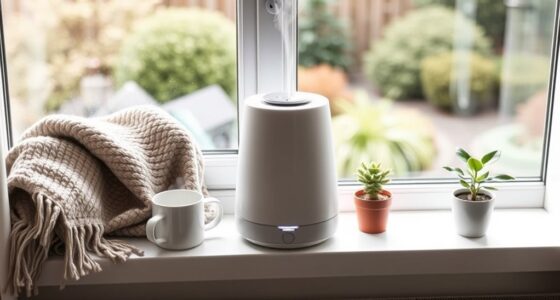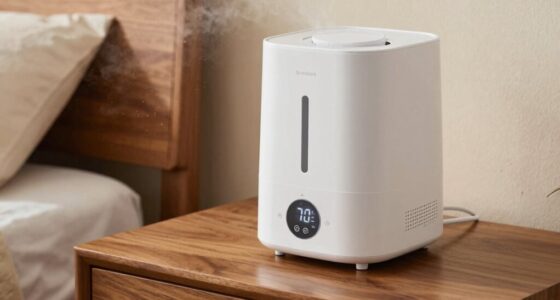
Maintaining the right relative humidity level is key to managing your allergy symptoms. When humidity is too high, mold spores and dust mites thrive, worsening allergies and causing discomfort. If it’s too dry, your skin and sinuses can become irritated. Keeping your indoor humidity between 40-50% helps limit allergen growth and creates a healthier environment. Want to discover how precise control can make a real difference for your allergies? Keep exploring to find out more.

Get home appliances delivered free with Prime
- Fast, free delivery on millions of items
- Prime Video, Amazon Music and more included
- Member-only deals all year
Key Takeaways
- Maintaining 40-50% humidity reduces dust mites and mold growth that worsen allergy symptoms.
- Proper humidity levels prevent excessive moisture that promotes mold spores and allergen proliferation.
- Controlling humidity minimizes airborne allergens, improving indoor air quality for allergy sufferers.
- Humidity management helps prevent dry skin, irritated sinuses, and respiratory discomfort related to allergies.
- Using hygrometers and dehumidifiers ensures optimal humidity, creating a less hospitable environment for allergens.
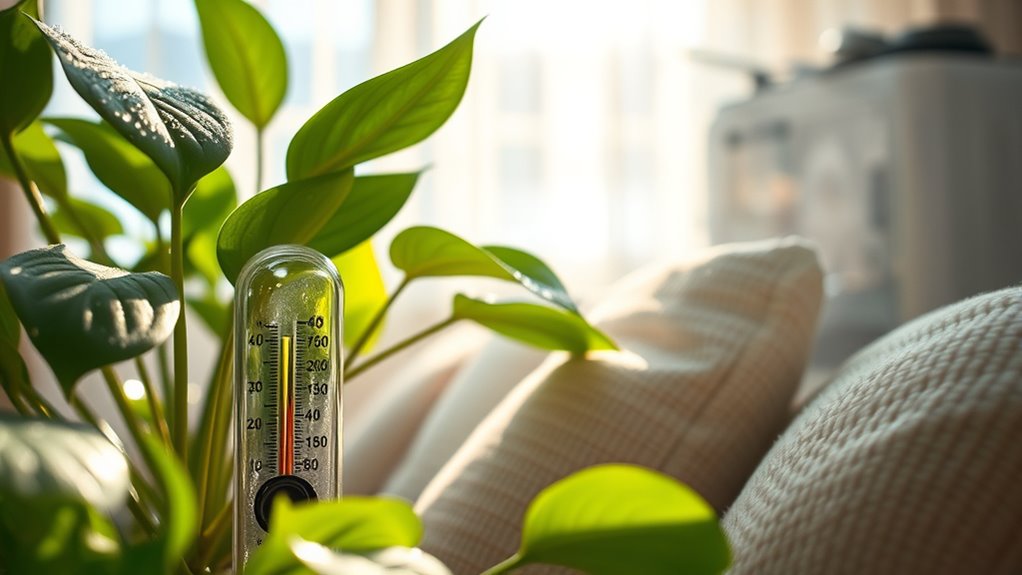
Understanding how relative humidity affects allergies is essential for managing allergy symptoms effectively. When you control the humidity levels in your home, you can considerably reduce the presence of dust mites, mold spores, and other allergens that thrive in certain moisture conditions. Using a humidifier benefits you by maintaining ideal humidity levels, typically between 40% and 50%, which helps keep the air comfortable and discourages airborne allergens from multiplying. However, it’s important to avoid excess humidity, as too much moisture can promote mold growth and dust mite proliferation, worsening allergy symptoms.
To allergy-proof your living space, start by monitoring your indoor humidity with a hygrometer. If levels are too low, especially during winter months when heating dries out the air, using a humidifier can add necessary moisture. Conversely, if the air is overly damp, running a dehumidifier or increasing ventilation can help. Keeping humidity within the suitable range creates a less hospitable environment for allergens, making your home safer and more comfortable. It also minimizes humidity-related issues like dry skin, irritated sinuses, and respiratory discomfort, which often accompany allergy flare-ups.
In addition to using humidifiers, allergy proofing tips include sealing leaks around windows and doors to prevent outside moisture from entering and reducing clutter that traps dust and pet dander. Regularly washing bedding, curtains, and plush toys in hot water also helps eliminate dust mites. Installing HEPA air filters further improves indoor air quality by capturing airborne allergens, especially when humidity levels are correctly maintained. These combined strategies create a thorough approach to allergy management, reducing the triggers that make your symptoms worse.
Maintaining proper indoor air quality through humidity control and filtration is a key element in reducing allergy symptoms and creating a healthier living environment.
digital hygrometer for indoor humidity
As an affiliate, we earn on qualifying purchases.
As an affiliate, we earn on qualifying purchases.
Frequently Asked Questions
How Does Humidity Affect Indoor Air Quality for Allergy Sufferers?
Humidity levels directly impact indoor air quality for allergy sufferers. When humidity is high, it promotes airborne mold growth and increases dust mite populations, both of which can worsen allergies. Maintaining ideal humidity helps you control airborne mold and dust mites, reducing allergy symptoms. Lowering humidity makes your environment less hospitable for these allergens, so you breathe easier and experience fewer allergy flare-ups indoors.
Can Adjusting Humidity Levels Reduce Specific Allergen Concentrations?
They say, “A stitch in time saves nine.” Adjusting humidity levels can indeed reduce allergen concentrations, making your home healthier. By keeping humidity below 50%, you limit mold growth and dust mite populations, which thrive in damp environments. Maintaining proper humidity helps control these allergens, easing allergy symptoms. So, take action now—balancing humidity is a simple, effective way to improve your indoor air quality and breathe easier.
What Are the Best Tools to Measure Indoor Humidity Accurately?
You should choose a hygrometer with high accuracy to get reliable indoor humidity readings. Look for models with a digital display and features like sensor calibration to maintain precision over time. Some hygrometers also have built-in temperature sensors, which can help you monitor overall comfort. Regularly calibrate your device if needed, and avoid cheap or analog models, as they often lack the precision necessary for managing humidity effectively.
How Quickly Does Changing Humidity Impact Allergy Symptoms?
Changing air moisture levels can impact your allergy symptoms pretty quickly, often within hours. When humidity rises, it creates a perfect environment for allergy triggers like mold, dust mites, and mildew to thrive. Conversely, lowering humidity can help reduce these triggers, easing your symptoms. So, adjusting indoor humidity isn’t just about comfort; it can directly influence how severe your allergy symptoms become, sometimes almost immediately.
Are There Seasonal Humidity Variations That Influence Allergy Severity?
You might notice seasonal humidity changes influencing allergy flare-ups. In summer, higher humidity levels can increase mold growth and dust mites, worsening symptoms. Conversely, winter often brings lower humidity, which can dry out nasal passages and make you more sensitive to allergens. Being aware of these fluctuations helps you prepare and manage your allergies better, adjusting your environment or medication as needed during different seasons.
adjustable humidifier for allergy relief
As an affiliate, we earn on qualifying purchases.
As an affiliate, we earn on qualifying purchases.
Conclusion
By keeping an eye on the humidity levels in your home, you’re like a skilled gardener tending to delicate plants. When the air’s just right, allergens stay in check, and your allergy symptoms stay at bay. Too humid or too dry, and it’s as if weeds and pests invade your carefully maintained garden. So, monitor your relative humidity—think of it as watering your indoor oasis—to create a comfortable, allergy-free space you’ll love to live in.
dehumidifier for mold and dust mite control
As an affiliate, we earn on qualifying purchases.
As an affiliate, we earn on qualifying purchases.
As an affiliate, we earn on qualifying purchases.
Halloween Picks
halloween
As an affiliate, we earn on qualifying purchases.