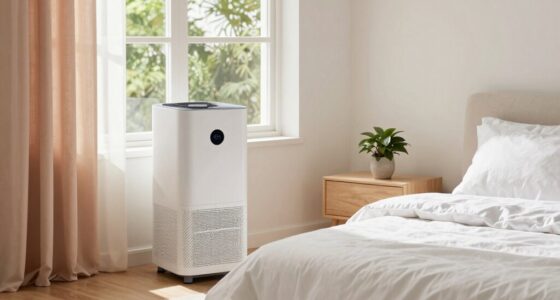
The fresh ‘new renovation smell’ often seems harmless but can be much more harmful to you if you’re sensitive to chemicals. These odors come from VOCs released by paints, adhesives, and furniture, which can cause headaches, dizziness, and respiratory issues. Even with ventilation, chemical off-gassing can persist for weeks or months, making you feel unwell. To protect yourself, it’s important to understand these risks and discover effective strategies to reduce exposure. Keep exploring to learn more.
Key Takeaways
- The “new renovation smell” often contains VOCs that can trigger health issues in chemically sensitive individuals.
- Sensitive people may experience headaches, dizziness, or respiratory problems even after ventilation efforts.
- Off-gassing from paints, adhesives, and furniture can linger for weeks or months, increasing exposure risk.
- Symptoms like itchy eyes and sore throats post-renovation indicate heightened chemical sensitivities.
- Proper ventilation and low-VOC materials are essential to reduce adverse effects on sensitive individuals.

When you step into a freshly renovated space, that distinct “new renovation smell” often signals freshness and cleanliness. But for some people, especially those with chemical sensitivities, that smell can be more than just a sign of a fresh start—it can be a signal to brace for discomfort. The odors released from new paint, adhesives, flooring, and furniture don’t just dissipate into the air; they interact with your indoor air, creating a cocktail of chemicals that can trigger a variety of reactions. If you’re sensitive to chemicals, this new-air quality might cause headaches, dizziness, or respiratory issues, turning what should be a positive change into a source of stress.
New renovation smells can signal discomfort for those with chemical sensitivities, causing headaches and respiratory issues.
The problem lies in the volatile organic compounds (VOCs) released during and after renovation. These chemicals off-gas into the indoor air for weeks or even months, depending on the materials used and ventilation. For someone with chemical sensitivities, this lingering indoor air pollution can be overwhelming. You might notice symptoms like itchy eyes, sore throats, or difficulty breathing, even when you try to enjoy your newly updated space. The more sensitive you are, the more these invisible irritants can affect your daily comfort and health.
Understanding that indoor air quality plays a crucial role is essential. Renovations often introduce a surge of chemical-laden fumes, which can settle into fabrics, carpets, and walls, making the environment uncomfortable long after the work is done. If you’re prone to chemical sensitivities, it’s wise to plan ahead. Ventilate extensively during and after renovations, and consider using low-VOC or zero-VOC materials. Even after the work is complete, keeping windows open and running air purifiers can help clear the indoor air of lingering chemicals. These steps don’t eliminate the problem entirely but significantly reduce exposure. Additionally, awareness of indoor air quality is vital for maintaining health in renovated spaces.
It’s also helpful to understand how VOC emissions from new materials can continue over time, gradually decreasing but often remaining at levels that may still be problematic for sensitive individuals. You also need to be aware of how your body reacts. Your sensitivity might not be immediately obvious, so paying attention to symptoms is key. If you notice increased allergy symptoms or new respiratory issues after a renovation, it’s likely due to indoor air quality. Consulting with experts who specialize in indoor air quality can help you identify and reduce sources of chemical emissions. Sometimes, simply giving your space time to air out can make a big difference, but in more sensitive cases, professional intervention might be necessary.
Recognizing the importance of ventilation strategies can greatly improve indoor air quality and reduce health risks. Ultimately, understanding the impact of indoor air on those with chemical sensitivities helps you make smarter choices. Recognizing that the “new renovation smell” isn’t just a sign of cleanliness but also an indicator of chemical presence allows you to protect your health while still enjoying the benefits of a renovated space. Your comfort and well-being should always come first, especially when it comes to the air you breathe every day.

Purivortex Air Purifiers for Bedroom, Quiet Air Purifier with HEPA Filter for Pollen, Smoke, Dust, Pet Dander, Odor, Hair, Ozone Free, Covers Up to 880 Sq Ft, PX500 Black
- Covers Large Room Areas: Covers up to 880 sq ft in one hour
- Fast Air Purification: Purifies a 215 sq ft room in 15 minutes
- High-Efficiency Filtration: Filters 99.97% of pollutants including dust, pollen, smoke, pet dander, VOCs
As an affiliate, we earn on qualifying purchases.
As an affiliate, we earn on qualifying purchases.
Frequently Asked Questions
How Long Does the “New Renovation Smell” Typically Last?
The “new renovation smell” usually lasts from a few days up to several weeks, depending on indoor air quality and VOC emissions. You might notice it lingering longer if ventilation is poor or if new materials emit high levels of VOCs. To help speed up the process, increase airflow, use air purifiers, and keep humidity levels balanced. This way, you can reduce indoor air contaminants and improve comfort faster.
Are Certain Renovation Materials More Likely to Cause Sensitivities?
You should know that about 10% of people are more sensitive to renovation materials. Certain materials, like pressed wood, vinyl, and adhesives, release volatile chemicals that worsen indoor air quality and trigger sensitivities. These substances emit fumes that can cause headaches, dizziness, or respiratory issues, especially for sensitive individuals. Choosing low-emission, natural materials can substantially improve indoor air quality and reduce health risks during and after renovation.
Can Air Purifiers Fully Eliminate the “New Renovation Smell”?
Air purifiers can’t fully eliminate the new renovation smell because of their limitations in scent absorption. They excel at filtering particles and some odors but may struggle with strong, lingering scents. To improve results, combine using an air purifier with scent absorption techniques like increasing ventilation, opening windows, and using activated charcoal or baking soda. These methods work together to reduce the smell more effectively for sensitive individuals.
What Are Immediate Symptoms Experienced by Sensitive Individuals?
An ounce of prevention is worth a pound of cure. When exposed to the renovation smell, you might experience immediate symptoms like indoor allergies, such as sneezing, itchy eyes, or a runny nose. Respiratory reactions like coughing or shortness of breath can also occur. If you’re sensitive, these symptoms hit quickly, making it essential to ventilate the space and use air purifiers to reduce exposure and protect your health.
Are There Specific Renovation Practices to Minimize Scent Emissions?
To minimize scent emissions during renovations, you should choose eco-friendly alternatives and implement VOC reduction techniques. Opt for low-VOC paints, adhesives, and finishes, which release fewer fumes. Guarantee proper ventilation by opening windows and using exhaust fans. Additionally, consider using air purifiers with activated carbon filters to absorb lingering odors. These practices help reduce scent emissions, making the environment safer and more comfortable for sensitive individuals.

Air Purifiers for Home Large Room, Cover Up to 2400 Ft² with True HEPA Filter, Smart Mode, PM2.5 Air Quality Display, 22dB Sleep Mode, Aromatherapy with 2X-Purification & 360°Air Outlet, HAP603
- Powerful Filtration for Large Rooms: Covers up to 2400 ft² with 2X filtration
- Real-Time Air Quality Monitoring: PM2.5 display and infrared sensor
- Smart Auto Mode: Adjusts fan speed based on air quality
As an affiliate, we earn on qualifying purchases.
As an affiliate, we earn on qualifying purchases.
Conclusion
Just remember, beauty is only skin deep, and sometimes that new renovation smell can hide more than just fresh paint. If you’re sensitive, don’t ignore your body’s signals—your health comes first. Ventilate well, opt for low-VOC materials, and give your space time to air out. As the saying goes, “Forewarned is forearmed.” By staying mindful, you can enjoy your refreshed home without compromising your wellbeing.

Glidden Total 1 gal. Pine Forest/Green Semi-Gloss Interior Paint with Primer
- Durable Interior Paint: Suitable for walls, ceilings, trim
- Easy to Clean: Scrubbable and washable without damage
- All-in-One Paint & Primer: Provides excellent coverage up to 400 sq. ft.
As an affiliate, we earn on qualifying purchases.
As an affiliate, we earn on qualifying purchases.

16 in 1 Air Quality Monitor Indoor 7" Wildfire CO2 Monitor, 9 AQI+7 Alerts
- 16-in-1 Air Quality Monitoring: Detects 9 key air parameters and 7 AQI alerts
- Large 7-inch LED Display: Clear, high-resolution air quality readings
- Multiple Brightness Settings: Adjust display brightness for any lighting
As an affiliate, we earn on qualifying purchases.
As an affiliate, we earn on qualifying purchases.