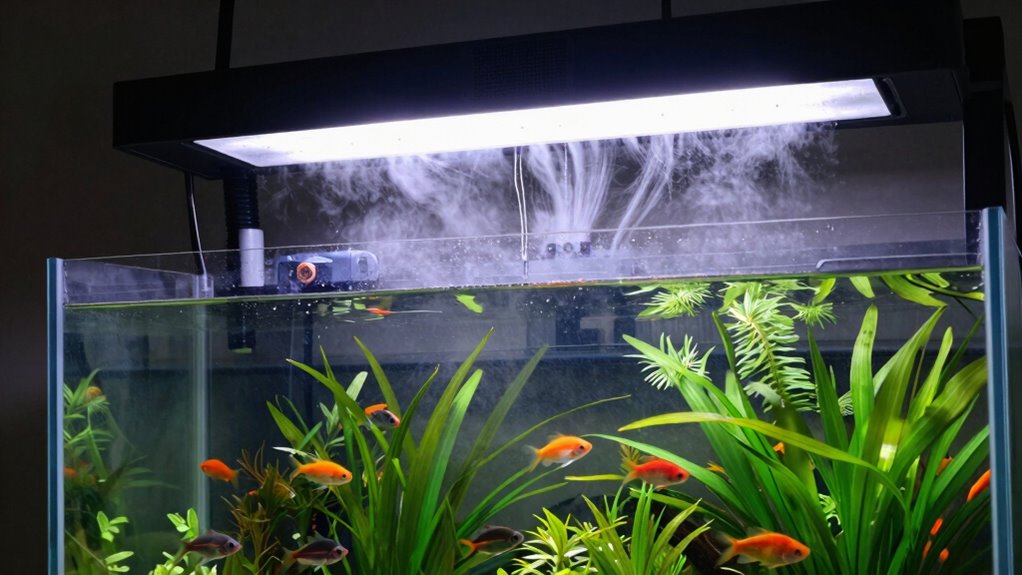

Managing humidity, odors, and ventilation in your aquarium room is essential for a healthy environment. You’ll need to control moisture to prevent mold and equipment damage, using humidifiers or dehumidifiers as needed. Proper ventilation helps remove odors and airborne pollutants, while maintaining good airflow prevents stagnant air and reduces respiratory issues. With the right system in place, you’ll create a safe space for your aquatic life and yourself. Keep going to discover more effective strategies and solutions.

Get home appliances delivered free — and shop member deals
- Fast, free delivery on millions of items
- Access to Prime Big Deal Days deals on October 6–7
- Prime Video, Amazon Music and more included
Key Takeaways
- Proper ventilation systems prevent stale air, reduce airborne pollutants, and control humidity levels effectively.
- Regular maintenance of filters and exhaust fans minimizes odors from organic decay and waste buildup.
- Humidity should be maintained within 40-60% to prevent mold, equipment corrosion, and respiratory issues.
- Adequate airflow helps disperse odors and maintain water quality, supporting healthy aquatic environments.
- Strategic placement of dehumidifiers or humidifiers ensures stable indoor conditions for fish and plants.

Maintaining proper indoor air quality is essential for creating a healthy environment in your aquarium room. Your fish and plants thrive when the air is clean, balanced, and free from harmful contaminants. To achieve this, you need to focus on effective air filtration and humidity control. Air filtration isn’t just about removing dust or debris; it also helps eliminate odors and airborne pollutants that can compromise water quality or stress your aquatic life. A good filtration system ensures that stale air and potential toxins don’t accumulate, keeping the environment fresh and safe. This is especially critical if your aquarium setup is indoors, where air circulation might be limited. Proper ventilation also supports air exchange, which helps maintain consistent air quality and humidity levels. Humidity control plays a significant role in maintaining a stable environment. Too much moisture in the air can lead to mold growth, corrosion of equipment, and increased risk of respiratory issues for anyone in the room. Conversely, low humidity can cause static buildup and dry out plants or equipment. You need to monitor humidity levels regularly and adjust accordingly. Using a dehumidifier or humidifier can help maintain the ideal range, typically between 40-60%. Proper humidity management not only protects your equipment but also creates a comfortable space for you and your aquatic inhabitants. Ventilation is another key factor. Proper airflow prevents stagnation, reduces odors, and disperses airborne pollutants. It’s important to have a ventilation system that exchanges air efficiently without causing drafts that could disturb your aquarium’s delicate balance. Ventilation also works hand-in-hand with air filtration; fresh, filtered air enters the room while stale air exits, maintaining a healthy indoor atmosphere. When designing your aquarium room, consider installing exhaust fans or air exchange systems that can be adjusted based on humidity and odor levels. Regular maintenance of air filters is crucial for keeping the system functioning optimally and preventing the buildup of contaminants. Odor control is often overlooked but is essential for a pleasant environment. Excessive smells can stem from organic decay, unclean filters, or overfeeding. Even with good air filtration, odors can seep into your living space, making it uncomfortable. Regular cleaning, proper waste management, and using activated carbon filters help keep odors in check. Additionally, selecting the right ventilation system can enhance overall air quality and make maintenance easier. Proper air circulation also helps prevent the buildup of harmful airborne pathogens and reduces the likelihood of disease transmission. A well-implemented air quality management plan ensures that your aquarium room remains a safe and comfortable environment for both your aquatic life and yourself. Remember, a well-ventilated room with effective air filtration and humidity control creates a healthier atmosphere for your aquatic life and makes your maintenance routine easier.
As an affiliate, we earn on qualifying purchases.
Frequently Asked Questions
How Does Humidity Affect Indoor Plant Growth Near Aquariums?
High humidity levels near aquariums can boost your indoor plant health by keeping the air moist, which benefits plants that thrive in humid environments. However, excessive humidity might lead to mold or root rot, harming your plants. You should monitor humidity levels carefully and guarantee proper ventilation to maintain an ideal balance, helping your plants grow strong and healthy without risking damage from too much moisture.
Can Aquarium Odors Impact Indoor Air Quality Long-Term?
Yes, aquarium odors can impact your indoor air quality long-term if not properly managed. Strong odors release airborne particles that can linger and affect breathing. To prevent this, you should use effective air filtration and odor control techniques, like activated carbon filters or ventilation systems. Regular maintenance minimizes odor buildup, ensuring cleaner air and a healthier environment for both you and your indoor space.
What Are the Best Ventilation Systems for Large Aquarium Rooms?
You should choose a ventilation system that maximizes air exchange and offers high ventilation efficiency for large aquarium rooms. Consider installing exhaust fans combined with intake vents to promote continuous airflow, removing humidity, odors, and airborne contaminants effectively. Make certain the system is appropriately sized for your room’s volume, and consider using humidity-sensitive controls to optimize performance and guarantee a healthy environment for both the aquatic life and indoor air quality.
How Often Should Indoor Air Be Tested in Aquarium Areas?
You should test the air quality in your aquarium areas at least quarterly to guarantee ideal conditions. However, if you notice persistent odors, high humidity, or ventilation issues, increase your testing frequency to monthly. Regular testing helps identify pollutants or excess moisture early, preventing health problems for your aquatic life and maintaining a safe environment. Keep a consistent schedule, and adjust based on your specific room conditions.
Are There Eco-Friendly Methods to Reduce Indoor Humidity From Aquariums?
Think of controlling humidity like tending a garden—balance is key. You can use eco-friendly dehumidifiers that act like gentle rain, removing excess moisture without harm. Natural moisture control methods, such as houseplants or ventilation, are your garden’s sunlight, helping to keep humidity levels steady. These eco-friendly options support a healthy environment, ensuring your aquarium room stays comfortable and odor-free without relying on harsh chemicals or energy-heavy solutions.
air ventilation system for fish room
As an affiliate, we earn on qualifying purchases.
As an affiliate, we earn on qualifying purchases.
Conclusion
Managing indoor air for your aquarium room is like tending a delicate garden—it requires careful balance and attention. When humidity, odor, and ventilation are harmonized, your aquatic sanctuary thrives like a hidden oasis. Neglect these elements, and chaos could seep in like weeds choking a bloom. With mindful care, your space becomes a vibrant, breath-filled haven—an underwater world that breathes life into your home, whispering the secrets of harmony beneath the surface.
air filtration system for indoor aquarium
As an affiliate, we earn on qualifying purchases.
As an affiliate, we earn on qualifying purchases.
As an affiliate, we earn on qualifying purchases.
Fall yard work Picks
leaf blowers
As an affiliate, we earn on qualifying purchases.