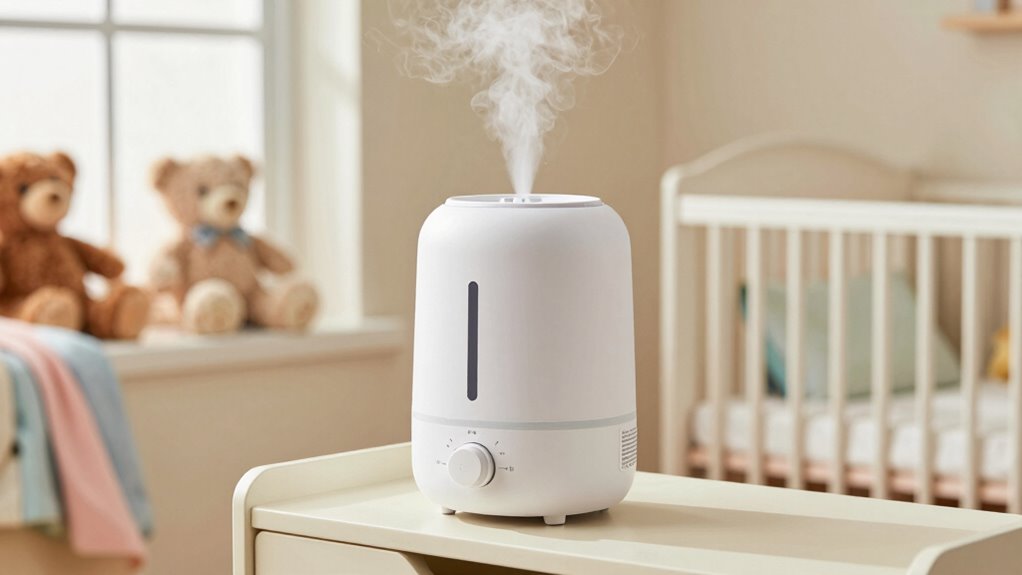

To keep your baby safe with a humidifier, choose models made from non-toxic, BPA-free materials with features like adjustable humidity controls and automatic shut-off. Place the device on a stable surface away from the crib and out of your baby’s reach, and use distilled water to prevent mineral buildup. Regular cleaning and proper maintenance are essential to prevent mold and bacteria. Want to learn more safety tips to guarantee peace of mind?
Key Takeaways
- Choose BPA-free, non-toxic humidifiers with safety certifications and adjustable humidity controls.
- Use distilled water and clean the device weekly to prevent mold and bacteria buildup.
- Place the humidifier on a stable surface, away from the crib, and keep cords out of baby’s reach.
- Ensure the device has automatic shut-off and features like antimicrobial technology for added safety.
- Monitor humidity levels with a hygrometer and avoid over-humidification to prevent respiratory issues.

Frida Baby 3-in-1 Cool Mist Humidifier for Large Rooms, Top Fill Humidifier for Bedroom, Allergy Relief, 60 Hour Runtime + Nightlight, Auto Shut-Off, Quiet, Carry Handle, Essential Oil Diffuser
ULTRASONIC COOL MIST HUMIDIFIER: Our baby humidifier converts water into a refreshing mist that runs up to 60…
As an affiliate, we earn on qualifying purchases.
As an affiliate, we earn on qualifying purchases.
Why Baby Humidifier Safety Matters
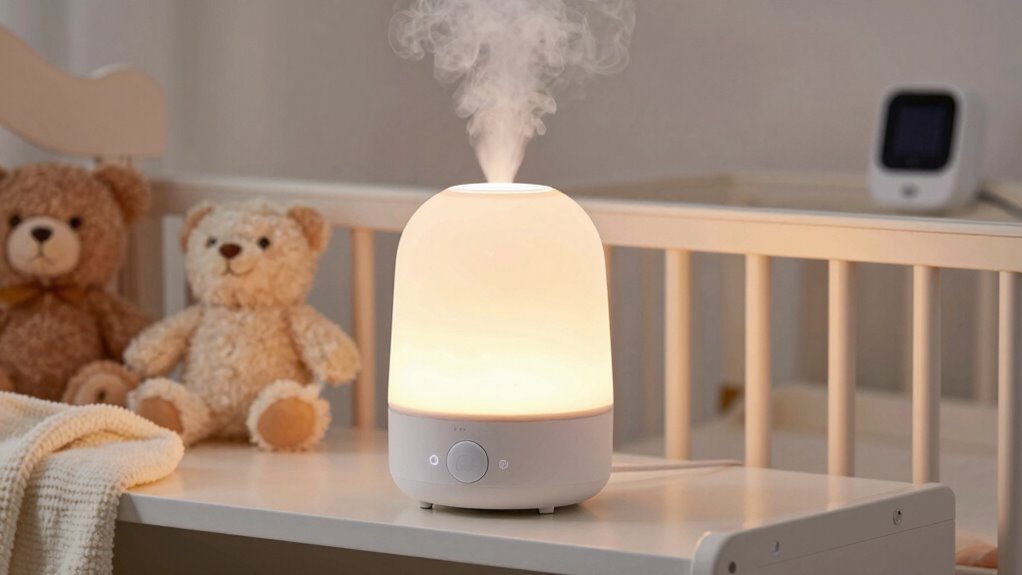
Ensuring baby humidifier safety is essential because improper use can pose health risks for your little one. One concern is humidifier noise, which can disturb your baby’s sleep or cause stress if the device is too loud. Choosing a model with quiet operation helps maintain a peaceful environment. Additionally, energy efficiency is important—not only does it save on electricity bills, but it also reduces the risk of overheating or electrical issues. An energy-efficient humidifier operates smoothly and consistently, ensuring your baby’s space stays comfortably humid without unnecessary energy consumption. Incorporating energy-saving features and safety tips into your nursery setup can help you troubleshoot and maintain your humidifier safely. Prioritizing safety by considering noise levels and humidifier technology helps protect your baby’s health and promotes a safer, more comfortable nursery environment. Using models with automatic shut-off can prevent accidents caused by running the device unattended.
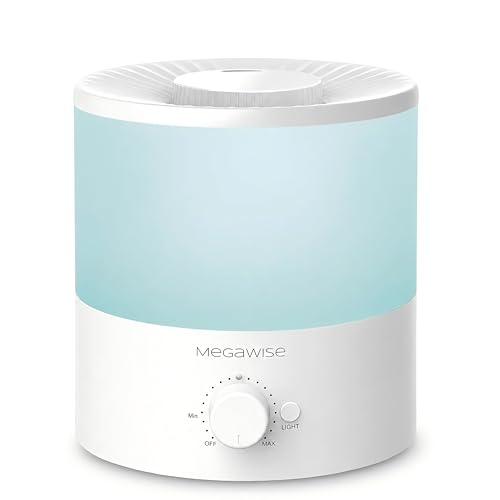
MegaWise Ultrasonic Cool Mist Humidifier SK7620 – 1.5L Capacity, Whisper-Quiet Operation, Adjustable Mist Output, Auto Shut-Off – Ideal for Home, Office, Baby Room, and Bedroom
We Care About You: The mist humidifier will be automatically shuts off if waterless, and it is BPA…
As an affiliate, we earn on qualifying purchases.
As an affiliate, we earn on qualifying purchases.
How to Choose the Safest Baby Humidifier for Your Baby

When choosing a baby humidifier, you want to focus on non-toxic materials to keep your little one safe. Make sure it maintains proper humidity levels and is easy to clean to prevent mold and bacteria buildup. Prioritizing these factors helps you find a safe, effective humidifier for your baby’s health. Additionally, checking that the product is free from hidden risks like potential chemical emissions can provide extra peace of mind. Ensuring the humidifier uses safe materials reduces the chance of exposing your baby to harmful substances. Being aware of air quality concerns can also help you select the most suitable device for your home environment.
Check for Non-Toxic Materials
Choosing a baby humidifier made from non-toxic materials is essential for your child’s safety. Look for models crafted from non toxic materials and chemical free plastics to reduce exposure to harmful chemicals. Many cheap plastics contain BPA or phthalates, which can leach into the air and pose health risks. Opt for humidifiers labeled as BPA-free or made with organic, eco-friendly plastics. Check manufacturer details to ensure the materials are safe and free from toxins. Avoid humidifiers with painted or coated surfaces that may contain toxic paints or finishes. Prioritizing non toxic materials gives you peace of mind, knowing your baby isn’t inhaling potentially harmful substances. Additionally, considering the environmental impact of your choice can help reduce your ecological footprint. Be aware of chemical exposure risks associated with certain plastics and finishes to make a fully informed decision. Always verify product details before purchasing to ensure the humidifier is genuinely safe for your little one. Furthermore, selecting products with certified safety standards can offer extra assurance of their safety and quality. Incorporating models with energy-efficient features can also contribute to a healthier environment and lower utility bills. Being mindful of the manufacturing processes used in the production of these devices can further ensure the safety and sustainability of your choice.
Ensure Proper Humidity Levels
Maintaining the right humidity level is essential for your baby’s health and comfort. Too much humidity can worsen air quality, encouraging mold and dust mites, while too little causes dry skin and congestion. Aim for 40-50% humidity, and monitor with a hygrometer. Select a humidifier with adjustable settings to sustain consistent levels. Also, consider noise levels; a quiet device ensures your baby sleeps undisturbed. Proper air quality is crucial for your child’s well-being. Ensuring proper humidity levels can help prevent respiratory issues and support your baby’s immune system. Additionally, choosing a device with cleaning features can reduce the buildup of bacteria and mold, promoting a healthier environment. Understanding filter maintenance guidelines is vital to keep the air purifier functioning effectively and ensuring your baby breathes clean air. Here’s a quick guide:
| Humidity Level | Effect on Air Quality | Recommended Features |
|---|---|---|
| Too high | Promotes mold, dust mites | Auto-shutoff, adjustable humidity |
| Optimal | Maintains air quality | Quiet operation, reliable sensors |
| Too low | Causes dryness, congestion | Easy to monitor humidity |
Prioritize Easy Cleaning
Ever wondered how to keep your baby’s humidifier safe and hygienic? Prioritizing easy cleaning is essential. Look for models with straightforward access to the water tank and filter compartments, making daily maintenance less of a chore. Regular filter maintenance prevents mold and bacteria buildup, ensuring clean, healthy air. Choose a humidifier that simplifies water tank cleaning—detachable tanks or wide openings make this task quicker and more effective. Additionally, selecting a model with safe electrical components enhances overall safety during operation. Incorporating traditional techniques and materials into the design can also promote durability and ease of cleaning, reducing potential hazards. Remember, a well-maintained humidifier promotes safety and peace of mind.
- Easy-to-remove water tanks for quick cleaning
- Clear instructions on filter maintenance
- Minimal crevices where mold can grow
- Durable materials that withstand frequent cleaning

DREO Humidifiers for Bedroom, 3L Top Fill 30H & 26dB Quiet Runtime for Large Room, Cool Mist Ultrasonic Humidifier with Humidity Sensor, Night Light for Home, Baby, Nursery, Plants, New Edition
𝐅𝐨𝐫𝐠𝐞𝐭 𝐚𝐛𝐨𝐮𝐭 𝐜𝐨𝐧𝐬𝐭𝐚𝐧𝐭 𝐫𝐞𝐟𝐢𝐥𝐥𝐬: With a 3L tank and convenient top-fill design, this humidifier large room for baby…
As an affiliate, we earn on qualifying purchases.
As an affiliate, we earn on qualifying purchases.
Where to Place Your Baby Humidifier for Maximum Safety

To guarantee your baby’s safety, it’s important to place the humidifier in a spot where it won’t pose any risks. Focus on placement safety by keeping it on a stable, flat surface away from the crib or bed to prevent accidental tipping or water spills. Consider environmental factors such as avoiding direct airflow toward your baby to prevent irritation. Keep the humidifier out of reach of curious little hands and ensure it’s positioned at least three feet away from the crib to prevent burns or water hazards. Avoid placing it near curtains, cords, or other objects that could get tangled or cause accidents. Proper placement minimizes risks and ensures your baby benefits from safe, effective humidity without unintended hazards. Selecting a verified, high-quality humidifier can help reduce the risk of mold and bacteria growth, further ensuring your baby’s safety. Regular cleaning and maintenance of the humidifier are also crucial to prevent bacterial buildup and promote a healthy environment. Incorporating models with automatic shut-off features can provide extra peace of mind during use. Additionally, choosing a humidifier with antimicrobial technology can further decrease the likelihood of bacterial contamination, enhancing your baby’s safety.
Frida Baby 3-in-1 Cool Mist Humidifier for Large Rooms, Top Fill Humidifier for Bedroom, Allergy Relief, 60 Hour Runtime + Nightlight, Auto Shut-Off, Quiet, Carry Handle, Essential Oil Diffuser
ULTRASONIC COOL MIST HUMIDIFIER: Our baby humidifier converts water into a refreshing mist that runs up to 60…
As an affiliate, we earn on qualifying purchases.
As an affiliate, we earn on qualifying purchases.
Water Quality: Using Distilled or Filtered Water Safely

Is tap water safe for your baby’s humidifier? Not always. Water impurities and mineral buildup can harm your little one’s health and reduce your humidifier’s effectiveness. Using distilled or filtered water minimizes these risks and keeps the air cleaner.
Tap water isn’t always safe for your baby’s humidifier—use distilled or filtered water for healthier, cleaner air.
To guarantee safety:
- Avoid tap water with high mineral content that can cause mineral buildup
- Opt for distilled water to eliminate impurities completely
- Use high-quality filters if you choose filtered water
- Regularly check water quality to prevent bacteria and mold growth
Choosing the right water is essential for your baby’s health. It prevents mineral deposits from damaging the humidifier and reduces airborne irritants, making sure the air stays pure and safe for your baby’s delicate lungs.
How to Keep Your Humidifier Clean to Prevent Mold and Bacteria
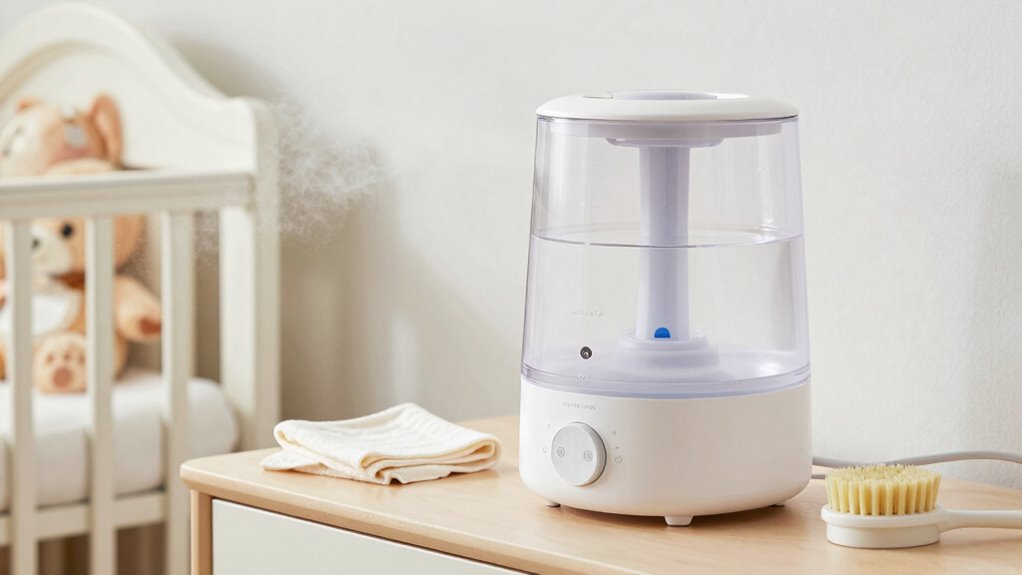
Maintaining a clean humidifier is essential to prevent mold and bacteria from developing and spreading into your baby’s air. Regular humidifier maintenance involves emptying and drying the tank daily, as standing water promotes mold growth. Use a mixture of white vinegar and water to clean all parts of the humidifier weekly, ensuring you scrub away any mineral deposits or mold buildup. Rinse thoroughly to remove vinegar residue, which can irritate your baby’s airways. Always dry all components completely before reassembling and refilling. Replacing filters as recommended also supports mold prevention. By keeping up with consistent cleaning routines, you reduce the risk of mold and bacteria, creating a safer environment for your baby’s health and ensuring the humidifier functions effectively.
Setting Safe Humidity Levels for Your Baby
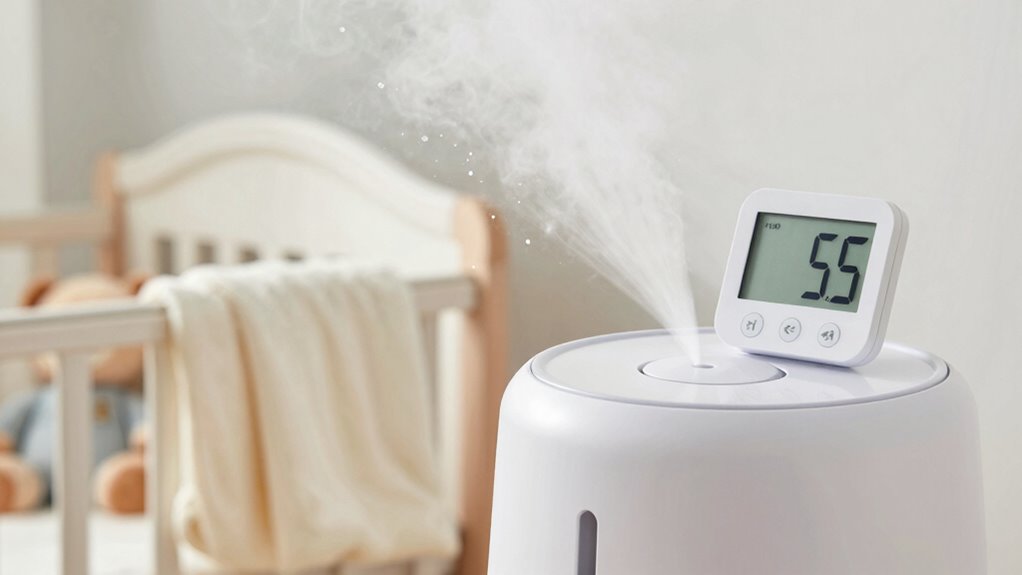
Keeping your humidifier clean helps prevent mold and bacteria growth, but it’s equally important to establish the right humidity levels to ensure your baby’s safety. To do this, choose filters that maintain proper moisture without over-humidifying. Adjust the settings carefully, aiming for a humidity level between 30-50%. Too high, and you risk mold, dust mites, or respiratory issues; too low, and your baby’s skin and nasal passages can dry out. Keep an eye on your baby’s comfort, and use a hygrometer to monitor humidity levels accurately. Remember:
- Proper filters protect your little one
- Correct settings prevent excess moisture
- Regular monitoring ensures safety
- Adjust as needed for comfort and health
Electrical Safety Tips: Keeping Cords and Plugs Out of Reach
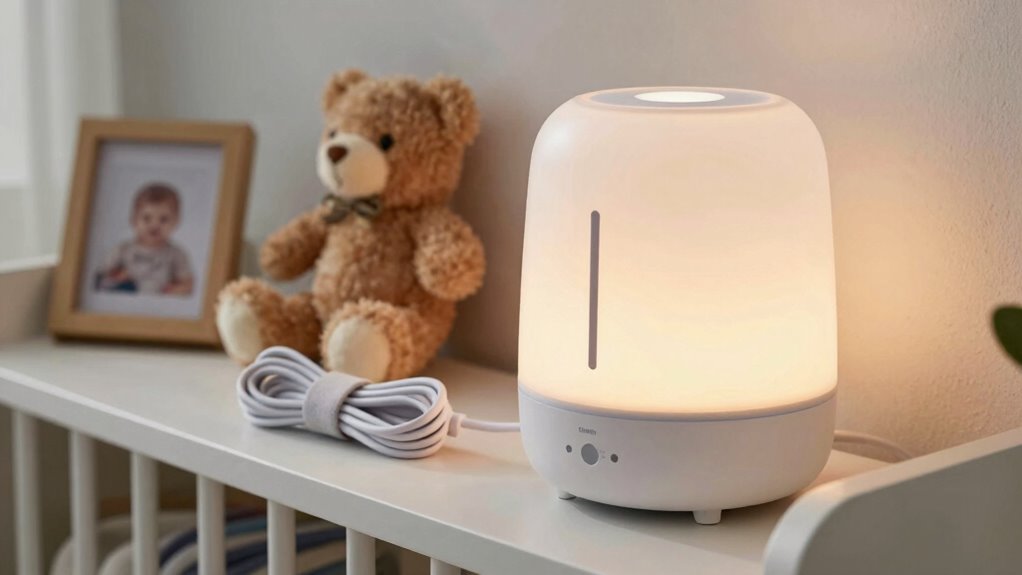
Make sure power strips are secured and out of your baby’s reach to prevent accidental pulling. Hide loose cords behind furniture or use cord covers to keep them safely out of sight. Taking these steps helps protect your little one from electrical hazards around the humidifier.
Secure Power Strips
To prevent accidents, you should make sure power strips are secured and out of your baby’s reach. Proper power strip safety and cord management are essential for a safe environment. An unsecured power strip can become a tempting toy or pull, risking shocks or injuries. To keep your little one safe, consider these tips:
- Use cord covers or outlet safety caps to hide plugs.
- Secure power strips to the wall or furniture to prevent tipping.
- Keep cords neatly coiled and tucked away.
- Regularly check for loose or frayed cords, replacing them immediately.
Hide Cords Properly
Hiding cords properly is a simple but essential step to protect your baby from electrical hazards. Effective cord management prevents your little one from pulling on cords or accessing plugs, reducing the risk of electrical shock or injury. Keep cords out of reach by using cord covers or clips to secure them along walls and furniture. Avoid running cords under rugs or furniture where they can be forgotten or chewed. Always unplug devices when not in use, and never leave cords dangling where your baby can grab them. Proper electrical safety isn’t just about unplugging; it’s about creating a safe environment where cords are concealed and secured. Staying vigilant with cord management helps ensure your baby’s safety around the humidifier and other electrical devices.
Using Your Baby Humidifier Safely During Sleep and When You’re Away
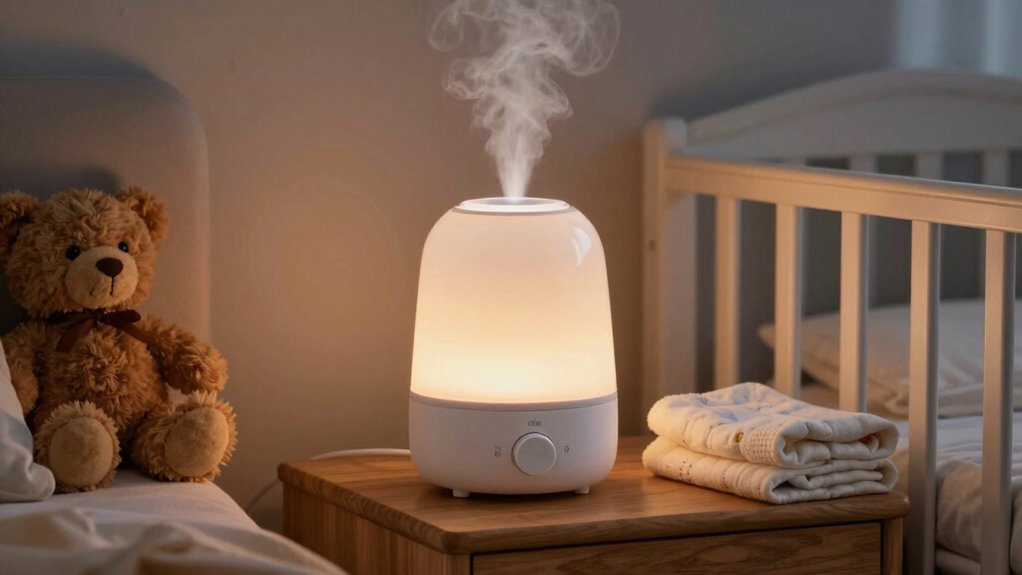
Ensuring your baby’s humidifier is used safely during sleep and when you’re away is essential for their well-being. Proper use helps maintain healthy breathing patterns and creates safe sleep environments. To keep your little one protected:
- Always place the humidifier on a sturdy, flat surface, away from their reach.
- Use a timer or auto-shutoff feature to prevent over-humidifying.
- Regularly clean and disinfect the device to avoid mold and bacteria growth.
- Check the water level frequently, especially during naps and overnight, to avoid dry or overly moist air.
Frequently Asked Questions
Can a Humidifier Cause Allergies in Babies?
Yes, a humidifier can cause allergies in babies if it spreads allergy triggers like mold, dust mites, or bacteria. These triggers can stimulate your baby’s immune response, leading to allergy symptoms. To prevent this, you should clean the humidifier regularly and use distilled or filtered water. Doing so minimizes the risk of introducing allergy triggers, helping your baby breathe easier and stay healthy.
How Often Should I Replace the Water in the Humidifier?
Did you know that bacteria and mold can grow quickly in stagnant water? You should replace the water in your baby’s humidifier at least daily to guarantee ideal water quality. Following a consistent maintenance schedule helps prevent the buildup of harmful microbes and keeps the air safe for your little one. Regularly changing the water reduces allergy risks and ensures your humidifier functions effectively, providing healthy, moist air for your baby.
Are There Specific Features to Look for in a Baby Humidifier?
Look for humidifier features like automatic shut-off, adjustable settings, and a wide water tank for convenience. Safety considerations are vital, so choose models with BPA-free materials, easy-to-clean designs, and secure water compartments to prevent leaks. Additionally, opt for units with a built-in filter or ultrasonic technology to maintain air quality and reduce bacteria growth. These features help guarantee safe, effective humidification for your baby’s room.
Is It Safe to Leave a Humidifier Running All Night?
It’s generally safe to leave a humidifier running all night if you prioritize sleep safety and keep noise levels low. Make sure you use a filter or distilled water to prevent mold and bacteria growth. Set the humidifier to an appropriate level—around 30-50% humidity—to avoid excess moisture. Regularly clean the device, and monitor your baby’s comfort to guarantee a safe, peaceful sleep environment all night long.
What Signs Indicate My Baby’s Humidifier Needs Maintenance?
Like a mirror showing wear, your baby’s humidifier reveals signs it needs maintenance. Watch for water discoloration, which suggests mineral buildup, and check if the filter needs replacing. If the mist output decreases or the device emits strange odors, it’s time to clean or replace parts. Regular filter replacement and cleaning guarantee the humidifier functions efficiently, keeping your baby’s environment safe and healthy.
Conclusion
Remember, safety is key when using a humidifier for your baby. Always follow the checklist to keep your little one safe and healthy. Regular cleaning, proper placement, and using quality water are simple steps that make a big difference. Think of it like tending a delicate garden—consistent care helps it flourish. By staying vigilant, you ensure your baby breathes easy and stays safe, turning a humidifier into a helpful, not harmful, tool.