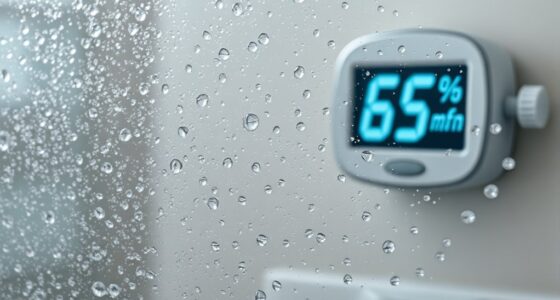
As seasons change, you should start by monitoring your indoor humidity levels with a hygrometer. When the humidity consistently exceeds 50%, switch from your humidifier to a dehumidifier to prevent dampness and mold. Choose a dehumidifier that suits your room size and adjust settings as outdoor conditions shift. Keep windows and doors closed during operation and maintain the device regularly. To smoothly shift and maintain ideal indoor air quality, there’s more to take into account.
Key Takeaways
- Measure indoor humidity with a hygrometer to determine if it exceeds 50%, indicating the need for dehumidification.
- Gradually reduce humidifier use as outdoor temperatures rise and indoor moisture levels increase.
- Select a properly sized dehumidifier with an Energy Star rating suitable for your room size.
- Close doors and windows during dehumidifier operation to prevent external moisture from affecting indoor humidity.
- Regularly monitor humidity levels and adjust dehumidifier settings for seasonal fluctuations to maintain optimal comfort.
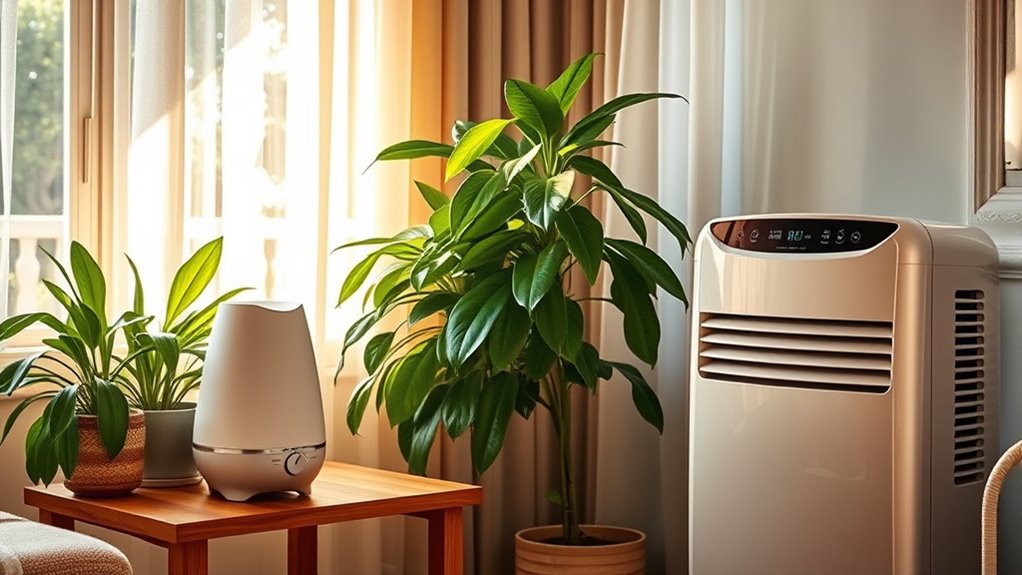
If you’ve been using a humidifier to add moisture to your air, you might soon find that switching to a dehumidifier is necessary to maintain a comfortable environment. As seasons change, the indoor air quality shifts, often requiring adjustments in your home’s humidity levels. During colder months, indoor air tends to be dry, making a humidifier essential to prevent issues like dry skin, sore throats, and static electricity. However, as temperatures rise in spring and summer, excess moisture becomes a concern, especially if your home feels damp or you notice mold growth or musty odors. At this point, a dehumidifier becomes your best tool to control humidity, improve air quality, and keep your living space comfortable.
Transitioning from a humidifier to a dehumidifier isn’t just about flipping a switch; it involves understanding your home’s humidity needs and guaranteeing your new device operates efficiently. One key factor is air quality. Too much moisture can lead to mold, dust mites, and bacteria, all of which compromise your health. A dehumidifier helps remove excess humidity, reducing these risks and enhancing overall air quality. Proper humidity levels, around 30-50%, keep your environment healthy and safe. To achieve this, you should start by measuring your home’s humidity using a hygrometer. If levels are consistently above 50%, it’s time to run a dehumidifier.
Energy efficiency is another important consideration. Modern dehumidifiers are built with energy-saving features that help you manage running costs. Look for models with Energy Star ratings, which indicate they meet strict energy efficiency standards. These units consume less power while effectively reducing humidity. When choosing a dehumidifier, consider its capacity relative to the size of your space. An undersized unit won’t effectively dehumidify, while an oversized one wastes energy. Properly sizing your dehumidifier guarantees maximum performance and energy efficiency.
Using your dehumidifier correctly is vital for a smooth transition. Keep doors and windows closed when it’s running to prevent outside moisture from entering. Regularly clean the filter and empty the water tank to maintain efficiency. Also, monitor the humidity levels periodically to avoid over-drying the air, which can lead to discomfort. Adjust the settings as needed, especially during seasonal transitions when outdoor conditions fluctuate.
Additionally, understanding the contrast ratio of your dehumidifier can help you choose a model that performs well in different lighting conditions and room environments.
Frequently Asked Questions
How Do I Know When to Switch From Humidifier to Dehumidifier?
You should switch from a humidifier to a dehumidifier when you notice humidity levels consistently exceeding 50-60%. Use a hygrometer to monitor the moisture in your space regularly. Keep in mind that device maintenance is essential—clean your humidifier or dehumidifier as recommended. When the air feels damp, and your humidity readings are high, it’s time to make the switch for comfort and health.
Can I Use Both Devices Simultaneously Year-Round?
You can use both devices simultaneously, but consider your home’s needs, device maintenance, and energy consumption. Running a humidifier and dehumidifier together helps balance indoor humidity, especially during fluctuating seasons. Regularly clean and maintain each device to guarantee efficiency. Be mindful of energy use; using both might increase your bills. Ultimately, monitor your indoor air quality and adjust usage accordingly for comfort and efficiency year-round.
Will Switching Affect Indoor Air Quality?
Changing from a humidifier to a dehumidifier can impact your air quality, but proper device maintenance keeps everything safe. It may temporarily affect humidity levels, but maintaining your devices ensures healthy air. You should monitor indoor air quality closely during the shift, adjusting settings as needed. Regular cleaning and filter checks help prevent mold or dust buildup, ensuring your indoor environment remains comfortable and safe throughout seasonal changes.
How Often Should I Adjust the Device Settings Seasonally?
You should adjust your device settings seasonally based on humidity levels in your home. Check your humidity regularly—ideally, aim for 30-50%. When seasons change, tweak your dehumidifier or humidifier accordingly. Regular device maintenance guarantees accurate readings and peak performance. This way, you keep indoor air quality comfortable and healthy year-round, preventing issues like mold or dry skin. Adjusting settings thoughtfully helps you enjoy a balanced, cozy environment.
Are There Specific Signs Indicating Humidity Imbalance?
You can tell there’s a humidity imbalance by noticing signs like musty odors, mold growth, or condensation on windows. Use humidity sensors to monitor indoor moisture levels regularly. If readings go above 60%, it’s time to switch to a dehumidifier for mold prevention. Conversely, if levels drop below 30%, a humidifier can help maintain comfort. Adjust your device settings accordingly to keep humidity balanced year-round.
Conclusion
As the seasons change, shifting from a humidifier to a dehumidifier is like adjusting sails to the wind—your home’s comfort depends on it. Embrace the flow of seasonal needs, and remember that balancing moisture is key to a healthy, cozy space. Just as a garden needs the right amount of water to thrive, your home thrives when you master this seasonal progression. Stay attentive, and your environment will always feel just right.