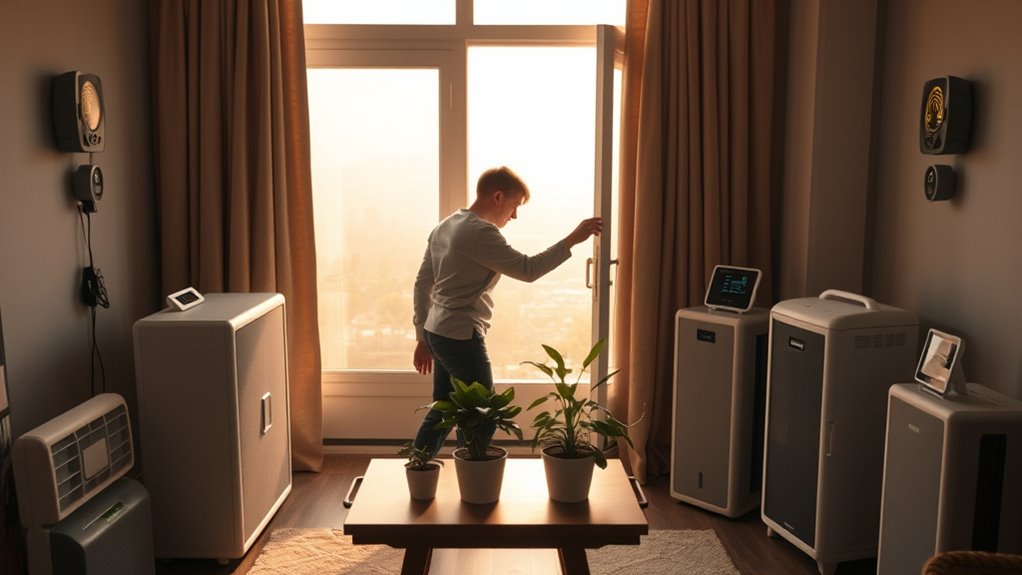

To set up an air quality safe room during wildfires, start by sealing gaps around doors, windows, and vents to prevent smoke from entering. Install high-efficiency HEPA filters and portable air purifiers to continuously clean indoor air. Use controlled ventilation during times of better outdoor air quality, but keep filters running to trap smoke particles. Monitoring indoor air helps you adjust your system effectively. Keep these steps in mind to create a safer, smoke-free sanctuary as you explore more solutions.

Get home appliances delivered free — and shop member deals
- Fast, free delivery on millions of items
- Access to Prime Big Deal Days deals on October 6–7
- Prime Video, Amazon Music and more included
Key Takeaways
- Seal all gaps around doors, windows, and vents to prevent smoke infiltration.
- Install high-efficiency HEPA filters and portable air purifiers in the safe room.
- Use controlled ventilation to bring in filtered outdoor air during periods of better air quality.
- Monitor indoor air quality regularly to adjust filtration and ventilation strategies.
- Maintain a balance of sealing, filtration, and strategic ventilation for continuous indoor safety.
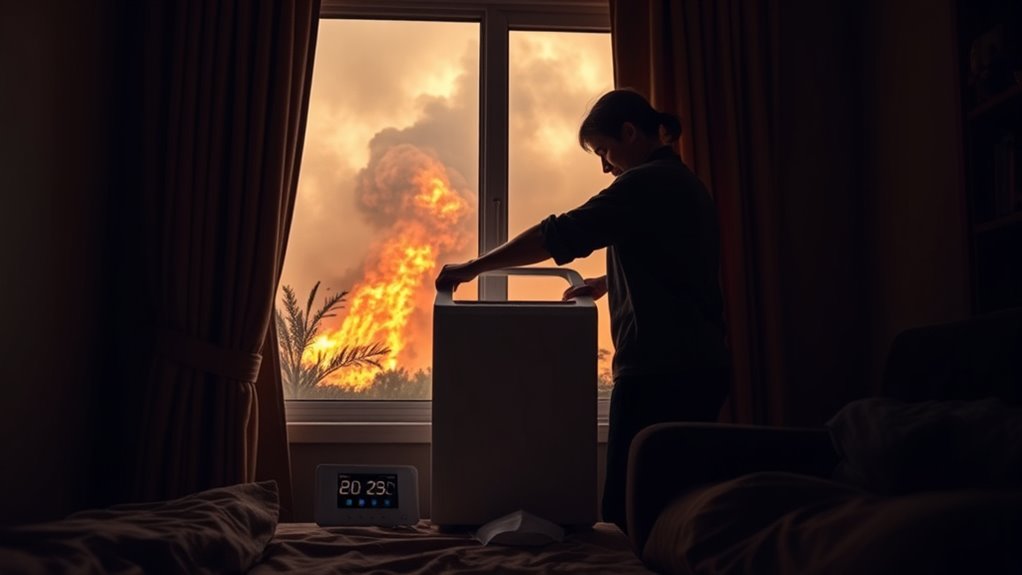
During wildfires, maintaining safe indoor air quality becomes essential, especially when outdoor conditions are hazardous. Smoke and particulate matter can quickly infiltrate your home, posing serious health risks. To protect yourself and your loved ones, setting up an air quality safe room is important. A key aspect of this setup involves implementing effective ventilation strategies and using high-quality filtration systems. Proper ventilation helps control airflow, reducing the influx of smoky air, while filtration systems actively remove harmful particles from the air inside your safe room.
Start by sealing any gaps around doors, windows, and vents to minimize smoke infiltration. This simple step enhances your ventilation strategies by controlling the air exchange between the indoor and outdoor environment. Once the room is sealed, focus on installing or upgrading filtration systems. HEPA filters are highly recommended because they capture particles as small as 0.3 microns, including soot, ash, and other wildfire pollutants. Portable air purifiers equipped with HEPA filters can be placed inside the safe room to continuously clean the air, providing ongoing protection. Ensure these purifiers are appropriately sized for the room to maximize their effectiveness.
Seal gaps around doors and windows; use HEPA filters and portable purifiers for continuous indoor air protection.
In addition to filtration, consider using ventilation systems that allow you to control airflow without bringing in smoky air. Mechanical ventilation with fresh air intake can be set up to filter incoming air before it enters your safe space. Alternatively, if outdoor air quality is too poor, you might opt for a completely sealed environment with no fresh air exchange, relying solely on your filtration systems to maintain air quality. When you do need to ventilate, do so during times when outdoor air quality improves, such as early mornings or after rain, and always with filtration systems running to scrub the incoming air.
Maintaining a balance between ventilation and filtration is important. Too much airflow can bring in smoke, while too little can lead to stale indoor air. You should also regularly check and replace filters in your filtration systems to make sure they work efficiently. Additionally, monitor indoor air quality with reliable air quality monitors so you can adjust ventilation and filtration settings as needed. Remember, the goal is to create a safe, breathable environment that minimizes smoke exposure and maintains your health during wildfire events. Incorporating advanced filtration technology can further enhance your safe room’s effectiveness.
HEPA air purifier for wildfire smoke
As an affiliate, we earn on qualifying purchases.
As an affiliate, we earn on qualifying purchases.
Frequently Asked Questions
How Often Should I Replace the Air Filters in My Safe Room?
You’re wondering how often you should replace the air filter to guarantee good air quality. For ideal air filter maintenance, it’s recommended to change filters every 1 to 3 months, depending on usage and filter type. Regular filter replacement frequency helps maintain efficient filtration and keeps your safe room environment safe during wildfires. Always check your filter manufacturer’s guidelines and inspect filters monthly for dirt or damage.
Can I Use a Portable Air Purifier Instead of Built-In Systems?
You can definitely use portable air purifiers instead of built-in ventilation systems. Portable air purifiers are effective at filtering out smoke particles and pollutants, providing cleaner air in your safe room. Just make sure to choose a high-quality model with a HEPA filter. While built-in ventilation systems offer continuous airflow, portable purifiers give you flexibility and can be easily moved to where you need cleaner air the most.
What Is the Ideal Size for an Air Quality Safe Room?
You should aim for a safe room with sufficient room dimensions and occupant capacity to guarantee good air quality. Ideally, the space is at least 10×10 feet, offering enough ventilation and space for air purifiers to work effectively. Consider how many people will be inside; larger rooms accommodate more occupants comfortably while maintaining clean air. A well-sized safe room helps reduce smoke inhalation and keeps everyone safer during wildfires.
Are There Specific Materials Recommended for Constructing the Safe Room?
When choosing building materials for your safe room, opt for sturdy, non-porous options like concrete, steel, or insulated panels. These materials help you achieve airtight sealing, preventing smoke and pollutants from entering. Avoid porous or flimsy materials that compromise the seal. Properly sealing gaps and using quality sealing compounds guarantees your safe room remains airtight, offering effective protection during wildfires.
How Do I Ensure Proper Ventilation Without Letting in Smoke?
Think of your safe room as a fortress of air, where airflow management is key to maintaining smoke at bay. You’ll want ventilation strategies that act like a filter, allowing fresh air in while blocking harmful particles. Use airtight seals, and consider installing HEPA filters or dedicated filtered vents. Keep windows and doors closed tightly, and use monitored air purifiers to guarantee your indoor air stays clean without letting smoke seep inside.
portable air purifier with HEPA filter
As an affiliate, we earn on qualifying purchases.
As an affiliate, we earn on qualifying purchases.
Conclusion
Think of your safe room as a lighthouse in a storm—guiding you safely through the smoke and chaos outside. When you set up your air quality safe room correctly, you create a fortress that shields you from harmful wildfire smoke. Remember, during last year’s fires, families with well-prepared safe rooms reported breathing easier and feeling more secure. By taking these steps, you’re not just protecting your home—you’re safeguarding your health and peace of mind amid nature’s fiercest storms.
As an affiliate, we earn on qualifying purchases.
air sealing kit for windows and doors
As an affiliate, we earn on qualifying purchases.
As an affiliate, we earn on qualifying purchases.
Fall yard work Picks
leaf blowers
As an affiliate, we earn on qualifying purchases.