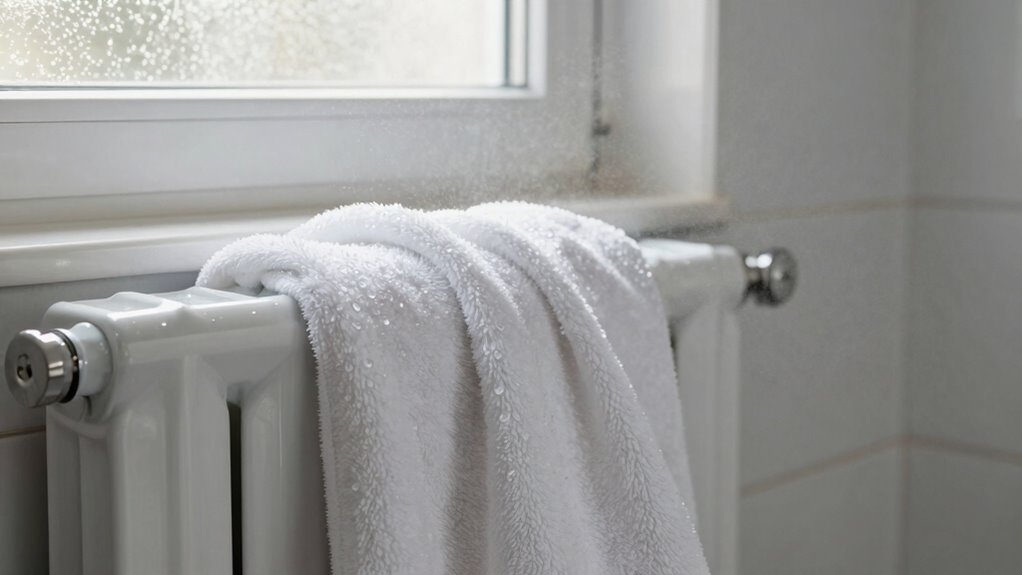

Drying your towels indoors releases a lot of moisture into your home, often more than you realize. This extra humidity can raise indoor levels, making the environment damp and promoting mold growth behind walls or in fabrics. Too much moisture also worsens indoor air quality, increasing allergens and reducing freshness. If you want to understand how to keep your home dry and healthy, keep exploring these important tips.

Get home appliances delivered free — and shop member deals
- Fast, free delivery on millions of items
- Access to Prime Big Deal Days deals on October 6–7
- Prime Video, Amazon Music and more included
Key Takeaways
- Damp towels release significant moisture into indoor air, increasing humidity levels more than expected.
- Higher indoor humidity from towels promotes mold growth behind walls and within fabrics.
- Excess moisture from drying towels can worsen indoor air quality and trigger allergies.
- Poor ventilation traps moisture, amplifying humidity and mold risks from damp towels.
- Using proper drying techniques and ventilation reduces indoor moisture and maintains a healthier environment.

Drying towels indoors can be convenient, especially when outdoor space is limited or the weather isn’t cooperating. But while it might seem like a simple solution, it’s important to recognize how indoor towel drying can impact your home environment. One of the main concerns is how damp towels release moisture into the air, which can influence your home’s air quality. When towels stay wet inside, the excess humidity increases the overall moisture level in your space. This added moisture doesn’t just make the air feel damp; it can create a perfect breeding ground for mold growth. Mold thrives in humid environments, and damp towels provide the ideal conditions for it to develop behind walls, on ceilings, or within fabric fibers. Over time, this mold can spread unnoticed, compromising your indoor air quality and potentially causing health issues like allergies or respiratory problems.
You might not realize just how much moisture a single towel can release when left to dry indoors. The more towels you hang up, the more moisture is added to your indoor environment. This excess humidity isn’t just a minor inconvenience; it can lead to increased dust mites and other allergens, further degrading the air quality. If you have poor ventilation, the moisture from damp towels accumulates, making it harder for your home to stay fresh and dry. Proper air circulation is essential to reduce these risks and prevent moisture buildup. Additionally, humidity levels can fluctuate significantly in indoor spaces, especially when damp towels are left hanging for extended periods. This is especially problematic in small rooms or poorly ventilated spaces, where moisture has nowhere to escape. Without proper airflow, the dampness lingers, creating an environment conducive to mold growth and indoor air pollution. Regularly monitoring indoor humidity levels can help you maintain a healthier home environment and avoid these issues. Furthermore, understanding the effects of excess moisture** on indoor air quality can motivate better drying practices and ventilation strategies. Using adequate ventilation** can significantly reduce these risks by helping remove excess moisture from drying towels.
indoor towel drying moisture absorber
As an affiliate, we earn on qualifying purchases.
As an affiliate, we earn on qualifying purchases.
Frequently Asked Questions
Can Towel Drying Indoors Cause Long-Term Humidity Issues?
Yes, towel drying indoors can cause long-term humidity issues. When you don’t have proper air circulation, moisture from towels leads to humidity buildup in your space. This excess moisture can promote mold growth and damage your walls or furniture over time. To prevent this, guarantee good ventilation and consider using a dehumidifier. Proper air circulation helps evaporate the moisture faster, reducing the risk of long-term humidity problems.
How Quickly Does Indoor Moisture From Towel Drying Dissipate?
Think of indoor moisture as a gentle fog that lingers after towel drying. With good air circulation, this fog evaporates quickly, usually within a few hours. The drying time depends on the room’s humidity and airflow—better circulation speeds up the process. If you keep the air moving, the moisture disperses like morning mist fading into the air, helping maintain a comfortable, dry environment indoors.
Are Certain Towel Materials More Likely to Increase Indoor Moisture?
Certain towel fabrics, like cotton, tend to absorb and hold more moisture, making them more likely to increase indoor humidity. Towels with a slower drying speed, such as terry cloth, also contribute to higher moisture levels indoors since they stay damp longer. To minimize moisture buildup, opt for quick-drying fabrics like microfiber, which dry faster and reduce indoor humidity effectively.
Does Towel Drying Indoors Affect Indoor Air Quality?
Yes, towel drying indoors can impact your air quality by increasing indoor moisture levels, leading to potential mold growth and dust mites. To minimize this, you should improve your ventilation strategies, like using exhaust fans or opening windows. Proper airflow helps reduce excess humidity, keeping the air cleaner and healthier. Regularly managing moisture levels is essential for maintaining good indoor air quality and preventing mold-related issues.
Can Towel Drying Indoors Lead to Mold Growth?
If you towel dry indoors, mold growth is a real risk, especially if your towel material retains moisture and air circulation is poor. Damp towels create a perfect environment for mold spores to thrive. Keep towels in a well-ventilated area and choose quick-drying materials. Otherwise, you might unknowingly invite mold into your home, turning a simple habit into a hidden health hazard.
As an affiliate, we earn on qualifying purchases.
Conclusion
So, next time you towel dry indoors, remember you’re releasing more moisture into the air than you might think—like opening a tiny dam of humidity inside your home. It’s easy to overlook, but this extra moisture can turn your cozy space into a breeding ground for mold and mildew. Keep your home dry and healthy by hanging towels to dry outside or in a well-ventilated area. Don’t let moisture sneak in and turn your sanctuary into a damp cave.
air circulation fan for bathroom
As an affiliate, we earn on qualifying purchases.
As an affiliate, we earn on qualifying purchases.
As an affiliate, we earn on qualifying purchases.
Fall Picks
fall essentials
As an affiliate, we earn on qualifying purchases.