
To create a DIY indoor herb garden that improves air quality, choose popular herbs like basil, mint, or parsley that are easy to grow with minimal effort. Place them in well-draining pots with plenty of sunlight or use grow lights if needed. Water when the topsoil feels dry and prune regularly for healthy growth. Maintaining good airflow and keeping pests at bay enhances both plant health and air purification. Stay tuned to discover more tips to boost your herb garden’s benefits.
Key Takeaways
- Select easy-to-grow herbs like basil, mint, and parsley that thrive indoors and improve air quality.
- Place herbs in a sunny spot with 4-6 hours of direct sunlight or use grow lights for optimal growth.
- Use well-draining potting soil and water only when the top inch feels dry to prevent overwatering and root rot.
- Regularly prune and check for pests to promote healthy growth and maintain air circulation around the plants.
- Fertilize periodically with diluted liquid fertilizer to support robust herb growth and maximize air purification benefits.
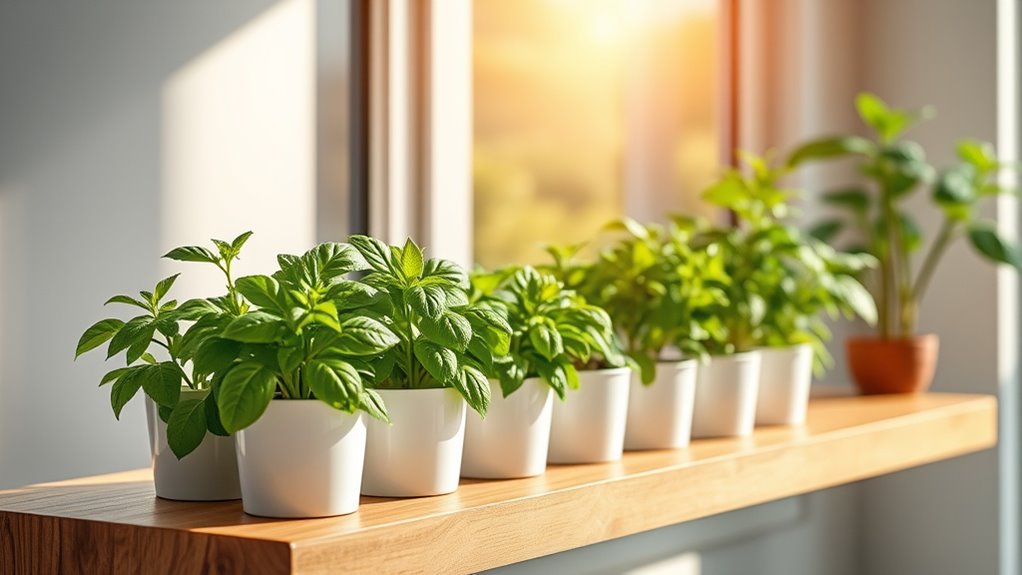
Creating a DIY indoor herb garden is a simple and rewarding way to bring fresh flavors into your kitchen. Not only does it add a touch of greenery, but it also improves the air quality around you. When selecting herb varieties, think about the flavors you love and the space you have available. Popular choices include basil, mint, parsley, cilantro, thyme, and rosemary. These herbs are easy to grow indoors and can thrive with minimal effort. Choosing a variety of herbs ensures you have fresh ingredients at your fingertips for cooking and garnishing, and their presence can help purify the air by absorbing toxins and releasing oxygen.
To set up your indoor herb garden, find a sunny spot with at least 4-6 hours of direct light daily. If natural light is limited, consider supplementing with grow lights that mimic sunlight. Use well-draining pots or containers filled with quality potting soil designed for herbs. These containers should have drainage holes to prevent waterlogging, which can lead to root rot. Positioning your herbs in a spot with good airflow helps prevent mold and pests, keeping your garden healthy. Remember, consistent watering is key—water when the top inch of soil feels dry, but avoid overwatering, which can harm your plants.
Garden maintenance is essential to keeping your indoor herb garden thriving. Regular pruning encourages healthy growth and prevents herbs from becoming leggy or overcrowded. For example, snip off the top leaves of basil or mint to promote bushier growth. Keep an eye out for pests like aphids or spider mites, which can sometimes find their way indoors. Wiping down leaves gently with a damp cloth helps keep pests at bay and improves photosynthesis. Also, periodically check the soil moisture and adjust watering accordingly. Fertilize your herbs every few weeks with a diluted, balanced liquid fertilizer to promote lush growth; over-fertilizing can lead to weak, leggy plants, so moderation is key. Additionally, understanding the role of light and contrast can help optimize your herbs’ growth conditions indoors.
Frequently Asked Questions
Which Herbs Best Purify Indoor Air?
You should choose basil, mint, and rosemary for their air-purifying qualities. These herbs actively remove toxins and improve indoor air quality. To keep them healthy, practice herb pest management naturally and use organic herb fertilizers. Regularly prune and monitor pests to maintain their effectiveness. With proper care, your indoor herb garden not only freshens the air but also provides aromatic herbs for your kitchen.
How Often Should I Water My Indoor Herbs?
You should water your indoor herbs when the soil moisture feels dry about an inch below the surface, usually every 2-3 days. Check their watering frequency regularly, as overwatering can lead to root rot, while underwatering stresses the plants. Stick to a consistent schedule, adjusting based on your home’s humidity and temperature, and always guarantee proper drainage to keep your herbs healthy and thriving.
Can Herbs Improve Overall Home Air Quality?
Yes, herbs can improve your home’s air quality by filtering toxins and releasing oxygen. To maximize benefits, choose the right indoor herb container options that suit your space and guarantee proper herb pest management. Regularly check for pests and keep your herbs healthy. When your herbs thrive, they actively purify the air around you, making your home fresher and more inviting.
What Are the Best Lighting Options for Indoor Herbs?
You should use LED grow lights or place your herbs in areas with plenty of natural sunlight. LED grow lights provide consistent, energy-efficient light that promotes healthy growth, especially indoors where sunlight may be limited. Natural sunlight is ideal, so position your herbs near windows that face south or west to maximize exposure. Combining both options guarantees your herbs receive adequate light for thriving, fresh, flavorful leaves.
Are There Any Safety Concerns With Indoor Herb Gardens?
You might think indoor herb gardens are perfectly safe, but watch out for toxic plant risks like accidental ingestion, especially with kids or pets around. Always research each herb’s safety, and keep pest control methods natural to avoid harmful chemicals. While herbs boost your air quality, improper care or toxic plants can pose serious safety concerns—stay vigilant, and your indoor garden will be a safe, lush oasis.
Conclusion
Creating your own indoor herb garden not only adds fresh flavors to your meals but can also improve your air quality. While some believe plants substantially purify indoor air, studies show they do help reduce certain toxins and increase humidity. So, by starting your DIY herb garden, you’re supporting a healthier living space. It’s a simple, enjoyable way to boost your environment—proving that small green efforts can make a big difference for your well-being.